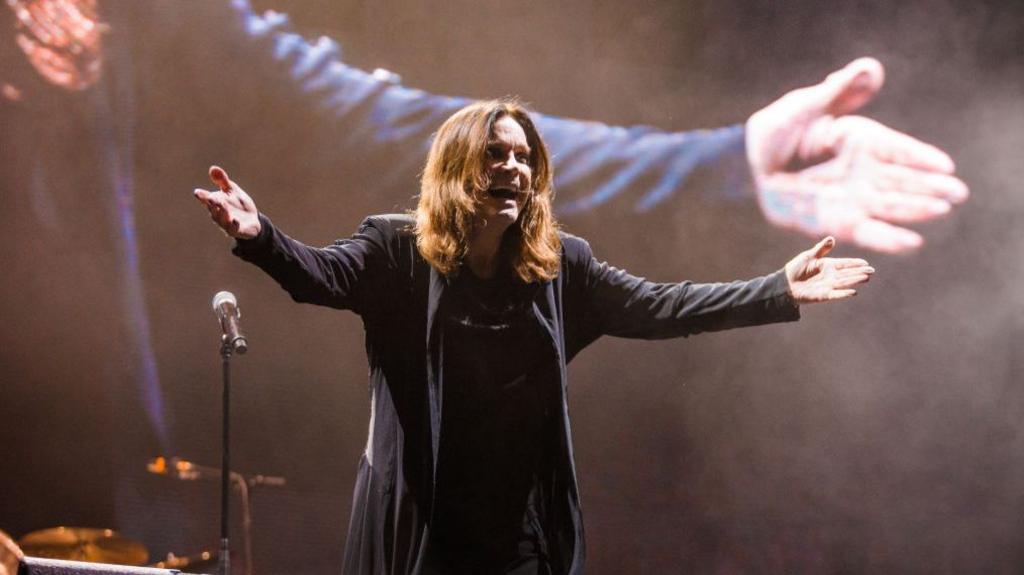
Ozzy Osbourne, the indomitable godfather of heavy metal and one of the most unforgettable personalities in rock history, has died at the age of 76. The announcement was confirmed by his family on 22nd of July 2025. With his passing, the world has lost not only a musician but a mythic figure whose voice, style, and spirit defined an entire genre — and who lived every moment of his life as if it were part of a larger-than-life performance.
Born John Michael Osbourne on December 3, 1948, in the working-class neighborhood of Aston in Birmingham, England, Ozzy rose from poverty to become the face of a musical revolution. His early years were shaped by a love of the Beatles and a childhood marred by hardship. But it was in 1968, when he teamed up with Tony Iommi, Geezer Butler, and Bill Ward to form Black Sabbath, that he changed music forever. What they created was more than just a band — it was the birth of heavy metal. With songs like “Iron Man,” “War Pigs,” and “Paranoid,” Sabbath laid the foundation for a genre that combined crushing guitar riffs with bleak, apocalyptic themes — and Ozzy’s eerie, mournful voice gave it soul.
The band’s influence was immediate and enormous. While critics initially dismissed Sabbath, fans connected deeply with the band’s raw, ominous sound and Ozzy’s chilling delivery. His voice became synonymous with metal itself: both haunting and hypnotic, theatrical yet deeply human. By the mid-1970s, Black Sabbath had become one of the biggest bands in the world, and Ozzy — the scruffy kid from Birmingham with the wild eyes and the haunted voice — had become a rock god.
But success came with demons. Years of drug and alcohol abuse led to Ozzy’s dismissal from Sabbath in 1979. Many assumed it was the end of the road. Instead, it was just the beginning of his second act. With the support of his then-manager and future wife Sharon Arden, Ozzy launched a solo career that would exceed all expectations. Blizzard of Ozz (1980) introduced a new side of him: still dark, still dangerous, but more melodic, more refined. With the late guitar prodigy Randy Rhoads at his side, Ozzy released hits like “Crazy Train,” “Mr. Crowley,” and “Suicide Solution,” blending virtuoso musicianship with macabre lyricism.
Over the following decades, Ozzy became a constant presence in the world of rock. He released over a dozen solo albums, headlined massive tours, and co-founded the annual Ozzfest tour in 1996, which helped launch the careers of countless bands including Slipknot, System of a Down, and Korn. He wasn’t just a legacy act — he was a gatekeeper, a mentor, and a bridge between generations.
Yet Ozzy’s life wasn’t just defined by music. He became a cultural phenomenon in the early 2000s with The Osbournes, the MTV reality show that offered a chaotic, hilarious, and surprisingly tender glimpse into his home life. Audiences around the world were captivated by the contrast between Ozzy’s devilish stage persona and his soft-spoken, bewildered presence as a father and husband. It was reality television before it became a genre, and Ozzy was its unlikely king.
Despite numerous health issues in his later years — including a near-fatal ATV accident, a Parkinson’s diagnosis, and several surgeries — Ozzy continued to record, perform, and inspire. His 2020 album Ordinary Man, and its 2022 follow-up Patient Number 9, featured collaborations with Elton John, Post Malone, and Eric Clapton, and were hailed as triumphant returns. Even as his body weakened, his creative spark burned brightly.
Ozzy Osbourne’s legacy is vast and unshakeable. He reshaped what rock music could sound like — and what a rock star could look like. He challenged taboos, broke barriers, and endured public scandals with a mixture of absurdity and resilience. He was unpredictable, often outrageous, but never insincere. Whether he was biting the head off a bat on stage (an act he later said he deeply regretted) or tenderly praising his children on television, he remained authentically himself: wild, wounded, funny, haunted, human.
His death marks the end of an era not just for metal, but for popular music as a whole. The world without Ozzy is quieter, dimmer, less dangerous — and a little less fun. But the voice that once howled through the speakers of teenagers’ bedrooms, that rang out in stadiums filled with tens of thousands of fans, will never be silenced. Ozzy Osbourne did not simply entertain — he transformed. He brought darkness into the light and gave it a sound.
He is survived by his wife Sharon, children Aimee, Kelly, and Jack, and an army of fans whose lives were forever changed by the Prince of Darkness.
Rest in peace, Ozzy. We’ll see you on the other side.
About the Author