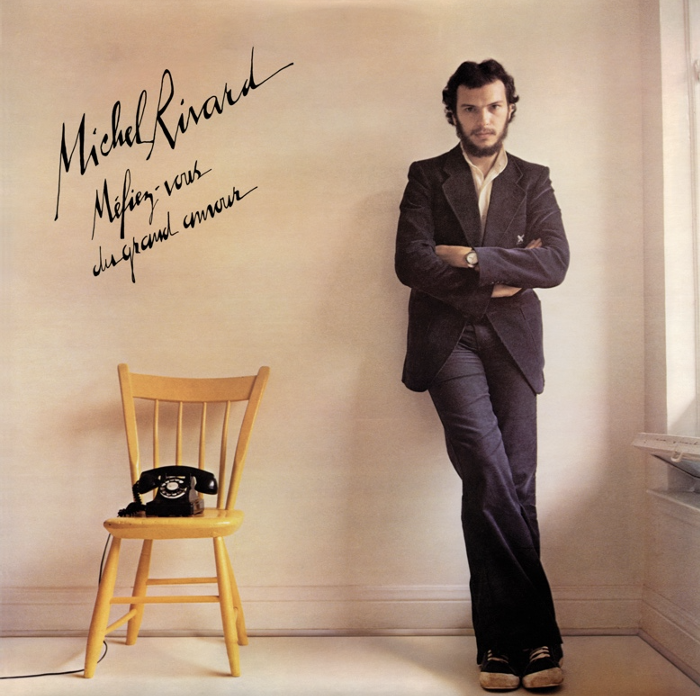
Michel Rivard
A New Album and Theatrical Tour on the Horizon
Michel Rivard has never played it safe. In the mid-’70s, while most of North America was chasing the disco fever, the Montréal-born songwriter was penning folk-rock anthems that made him a household name in Québec and a thorn in the side of anyone who thought French-language rock couldn’t go toe-to-toe with Dylan or Springsteen. Now, at 72, Rivard is pulling a move that’s part history lesson, part mic drop: his first two solo albums—Méfiez-vous du grand amour (1977) and De Longueuil à Berlin (1979)—are finally breaking free of their dusty vinyl sleeves and landing on streaming platforms for the very first time.
For fans who’ve been hunting down rare LPs for decades, the announcement marks a significant moment in the preservation of Rivard’s catalog. Two tracks, “Belle promeneuse” and “La triste histoire de ma virginité,” are already streaming, offering an early glimpse at how the restored material balances clarity with the warmth of the original analog recordings.
The two albums bookend a pivotal chapter in Rivard’s career. Released while Beau Dommage were still active, Méfiez-vous du grand amour featured contributions from fellow bandmates Réal Desrosiers and Michel Hinton, as well as collaborations with Octobre’s Mario Légaré, French singer-songwriter Maxime Le Forestier, and renowned jazz bassist Michel Donato. Two years later, De Longueuil à Berlin pushed Rivard’s songwriting further into poetic and theatrical territory, culminating in some of his most enduring solo material.
The reissues arrive just one month ahead of Rivard’s next original studio project, Après on va où?, due October 31. He’ll support the release with an ambitious tour that fuses music and theater, set to premiere in spring 2026 at Montréal’s Centre du Théâtre d’Aujourd’hui before traveling across Québec well into 2027.
It’s a career built on zigzags. Born in Montréal in 1951, the son of a beloved TV personality, Rivard grew up surrounded by media and performance. By his early twenties, he was co-founding Beau Dommage, the band that gave Québec its unofficial national anthem, “La complainte du phoque en Alaska.” When that group imploded at the end of the ’70s, Rivard refused to fade—he re-emerged as a solo artist, delivering hits like “Le retour de Don Quichotte” and “Je voudrais voir la mer,” songs that became campfire standards for an entire province. Along the way, he racked up ADISQ awards, a Prix du Québec, and in 2023, induction into the Canadian Songwriters Hall of Fame—basically the establishment admitting what fans had known all along.
With Méfiez-vous du grand amour and De Longueuil à Berlin finally entering the streaming era, Rivard’s earliest work is set to resonate far beyond the borders of Québec — reaffirming his status not just as a folk hero of his province, but as one of Canada’s most vital and imaginative songwriters.
Pre-order Méfiez-vous du grand amour and De Longueuil à Berlin.
About the Author