Never Mind The Blockflutes - Little League Rebellion
The Recorder Revolution: Ruaraidh Wishart’s Modern Punk Twist on Medieval History
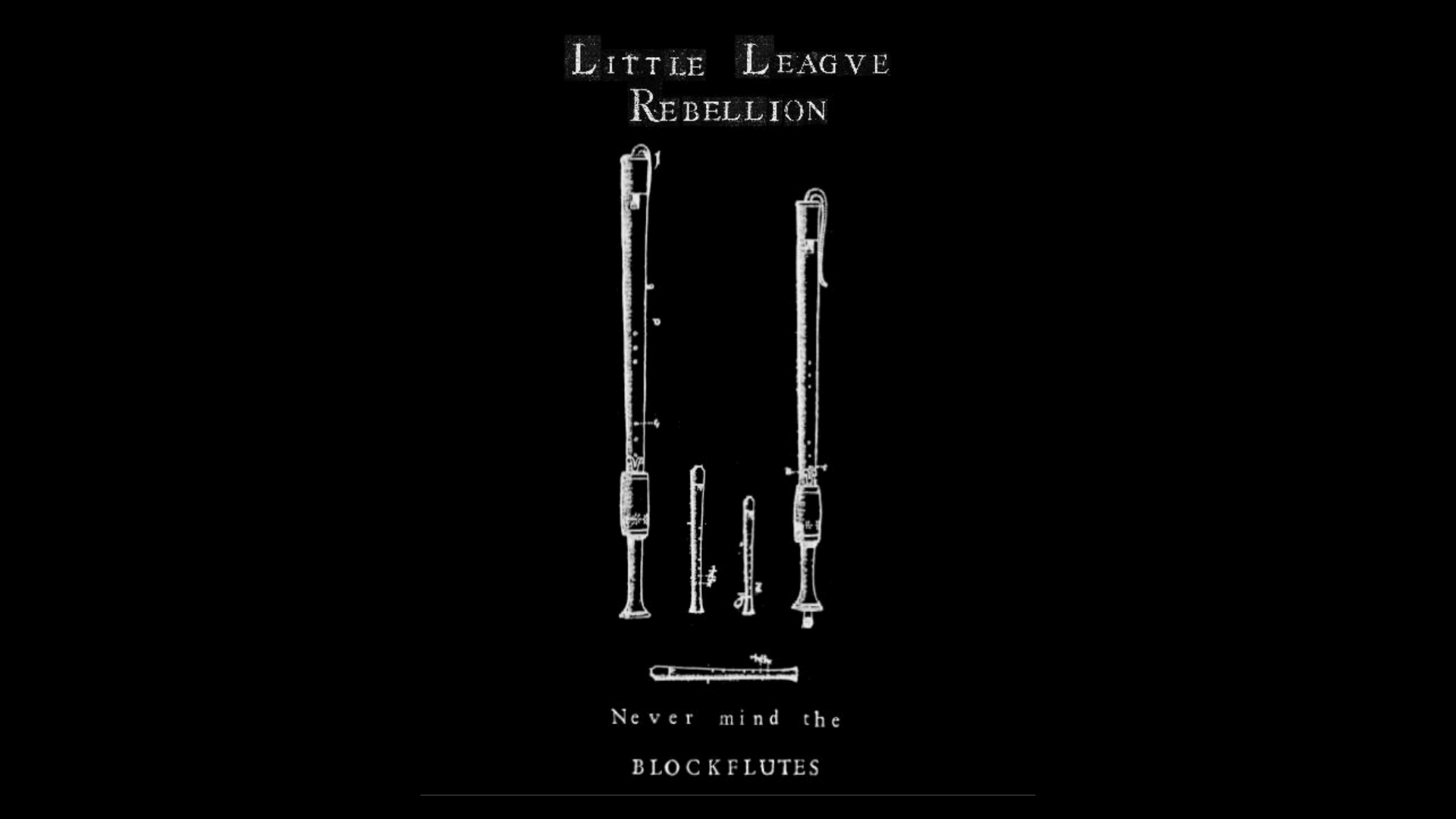
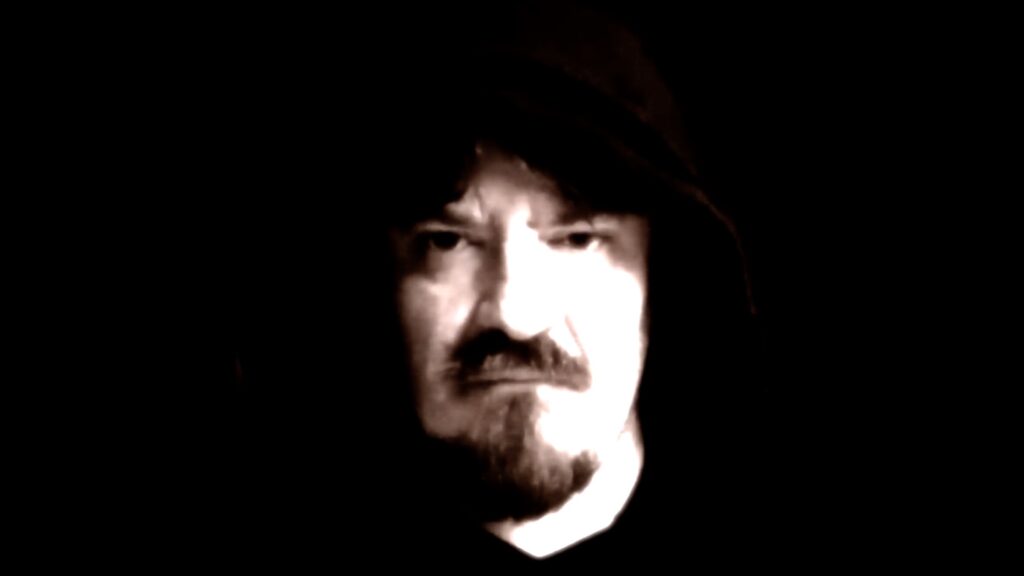
Ruaraidh Wishart, the mastermind behind Little League Rebellion, isn’t your average solo artist, he’s tearing down genre walls by fusing electro-punk with medieval history, turning the recorder into a glitchy, bass-heavy powerhouse. His upcoming album Acid Bardcore takes this fusion to new heights, merging industrial techno with sounds and poetic texts from the past to create something both radical and timeless. With a background in archives, Ruaraidh is all about making the past come alive, whether through his live performances or in his studio creations.
Can you tell us a bit about your journey into music? What inspired you to blend genres like electro-punk with historical themes?
First and foremost the idea of mixing them together was something that interested me, and I was curious to see if it would genuinely work, so I thought it would be fun to try. My sense of humour is very much rooted in the absurd, and so I also thought that even if it didn’t work it could be very funny. But the genesis of it was also me trying to use skills, ideas and opinions in a meaningful artistic way.
From one perspective, it came from a desire to express a concept of the past informing the future and the future informing the past with the tools and skills I had available. I’ve played recorders throughout my life – that’s my main instrument. I learnt about electronics and recording in the alternative and prog bands I had played in. And I had learnt about language, expression of artistic concepts, and theories of memory at University and in my work as an archivist.
I had also been frustrated at being unable to be myself, and I wanted to find a means of self-expression. I’ve gone through my education and work being taught to follow standards – “correct” interpretations of literature and history and music, and the “right” way to do things . I had also played in other people’s groups, contributing to another person’s vision. I learnt a lot from these experiences, but I felt I wasn’t able to fully be myself. So I’ve taken the things I’m most passionate about and most interested in – musically, artistically, historically – and put them together as a vehicle for my own self expression.
What does the name “Little League Rebellion” represent to you and your music?
It’s a quirky name, isn’t it? It conjures the idea of less powerful people resisting and fighting back. Being “the mouse that roars” and challenging the establishment.
Little League Rebellion is fundamentally about non-conformity, mischief, fun, and confounding expectations. Society likes to preserve things in their place – revere the past as an untouchable and unchangeable icon in a glass case; separate “serious” musical instruments from “frivolous” ones of childhood; and keep the purity of historical classical music away from the “bad influence” of popular and alternative music.
This is the order of things that are imposed by establishment gatekeepers. To me it gets in the way of any meaningful progress and artistic expression. I feel this order needs to be disrupted, to stop it from sucking the life out of history and music.
LLR music is all about saying the past can live and breathe outside a case and be seen in a new way; that popular music is just as artistic and “valid” as historical classical music; and that the recorder has a rightful place in both those types of music, no matter what traditionalists and society might say.
But there is respect in the disruption. By breathing life back into these things, demonstrating that the past is not “a foreign country”, people in history are just as human as us now, and that music is a universal language no matter what instrument it’s played on.
This all sounds very serious, but it is meant to be fun too. It’s about letting the inner child run amok – doing the unexpected with a twinkle in the eye with these things, surprising people with the mischief of it, and hopefully making them laugh.
How has your background as an archivist influenced the music and themes of Little League Rebellion?
Archivists are always looking for new ways to use collections and interpret the stories we find. In my past as an Archivist I always found work with artists and drama specialists really inspiring. I never got the chance to work with a musician though, so I’ve ended up doing it myself.
Building the tracks involves searching for the music or text, researching the stories behind them, and using the skills I have in Middle English and Scots where they apply.
You have a very unique sound with your blend of recorders, synths, and industrial elements. How did you develop your distinctive style?
The recorder is my main instrument, and the one rule I have always had is to include it in everything I do, regardless of what style I’m working in.
When I started out many years ago I did what I called “demixes”, recorder arrangements of alternative music, to try the idea of the past looking to the future. These were lots of fun, and very funny, but one of them culminated in a recorder demix of “The Downward Spiral” (The Glassward Spiral), using deconstruction remix techniques that I knew from the industrial music I’d listened to. It totally changed that track – made it my own, and produced something very original.
At the same time, I did original songs in alternative styles, like goth, metal, industrial, using old poetry in Latin, Old English, and Middle English, and recorders with effects like chorus and distortion.
Whilst I was doing an educational project at work about the effect of the First World War I read Charles Murray’s poetry, written during that time. It was very immediate to me, expressing emotions and themes about war that apply as much today as when they were written over a hundred years ago.
I wanted the voices of this poetry and its eternal themes to live and speak again. And all of the work I had done incorporating history and what is fundamentally a historical but current instrument with modern styles then came into play.
The voices of that poetry are allowed to live and speak again to a modern audience through the use of an electro-punk style that also has elements of folk weaved through it. The music creates a bridge to allow communication between the past and the present.
Acid Bardcore is the next step with that concept.
Your upcoming album “Acid Bardcore” mixes medieval music with modern electronic and industrial sounds. What motivated you to explore this fusion of genres?
That came from some work I did with a DJ, Jill Scott, who had been asked to do a session for an opening party in the Aberdeen Art Gallery to support an exhibition of viking and medieval material there. She wanted to mix medieval music with techno dance music and asked me to help. I arranged and recorded lots of medieval music for her and then watched what she did with it on the night, chopping bits up into samples and mixing them through.
That was the spark that brought everything I’d been doing together for me, but instead of doing a DJs job of mixing recorded tracks and samples together, I thought it would be really cool to provide modern remixes of medieval music, and some original songs using medieval words that DJs could add to their source material for what they do. Acid Bardcore was born.
How do you approach creating a track that bridges such diverse time periods and genres? Is there a particular process or theme that guides you?
With words I’m looking for historical texts that still have some resonance today. Medieval folks and other people from history contemplated life and society far more than we like to imagine, and we can still learn from them. So, I’m interested in things that shine a light through beyond the romantic veneer of chivalry, to tell us about their philosophy and their way of life, and the things they laughed at, as well as the things that made them angry and sad. My feeling is that they have lots to say that is still applicable – from comments about corruption, and the pointlessness of work (“For to consider is an payne”), to more spiritual messages about hope that everything will become right in the world, and the benefits of being free (“Fredome ys a nobill thyng”).
When it comes to the music, I have a lot of freedom there to do my own thing, because very often the original sources just give you one line of music. To make it interesting to an audience (whether it’s an authentic performance or something else) you have to make a new arrangement adding in other parts and creating a structure according to your needs for performance. I’ve done exactly the same thing, but used techno-industrial techniques of chopping up, stuttering, samples, resonating basses etc to make the tunes relatable for a 21st century audience.
Can you explain the concept behind “Acid Bardcore” and how it fits into the broader themes of memory and history in your music?
The name has a lot of mischief in it. Travellers in YouTube and social media will have heard of “Bardcore” – covers of modern tunes using early musical instruments. Acid Bardcore turns that on its head by setting medieval music in a modern context, and in the process it provides a bridge of communication for the future to inform the past and the past to inform the future. To me history is about humanity, and shouldn’t be in an unrelatable case, frozen in the state in which it was found. That’s not remembering the past.
Remembering the past is done by making the effort to understand it, trying to make it live again or retell its stories, and to learn from what has gone before, or make sense of where we are now from what has happened in the past. Acid Bardcore is an artistic way of making these sorts of points, and my way of encouraging people to rediscover the past in this way. For example, medieval dance music can be just as heavy and frenetic as techno and rave – once you realise things like that, the people from that time don’t seem so distant and remote. Their humanity is restored, and their voices speak again to help us here in the present.
The album also includes old dialects in a goth industrial context. What was the inspiration behind using 15th-century texts like “Blac” in your work?
I discovered this poem in a book of late medieval English lyrics and carols when I was looking for poems to try out. As soon as I read it, my jaw dropped, because this person was talking about their passion for the colour black in the same way as goths on social media do now. The subject matter fitted completely with my concept of the bridge between the past and present. And when I read the words I could hear them in a Rammstein / Laibach style of voice which would not just complement the meaning of the words, but also the delivery of them. This helps the audience to connect more with the sound of the unfamiliar dialect, because they’re already used to hearing non-English language from these bands.
Your work, especially “A Sough O’ War,” brings historical events and voices to life through electro-punk. How do you decide which historical moments or voices to explore through your music?
There’s a lot of reading, musical listening, and exploration involved, along with quite a bit of thinking about connections between the past and present. I’m always looking for moments of universality and humanity that we can relate to now.
Memory seems to be a key theme in your music. How do you feel the past continues to influence and shape the present in both your personal life and your work?
A key point about archives that people often overlook is that they are a vital part of our present and future. Without memories and evidence of the past we have nothing to be able to make sense of where we are in the present. And if we can’t do that then it makes it much more difficult to be able to build our future. Our mind is as much an archive as the collective memory of a community or society is, and its past and current state needs to be explored and understood in order to live healthily and build a more positive future for ourselves.
Little League Rebellion is an artistic expression and vehicle of that concept.
How do you ensure that the historical elements of your music resonate with a modern audience, especially when exploring complex or painful topics like war?
A lot of that is about matching up the style to the subject matter. Charles Murray’s doric poems in “A Sough O’War” had a lot of folk rhythms to them, and so I incorporated folk elements into the music with the electro punk style to help bring some combined antiquity and familiarity to create the bridge between the past and present and emphasise the universal points being made in the poetry.
You’ve performed across Scotland, from Dundee to Aberdeen. How does your approach to live shows differ from creating studio albums, and how do you engage with the audience in a live setting?
At the moment I’m a one man band, and I’m using backing tracks that I play live to. I’ve created an alter ego dressed in a monk outfit, MCM Cybermonk, to bridge the gap between past and present, deliver the Acid Bardcore music that’s my current focus, and tell some of the background to what I’m playing.
He’s a new invention, so he didn’t have any input into creating the studio album, other than being another product from the concept of making connections between past and present.
Are there any performances that stand out to you as particularly memorable or impactful?
The first time I tried out Acid Bardcore in a live setting, was at a packed open mic night in a local town near me. When it got a very enthusiastic reception from the audience I realised I’d discovered something special!
Do you have any specific rituals or methods you follow when composing or producing music, especially when blending historical influences with modern sounds?
I wouldn’t have said so. Acid Bardcore was developed from the medieval music up. I picked my tunes, created the arrangements and made straight recordings with recorders first, and then started building the techno versions around those in my DAW, including creating chopped up samples from the original recorder recordings.
Aside from that, research and exploration are really important to me generally to help inform what I’m doing, but there’s quite a lot in my music that grows instinctively and organically as the work progresses.
Are there any artists or composers that you consider major influences when it comes to creating your music, especially in terms of blending classical and industrial styles?
Laibach is a real touchstone for me in terms of being open to anything musically and culturally in order to express an idea. The ideas are the most important elements, and the styles and techniques used are the tools to deliver and express the ideas. This gives me freedom to explore and mix all sorts of styles, which comes across in the music I’ve put out. You can hear rock, folk, industrial, classical, metal, techno, rave etc in my music.
What can fans expect next from Little League Rebellion beyond the upcoming album? Any new directions or collaborations in the works?
Neil Pennycook from Meursault was a co-producer on the album and I’m continuing the collaboration with him on developing the upcoming launch of it. I’m also hoping to be able to work with another experimental recorder player, Otto Hashmi, to expand the live performance of Acid Bardcore to allow more live players to be involved.
Where do you see Little League Rebellion evolving in the next few years? Are there any themes or concepts you’re excited to explore further in future projects?
Acid Bardcore is a big concept that I want to develop more. Aside from the obvious next album, I want more people to be involved in the live performance of it, as well as giving more people an opportunity to do their own acid bardcore style mixes, so a remix album from other artists is also an aspiration.
Outside of that I have a historical miscarriage of justice case that I am writing original songs about, but that is taking more time to develop.
How do you balance the experimental nature of your music with your own personal life, especially when it comes to maintaining your vision as an artist?
This is an interesting question. So many artists now “have a day job” to pay the bills and support families, and I find there is a lot of tension between having to do that, and suppressing the person that I actually am in my daytime workplace (My job really doesn’t involve archives anymore). I think boundary setting to allow time for creativity, but equally allow time for other essential things like the day job, and most importantly for family and friends, is really important. Being an artist can be a very solitary pursuit, especially in the form that I’ve developed. Connection with people could easily be lost, and relationships destroyed because of an obsession with creating.
So, yes, setting boundaries and carving out time for other things is the key to balance.
What’s something people might be surprised to learn about you, either musically or personally?
I’m not a fan of the flute. Recorders FTW every time!
Official website of Little League Rebellion.
About the Author