Lettoman
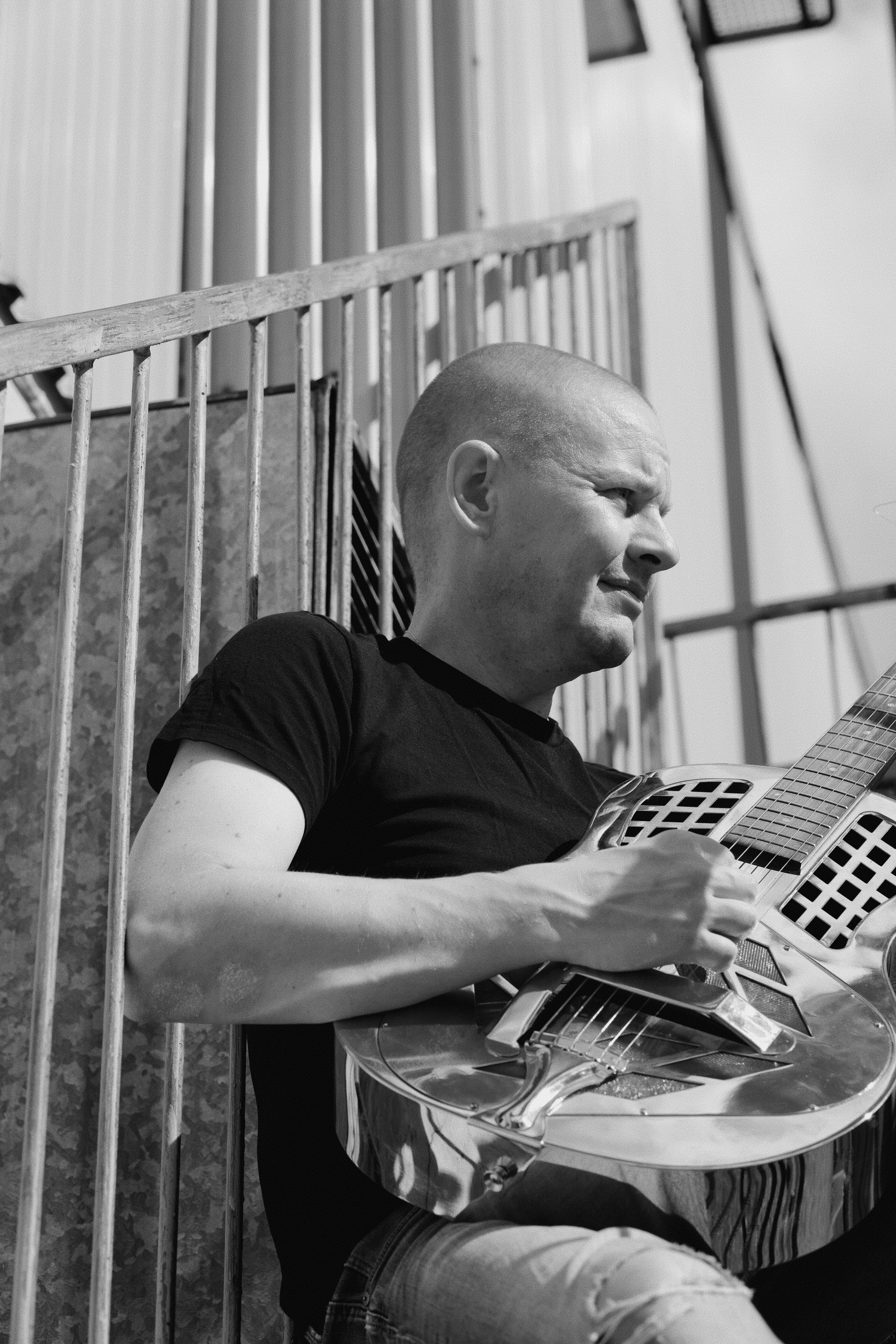
With raw riffs, driving rhythms, and a blend of blues traditions that feel both timeless and fresh, Lettoman is carving out a distinct space in Finland’s music scene. The project, led by Antti Pasanen who hails from Varpaisjärvi, was born during the pandemic and has since evolved from Finnish-language releases to a renewed focus on English tracks. His latest single, “Mismatched,” captures that evolution perfectly—an energetic meeting of Hill Country blues and 60’s blues rock, full of grit, heart, and storytelling. We sat down with Antti to talk about the inspiration behind Mismatched, the roots of his sound, and where he hopes this journey will lead.
Let’s start with the track itself, what inspired the creation of “Mismatched”?
Lettoman was born in 2020 during the pandemic. The first two songs were in English, and in fact, the idea for Mismatched also came about back then. In between, I released a Finnish-language album and an EP, but now the time felt right to return to English and finish this track. The whole song started from a riff that stuck in my head right away. That’s the key feature of a good riff: if you can remember it without recording, it means it’s simple and catchy enough.
You describe “Mismatched” as a collision of two worlds—Saturday meets Monday morning. Could you dive deeper into what this metaphor represents?
Yes, “Saturday meets monday morning” is a metaphor for situation where two different person meets each other. Other is like saturday, wild and lively, and other is more like monday, more ordinary and trusty.
How would you say the sound of “Mismatched” compares to your previous work? Is this track a natural evolution or a departure from what fans might expect?
With this song, I’m finally moving in the direction I’ve wanted to go for a long time, so I’d call it a natural step forward. In my Finnish material, there were also calmer songs, but from now on, I want to focus more on energetic tracks.
You’ve mentioned influences like R.L. Burnside and early Rolling Stones in the track’s sound. What specifically about these artists resonated with you when shaping this song?
I discovered Hill Country blues through Burnside’s music. I’m not particularly skilled as a musician, but his music encouraged me to try this style anyway. Of course, there are many other artists, both Finnish and international, who have influenced me. I actually started writing my own music with punk in the 1990s. The beauty of punk is that anyone can start a band – you didn’t even need to know how to play well. To me, Hill Country blues has something similar: you don’t have to be perfect to create powerful and great-sounding music
How did you first get into music? What made you realize it is your passion?
I started making music before I was even 10. I grew up in the countryside, and since I didn’t have real instruments, I used tin cans as drums. I got my first guitar around the age of 13, and since then I’ve been creating all kinds of music. On my Finnish-language album Amerikka, I even played drums myself – again using tin cans and kitchen utensils. For Mismatched, I bought a children’s drum kit that cost just 20 euros. Music has been a lifelong hobby for me. The best part is that my songs can find listeners anywhere in the world – that’s one of the reasons I keep making music
The harmonica in “Mismatched” seems like a key element. How important was it to feature that instrument in capturing the raw energy you’re going for?
My bandmate Pasi Pohtinen played harmonica on another project of mine, and it sounded so amazing that at the very last moment I asked him to record for this song as well. It really lifted the track to another level. I’m sure you’ll hear more of Pasi’s fantastic playing on future songs too.
The fusion of 60’s blues rock with hill country blues is unique. How did you approach blending these two genres? Was there a particular challenge in doing so?
I may have slept through some music history lessons, so I’m not sure if my classification is entirely correct. But to me, both styles at their best have this furious rhythmic energy that immediately grabs the listener.
Tell us about the recording process for “Mismatched”, did you do anything different in the studio this time around, or stick with familiar methods?
The process was quite similar to my previous recordings – basically done at home in the bedroom. There was no expensive studio involved, not even a high-end home studio. But with this kind of music, I don’t think it matters. The vibe and authenticity are what count
How would you describe the vibe of the track? What kind of atmosphere were you hoping to create?
If the song and its imagery were painted on canvas, you’d see an American rural landscape with a road leading to the unknown. Is it heading deeper into the countryside, or towards a city? Despite the lyrics, the mood isn’t dark
“Mismatched” touches on the idea of two worlds colliding. What is the story behind the lyrics? Are there personal experiences you drew from when writing this?
When I wrote this lyrics, I took some parts of my own life and experiences with relationships, and overstated those feelings about two worlds and made more contrast.
Blues music has a long history of storytelling. What inspires you when you write your lyrics?
My previous Finnish album told the story of Finnish train-hoppers in America, set around the late 1800s and early 1900s. That album was very much about storytelling. With the English songs, I’ve also had help from other lyricists – for Mismatched, from Tiina.
Varpaisjärvi is known for its rich blues scene. How does your music reflect the atmosphere or culture of the area, and how does it influence your sound?
Hill Country blues has its roots deep in rural life, and I was born on a farm with cows. I worked on the farm from an early age, milking cows and driving tractors. In that sense, I can relate to Burnside, who also lived in the countryside.
You’re often referred to as Varpaisjärvi’s “third most legendary blues artist.” For those who may not be familiar with the area, could you tell us a bit about the local blues scene and your place within it?
Varpaisjärvi is a small town in Finland, with probably fewer than 2,000 residents today. Despite its size, several musicians have emerged from there, some with connections to blues. There’s a bit of humor in this nickname, of course.😉
“Mismatched” is just the start of what promises to be an exciting journey. What’s next for Lettoman? Can we expect more tracks in the same vein, or are you exploring new sounds?
The plan is to keep something familiar but also add new elements. As much as I love blues and Hill Country blues, the songs can sometimes be a little repetitive. Hopefully, I won’t make boring songs.
What’s the most exciting part of releasing new music for you? Is it the creation process, the release, or something else entirely?
As I mentioned earlier, it’s been years since I last made songs in English. I’m involved in many things, so writing and recording music sometimes takes a long time. I enjoy coming up with ideas and starting new tracks, but too often the excitement fades or something else takes my time. I hope I can focus more on finishing music in the future. Of course, I also hope that somewhere in the world, someone will enjoy what I make
How do you envision the future of blues music in Finland and internationally? Where do you see yourself and your music fitting into that evolution?
I’m realistic – I don’t expect worldwide fame. I’ve been lucky to perform at Finland’s largest folk music festival and in nearby towns. But in Finland especially, blues is very much a niche, so I won’t be reaching massive audiences. Still, I’m grateful for every listener. I also hope young people will take an interest in blues. Trends come and go, but blues has always had a steady audience
If you could perform “Mismatched” anywhere in the world, where would it be, and why?
I’d love to perform it at Jimmy “Duck” Holmes’ Blue Front Café in Bentonia, Mississippi. I’ve never been to the United States, so it would be a perfect introduction
Finally, what’s one thing you’d like your fans to know about the track that they might not pick up just from listening to it?
There are no cymbals in the drums – I simply didn’t have any. But in a way, that gives the track its own character. In Lettoman recordings, tracks are rarely re-recorded many times. Sometimes a part is played a bit off or there are wrong notes, but that’s the essence of Hill Country blues. Listen to the song and see if you notice anything unusual.
Check out Lettoman on Spotify here.
About the Author