JXCKY
Melbourne’s rising dark-pop phenom returns with THIRSTY—a blistering track of rage, seduction, and catharsis that signals a new era of unapologetic self-expression.
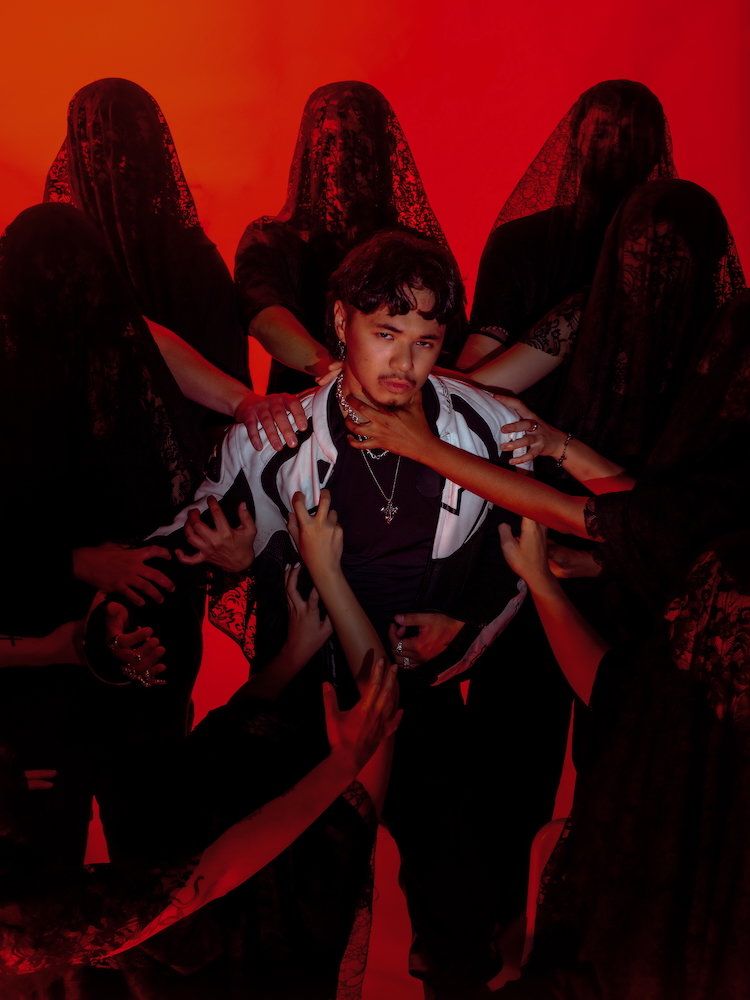
Emerging from Melbourne’s music scene with a voice that cuts between vulnerability and fire, JXCKY has quickly carved out a space as one of the most fearless new voices in dark-pop. Known for transforming personal pain into theatrical, genre-bending spectacle, the queer Chinese-Cambodian artist has built a reputation on honesty, defiance, and a willingness to lean into discomfort. After a very public disappearance in 2024, JXCKY returns with THIRSTY—a track that isn’t just a release, but a reckoning. Blending rage, seduction, and catharsis, the single serves as the opening to A BODY FOR AN EYE, a larger project that interrogates vengeance, grief, and ultimately, healing. In this interview, JXCKY speaks openly about their earliest influences, the emotional weight of survival, the complexities of identity, and what it means to reclaim power through music.
What first drew you into making music and when did you realize that it is your passion?
Listening to artists like Taylor Swift write so openly about their personal life and in such specific detail intrigued me. I was always drawn to English and Literature but in my last year of high school, I quickly realised I wanted to work on developing my voice and writing lyrics. I genuinely believed it might be the easiest way for my voice and my stories as a queer, Asian artist to be told and heard.
Who were some of your earliest influences, and who inspires you now?
I’m a massive fan of Taylor’s writing since I was teenager up til now. Her versatility and honesty has always given me purpose to write in a similar way. Recently, I’ve been going back to songs like “Maneater” by Nelly Furtado. That kind of grungy, in-your-face pop music that empowers you.
THIRSTY is being described as not a comeback, but a reckoning. Can you tell us about the emotional shift between survival and reclaiming power that shaped this track?
I think from an audience perspective, people will always see you suffer and then come out at the other end of the tunnel without seeing the in-between. There’s a massive period of time between survival and reclaiming power that not everyone sees. For me, it was months of really allowing myself to sit with and sink into my grief, guilt, anger and loss. And even after that, it was a debate about whether or not I should orcould return to writing. Once I came to an understanding that this was a story I needed to tell, reclaiming power came easily through writing each song for this project, including THIRSTY.
How would you describe the track THIRSTY to someone who has not heard it?
Actually, I did an interview for THIRSTY a few weeks ago and the writer of that piece said it “hits like Ye and Prince hanging in a dark nightclub”. That was such an intriguing description and honestly, accurate. I’d say it’s as if you made a concoction of pain, resentment and pent-up vengeance and threw it on the wall, hoping it would stain.
You went missing in September 2024, which became a very public event. How did that experience transform the way you view yourself—and your art?
It was a huge reset for me. At that point, despite having just released my debut EP, my priority wasn’t in the art. My heart just wasn’t in it. I think any artist struggles with balancing everything as well as sharing it through their art. And at the time, I couldn’t see myself doing that in the foreseeable future. This experience made me walk towards self-love more than I’ve ever ventured before. To be deeply appreciative of the gifts I was given in this lifetime and to use the voice I have to tell these unique stories. Because here’s the thing – no one else is going to do it for me.
Did you feel pressure returning to music after something so heavy and visible, or was THIRSTY more about breaking free from that expectation entirely?
Initially, I believed that it was part and parcel to feel any sort of pressure returning to music. But the moment I started doing the cover art shoots, visuals and the music video, I broke free from all expectations. I knew it was going to be loud and disruptive and cause discourse. And that’s what an artist is meant to do – make noise. Some people are gonna love it or hate it. As long as I sparked some sort of conversation or made them feel something, I’ve done my job.
The song drips with rage, seduction, and vengeance—it’s unapologetically unhinged. What did writing THIRSTY allow you to purge from yourself?
THIRSTY was particularly healing and cathartic for me because it acts as a callback to and a reflection of a past version of myself. It’s not who I am today. It wasn’t who I was at the time of writing. Putting it out there in the world, it allowed me to lay those toxic, vengeful parts of me to rest for good. Of course, the hard part then is when I’m doing press or promotion for the song, I still have to act like I currently mean it. So is it really purged? Maybe. Maybe not. I leave that to the listeners to decide.
The lyric “body for an eye” reframes revenge as something physical, and your track THIRSTY is part of a larger project with this name. What does that phrase mean to you personally?
The phrase is something someone from my past said to describe me. Rather than take “an eye for an eye”, they said I took “a body for an eye”. I’ve never heard anyone ever twist that phrase into something new. In that moment, hearing someone I care and love for deeply describe just how far I’ve taken a tit-for-tat in that way, it made me fully surrender to the gravity of my actions and made me want to evaluate, from start to finish, why I was so broken to feel the need to hurt someone back. That’s why it’s the title of the project. The phrase serves as a crucial lesson – I never want to stoop that low again.
Your music has been described as “anti-pop spectacle meets emotional exorcism.” How do you balance the theatrical with the deeply personal without losing authenticity?
Honestly, I still struggle every single day with this. I’ve always mentioned how exhausting it is to write dark-pop. I really have to dig deep, face my inner demons and channel negative energy that I feel less strongly about at the time of recording as opposed to when it happened. At the same time, like I said, it’s also cathartic because it’s like therapy. I vent, air it out and I heal as a result of the writing and release of the music. It’ll always be an awkward fight internally for me because visually and sonically, I appear and sound so heated and I have to consistently keep up that theatrical persona whilst hoping people understand me on a deeper level. It does really come down to – as long as I’m brutally honest about what I’m writing and singing about, regardless of what emotion I’m trying to evoke, people will know because they’ll feel and see it.
Being a queer Chinese-Cambodian artist in Melbourne, how does your cultural and personal identity feed into your sound?
This is always an interesting question to answer because there’s so many layers to it. As a queer POC artist, there’s so many stories I’ve told, am telling and have yet to tell. And I believe every queer POC artist, despite sharing some similarities, will always have something unique to share because not everyone’s come-up is going to be the same. Fortunately, I have a very accepting and loving family so I can be free with my expression of sexuality in my music. It helps with my confidence on and off stage. I can be loud, sexy, intimidating and hope it empowers and connects with others who are like me. In terms of cultural background, I would love to see how I can incorporate that more with the pop music I’m writing. I once shot a visualiser and cover art for a song called ‘Ghost You’ where I was heavily influenced by Chinese-Cambodian mythological traditions and folklore. I’d love to see i I could do something sonically, even if it’s from a lyrical perspective. There’s so much more space for it.
What’s the biggest challenge you’ve faced in your career, and how did you overcome it?
I think losing my passing for music as well as getting a bad reputation is as low as it gets. I don’t think any artist wants to get to a point where they loathe their craft and want nothing to do with it. I don’t think any artist wants to feel like the world hates them either. I was honestly ready to choose the easy path and settle down. It would be so much more peaceful for me in so many aspects, especially financially. But you know what??? God or the universe put me on this earth full of ambition. And my ambition is what keeps me from turning away from music for good. It’s still a challenging time right now but with the new project around the corner, there’s also a lot of hope.
Outside of music, what inspires or fuels your creativity?
Genuinely, just living life. Sounds boring, right? But what I end up writing about is my life so I have to allow myself time to live it. I think Lorde mentions that as a reason as to why her albums are so spaced out. As an up and coming artist, the hustle is always going to be overwhelming cause you have to be consistent. But I always allow myself time to live a little. Only then do I have anything compelling at all to write about.
Your falsetto cuts like a weapon throughout THIRSTY. Do you see your voice as another tool of revenge and catharsis?
Thanks for mentioning that! 100%. Since my first release, I’ve worked unbelievably hard to hone in on my vocals and grow my voice. I didn’t start out in music as a trained vocalist. I really had to learn. If anything, I always used to say I’m a lyricist first. But nowadays, I’ve never felt more secure about the fact that I can sing and it helps because I know some of my opps are maaaad out there. Some of them can sing but need ghost writers to write their lyrics. Thankfully, I’ve got both!
How do you hope listeners engage with A BODY FOR AN EYE—as a mirror of their own rage, or as theatre to witness from the outside?
This is such a great question! When listeners are engaging with A BODY FOR AN EYE as a whole, from the first to last track, I’d definitely say as theatre to witness from the outside. With every track altogether, you’ll clearly be able to hear a journey from start to finish that begins with resentment but ends with acceptance and grief. However, as standalone tracks, I think listeners would still be able to engage and relate it to their own experiences. And heads up – it’ll not only mirror their own rage but also sadness.
Do you feel like THIRSTY is the truest reflection of who JXCKY is, or is it just one version of you?
THIRSTY to me is the truest reflection who JXCKY was from late 2022 through to early 2024. But this is most definitely a version of me who has come to pass. I’m always going to reflect deeply on it but the feelings and actions of the person I write about in THIRSTY is not someone I’m proud of and hardly a reflection of me today.
What’s something about you people might be surprised to learn?
That I’m a massive goof and softie. I don’t think people often see that side of me because I’m so serious when I release music. Maybe after A BODY FOR AN EYE, I need to move towards something a lil lighter….
About the Author