Zombi Elima
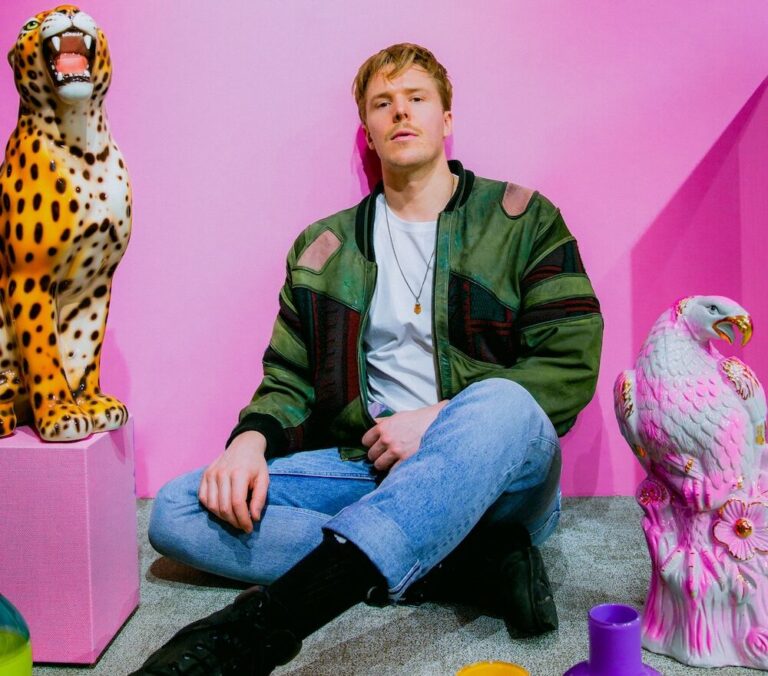
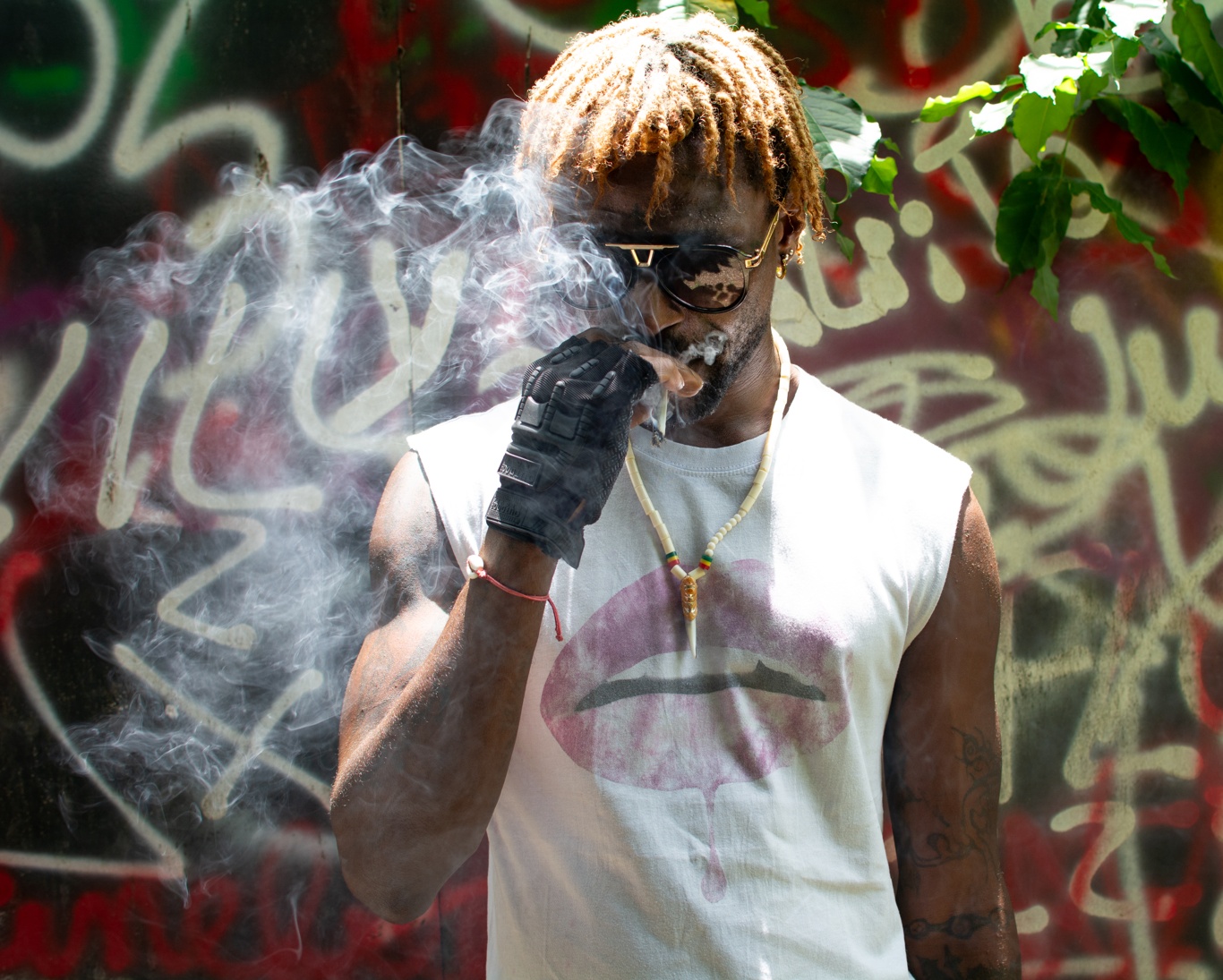
Kinshasa-born artist Zombi Elima — also known as Aigle Royal — refuses to be boxed in. He doesn’t call himself a rapper or a singer, though he’s both; instead, he embraces the title of “artist” in its fullest sense — someone who takes scraps of life and turns them into something burning, undeniable. Born in Barumbu in 1998, he grew up without parents, choosing the streets over a loveless roof, and learning early that survival itself could become art. At 12, the streets taught him their hard lessons: that nothing is given, that silence has rhythm, that even chaos can roar like a microphone.
With brothers from his neighborhood, he founded Bitumba eza mulayi — “The Mother of All Battles” — a collective born of blackouts and hunger, their verses sounding both alarm and lifeline. His work defies genre, weaving rumba into rap, rage into rhythm, survival into melody. At 27, he carries both scars and vision: the cursed age of fragile legends, and the will to build not just songs, but an entire stage that rises from dust, for and with the people.
On June 28, 2025, Elima dropped his debut single Baby Girl — not romance, but rough love, scraped and true. To him, art isn’t career. It’s air. It’s family. It’s the reason he’s still here. In this interview, we sit down with Zombi Elima to hear his story in his own words.
You call yourself simply an artist — not a rapper, not a singer. Why does that word hit harder for you? What genres would you classify your work as?
An artist is someone who takes dust and turns it into fire. I don’t want labels: rapper, singer, dancer… those are just pieces of a puzzle. I take everything — my voice, my body, my pain, my joy — and I make it art. My genre is Kinshasa street life: rap, rumba, afro, sadness, rage. I call it survival music.
No one really knows where your story begins. For you, does it start in Barumbu, in your aunt’s house… or the moment you chose the street?
At my aunt’s place, I had a roof but no love. On the street, I was hungry but alive. So my story starts the day I chose to sleep outside, when I understood it’s better to suffer in freedom than suffocate under false love.
You’ve said the street gives nothing but teaches everything. What’s the one lesson it taught that you’ll never shake?
That nobody owes you anything. Not bread, not tenderness. If you want something, you fight for it. But the street also taught me to listen: to silences, to the beat of concrete, to the rhythm of footsteps. That lesson will never leave me.
You didn’t chase music — you say music hunted you down. Do you remember the exact moment you knew that music was your calling?
Yes. One day, we were just joking around, throwing rhymes. When I rapped, there was silence. Not the silence of boredom — the heavy silence that says: “We just heard something real.” That’s the day I knew music had found me, and I could never run away from it.
Your first “stage” was a schoolyard fight. How did fists and music get mixed into the same story for you?
My school director tore my shirt, humiliated me. I fought back. Everyone was watching. It was chaos, like a wild concert without instruments. That’s when I realized I liked that energy — not the violence, but the fact that people were watching, listening. The fight was my first microphone.
When you slip between Lingala, French, and English — are you just changing languages, or are you swapping identities?
I don’t change identity. I change weapons. Lingala is my machete, sharp and raw. French is my precision knife. English is a key to open doors beyond Congo. But it’s always me speaking.
You’re 27. That cursed age when so many artists burn out. Does the number scare you?
No. I’ve seen brothers die at 17. For me, 27 is already a victory. If I’m still here, it means I still have something to say. This number doesn’t scare me — it fuels me.
When was the last time you felt completely free?
At night, outside, with two friends beating on a plastic drum. No stage lights, no police, no critics. Just my voice climbing into the air. That’s freedom.
You didn’t grow up with parents. Has music stepped in to play mother, father, family?
Yes. Music fed me when I was starving. It gave me reasons not to disappear. It scolded me, it comforted me, it carried me. It is my mother, my father, my family. In Barumbu, you and your brothers launched Bitumba eza mulayi — “The Mother of All Battles.”
What does the name of the collective mean to you?
It means living here is war. War against hunger, against being forgotten, against injustice. With that collective, we fought with words, rhymes, rhythms. That was our army.
You’ve picked up awards at home, but you’ve said trophies aren’t everything. What goals do you have in your career?
Trophies shine for one night and then gather dust. What I want is my own space. A place where I can record every day without begging, without chasing anyone. My goal is for my voice never again to be stopped by a power cut or a closed door. My next single. Opening my own studio. Big or small, I don’t care. I just want a place where I can sing every day without asking permission. My real goal? To tear out my freedom and quit this shitty life.
June 28, 2025, you dropped Baby Girl. What do you wish to say with the song and who is “Baby Girl” to you?
Baby Girl is not soft romance. It’s rough love, broken but real. “Baby Girl” is a woman, yes, but she’s also music itself: she breaks me, but she saves me.
Do you see Baby Girl as your first step into the industry — or do you intend to make your own industry?
I won’t knock on the doors of an industry that doesn’t want us. Baby Girl is a first stone, but the real plan is to build my own space, my own industry, from the dust up.
You’ve carried Barumbu into your music. What does the neighborhood mean to you today?
Barumbu is my scars. Even if I don’t live there anymore, it’s tattooed in my voice. Every blackout, every loud laugh, every horn, every tear… it all lives inside my songs.
You’ve said you don’t want to climb onto a stage — you want the stage to rise from the dust. What does that vision mean to you?
It means I don’t want to perform above the people. I want the stage to rise among the people, from the dust, where real life is. A stage for everyone, not just the privileged.
How would you describe Zombi Elima as an artist to someone who has not heard your work?
I am raw. I sing hunger, sweat, fights, dreams, broken love. If you listen to my music, you hear Kinshasa as it really is: beautiful and violent, bright and dirty at the same time.
What artists inspire you? What’s a song/piece of art/book that shaped you in ways you can still feel today?
A Congolese artist, Bill Cliton, who used to work with Werrason, marked me with his raw energy. And in books, Alan Sillitoe. He wrote the life of workers, outsiders, without filter. I want to sing the way he wrote: hard, true, without makeup.
Do you have any advice for young musicians? What would you want to tell your 12-year old self?
Protect your gift. Don’t let the world steal your time. Talent is fragile: take it seriously. To my 12-year-old self, I’d say: “Hold on. You will be hungry, cold, ashamed. But music will drag you out of the dust. Don’t let go.”
When you look at the world right now, what gives you hope?
When I see young kids making songs with nothing: a broken mic, a stolen phone, and still they record. That tells me I’m not alone. That gives me hope to keep going.
Listen to Baby Girl on Spotify.
About the Author