Thylacine
How a French Music Producer and a Filmmaker Brought the Voices of Shark Island to Life
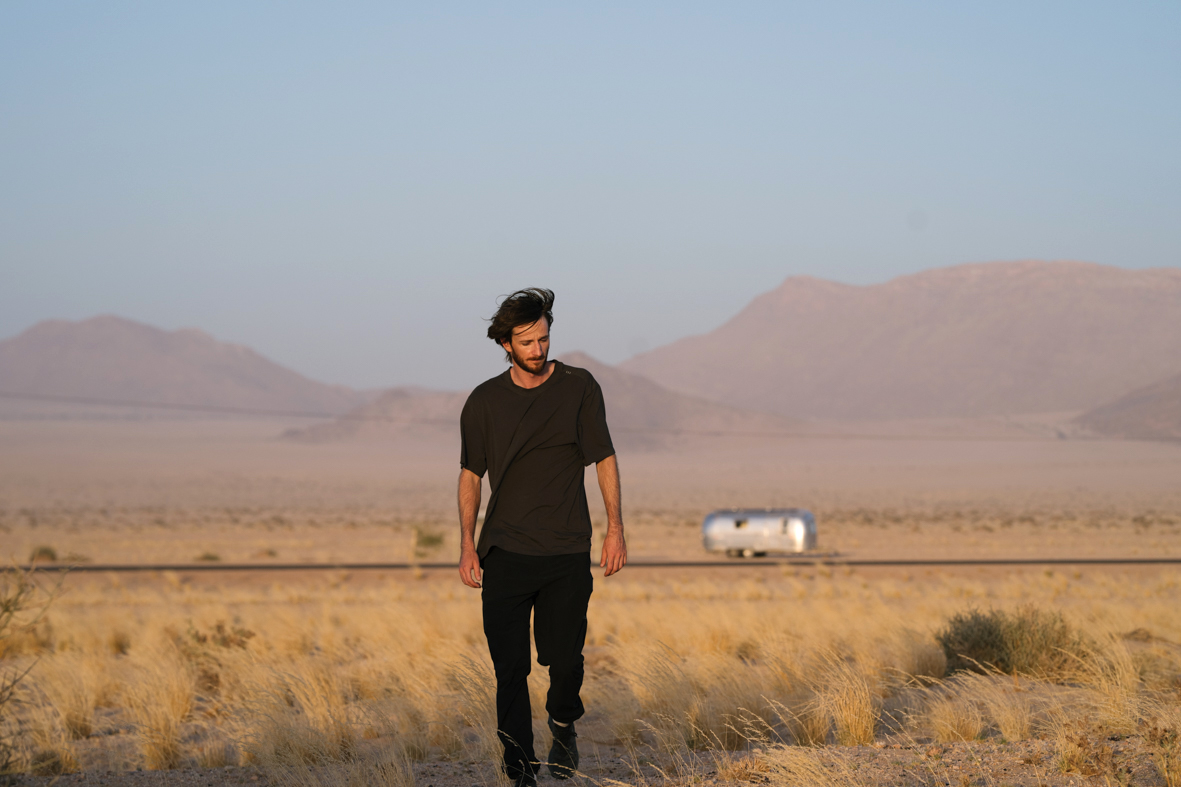
The French producer William Rezé, aka Thylacine, built his reputation on the road, turning train rides across Siberia and journeys through the Arctic into sprawling electronic soundscapes. His music has always been about more than just beats and melodies—it’s about movement, place, and the way sound can capture memory. But with Shark Island, a collaboration with filmmaker Cécile Chabert, he shifted his focus from landscapes to history, diving into one of the darkest and most overlooked chapters of the 20th century: the genocide of the Herero and Nama peoples in Namibia under German colonial rule. What began with a book and a series of interviews evolved into an immersive project blending electronic production with the voices of a Nama choir, recorded inside a German-built church constructed by survivors of forced labor.
The result is a work that balances art and testimony, using music and film to shed light on a past that remains painfully relevant today. In conversation, the duo reflect on how Shark Island came together, what it taught them about respect and memory, and why projects like this are as much about the future as they are about the past.
Indie Sound: How did you first develop an interest in music? Was there a specific moment or event that sparked your passion for creating?
Thylacine: My parents (who were not musicians or artists) made me choose an instrument when I was six years old. I got into music very early without really thinking about it. I was fine with it and did well, but I wasn’t passionate. I only decided that music would be my life much later, at nineteen, while watching movies in art school.
Indie Sound: What music did you listen to growing up? Were there any particular artists or genres that you remember influencing you early on?
Thylacine: I think the one that really got my attention when I was a kid was Moby, because it was the first time that I was seeing a guy making pop music without necessarily singing on it.
Indie Sound: Your collaboration with Cécile on Shark Island brings together the haunting history of the Herero and Nama peoples with modern electronic music. What was your initial inspiration for blending these two worlds, and how did you approach the cultural sensitivity required for such an intense subject matter?
Thylacine: I think the first thing that got me into it was a book called The Blue Book, and at about the same time Cécile interviewed politicians who talked about the genocide and Shark Island. The book moved me deeply, and the interviews made me realize it was still a subject nowadays. So we went there, met some people, and after a long conversation with a Nama chief, he asked us to do our best to talk about that part of history. I believe what I do best is making modern music, so I started working on a track and then on lyrics that I showed to the Nama chief for his approval.
Indie Sound: Working with the Nama Choir was a significant part of this project. Could you share what the experience was like, both musically and emotionally, especially given the powerful history that these voices carry?
Thylacine: Firstly, it was hard to find a Nama choir. After the genocide, the Nama people became a very small minority. A lot of people we met were not interested in the past because they were neither Herero nor Nama, and therefore had no interest in bringing back that subject, as it could potentially favor the Herero and Nama against them.
We had great times with the choir, inviting everyone for dinner after the rehearsals, and it was an amazing experience when all the pieces came together and we managed to record in such a symbolic place as the Felsenkirche. The process to arrive there was long but meaningful, so it was a very emotional moment.
Indie Sound: You recorded the lyrics in a German church built by forced labor from survivors of the
Shark Island camp. What was the atmosphere like in this space, knowing its dark
history? How did this setting impact the music and your process?
Thylacine: It was heavy, of course, but for all the singers it was their first time recording, so there was also excitement. The project was surprisingly well received by the people in charge of the church, so in the end it was a happy moment, I think. I believe we can hear this depth and feeling of achievement in the recording.
Indie Sound: As a musician who’s not native to the culture you’re exploring, how did you navigate
the complexities of representing the Nama and Herero peoples respectfully through
your music? Did you face any challenges or learnings in the process?
Thylacine: I don’t remember facing any major challenges, to be honest. I had many questions before going there, but once on site, things turned out to be quite simple in that regard. My goal is not to represent the Nama and Herero peoples. What I do is collaborate with inspiring people and find inspiration in learning about other cultures and histories, and in my opinion, it’s quite easy to be respectful if you are genuinely interested and approach things the right way. It’s not like I’m just taking a random sample from YouTube – I’m there in person, so I can explain what I’m doing, ask the people involved what they think about it, and discuss how it should be done.
For young musicians or producers starting out, what advice would you offer? Are
there any particular lessons you’ve learned over the years that you wish you’d known
at the beginning of your journey?
Thylacine: I think everybody has to follow their own path, so I’m not sure about giving advice. But don’t forget to sleep well and exercise, ahah. It seems dumb, but those are the only things I regret not doing when I began.
Indie Sound: How did this collaboration come about between you two, whose idea was it initially?
Thylacine: Cécile was more involved in the historical aspect of the country from the start. She actually learned about the genocide of the Herero and Nama at the Kigali Genocide Memorial in Rwanda while working on another project. She was the one who pushed me to go deeper into that subject and wanted to go to Shark Island. And then I got the idea of the choir.
Indie Sound: Given the complexity of this project, what was the creative dynamic between you two
like? How did you combine your respective expertise in music and filmmaking to tell a
story that is both artistic and historically significant?
Thylacine: We are pretty used to working together now. It’s been six years since the first music video, so I think we know each other’s strengths and how to connect them. I think the key is that we just talk a lot and constantly share ideas. Being a team of two is good for quickly setting aside bad ideas, but also because we don’t need too many people’s approval to move forward.
Indie Sound: This project dives deep into a painful and often overlooked chapter of history. How
has this experience shaped you both personally, and what do you hope audiences
take away from Shark Island?
Thylacine: Personally, it shook me to discover new things humans can do, and it really made me question human nature. But the project also inspired me to continue creating art with a deeper meaning, if I can, and to be as attentive as we were there about how to do things.
Cécile: I was struck by the fact that an episode like this, whose consequences are still very present for the peoples who suffered the genocide, could have been almost forgotten – or at least so little known in Europe. We almost made this journey without being aware of it, and it would have been such a shame to come back with a sound and visual work that hadn’t taken it into account.
Shark Island seems to be a call to remember and acknowledge a past that risks being
forgotten. What kind of impact do you hope the film will have on contemporary
discussions about memory, history, and cultural survival?
Cécile: In the times we are living in, I think it is more important than ever to remember events like these. Above all, we promised the descendants of the genocide victims to speak to ‘our people,’ to remind them of what they went through. If this film can offer them a form of reparation, however small it may be, that would already mean a lot.
Indie Sound: The film’s aesthetics, from the visuals of Shark Island to the immersive music, are
striking. Were there any particular challenges or revelations when it came to marrying these elements in a way that felt both respectful and creative?
Thylacine: The revelation for me was how the images of the White Flag Day Ceremony with the Herero in Omaruru could suddenly feel so synchronized with what we did in Lüderitz with the Nama choir. Two different communities living quite far apart, but sharing this tragic past on Shark Island.
Cécile: I wanted to film in the simplest way possible, with an approach close to documentary, without giving in too much to the aesthetic ambition that music videos often call for. The idea was for this video to primarily serve as a faithful testimony of the encounters we had and the moments we experienced. Given the magnitude of the subject we were dealing with, I wanted to remain as accurate as possible, and therefore as simple as possible.
Indie Sound: How has this project influenced the direction of your future work? Will this journey in
Namibia shape the projects you undertake going forward?
Cécile: Undeniably, I have never felt my work had as much meaning as it did with this project. And I know that from now on this will be something that guides both my artistic and professional choices.
Official website of Thylacine:
https://www.thylacinemusic.com
Official website of Cécile Chabert:
About the Author