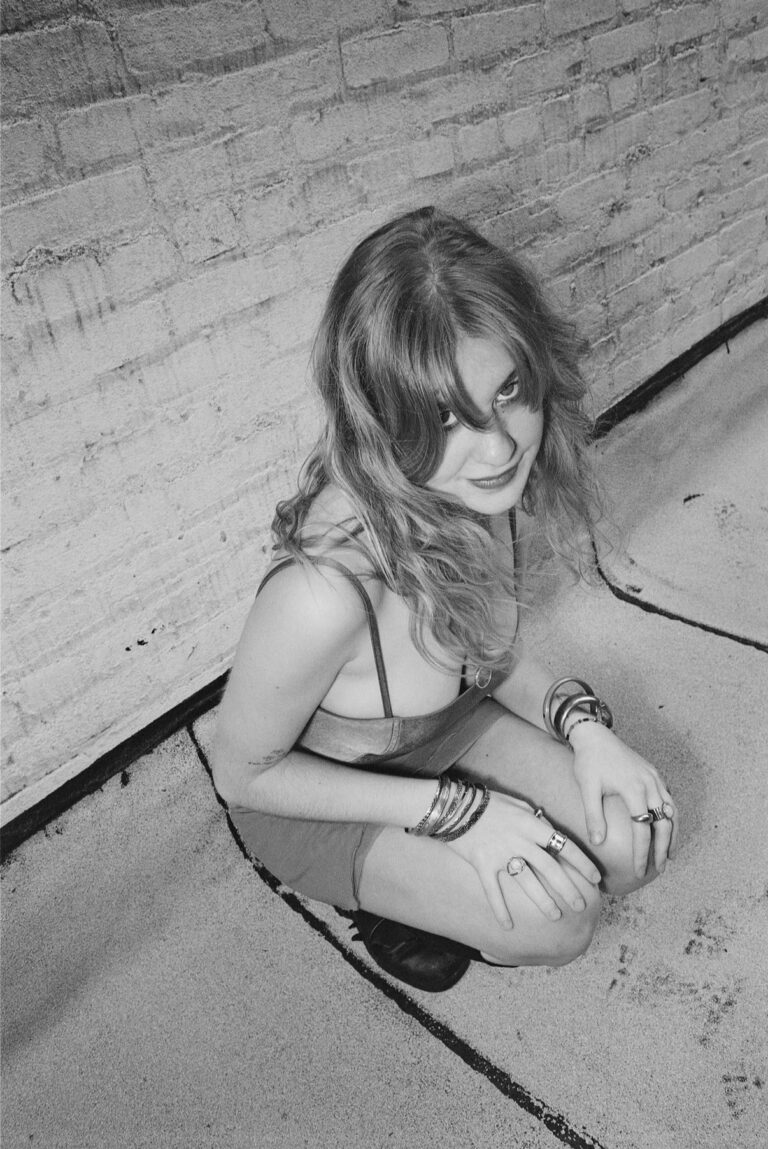
Sarah Kinsley
After touring with Mitski and Weyes Blood, Sarah Kinsley kicks off her next chapter with Fleeting — a sweeping single born in the back seat of a New York cab.
Sarah Kinsley’s debut album Escaper was the kind of record that critics dream of discovering: hailed as “a life-affirming debut” (The Observer) and “dramatic, ambitious arrangements with a lyrical sensitivity that’s truly transporting” (DIY). Now, the New York–based singer-songwriter returns with Fleeting, a euphoric yet melancholic single that distills the rush of change into four minutes of dance-pop transcendence.
Written in bursts of inspiration on cab rides across Manhattan and co-produced with longtime collaborator Jake Aron, Fleeting is a heady anthem about impermanence: “Fleeting is my catharsis: an anthem dedicated to the flood of change,” Kinsley says. “It is my homage to the transience of what it means to be alive: who am I if every moment is fleeting?” It’s a rallying cry for the dancefloor, a song that asks listeners to throw their arms up not despite life’s volatility, but because of it.
The release signals the beginning of a new project for Kinsley, one that builds on the momentum of her critically acclaimed debut. Escaper not only earned praise from outlets like DIY, Far Out, and NME—who claimed “there’s a whole universe inside of her”—but also caught the attention of fellow pop provocateur Chappell Roan, who publicly spotlighted Kinsley’s music earlier this year.
For Kinsley, the ascent has been rapid yet deliberate. Trained as a classical musician but carving her own path as a self-taught writer and producer, she’s cultivated a devoted following through her smart, savvy presence on TikTok, her commanding live performances, and tours with the likes of Mitski, Weyes Blood, and Sylvan Esso. That she’s sold out headline shows across the globe suggests her music resonates as much in sweaty club rooms as it does under the critical gaze.
With Fleeting, Sarah Kinsley leans into the paradox of creating pop music that feels both expansive and intimate, otherworldly yet deeply grounded in human vulnerability. It’s a song about change, but also about permanence—the permanence of that moment on the dancefloor, where transience turns, briefly, into eternity.
About the Author