Agnesz Anna
“Power” as Fracture: Love, Control, and the Cost of Conviction
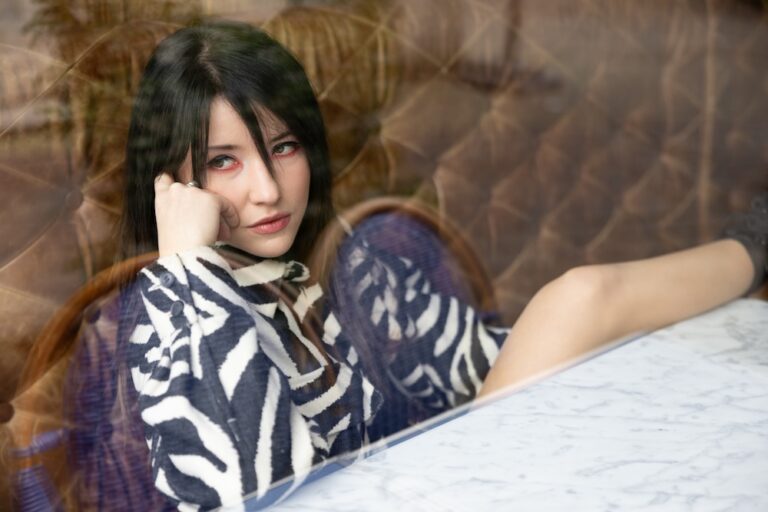
Polish-born, globe-spanning artist Agnesz Anna turns up the voltage with her new single, “Power.” She sheds the gentler hues of her earlier work and steps into something rawer, embracing her most rock-driven sound yet. In a musical landscape obsessed with invincibility, Agnesz Anna does something radical: she questions her own strength. “Do we have a clear viewpoint?” she asks.
Released today, “Power” offers a glimpse into Anna’s forthcoming debut album, out November 20 — a project years in the making and charged with the emotional complexity of an artist who has lived across borders, both literal and emotional. Raised between Poland, the Netherlands, Spain, and New York City, and shaped by her story of adoption, Anna grew up in motion. That quiet sense of displacement runs through every note she sings.
Her music lives at the intersection of worlds: timeless soul, modern indie pop, pop-rock and a lyrical candor that feels almost literary. If her past releases flirted with vintage influences — echoes of Joni Mitchell’s poetic introspection and Stevie Nicks’ mystic vulnerability — “Power” feels like the moment she steps into her own mythology. It resists the easy heroics of the genre it’s named after, wrestling instead with what control, faith, and survival actually mean when the world keeps demanding certainty.
“It’s not power as domination,” Anna says. “It’s power as fracture — something that both sustains and corrupts.”
The production mirrors that duality. Co-produced with her husband and creative partner, Tim van Elten, “Power” is built on restraint. Every sound feels chosen for its emotional truth. The arrangement leans on organic textures — resonant guitars, live drums, and an unflinching vocal that carries the song with precision and strength. Anna’s voice doesn’t break; it commands. Its steadiness becomes the song’s emotional core, a force of clarity in a world that keeps shifting.
In a cultural moment where empowerment anthems often equate volume with conviction, “Power” dares to be uneasy. It’s more inquiry than statement, more meditation than manifesto. The chorus, looping like an inner dialogue, turns weariness into revelation. Strength, in Anna’s world, isn’t about dominance but awareness — a kind of grace forged in exhaustion and empathy.
That tension — between faith and fatigue, conviction and confusion — runs through much of her upcoming album. Written and recorded largely in her home studio in the Netherlands, the project marks a creative rebirth. She and van Elten taught themselves production, trading late nights in rented studios for total independence. In an era of machine precision and algorithmic pop, Anna’s devotion to imperfection feels like protest. She prefers the creak of wood, the air between notes, the human honesty of live performance. “I wanted to make a record based on real human effort,” she explains.
Anna’s songs — whether the aching “Songbird,” inspired by the suffering of children in conflict zones, or the darkly narrative “Serial Killer,” a folk-country meditation on societal collapse — are bound by empathy. Her training at New York’s Lee Strasberg Theatre and Film Institute sharpened that instinct: every lyric feels like a scene, every melody like a performance stripped of pretense.
“Power” sits at the moral center of that vision. It plays like a hymn for the disillusioned — a secular psalm for people trying to stay awake in a world that rewards numbness. Its verses unfold like blessings only to be undercut by the weary insistence of the chorus. This isn’t empowerment as victory, but as survival.
And that’s what makes Agnesz Anna such a compelling new voice in indie pop. She isn’t chasing trends — she’s excavating meaning. Her art doesn’t offer closure; it invites reflection. In her hands, pop becomes philosophy, and melody becomes a form of moral inquiry.
By the time “Power” fades, its questions linger: What does it mean to be strong when the world feels so fragile? Can awareness itself be a form of resistance?
Agnesz Anna doesn’t claim to have the answers. She keeps asking the right questions — and that, perhaps, is the truest kind of power.
Watch the official music video for Power here.
About the Author