Pete Pom
The Philadelphia artist on channeling emotion through layers of sound, and keeping the shoegaze spirit alive.
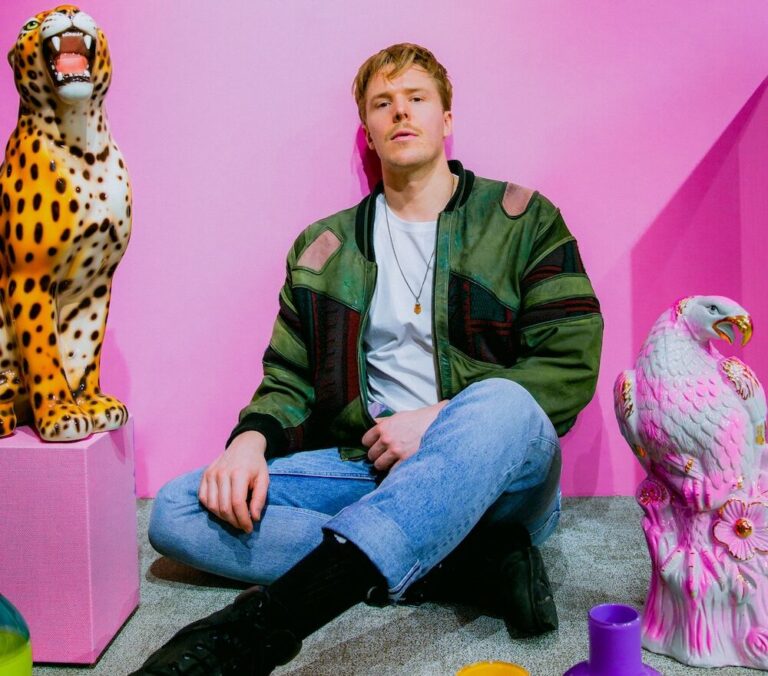
There’s a certain magic that lingers in the quiet corners of memory — and few artists capture that feeling quite like Pete Pom, the creative force behind Dramamine. Emerging from the Philadelphia music scene in the late ’90s, Dramamine began as a full band blending raw emotion with the hazy textures of indie rock’s golden age. After a brief run of local shows and early recordings, the project quietly faded, leaving behind echoes of a timeless sound. What began as a solitary experiment quickly evolved into something more — a full creative rebirth under the familiar name of Dramamine. The result is Heights Lake, a haunting and heartfelt EP that feels both like a homecoming and a revelation.
Heights Lake feels like a reflective swim through memory — each layer of reverb and melody rippling with sentiment. In this conversation with Indie Sound, Pom opens up about rediscovering his passion for songwriting, the influence of bands like Slowdive and The Verve, and how working alone has shaped the sound and soul of Dramamine.
Indie Sound: When did you first get into music and how did you decide to pursue this passion as a professional? What was your first instrument?
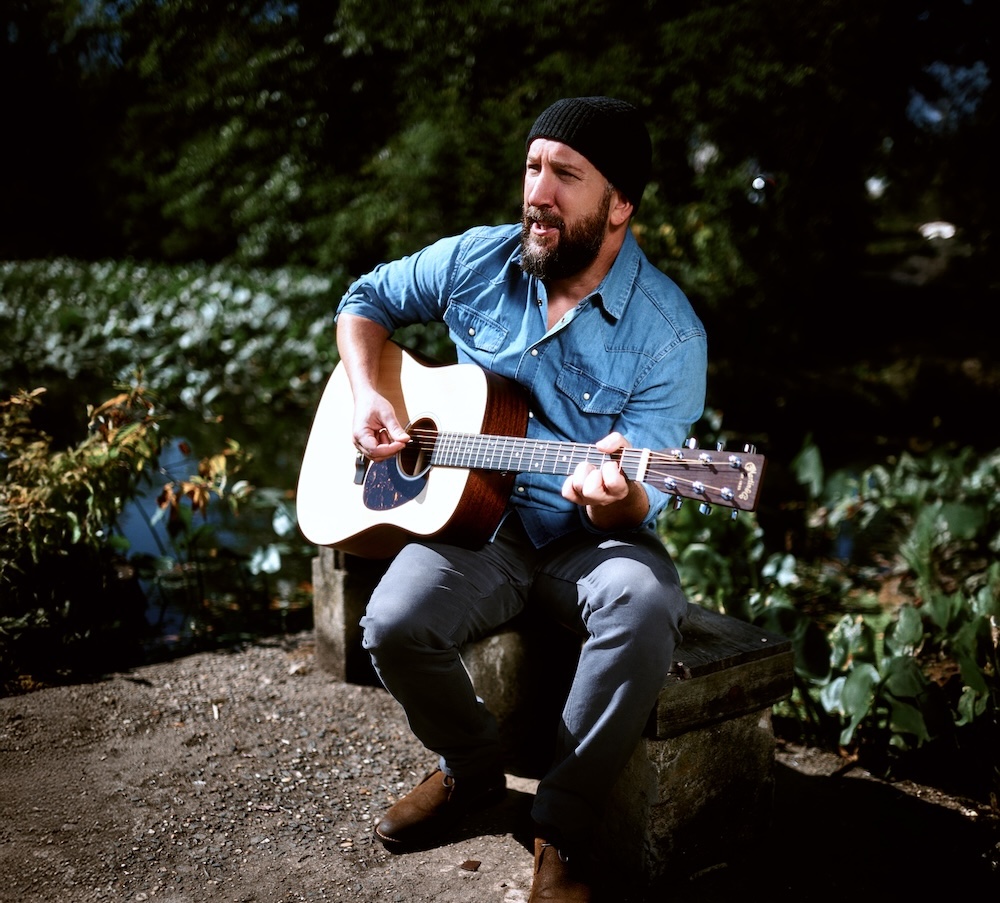
Pete Pom: I’ve been playing guitar and writing songs since I was a teen, recording acoustic songs in my bedroom like Lou Barlow (Dinosaur Jr., Sebadoh). Dramamine started as a full band in the late 90s and we used to play shows in the Philly area and then disbanded after two years. I started picking it up again as a solo project after COVID and started recording new songs.
Indie Sound: Dramamine is a solo project — how does working alone shape your creative process compared to collaborating with a band?
Pete Pom: Great point, being solo does help shape the music, as well as recording at home. I think it lends a bit of an isolation feel to the music and maintains that quiet, nostalgic feel to back when I recorded on a tape deck all those years ago. There are times when I miss playing in a full band. For me, you get a better full sound and other members often add elements and feel that I may not have thought of.
Indie Sound: Is there a reason you prefer to work solo or is it simply a sort of practical necessity?
Pete Pom: It’s really out of necessity and it’s easier to record at home alone. Also affordability — ha — I don’t make enough from music to record in a studio.
Indie Sound: How did your relationship with the shoegaze genre begin? Have you experimented with other genres, if so, which?
Pete Pom: I remember hearing Slowdive for the first time and being blown away by the sounds and emotion they created with guitars and effects and was instantly drawn in. They were the gateway for me to favorites The Verve, Ride, Swervedriver, and Catherine Wheel. It’s nice to see the genre get a bit of a renaissance. I also enjoy and dabble in singer/songwriters like Elliott Smith, Bon Iver, Iron & Wine. Those two influences are what I think lend to the unique sound of Dramamine.
Indie Sound: Shoegaze and dreampop have such a rich lineage, how do you navigate honoring those influences while carving out your own voice?
Pete Pom: I certainly don’t shy away from “borrowing” from my influences and trying to recreate the shoegaze sound in my own way. I think that by combining my singer/songwriter sensibilities with layered shoegaze sounds provides an opportunity to be unique. A lot of shoegaze bands now are going louder and fuzzier, which is great — it’s just not me, and my influences are a bit more varied. I also love The Cure! There’s often a little post-punk influence in my music as well.
Indie Sound: There’s a strong sense of nostalgia and introspection in your music. Are those themes rooted in personal experiences, or more in the mood you want to create?
Pete Pom: A little bit of both actually. I’m getting up there in age so I think it’s natural to look both back and forward. Once I decided on the title Heights Lake for the album, which is the lake in the town I grew up in, I was committed to creating an album and lyrics that explored those topics. I’m glad that you caught that from the album.
Indie Sound: You’ve cited bands like My Bloody Valentine and Airiel as inspirations. What specific elements from their work have shaped your sound the most?
Pete Pom: What is there to say about MBV that hasn’t already been said? For me, I pull from their creation of that modern wall of sound and their ability to create a full sensory experience from the music. Airiel is one of the best doing it and one of my favorite shoegaze bands. They separate themselves because they don’t shy away from blending genres and taking it in a new direction. In Your Room is a classic.
Indie Sound: What emotions or concepts were you trying to capture with your new EP Heights Lake?
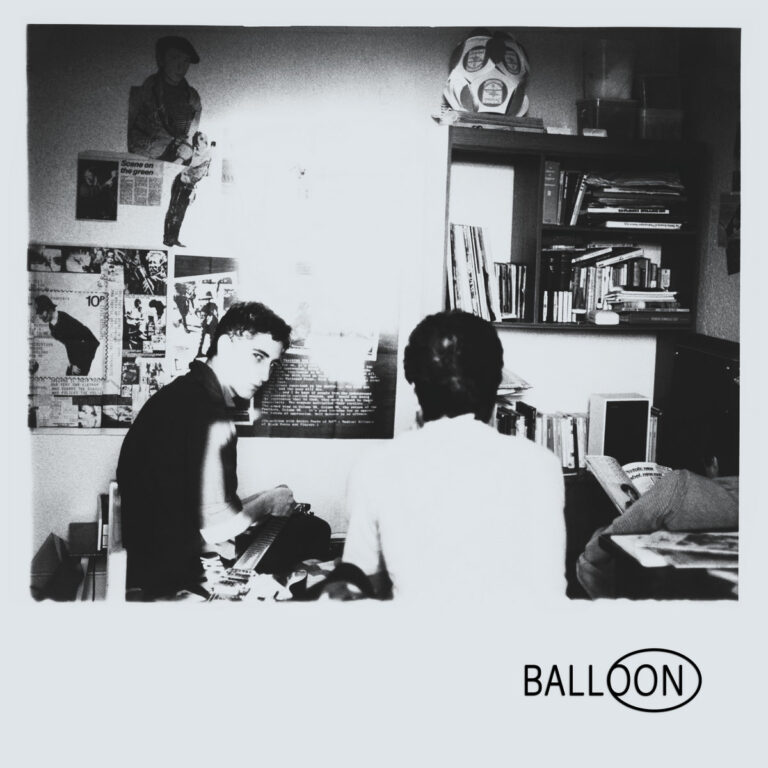
Pete Pom: I was so fortunate to find an image for the album cover that captured the concept of the music. The house sits perfectly isolated on the lake with a mirrored reflection in the water. I’m not sure I can explain in words much better than the picture does.
Indie Sound: Was there a particular track on the album that acted as the creative anchor or set the tone for the rest?
Pete Pom: The first track, Dearly Beloved, really did set the stage for the rest of the album. I leaned into more acoustic tracks after that was completed. Lyrically, that song also sets the stage as it explores new beginnings and romance and allowed me to tell the story throughout the rest of the album.
Indie Sound: How did the production process for Heights Lake differ from your earlier work?
Pete Pom: I’m not technically trained so I mostly record by ear, but I find the more I do the better I get and the more tricks I learn. Because of those limitations, I owe a ton of credit on the final sound to Lance Fohrenkam, who mixed and mastered the final album. He’s taken the sounds to a level I could not achieve on my own.
Indie Sound: The record has a very immersive, almost cinematic quality. Did visual imagery or specific places influence the writing or recording process?
Pete Pom: Besides the obvious — the real Heights Lake and hometown — there isn’t really any specific imagery or places that come to mind. I do sometimes envision the music working perfectly as the closing scene for a season finale of a sad show. One day that just might be my ticket to reaching the masses haha.
Indie Sound: How do you approach layering and mixing to achieve that dreamlike atmosphere?
Pete Pom: Layering is such an important tool to get that wall of sound. I like to double up the same guitars with various effects and often add lower layers of strings, piano, or other ethereal keyboard sounds to add depth. I love when they add those subtle notes to the song like the strings do in Dearly Beloved. I’m still learning to balance it all, so I try not to add competing melodies — usually I try to carry the chords or mimic melody.
Indie Sound: Are there any unconventional techniques, pedals, or studio tricks you used on Heights Lake that shaped its sonic character?
Pete Pom: I’m very unconventional when it comes to pedals — I use none! I rely mostly on my Line 6 M13 Stompbox for the guitar sounds. I find I can achieve the sounds I’m looking for this way and enhance when needed with plugins.
Indie Sound: Do you usually start working on a song with the lyrics or the music?
Pete Pom: Most of my songs start with the music — either strumming the acoustic or creating sounds with my electric. I usually just start singing along with a set of words that don’t make sense but match the music. I’ll then go back and edit the words to a certain feeling, but sometimes they just end up working. For Into the Past, I believe the first thing I sang — “Don’t, don’t push me away” — stayed in the song and set the theme of the rest of the lyrics.
Indie Sound: How has your vision for Dramamine evolved since its inception?
Pete Pom: I’m just more comfortable in the style that I created and worry less these days about growing numbers and acceptance. In the past, I definitely overthought if the music needed to be more a certain way or approachable to more people. Heights Lake validated me a bit more that there is still an audience for the type of music I create.
Indie Sound: Shoegaze and dreampop have seen a major resurgence in recent years. How do you feel about being part of this new wave?
Pete Pom: I love it! It’s so exciting to see Slowdive get the type of recognition they deserve and reach a new younger generation. I also like to see new bands like Wisp taking it in new directions while honoring her influences as well. The only drawback is the divisiveness around what is shoegaze and what is not, and the debate over old bands versus new — but I try not to dwell in that. It’s just social media fodder.
Indie Sound: What role does performing live play in your artistic expression, given how studio-driven your sound is?
Pete Pom: Unfortunately, I’ve not had the opportunity to play live. I tried to put a band together previously but couldn’t find enough members and honestly not sure I have the time to commit to it. Playing live in the past though does add a different energy. Most of the current songs may be a bit boring to watch live, so I’d try to mix in a few more higher-tempo, louder songs from the catalog.
Indie Sound: How do you hope listeners feel when they’re immersed in your music?
Pete Pom: My favorite compliment is when someone comments they got lost in the music. That means to me that they were able to briefly escape the day-to-day world and think about something emotional — either positive or negative.
Indie Sound: If you could collaborate with any artist — past or present — who would it be and why?
Pete Pom: My dream project would be to work with Rachel Goswell from Slowdive on a solo record. Her first solo record, Waves Are Universal, is so underrated and I’d love to work with her to create the follow-up.
Listen to Heights Lake on Spotify.
About the Author