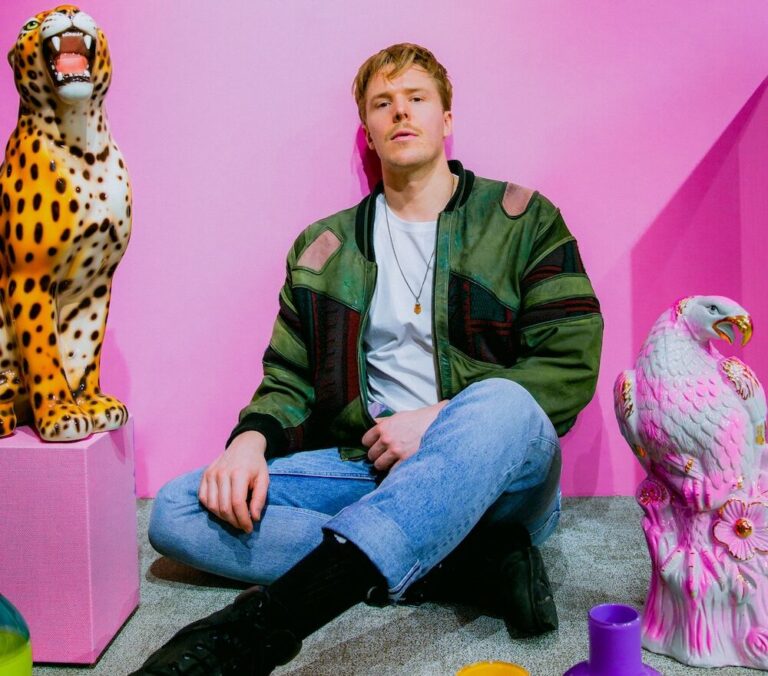
Bevin photographed by Angel Gomez
The Los Angeles artist carves her own path, channeling the ghosts, dreamers, and rebels of the American soul.
In an era when genre lines blur and authenticity is the rarest currency, Bevin stands as a defiant original. The Los Angeles–based alternative rocker has coined her own sonic identity — “American Gothic Rock” — a blend of grit, beauty, and haunting lyricism. Her music carries echoes of her classical beginnings and the raw pulse of the rock legends who inspired her, creating a sound that feels timeless yet entirely her own. It’s music that doesn’t just occupy space — it carves it out, demanding attention.
With collaborations spanning icons like Mötley Crüe, Tim Armstrong, and Jimmy Cliff, Bevin brings both pedigree and fearless experimentation to her craft. Her songs traverse the inner and outer landscapes of the American Dream — how we see the world, and how the world sees us. Within her soundscapes live the ghosts, dreamers, and rebels who mirror the fractures and beauty of modern America. For listeners seeking music that defies cliché and speaks to the fight and spirit of our times, Bevin’s work is more than a sound — it’s a political statement, and a movement taking form.
Indie Sound: Can you tell us about how you first got into music? Which instruments did you first start off with? When was the moment you understood that music is your true passion?
Bevin: I would always sing to myself and my Kindergarten school teacher pulled my mom aside and said “Put her in voice lessons!” Thankfully my parents were amazing and gave me those resources to grow my voice. I was always a singer and dabbled in piano and guitar. As a songwriter the guitar has been my spirit animal so to speak. I knew from an unreasonably young age — I would say 6 or 7 — that I would be a performer and singer.
Indie Sound: You describe your sound as “American Gothic Rock” — a unique new label. How did that identity take shape for you, and what does it exactly mean to you?
Bevin: American Gothic Rock was born out of me trying over and over again to explain to music producers and executives what my “sound” was. I didn’t feel like one particular genre fit what I was doing as a solo artist. I was rock, but it had blues and Americana texture to it. It had elements of pop but definitely did not set me squarely in the category of what pop artists were doing, especially at that time.
Indie Sound: Your music balances “grit, beauty, and haunting lyricism.” How do you find that balance between darkness and light in your creative process?
Bevin: Thank you so much. I think that has always been the goal for me. I want my music to be an expression of a life fully lived — and with the darkness comes the light. I think sometimes artists veer away from tackling difficult subject matter (or they’ve been steered away by their labels). If one person hears my song and says “That is exactly how I feel and what I am going through and I am not alone,” then I’ve done my job as an artist. Songs have saved my life and allowed me to change my perspective, and I aspire to be that kind of songwriter and musician.
Indie Sound: You’ve worked with iconic names like Mötley Crüe, Tim Armstrong, and Jimmy Cliff — each from distinct corners of the musical world. How have those collaborations influenced your sound and songwriting?
Bevin: Oh man, I feel like in working with these legends I’ve been blessed and imprinted upon in a way that’s hard to tangibly describe. They’ve made musical marks on my psyche that come out in my songwriting and musicianship, as well as when I perform on stage. From Mötley I learned the skill of creating a stage presence, story, and vision for your music. From Tim, I learned how to tap into my personal passion and that I could write songs about anything I wanted. From Jimmy, I tried to soak in every moment of his soul and purpose as an artist.
Indie Sound: Who are some other artists that inspire you? Who is your dream collaborator?
Bevin: I grew up with incredible forces of nature like Alanis Morissette, Sheryl Crow, and Fiona Apple. It’s been a delight to see artists like Hayley Williams, Paris Paloma, and Sofia Isella — who are really tapping into the present cultural temperature and aren’t afraid to write music that’s powerful and political. Any of those would be dream collaborators. As a self-described songwriting nerd, I’d also love to collaborate with Taylor Swift. Sitting in a songwriting space with her for an afternoon would be a masterclass for me — every time I write with others, I grow.
Indie Sound: What draws you to explore the “ghosts and fringe dwellers” in your songs — those rebels, dreamers, and visionaries?
Bevin: I think perhaps because I see myself that way. I think we write about what we want to understand, liberate, and celebrate.
Indie Sound: “YOU DON’T DECIDE” is a powerful statement about female bodily autonomy and reclaiming narratives. What was the spark that inspired this song?
Bevin: When Roe v. Wade was overturned it was shocking and enraging. I called up my producer/co-writer Todd Herfindal and said, “I’m extremely pissed off, wanna write?” Todd is an absolutely incredible producer, singer, songwriter, and multi-instrumentalist — and a father to a brilliant daughter — and he said, “Absolutely.” I believe we wrote it in one afternoon; it just flowed out of us.
Indie Sound: You’ve described it as an “open letter.” Who is this letter addressed to, and what do you hope it awakens in listeners?
Bevin: The letter is addressed to the government and anyone trying to tell women what to do with their bodies. Honestly, I hope it just awakens. Every person has a woman in their lives with a story. Listen to them, and get serious about helping protect their bodily autonomy and personal medical choices — because at this point, the government sure as hell isn’t going to.
Indie Sound: What was the most challenging part of writing or recording this track?
Bevin: Just scheduling between the musicians and me — making sure we got everything we wanted on the track! Other than that, the creative process was like therapy.
Indie Sound: Your music often explores different sides of the American Dream — how we see the world and how it sees us. How do those ideas shape the stories you tell?
Bevin: Often, mainstream music offers a singular perspective that may not reach or be tangible for many people. I want to share songs and stories that represent a fuller view of what it is to live and dream in America. Sometimes that reality is harsh and unexpected, and I haven’t shied away from that. A fellow artist once told me I could never have a popular song if I wrote about things that were sad or political — and I’ll refute that till the day I die.
Indie Sound: When you write, do you start with a character, a mood, or a political/emotional statement? Do you write lyrics or music first?
Bevin: It’s different with every song! Sometimes I get a visual or have a dream image that I create from. Sometimes I hear a quote that resonates deeply and I want to explore it through songwriting. And sometimes I walk into sessions with co-writers as a blank slate!
Indie Sound: How do classical music and classic rock — your early influences — continue to inform your current work?
Bevin: As someone who trained in classical voice, I grew up singing Italian arias and Latin hymns and have sung in German, Spanish, and French. My choir days are some of my happiest times; I loved being wrapped in the sounds of ancient choral music. On the other end of the spectrum, I fell in love with grunge music and the artists and songwriting of that era — so I have this rich texture of music swimming around in my brain and heart.
Indie Sound: “YOU DON’T DECIDE” comes at a time when conversations around bodily autonomy are urgent. How do you see the role of artists in cultural and political movements?
Bevin: The personal is political, and I see music as a way to reach people in magical ways that a normal conversation cannot. I stand with Nina Simone when she said, “An artist’s duty, as far as I’m concerned, is to reflect the times.” I’d take that further — it’s my calling to bring awareness to inequities and to help heal. We live in a time where healthcare and food aren’t basic human rights, and that’s sickening. When people are struggling for basic needs, they can’t survive, let alone flourish.
Indie Sound: Rock has always had a rebellious spirit. What does rebellion look like to you in 2025?
Bevin: Rebellion looks like boycotting convenience. Creating community. Creating awareness through art. You can’t argue with corporations or people without empathy or emotional intelligence. Unfortunately, I believe the only way through is a general boycott — they only seem to respond to losing money.
Indie Sound: How do you balance creating art that’s deeply personal with messages that resonate on a collective, societal level?
Bevin: For every big collective issue, there’s a personal issue at the core that mirrors that experience. For me, it comes naturally to tap into that.
Indie Sound: How do you envision American Gothic Rock evolving as a movement — not just a genre label?
Bevin: It’s about creating community, art, and outreach — about seeing another perspective, not just the one forced on us through algorithms or mass media. A great way to explain my genre is through Grant Wood’s American Gothic and the photograph by Gordon Parks inspired by it. For every one of those images, we could have countless response pieces. If we asked every person to create a painting, a play, a song about the American dream, there’d be infinite expressions of that national myth or narrative.
Indie Sound: What stories or themes are you excited to explore in your next body of work?
Bevin: I’m currently writing and recording my next full-length record, and I’m excited to explore our ancestors, our societal structures, and the beauty and fragility of life. What makes someone a hero or a villain?
Indie Sound: If your younger self could listen to “YOU DON’T DECIDE,” what do you think she’d say?
Bevin: I think my younger self would be proud that I’m still standing up for what I believe is good and true — and hopefully would be impressed with my vocals!
Indie Sound: And finally — if someone has never heard your music before, what’s the one thing you hope they feel when they press play?
Bevin: It feels like coming home.
About the Author