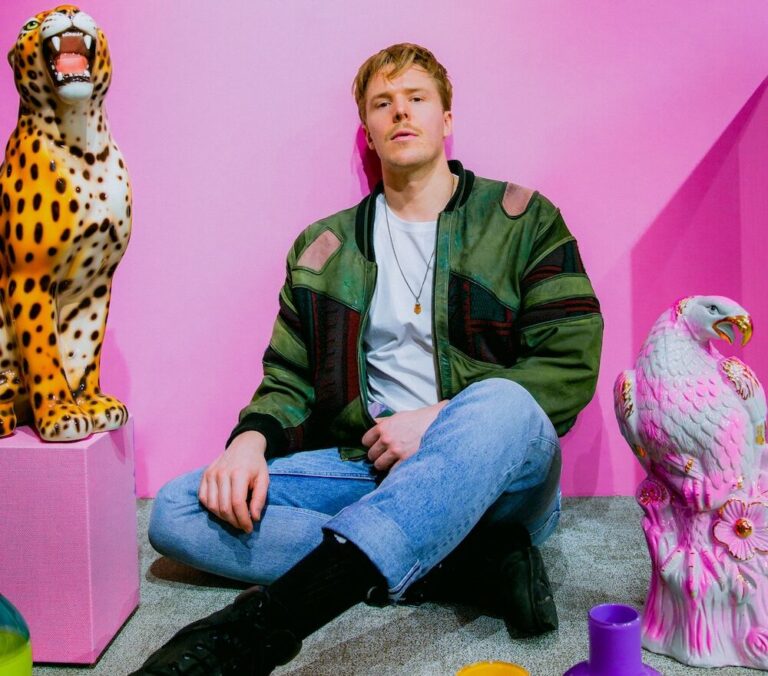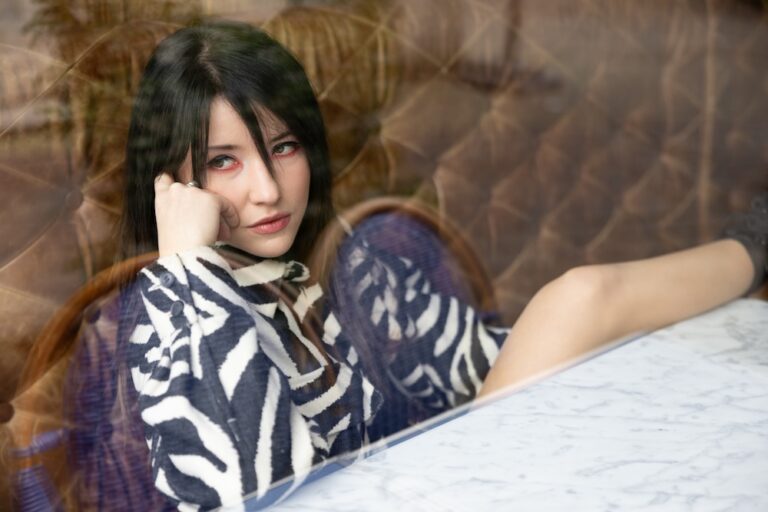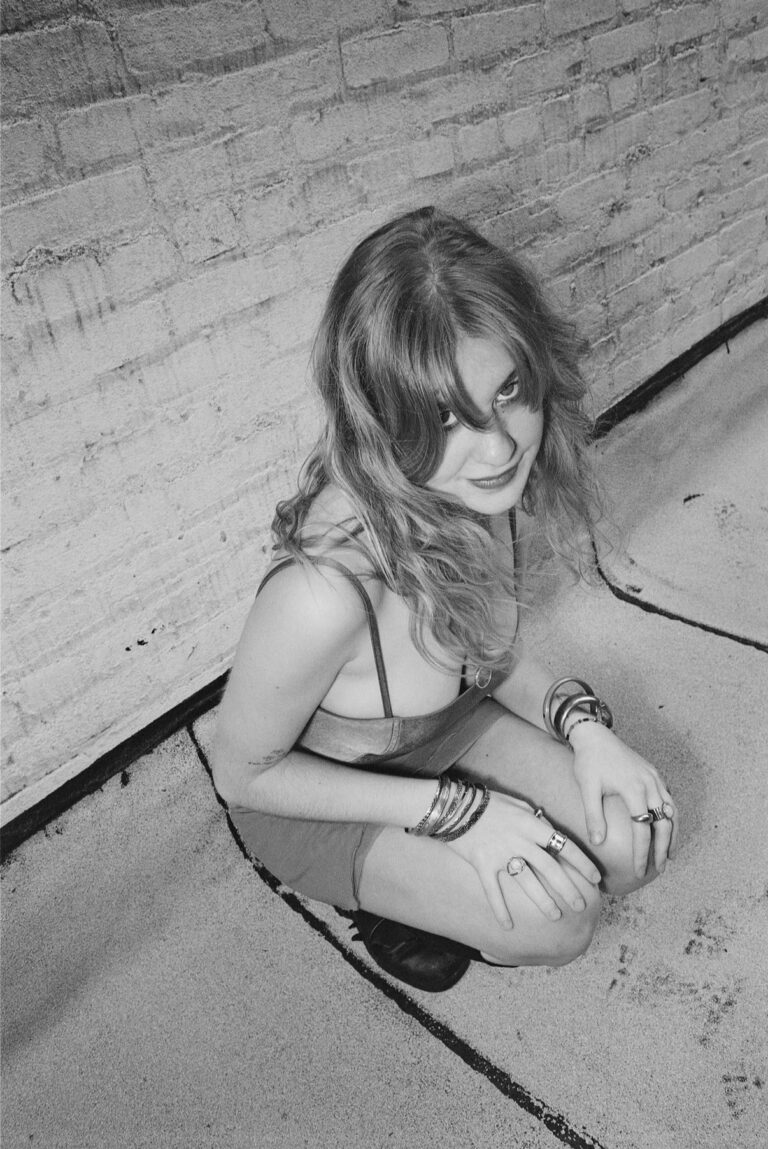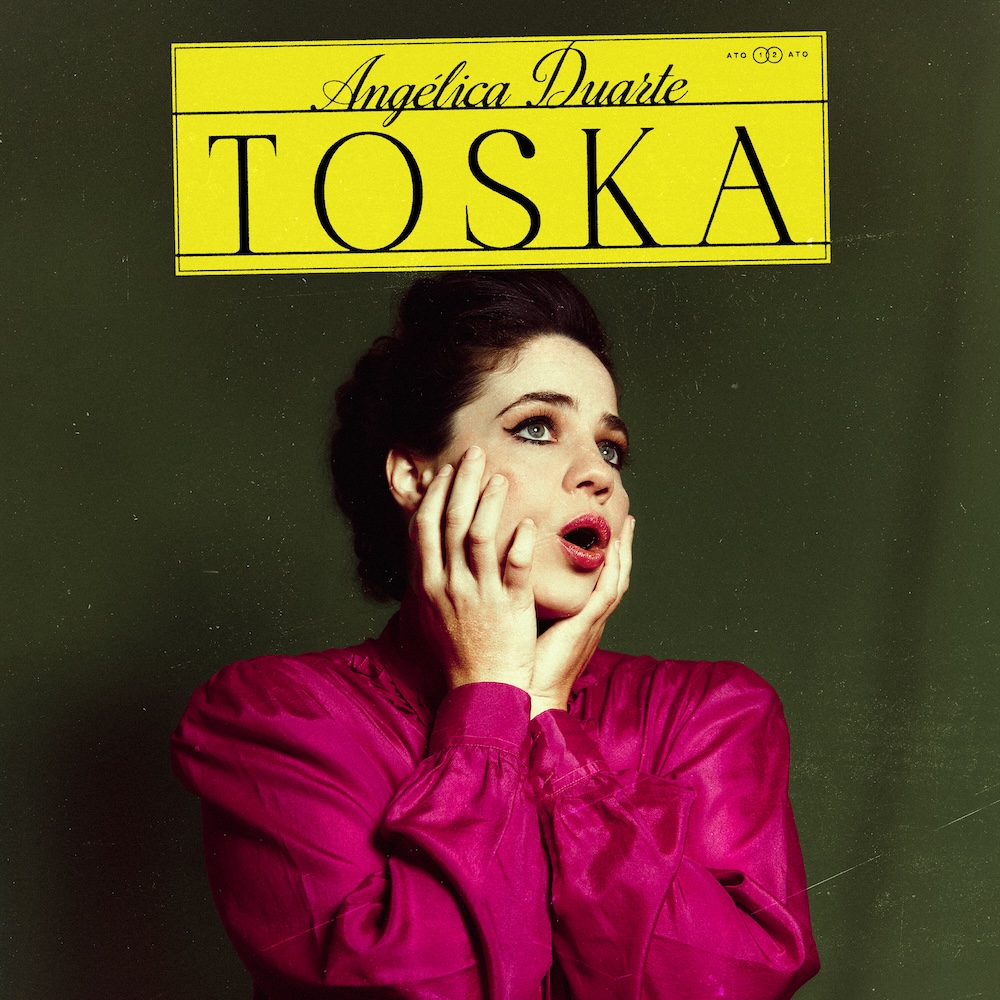
Angélica Duarte - TOSKA
Through songs like “Barriga de Lanche,” Duarte tackles body image, Catholic guilt, and female empowerment with irony and emotional depth
Brazilian singer, songwriter, and producer Angélica Duarte returns with TOSKA — released today — her boldest work to date, a record that dives headfirst into electronic and pop sounds without abandoning the lyrical sharpness and emotional depth that define her artistry. Following the debut Hoje Tem (2021) and the Odara EP (2018), TOSKA marks a turning point: a home-produced album that merges danceable beats, layered synths, and introspective storytelling. Moving away from the full-band arrangements of her previous releases, Duarte embraced a DIY approach, crafting each song from her home studio in Rio de Janeiro and the result is a striking balance between analog intimacy and digital experimentation.
Across ten tracks, TOSKA explores the tensions between melancholy and movement, irony and sincerity, faith and freedom. From the self-acceptance anthem “Barriga de Lanche” to the Hilda Hilst-inspired “Gostuesso,” Duarte weaves poetry, feminism, and humor into a soundscape that feels both distinctly Brazilian and universally relatable.
What inspired the title TOSKA, and how do you feel it reflects the duality between your classical roots and contemporary pop identity?
Angélica Duarte: That’s a tricky first question, because this is a difficult title to be translated, but TOSKA mixes a reference to Puccini’s opera “Tosca” with a word in Portuguese, “tosca”, that means something like clumsy, something not really well finished. The “K” is just a millennial touch that we Brazilians used to put into our online vocabulary back in the early 2000’s.
Who are some of your biggest musical influences, and how have they shaped your creative process?
Angélica Duarte: I’m deeply influenced by indie and alternative rock from the 90s, bands like Radiohead, Garbage, Hole and others really motivated me to learn electric guitar in my adolescence. I started composing songs when I was about 14 years old, but as time went by, I became very critical with my own songwriting and singing, so I ended up shutting that part of myself for quite a while. During that creative rupture, I started to study music from a technical perspective, taking classical singing lessons. That gave me the strength to shape my voice into new ways, and over time I got back to composing and started producing my own music. It was a long process of self-acceptance and discovery.
How did the process of producing TOSKA entirely in your home studio shape your creative freedom compared to working with a full band on Hoje Tem?
Angélica Duarte: I had a lot of time to learn how to be friends with the studio and all its gadgets. I’m still in the process of being more articulate with technology. I’m such an analog person that my new album refers to a form of music that doesn’t involve cables and electronics, but I’ve learned A LOT. Practicing, recording different instruments, and constantly changing ideas and arrangements became the richest and most liberating part of creating this album.
What’s the most challenging part of being an independent artist today?
Angélica Duarte: Money. And I feel like we don’t really have a solid independent music scene here in Brazil. We are all fighting for space.
“Barriga de Lanche” became a standout single before the album release. What was the story behind writing it, and why did you choose it to represent this new phase of your work?
Angélica Duarte: I’m in my 30s and as a female artist I used to struggle with not being in the perfect bikini shape. That changed when I realized that people are giving up the best things in life just to look a certain way. I’m alive for a bunch of reasons, and being pretty for the patriarchy is not one of them. Not anymore. But yes, I do feel pretty in my own skin, and I felt the need to share that sensation with those who are struggling with body image issues.
The record moves between high-energy electronic beats and a certain melancholic tone. How did you balance those emotional contrasts in the tracklist?
Angélica Duarte: All the albums I love have some contrast in it. I think that it’s an obligation of the artist to cause impact, and I personally hate how pasteurized the popular Brazilian music has become. I feel like the album, any album, should tell a story, and stories can’t be boring and contrast free.
Your lyrics touch on themes like Catholic morality, body image, and feminism. Was there a particular event or realization that pushed you to explore these subjects more directly in TOSKA?
Angélica Duarte: I feel like those themes dialogue with the fact that I’m a woman and I have the power to talk about how difficult it can be sometimes. There are, in this album, humorous ways to explore sad themes. I like to play with words and sounds. I know that the audience will understand the irony present in those lyrics.
You collaborated with artists like Gabi Buarque and Billy Crocanty on this album. What do you look for in a creative partnership, and how did those collaborations influence the final sound?
Angélica Duarte: Chemistry is very important. We can’t fake it. Gabi Buarque is my most successful collaboration in songwriting; I absolutely adore her flow. In this album I also invited some instrumentalists that have been friends for a long time and who I trusted to bring the most accurate and sparkling sound for the album. Billy Crocanty is a hilarious artist who’s in a band called Biltre. It was my first collab with him, and we really got along and had a lot of fun in the studio.
You’ve mentioned artists and genres from Radiohead to funk carioca as influences. How did you weave these seemingly different references into a cohesive sonic identity?
Angélica Duarte: I have a bachelor’s degree in Arrangement, and also, I’m a person who listens to a lot of different genres of music. That made it possible for me to mix unobvious rhythms. We can’t label every music ever made. I love this.
“GOSTUESSO” includes a poem by Hilda Hilst. How did her writing impact your own approach to songwriting and vocal performance?
Angélica Duarte: Hilda Hilst was a Brazilian poet ages ahead of her time. She died in 2004. Hilda wrote about sexuality in a way almost no other woman contemporary to her ever talked about, at least in arts. To maintain the feminine authorality in this album, I invited Billy to read her poem in GOSTUESSO.
How did working as both the producer and performer on TOSKA challenge or empower you during the recording process?
Angélica Duarte: That experience came with a lot of challenges. One of the biggest was that my partner was in charge of mixing and the sound engineering of the album. If we survived that, we can go through some rough shit! But seriously, I learned a lot of new things and what made me proudest was the fact that I recorded all the keys and arranged the synths. I had never had this experience before TOSKA. It was surreal, even creating a synth solo on “Day by Day”. By the way, this is my favorite track on the album.
Many songs were born from everyday experiences and improvisation. Can you share an example of how a simple moment evolved into a finished track?
Angélica Duarte: It starts with a joke and becomes something serious. I wrote “Barriga de Lanche” right after ordering snacks. Then I spent months with the synth intro recorded on Ableton Live before starting to create the arrangement.
You’ve often spoken about female independence in the music industry. What does creative autonomy mean to you today, after completing TOSKA?
Angélica Duarte: Something I intend to achieve in this lifetime. I don’t feel like I’m 100% autonomous yet. And to be frank, as an independent artist I could use some (a lot of) external help to reach a larger audience. And, we, as female artists, can’t depend on men to express ourselves. I think the harder we study and connect with each other instead of competing, the more we will reach better results in collaborations.
How do you imagine the live performance of TOSKA—will it carry the same electronic atmosphere or evolve into something new on stage?
Angélica Duarte: I’m still elaborating on that. I think the charming answer would be “Wait until it’s time” but the truth is that reproducing the album’s sound live requires a lot of planning and money. I’m still deciding the format of the show, but I certainly want it to have a rock n’ roll vibe, despite the electronic stuff.
Finally, looking back from Odara to TOSKA, how would you describe your artistic evolution, and what do you hope listeners take away from this new chapter?
Angélica Duarte: Back to the independence topic. I’m much more independent compared to the Odara era, back then I had a boyfriend who was a respected musician and arranged Caetano Veloso’s songs for me to sing. Now I’m a producer and singer-songwriter with the ability to put on a great album into the world. And it sounds a lot better, my best work so far. I couldn’t be prouder.
TOSKA is now available on all platforms.
About the Author