Bauhaus
The Rise and Rise of Punk Gothique: The Songs That Shaped the Dark Alternative Sound
As Halloween approaches, it’s the perfect time to revisit the eerie hits that defined the darker side of music. The world of punk, goth, and alternative rock has always been about more than just music—it’s about an unfiltered attitude that doesn’t seek outside approval. Emerging in the late 1970s and flourishing throughout the 1980s, these genres grew out of a shared frustration with the mainstream and a desire to break free from societal constraints. Punk, in its purest form, was a reaction against the polished, corporate rock of the 1970s, embracing a DIY ethos and a fierce rebellion against authority. Meanwhile, goth took those same feelings of alienation and existential despair, draping them in dark, lush imagery and a sense of romanticism that was anything but conventional.
The ’80s saw these genres merge in fascinating and sometimes unexpected ways, creating a sonic landscape that was both harsh and haunting. Punk’s raw aggression and fast-paced rhythms intertwined with goth’s brooding, introspective themes, leading to a new wave of music that was as emotionally complex as it was sonically diverse. Bands experimented with everything from industrial beats to lush, reverb-drenched soundscapes, blending punk’s energy with the melancholic tones of goth, and the boundary-pushing spirit of post-punk. The result? A subculture of music that embraced rebellion, experimentation, and independence—one that still reverberates through alternative music today.
The tracks that defined this era weren’t just songs—they were anthems to a generation searching for meaning, and a way to express the complexities of the human condition.
Listen to our Goth / Post-Punk Spotify playlist here.
1. “Go!” – Tones on Tail (1987)
Tones on Tail, the experimental side project of Bauhaus’ Daniel Ash, carved a unique path between post-punk and gothic with Go!—a track that was simultaneously urgent and hypnotic. With its distorted bassline, driving drums, and Ash’s distinct voice echoing across a swirling mix of atmospheric noise, the song perfectly captures the tension and energy of the early goth scene. There’s an undeniable sense of urgency here, but also a controlled madness that lingers in the background. Go! was a breath of fresh, rebellious air during the late ’80s, its punk spirit mixed with a dark, danceable groove.
2. “Love Like Blood” – Killing Joke (1985)
Love Like Blood is a defining moment for Killing Joke, blending post-punk’s emotional intensity with industrial and military rhythms to create a chilling anthem of both defiance and vulnerability. The song’s driving beat, paired with its haunting refrain of “love like blood,” evokes a sense of passionate devotion that’s as fierce and unyielding as a soldier’s resolve in battle. Lead singer Jaz Coleman’s deep, resonant voice conveys a feeling of inevitable doom, making it one of the band’s most influential tracks and one of the most iconic goth songs of all time.
Inspired by the writings of Yukio Mishima, particularly The Samurai Ethic and Modern Japan (1967), the song reflects Mishima’s belief in absolute devotion to one’s principles—“to freedom with blood,” as Coleman described it. It was Killing Joke’s biggest hit even though the band actively rejected mainstream promotion. The music video, directed by Peter Care, further solidified its iconic status, giving the track a visual aesthetic that perfectly matched its romantic darkness.
3. “Cities in Dust” – Siouxsie and the Banshees (1986)
Siouxsie Sioux, the undeniable queen of post-punk, was a master at fusing punk’s raw energy with gothic elegance and art-rock experimentation.“Cities in Dust,” released in 1985 as the lead single from Tinderbox (1986), stands as one of Siouxsie and the Banshees’ most powerful and evocative creations. With its cinematic, haunting atmosphere and driving percussion, the song vividly portrays the eruption of Mount Vesuvius in 79 AD while showcasing Sioux’s remarkable vocal range. Her delivery—at once commanding and fragile—captures both the destructive fury of the volcano and the sorrow of Pompeii’s doomed inhabitants.
Beyond its historical narrative, the song also gestures toward the rediscovery of Pompeii centuries later, when the perfectly preserved remains of its citizens were unearthed, frozen in their final moments. Sioux even evokes a shrine to the Lares Familiares—Roman household gods—adding another layer of historical resonance and connecting the song to the city’s lost spiritual world.
4. “Lucretia My Reflection” – Sisters of Mercy (1988)
When The Sisters of Mercy released “Lucretia My Reflection” in 1988, they cemented their place at the forefront of gothic rock’s evolution. Featured on the band’s seminal second album Floodland, the track stands as one of the genre’s defining moments—a fusion of brooding atmosphere, industrial precision, and post-punk intensity. Driven by a relentless, bass-heavy groove and sharp, repetitive guitar riffs, it embodies the grand, almost cinematic production style of Jim Steinman, who also co-produced parts of the album.
Frontman Andrew Eldritch wrote “Lucretia My Reflection” as a kind of “welcome” to new bassist Patricia Morrison, who, he said, “always strikes me as a Lucrezia [Borgia]-type person.” The title’s allusion to Lucretia—a name linked both to Roman virtue and Renaissance intrigue—adds layers of mythic and feminine symbolism to the song’s themes. Its lyrics, evoking the fall of empires, war, and the collapse of order, mirror both personal disillusionment and broader political decay.
5. “Baby Turns Blue” – Virgin Prunes (1982)
Virgin Prunes were one of the most avant-garde and unsettling bands to emerge from the post-punk scene, and Baby Turns Blue is a perfect reflection of their strange, confrontational aesthetic. Released in 1982 on their debut album …If I Die, I Die, the track is filled with dissonant sounds and eerie melodies, blending theater, punk, and experimental noise into something both chaotic and haunting. There’s a visceral, almost grotesque quality to the song, with its twisted lyrics and jarring delivery underscoring its dark subject matter.
As Gavin Friday explained in a 1982 interview, the song was inspired by a local girl who died of a heroin overdose: “It’s about this girl we know who died of a heroin overdose. And by the time they’d found her, she’d turned blue… a serious and sad story, but all the local auld biddies were gossiping about it… It’s a singalong Prune song to show the blasé way ordinary people cope.”
6. “Bela Lugosi’s Dead” – Bauhaus (1982)
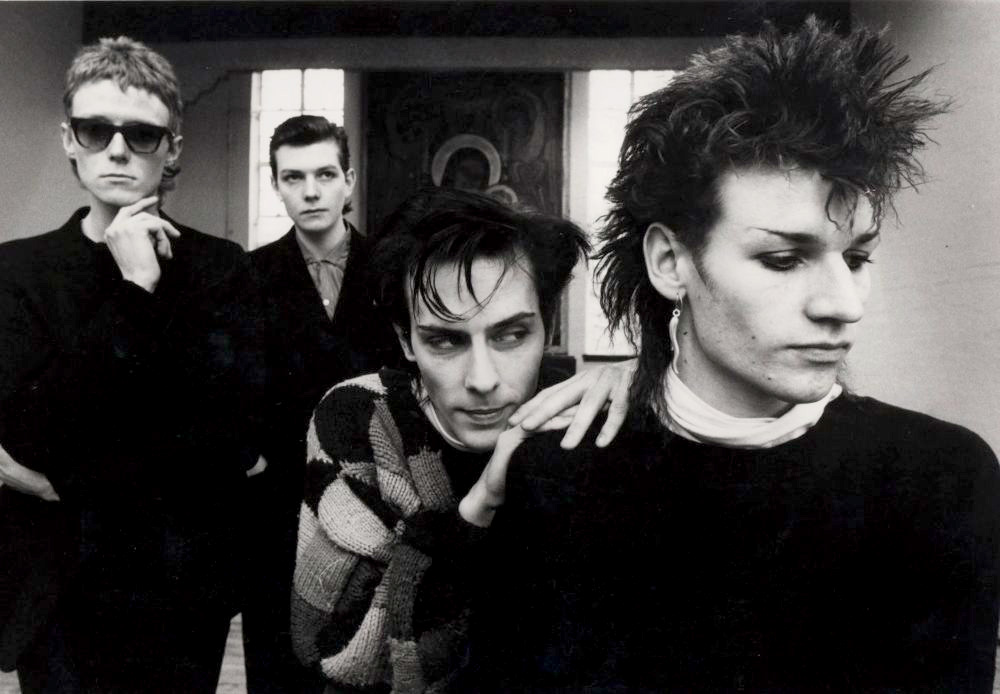
Often hailed as the birth cry of gothic rock, “Bela Lugosi’s Dead” was recorded in a single take at Beck Studios in Northampton in January 1979. Released later that year on Small Wonder Records, it clocked in at nearly ten minutes. Its skeletal bassline, echoing percussion, and eerie guitar effects created a soundscape unlike anything else in post-punk at the time. Peter Murphy’s haunting baritone and the song’s minimal lyrics — “Bela Lugosi’s dead, undead, undead, undead” — turned a low-budget experiment into an atmosphere of exquisite decay. The minimalist structure, heavy use of reverb, and dub influences established the sonic blueprint for goth’s brooding aesthetic.
Its impact was amplified when it opened Tony Scott’s 1983 vampire film The Hunger, starring David Bowie and Catherine Deneuve, immortalizing Bauhaus as the architects of “dark glamour.” Despite its unconventional length and DIY origins, “Bela Lugosi’s Dead” became a cult classic, bridging punk’s raw energy with the spectral romanticism that defined goth. More than four decades later, it still stands as the genre’s defining anthem — slow, seductive, and eternally undead.
“Khochu peremen” (“Changes”) – Kino (1989)
Khochu peremen (“Changes”) by Kino is one of the most iconic songs to emerge from the Soviet Union’s late 1980s underground music scene, and it quickly became the unofficial anthem of a generation yearning for change. Released in 1989 as part of the band’s Zvezda po imeni solntse (Star Named Sun) album, the track is a powerful cry for freedom and social reform, resonating deeply with the youth of the USSR during a time of immense political and cultural upheaval. With the Soviet government on the verge of collapse and perestroika reshaping the country, Khochu peremen captured the restless spirit of the moment.
Viktor Tsoi, Kino’s frontman, his magnetic charisma and ability to embody the voice of his generation made him a symbol of resistance against the regime. His intense, earnest delivery and his ability to convey both hope and frustration in a single breath made Khochu peremen a rallying cry for millions. Tsoi’s personal authenticity, combined with his unwavering commitment to his art, turned him into a folk hero, and his untimely death in 1990 further cemented his status as a cultural icon in Russian music history.
8. “Clown” – Switchblade Symphony (1995)
Switchblade Symphony’s Clown is a haunting, atmospheric piece that combines goth’s brooding sound with an experimental industrial edge. The track’s eerie synths and creeping rhythms create a sinister atmosphere, while the lyrics tap into a sense of emotional volatility and self-destruction via drug use. The song is both haunting and hypnotic, a perfect example of how goth rock could evolve into something more layered and intricate. Clown’s melodic yet unsettling beauty captures the essence of what made Switchblade Symphony stand out during the ‘90s.
“How Soon Is Now?” – The Smiths (1984)
How Soon Is Now? stands as one of the defining tracks of The Smiths’ catalog and remains a beloved anthem within both goth and indie circles. Released in 1984 as the B-side to their single William, It Was Really Nothing (though it later became a single in its own right), the song is an evocative exploration of alienation, loneliness, and longing, themes that would come to define much of The Smiths’ work.
Johnny Marr’s distinctive guitar riff opens the track with an eerie, swirling tone that creates a sense of melancholy that lingers throughout. The use of tremolo and reverb gives the music a haunting, ethereal quality, almost like an emotional echo, which perfectly complements Morrissey’s unforgettable vocals. His voice, both plaintive and resigned, brings a raw vulnerability to the song’s themes of rejection and despair. Morrissey’s delivery is simultaneously dramatic and intimate, conveying an unflinching honesty about personal isolation and yearning. His famous line, “I am the son, and the heir, of a shyness that is criminally vulgar,” captures his ability to combine self-deprecation with a sense of profound emotional weight.
10. “Deathwish” – Christian Death
Christian Death’s “Deathwish” stands as one of the defining songs of early American goth, emerging from the bleak heart of Los Angeles’s post-punk underground. Released on their debut album Only Theatre of Pain (1982, though recorded in 1981), the track encapsulates the macabre theatricality and nihilistic beauty that would come to characterize the deathrock subgenre. With Rozz Williams’s haunting vocals and the band’s jagged, reverb-drenched guitars, “Deathwish” feels like a dirge for lost innocence—equal parts ritual and rebellion. Its raw, lo-fi atmosphere and darkly poetic lyrics set Christian Death apart from their British goth contemporaries, proving that the U.S. scene could conjure its own brand of romantic decay.
11. “I Walk the Line” – Alien Sex Fiend (1986)
Alien Sex Fiend’s “I Walk the Line” (1986), captures the band at the height of their Batcave-era creativity, fusing gothic theatrics, industrial experimentation, and punk energy into one chaotic statement. The track’s distorted basslines, frenetic drum programming, and abrasive synths collide to form a hypnotic, unsettling soundscape that feels both mechanical and alive. Nik Fiend’s sneering, echo-drenched vocals—delivered with a warped charisma—drive the song’s sense of manic energy and alienation.
At the center of the chaos lies its deceptively simple hook: “I walk the line / Between good & evil”, repetitive and infectious, the phrase anchors the track’s tension between morality and madness, order and anarchy. This minimalism heightens the song’s trance-like quality, pulling the listener into its dark, seductive world.
12. “Break On Through (To the Other Side)” – The Doors (1967)
While The Doors aren’t typically categorized as goth, their music undeniably influenced the genre, particularly through tracks like Break on Through (To the Other Side). Released in 1967 as the opening track of their debut album, The Doors, the song is a psychedelic rock anthem with a dark, brooding edge. Jim Morrison’s baritone voice, dripping with a seductive yet menacing quality, sets the tone for the track’s exploration of transcendence, breaking societal boundaries, and inner rebellion. The song’s hypnotic, driving rhythm and Morrison’s cryptic lyrics invite listeners to push beyond conventional perceptions of reality—an idea that would resonate deeply within the goth community. Break on Through captures the tension between freedom and alienation, a theme that goth artists would later latch onto in their own music. It’s a defining moment in the late-60s psych-rock movement, bridging the gap between the rebellious spirit of rock ‘n’ roll and the introspective, darker tones that would define goth rock in the 1980s.
13. “First We Take Manhattan” – Leonard Cohen (1988)
Leonard Cohen’s First We Take Manhattan, released in 1988 on I’m Your Man, is one of the most goth-tinged tracks in his catalog. The song’s slow, brooding rhythm, combined with Cohen’s gravelly, almost apocalyptic delivery, gives it a menacing quality. Lyrically, Cohen crafts a dark, sardonic narrative of a revolution fueled by power and control, an idea that echoes through much of goth culture. The song’s stark imagery—“First we take Manhattan, then we take Berlin”—paints a picture of societal decay and personal revolution, mirroring the dystopian themes that were beginning to take root in alternative music. It’s a track that feels both deeply personal and eerily detached, with Cohen’s lyrics veering between the intimate and the apocalyptic.
14. “Metal” – Gary Numan (1979)
Gary Numan’s Metal, released in 1979 on Replicas, is a groundbreaking track that blends the icy precision of electronic music with the cold, dystopian themes that would later define industrial and goth rock. Numan’s robotic, detached vocals and the song’s mechanical rhythm create a sense of alienation that was ahead of its time. The lyrics, which describe the dehumanizing effects of modern technology, reflect Numan’s growing anxiety about the increasing mechanization of life. The song’s stark, futuristic production—dominated by sequencers and synths—offers a chilling atmosphere that echoes the darker side of the 80s new wave. Metal is often credited as one of the first tracks to truly capture the feeling of technological isolation, influencing not just the goth scene but also industrial and electronic music in the decades that followed.
15. “A Forest” – The Cure (1980)
The Cure’s A Forest, released in 1980 on Seventeen Seconds, is one of the most iconic songs in the goth rock pantheon. The track’s minimalist bassline, ghostly synths, and Robert Smith’s haunting vocals perfectly encapsulate the genre’s signature themes of isolation, longing, and searching. The song’s lyrics describe a protagonist lost in a literal and metaphorical forest, a symbol of confusion and emotional darkness. The music itself creates a swirling, ethereal atmosphere, underscored by a driving rhythm that evokes both the tension and release of a quest for something unattainable. A Forest marked a turning point in The Cure’s sound, moving away from their early post-punk roots into a more atmospheric, melancholic territory that would resonate deeply with the emerging goth scene. It became a key track for the band, cementing their place as pioneers of goth music and influencing countless other artists in the genre.
16. “Release the Bats” – The Birthday Party (1981)
Released in 1981 as part of The Birthday Party’s The Birthday Party EP, Release the Bats is one of Nick Cave’s most intense and chaotic moments with his band. The track’s primal energy, marked by pounding drums and discordant guitars, is a raw and untamed expression of the band’s post-punk fury. Cave’s ferocious vocals—part guttural growl, part maniacal chant—create an air of madness, pushing the song into the realm of both horror and catharsis. Lyrically, Release the Bats is a call to abandon society’s constraints and embrace a more anarchic, chaotic existence. It’s a song that’s both violent and darkly poetic, perfectly capturing the feral energy of post-punk while embracing the gothic atmosphere of decay and rebellion.
17. “Closer” – Nine Inch Nails (1994)
Nine Inch Nails’ Closer, released in 1994 as part of The Downward Spiral, is one of the most iconic industrial rock tracks of all time. The song blends abrasive, mechanical beats with visceral, sexually charged lyrics, making it a defining piece of both industrial and gothic music. Trent Reznor’s raw, tortured vocal performance explores themes of desire, alienation, and self-destruction, pushing boundaries with its unflinching exploration of pain and pleasure. The track’s aggressive production, filled with heavy synths, distorted guitar, and a driving, machine-like rhythm, creates an atmosphere that is both suffocating and intoxicating.
18. “Human Fly” – The Cramps (1977)
The Cramps’ Human Fly, released in 1977 on Songs the Lord Taught Us, is a psychobilly anthem that blends rockabilly, punk, and horror aesthetics into something uniquely sinister. The track opens with a driving rhythm and Lux Interior’s manic, almost hypnotic vocals, painting a bizarre picture of a human transformed into a fly. The song’s playfully macabre lyrics, along with its raw, lo-fi production, give it a distinctly campy, yet dark energy. It’s a song that celebrates the outsider, the grotesque, and the absurd, drawing heavily from 50s B-movie horror and punk’s DIY ethos. Human Fly became a defining moment for the Cramps, encapsulating their ability to mix horror, humor, and rock ‘n’ roll in a way that would influence deathrock and gothic rock.
19. “Evil” – 45 Grave (1983)
Evil by 45 Grave, released in 1983 on Sleep in Safety, is a quintessential deathrock anthem. Its blend of punk energy, gothic atmosphere, and horror-themed lyrics captures the essence of the genre. The song opens with a pulsating bassline, creating a driving rhythm that is both eerie and hypnotic. The lyrics, sung by Dinah Cancer with a sense of playful menace, tell a twisted tale of malevolent forces, aligning with the darker, more macabre side of goth. The track’s quick tempo and playful approach to darkness made it a favorite in underground circles, where the combination of energy and horror was highly regarded.
21. “Never Let Me Down Again” – Depeche Mode (1987)
Depeche Mode’s Never Let Me Down Again represents a perfect confluence of 80s synth-pop and darker, atmospheric production. Released in 1987 as part of Music for the Masses, the track is both expansive and claustrophobic, with its sweeping synths building a sense of emotional tension. The song’s themes of dependence and isolation are captured in David Gahan’s haunting vocal delivery, while the lush instrumentation creates an ethereal yet dark mood that has become synonymous with goth-leaning new wave. As a piece of music, it feels simultaneously uplifting and suffocating, carrying a weight of longing beneath its electronic sheen.
22. “Bull in the Heather” – Sonic Youth (1994)
Sonic Youth’s Bull in the Heather is a sonic exploration that fuses dissonant noise with punk energy, creating a sound that is both confrontational and seductive. The track is propelled by distorted guitars and Kim Gordon’s raw, almost indifferent vocal performance. It’s a chaotic burst of sound that moves through jagged rhythms and splintered melodies, tapping into an alienating energy that echoes the darker side of post-punk. While it doesn’t directly align with goth, its sense of dislocation and unease—embodied in Gordon’s fragmented lyrics—places it in close proximity to the genre’s more experimental and discordant elements.
23. “Ghost Rider” – Suicide (1977)
Suicide’s Ghost Rider is a bleak, unsettling anthem that fuses early punk with minimal electronic beats, creating a sound that’s both stripped-down and haunting. Released in 1977, the track features Alan Vega’s robotic, detached vocals, reciting apocalyptic imagery with a cold, matter-of-fact delivery. The mechanical, looping rhythms contrast with the haunting lyrics about alienation and an impending collapse, creating a sense of eerie inevitability. Ghost Rider is raw and uncompromising, a punk-infused electronic piece that lays the groundwork for the industrial and goth scenes that would follow.
24. “Public Image” – Public Image Ltd (1978)
John Lydon’s post-Sex Pistols project, Public Image Ltd, unleashed Public Image in 1978, a song that would alter the course of post-punk music. The track opens with a throbbing bassline, quickly spiraling into jagged guitar riffs and Lydon’s sneering, confrontational vocals. There’s an almost angry precision to the song, as Lydon deconstructs the very idea of public perception, using fragmented rhythms and abrasive textures to carve out a space for experimentation. The song moves away from traditional punk, embracing a more fractured, complex approach that would influence countless artists across the punk and goth landscapes.
25. “White Rabbit” – Jefferson Airplane (1967)
Jefferson Airplane’s White Rabbit is a mesmerizing psychedelic track, heavily inspired by Alice in Wonderland and its distorted take on reality. The song’s moody, hypnotic rhythm builds in intensity, with Grace Slick’s ethereal vocals weaving through surreal lyrics about mind-altering experiences and questioning reality. Its unsettling atmosphere and dark, almost foreboding quality have made it a timeless influence on genres like goth, where the lines between dream and nightmare are often blurred. The track doesn’t so much pull the listener in as it swallows them whole, drawing them deeper into its strange, disorienting world.
26. “Love My Way” – Psychedelic Furs (1982)
Love My Way by the Psychedelic Furs balances melancholy and euphoria in a way few songs from the era managed. With its lush, shimmering instrumentation and a steady, pulsing rhythm, the song has an intoxicating quality. Richard Butler’s voice is full of longing and vulnerability, giving the track an emotionally charged edge. The synths and soaring guitar riffs build a sense of elevated tension, moving through wistful introspection to a kind of bittersweet release. There’s a delicate, almost fragile quality to the track, but also a certain defiance that places it at the crossroads of goth and new wave, resonating with listeners caught between melancholy and hope.
27. “Lady Shave” – Fad Gadget (1986)
Fad Gadget’s Lady Shave is an unnerving blend of electronic beats, industrial noise, and disturbing lyrical themes. Frank Tovey’s cold, robotic vocals describe a mechanized, almost alienating world, while the sparse, mechanical rhythm suggests something deeply disconcerting about the intersection of technology and human experience. The song’s unsettling tone is amplified by its surreal, almost absurd lyrics—particularly its critique of consumerism and body image. The pulsing, repetitive beats create an atmosphere of discomfort, pulling the listener into a space that is both familiar and alien. It’s a track that doesn’t try to comfort, but rather challenges the listener to confront unsettling truths.
28. “God Save the Queen” – Sex Pistols (1977)
Released in 1977, God Save the Queen became an iconic punk anthem, symbolizing the movement’s anarchic spirit. With its fierce critique of the British monarchy and society, Johnny Rotten’s snarling vocals and the song’s aggressive riff delivered a visceral attack on the establishment. The track’s provocative line, “God save the Queen, the fascist regime,” led to widespread outrage, especially during the Queen’s Silver Jubilee, and helped cement the Sex Pistols as punk’s most rebellious voice.
Banned by the BBC but still reaching No. 2 on the UK Singles Chart, the song’s defiance of authority and rejection of societal norms made it an anthem for disaffected youth worldwide. God Save the Queen wasn’t just a protest song—it was punk’s declaration of independence, both musically and politically.
29. “Desperate But Not Serious” – Adam Ant (1982)
Released as the second single from Kings of the Wild Frontier, Desperate But Not Serious captures Adam Ant at the peak of his new wave and post-punk crossover appeal. With its driving rhythm, catchy hooks, and Ant’s charismatic, almost theatrical delivery, the track blends pop sensibility with punk attitude. The song’s cheeky, playful lyrics—which delve into themes of romantic desperation and self-aware rebellion—reflect Ant’s ability to fuse humor with his more dramatic, sometimes dark persona.
Musically, the track is an energetic mix of post-punk swagger and tribal rhythms, which helped define Ant’s distinctive sound during the early ‘80s. The song’s upbeat tempo contrasts with its somewhat melancholic lyrics, echoing a sense of existential longing beneath its confident exterior. Desperate But Not Serious marked a key moment in Adam Ant’s career, showcasing his unique blend of glam, punk, and new wave influences, while maintaining an air of pop accessibility that appealed to a broader audience.
30. “She Sells Sanctuary” – The Cult (1985)
She Sells Sanctuary is a standout track from The Cult’s breakthrough album Love, blending gothic rock with hard-driving, anthemic energy. Released in 1985, the song features a distinctive, hypnotic guitar riff and Ian Astbury’s evocative vocals, which combine to create a sense of spiritual longing and liberation. The track’s lyrical imagery—referencing a mystic, almost transcendent escape—has made it a goth-rock classic.
Musically, She Sells Sanctuary walks the line between goth’s introspective melancholy and the electrifying, anthemic energy of rock. The song’s infectious rhythm and dramatic intensity became a signature of The Cult’s sound, setting them apart from their contemporaries in both the goth and hard rock scenes. Its combination of dark, atmospheric imagery and powerful, soaring hooks helped cement it as one of the most enduring tracks in goth and alternative rock history.
Listen to our curated Spotify playlist here.
About the Author