Elizabeth Winterbourne
Mixing folk mysticism and pop production, the artist crafts a world where history’s ghosts speak to the politics of today.
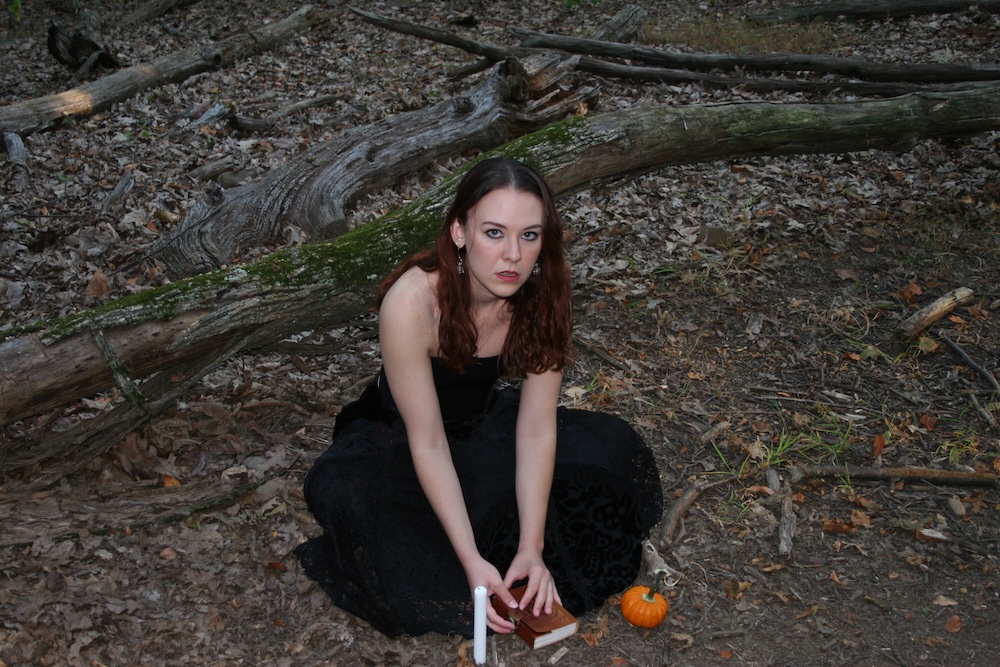
With “Salem,” Elizabeth Winterbourne doesn’t just tell a story — she resurrects one. The track draws from the haunting legacy of the Salem Witch Trials to explore a theme that feels chillingly current: the enduring fear of women’s power. Through spellbinding lyricism and lush, atmospheric production, Winterbourne transforms historical persecution into a modern fable of rage and reclamation. It’s a song born of anger — anger at injustice, at abuse of power, at the way women’s voices are still too often silenced or dismissed — yet it emerges as something transcendent, even liberating. Like the women once branded as witches, “Salem” stands defiantly at the edge of darkness, unashamed to burn with truth.
Produced with longtime collaborator Christian Reccasina, “Salem” is a sonic spell of its own — a lush, cinematic blend of folk storytelling and pop atmosphere that feels at once ethereal and defiant. Across our conversation, Elizabeth Winterbourne spoke with candor about channeling anger into art, finding creative freedom in New York after growing up in Arizona’s folk scene, and why, sometimes, it’s okay — even necessary — to be angry.
“Salem” is described as ‘a song about witches—sort of.’ Can you tell us what inspired the track and what that phrase really means to you?
Elizabeth Winterbourne: So it’s about witches. It is. But it’s also something that I wrote using witches and the Salem Witch Trials and that whole time period in history as a metaphor, or just even a parallel, for things that go on nowadays — and particularly since the MeToo movement and what keeps occurring in that vein with these men in power and in positions of authority that get to be abusive and don’t really see appropriate punishment for their actions. I wrote this song in a moment when I was feeling really angry about that and angry about the political situation in this country in general. And that came out as this song about witches and what “being a witch” has meant throughout history.
The production on “Salem” has such a rich, atmospheric feel — what was your creative process like in crafting that sonic world?
Elizabeth Winterbourne: I worked with a longtime collaborator of mine, Christian Reccasina, who’s a New York City-based producer and songwriter. He produced my last EP as well. And so I’ve worked with him on enough songs that we just have sort of a way of creating together, and he knows what I like. I told him that I wanted it to feel a bit magical, a bit whimsical, but sort of dark, as well, within that framework. And he really leaned into trying to find things that fit into that space: components like the church bells in the background and the sort of surround sound of birds in the forest. We really wanted to create a space and world in which the story is happening.
The song blends pop and folk in a way that feels both ethereal and grounded. How do you balance those elements in your songwriting and production?
Thank you! I honestly don’t know if I really do balance them. I think I just like having a mixture, and I know what I like, so when it maybe gets to that “balanced” point, I just know that it sounds the way I was imagining. But I don’t really think about it as balancing the two genres.
Witches have often been symbolic of power, fear, and femininity — does “Salem” explore any of those themes?
Elizabeth Winterbourne: Salem definitely does explore those themes, but more than anything, it’s really talking about this very long-standing fear of women having power and how that creates a lot of abuse and injustice. The symbol of the witch is simply a means of villainizing women who don’t act and look and speak in the exact, specific ways that “society” wants. And so I love playing with witch imagery because at the end of the day a “witch” is just an unconventional woman (there are of course some exceptions to that in history, where men were predominantly persecuted, for example, depending on the geographical region, but this is the predominating historical narrative.)
If “Salem” were a visual world or a film scene, what would it look like?
Elizabeth Winterbourne: So it’s interesting because the way that I write music usually involves a whole visual in my brain that kind of comes about during the process of writing it. I have synesthesia, so my brain associates words and music with visuals and colors just kind of automatically. When I was writing this, I pictured being in the Northeast woods of Massachusetts back in the 1600s, being near a churchyard, walking through a forested path, etc. All those elements that I talk about in the lyrics of the song.
Your lyrics are known for their poetic imagery and emotional honesty. How do you approach writing lyrics that are both deeply personal and universally resonant?
Elizabeth Winterbourne: Well, first of all, thank you! I’ve always honestly found it very hard to talk about my writing process because it’s not logical or technical in any way. I think, because I’ve been writing music since such a young age, I’ve just spent a lot of time internalizing music that resonated to me and practicing recreating that. So now I know, in a rather unconscious way, when the song is how I want it to be. I wish I had a better answer to this question, but the process is a very amorphous one. It always starts from a place of emotion though and trying to process the things I’m experiencing.
Many of your songs touch on mental health and the human condition. How has your relationship with those topics evolved through your music?
Elizabeth Winterbourne: Because I always wrote music as a means of coping and understanding things that I was going through, it always really came from that place. I’ve never been somebody that really feels drawn to writing songs about romance or relationships. I’ve written some, but very few. It’s not something that I feel very drawn to usually. I want to process my own struggles and things I experience that make me feel alone, so those are always going to be what I gravitate towards when I’m writing.
Do you typically start with words, melody, or an emotional concept when writing a new song?
Elizabeth Winterbourne: I love this. Everybody asks me this, and I never have a clear answer. It depends. Sometimes I start with a title, like there’s a word or a phrase that just feels very inspiring, so I start there. Sometimes there’s a melody, sometimes there’s words, sometimes I’m just sitting down with my guitar messing around. It just depends.
Elizabeth Winterbourne: You draw from a wide range of influences — americana, classical, pop, rock. Is there a genre or sound you’ve been wanting to explore next?
I don’t know how soon I would do this, but I would love to explore jazz at some point in my life. I think I would enjoy pulling a Lady Gaga and doing a jazz album or two. That probably won’t be anytime soon, but I am interested in exploring that more. Especially since I have a background in classical voice, jazz is a really fun place to go from there.
You’ve performed everywhere from SXSW to New York Fashion Week. How do you adapt your performance for such different audiences and spaces?
Elizabeth Winterbourne: I think that’s part of being an artist. Like, that’s part of the creative process. How do I present the music in this given space, in this given context for this set of people? How much do I talk in between songs? What should I say? Should I focus more on the musical atmosphere I’m creating than talking to the audience? There’s so many things to think about, and it really is about what kind of experience I want to create for people given the environment and given who will be there.
Being selected for Pirate Music’s artist residency out of over 5,000 applicants is an incredible honor — how did that experience shape you creatively?
Elizabeth Winterbourne: It was definitely a really cool thing to be picked for that because I think a lot of us as artists, we’re very used to rejection, and we’re very used to expecting that we’re not ever going get things, and that was a situation where I applied for it very spur of the moment with zero expectations. So to actually be picked out of such a large swath was very validating. It definitely gave me more confidence in my work.
But just to be completely honest, it was a bit of a disappointing experience for me and I think a lot of the other artists as well. It was an example of something where, as a bunch of independent musicians, we were really hoping for a lot of support in ways that didn’t really materialize. And we were promised opportunities that never ended up happening. This is unfortunately not an uncommon experience, and I just wish that there was more support for indie artists among organizations like Pirate.
Your music has been featured on PBS’s Roadtrip Nation. What was it like hearing your work in that context?
Elizabeth Winterbourne: It was very cool. That was another one of those things that I really wasn’t expecting would happen, and it made me feel wonderful to have somebody see my work in that way. And that happened to me when I was very young. It got that licensing deal when I was 16, which gave me encouragement at a time when I really needed it.
How has moving from Arizona to New York influenced your sound or your artistic identity?
Elizabeth Winterbourne: Arizona is where I get all of my folk/Americana/bluegrass influences from because that’s a really prominent sound in the Southwest. I grew up going to and performing in folk music festivals, so that’s where I get a lot of that sound from in my music now. But I think moving to New York, a place that has a lot more pop/hip hop/rock, has given me permission to explore and experiment and not necessarily just fit into one clear, distinct genre, which has been very fun and freeing.
You’ve been praised for creating music that feels “compelling” and “mesmerizing.” How do you personally define success as an artist?
Elizabeth Winterbourne: Oh gosh, it depends on the day. I think when my mental health is at its best, success means there being at least one person that I helped today with the music that I make. Whether that’s because my song made them feel less alone or simply gave them some sort of enjoyment, then that’s success for me. But there are definitely days where success feels like it’s all about the numbers.
I try as much as possible to not have that be my definition of success, though.
What do you hope listeners take away from “Salem” — emotionally or spiritually?
Elizabeth Winterbourne: I think the biggest thing with Salem is that I want people to feel like it’s okay to be angry. Obviously, I think the production on the song/what Christian did is very fun. And so it is a song that I want people to experience as something energizing and enjoyable, but I think on a deeper level, I want this to be an outlet for people’s anger and frustration, because that’s what it was for me in creating it. Like, it’s okay to be angry about the people who are in power right now. It’s okay to be angry as a woman — that’s a big one that, even if we don’t realize it day-to-day, it’s definitely something affecting us. People socialized as women very much internalize this idea that being angry is not acceptable like it is for men. I want women to listen to this song and be angry and feel like it’s okay.
Is there a particular message or feeling that you hope ties all your work together, from Christina’s World to Lost in Headlights and beyond?
Elizabeth Winterbourne: I think the biggest thing is just no matter what you’re experiencing, I hope that you can find a song of mine that resonates, that makes you feel less alone, that makes you feel like you can live through and process what’s going on in your life. Truly, universality is the thing that I hope I can give people. And I do feel like my last two EPs covered a good swath of different topics — talking about trauma, talking about pain in losing people or having people not value you, trying to recover from pain you internalized when you were very young, all those different things. So I hope that no matter what you’re experiencing, you can find an outlet for it in my music.
What’s next for you — are there any upcoming projects, collaborations, or tours fans can look forward to?
Elizabeth Winterbourne: Well, there will definitely be new music coming out! I’m really excited for the swath of things that I’m making right now. I’m writing a lot from anger and sadness about the current political situation and the sheer lack of humanity that just seems so prevalent among many of our leaders in the Western world. But within that, I’m finding a lot of my own, internal power, and I’m hoping that this collection of music can create that for my listeners as well.
If you could describe your music in three words today, what would they be?
Elizabeth Winterbourne: Folky, poppy, witchy.
Official website of Elizabeth Winterbourne
About the Author