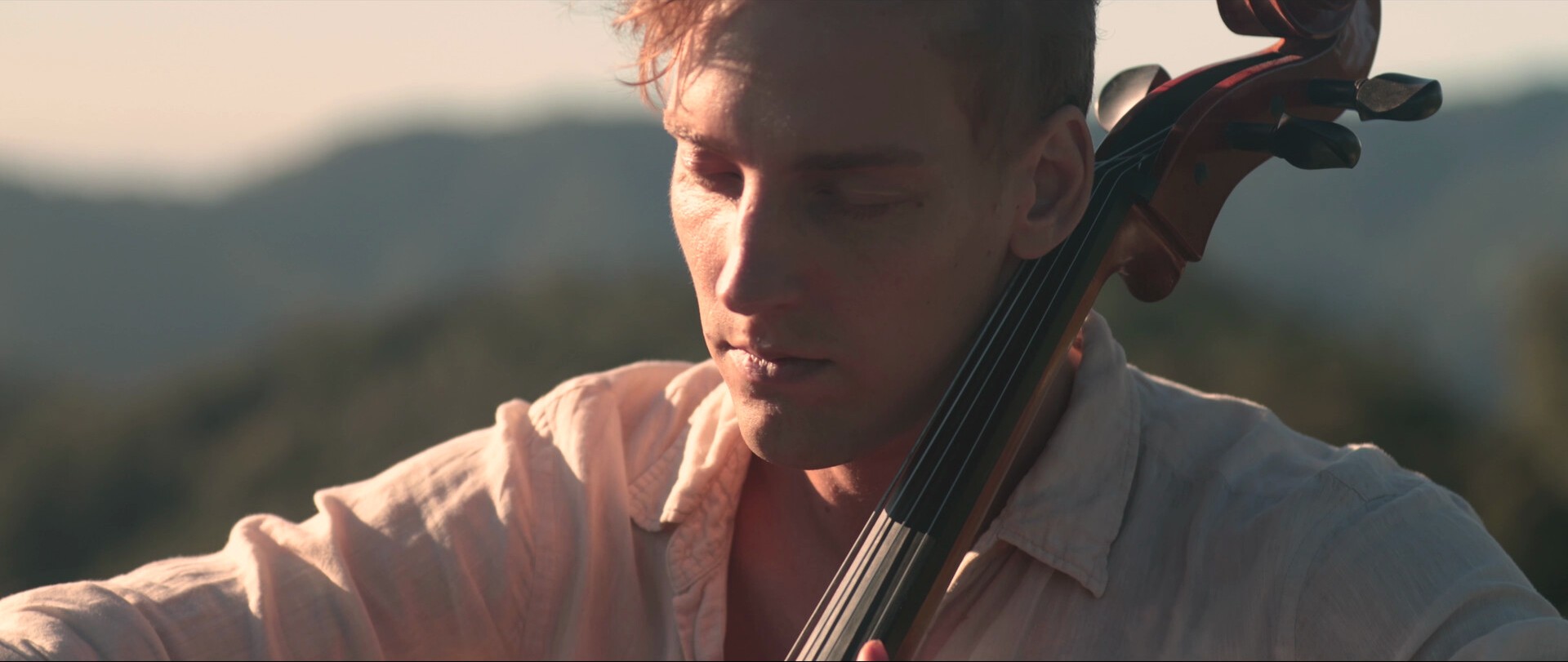
Vesse Saastamoinen in Cello
In the frost-etched quiet of Helsinki’s Itäkeskus district, the 2026 Solaris Film Festival at Stoa held a mirror up to our collective reality. Solaris reminded us that the most dangerous, beautiful thing a human can do is create something that bites back. From a visceral dystopian overhaul to the haunting strings of an aspiring cellist, the festival’s winners felt like a gorgeous transmission from the edge.
At the center of the storm was Diana Ringo’s 1984. We’ve seen Orwell’s nightmare before, but Ringo’s 2026 Remastered Edition—unveiled this February—is a different beast entirely, it’s an unforgettable sensory experience. Incorporating 114 brand-new CGI shots, the film’s reality feels closer than ever. Ringo, a Finnish-born polymath who seems to do everything but the catering, pulls off a high-wire act by merging Orwell’s classic with Yevgeny Zamyatin’s We.
As D503, Aleksandr Obmanov captures the twitchy despair of a man whose very dreams are state-regulated, while Ringo herself haunts the screen as I330. But it’s the soundscape that truly gets under your skin. Ringo’s score—a blend of electronic sounds and classical mentality—it is the beating heartbeat of the picture. This isn’t just “Best Feature Film” because of its scope; it’s because it asks the one question we’re all too scared to answer: will we really be able to love Big Brother?
If 1984 is about the state crushing the soul, Liam Anderson’s Cello is about how we do that job perfectly well ourselves. Vesse Saastamoinen, who walked away with Best Actor, delivers a performance that is all raw nerve and vibrating tension. He plays Tristan, an aspiring cellist whose talent is a double-edged sword, cutting through the haze of a self-destructive party lifestyle while simultaneously threatening to bleed him dry.
Anderson—directs with a cameraman’s eye for the intimate, the film captures the frantic energy of youth on the brink of either greatness or collapse. Saastamoinen doesn’t play a musician; he plays the music itself—unpredictable, demanding, and deeply fragile. It’s a film that reminds us that ambition is its own kind of haunting.
Every festival needs a powerhouse song, and this year, it was Debra Gussin and Dale Effren’s THIS IS OUR TIME. Winning Best Song, their composition felt less like a track and more like a manifesto. “THIS IS OUR TIME” is an unapologetically emotive anthem for a generation that has survived the noise and is looking for a reason to stay loud.
Solaris 2026 wasn’t just a win for Helsinki; it was a win for anyone still looking for the ghost in the machine. In the hands of creators like Ringo, Anderson, and Gussin, the future of film looks a lot like its past: brave, bloody, and beautiful.
Full winners list of SOLARIS 2026 film festival is available here.
About the Author