June Swoon
To listen to June Swoon is to step inside a carefully constructed architecture—be it a dusty Sacramento house, a 26-foot RV, or a “field notebook” of memories—and find the lights still burning. Born from a childhood spent in the high-pressure environments of fundamentalist organizations like the International House of Prayer, her musical education was as rigorous as it was restrictive. While she clocked her “10,000 hours” on church stages, it was her eventual escape into the experimental scenes of Sacramento and the songwriting hubs of Austin that allowed her to reclaim her voice. Today, she describes her work as songwriter-driven indie rock, but that simple label belies the complexity of her vision. Influenced by the DIY brilliance of Prince and the concept-driven “apocalyptic optimism” of Bright Eyes, she has transformed her history of rigid doctrine into a fluid, inhabitable daydream where the listener is invited to find shelter.
In her latest work, the Big Truck EP, June Swoon continues to explore the friction between the “toughness” of a self-producing director and the “tenderness” of a performer. Now based in Los Angeles—a city she champions as a sanctuary for the “mass art” of dreaming—she views her music not as a product to be commodified, but as a spiritual practice of philoxenia: the love of the stranger. Whether she is facing down the “bull” of the music industry or tracing the painful “interstate” of mother-daughter dynamics, her songs act as a vehicle for both artist and audience to face themselves with courage. In the following conversation, we dive into her transition from the church to the road, the “rich veins” of her most vulnerable lyrics, and why the dashboard of a vehicle remains the most vital place for her to witness the world.
How would you describe your music to someone who has never heard it?
My music is my field notebook, interpreted through the mirror of my favorite genres. So far, each June Swoon album is a structure to get inside of: a town, a house, a truck. They’re inhabitable daydreams. And if I started to see that person’s eyes glaze over at that point, I would say, it sounds like songwriter-driven indie rock.
When did you first start songwriting, and what is your musical background?
I wrote poetry and songs as a child. I was always by the stereo. I started piano lessons at 4 years old and got a lot of attention for having a tiny, musical voice. At dinner parties my parents would put headphones on me and play Amy Grant, a parlor trick to get me to sing acapella for their friends. Our house was full of music. My grandmother and grandfather played piano and violin, my mom was a classical guitarist, and my dad was what I would call a natural born selector, always putting on certain tapes to suit the occasion. My dad was a teenager in the 60s, he liked psychedelic, esoteric music, and my mom, who came of age in the 70s, listened to good American rock music like Heart and The Eagles.
By age 11, I was onstage several times a week. My family was involved with extremist organizations like the International House of Prayer and Bethel School of Supernatural Ministry, which were very music-driven. I was mostly homeschooled and could spend as much time playing music as I wanted, as long as it was in church. In retrospect, it all counts towards my 10,000 hours, so it was a blessing in many ways. I bought secular CDs with pocket money and regularly raided the public library and Blockbuster.
By age 16, the church was becoming increasingly incompatible with my emerging adult values. I have two Deaf older sisters and I loved our family’s second language, American Sign Language. That was a gateway for loving many cultures and languages. I bristled at being compelled by the church to proselytize, to move towards this monoculture. Of course the church also had limiting beliefs about me and my place in society as a woman. Towards the end of high school, I started exiting the church, but found a way to keep playing music by getting involved in the experimental music scene in Sacramento. My brother and I started a band and cut a couple EPs. When the dam finally broke and I officially left, I had a profound loss of identity and had to redefine who I was. That marked the beginning of my roaming years. I escaped to Austin, Texas, where I first began writing songs for June Swoon.
Which artists inspire you the most?
Prince is my biggest inspiration. His music was idiosyncratic, addictive, technically excellent, danceable – everything I could hope to be. I love his level of involvement in every stage of the recording process, especially mixing, and how he made choices that weren’t always popular but always true to his vision. I’m inspired by the painter Martin Wong. He let himself get obsessed. He famously wore a firefighter coat around the East Village because he loved to paint firefighters. I once saw Bjork perform in a room of 6000 people and it felt, in a very real way, like she performed energetic dialysis for us all. I hope to one day achieve that level of catharsis for people when I perform. I like the neon signs that people pick out for their small businesses. Making any kind of dream into a physical reality is an art form. Everyday people carrying out their dreams and providing for their families inspire me.
If you could have sat in on the recording session of any album in history, which one would it be?
Cassadaga by Bright Eyes is, I think, one of the best concept albums of all time, and even though it would mostly be Conor Oberst and Mike Mogis in the room, I would have loved to sit in. Listening to “Four Winds” feels like a seminar in world history with a catchy hook, naming the past in order to make a better future. Apocalyptic optimism. It got me through a lot.
What does “success” look like to you on a typical Tuesday morning?
Keeping promises to myself is my definition of success. My promises from the night before are usually to practice yoga, to successfully stay off my phone for the first hour, to walk my dog Pony without becoming impatient, to complete a creative thought before the day takes over, whether that’s on paper or with an instrument, and to get out of my head and remember to be present with whoever crosses my path that day.
Is there a specific lyric on this EP that was particularly painful or scary to write down?
Those self-deprecating moments are always a little painful. Sometimes you get close to the bone about something, either because it’s true, it’s not true but has been said about you a lot, or it’s an insecurity. Something that’s part of my story is the idea that I’m the wrong kind of woman. I was a tomboy, I never liked the patriarchy’s dreams for me, that was no secret. My mom appears a couple of times on this EP – in “Denver,” I say, “It’s not a phase, mama, it’s an interstate,” and in “Someone Else’s Dream,” I say, while describing myself in a hypothetical scene of domesticity, “My mother would be so proud.” Those veins are always a rich source for songwriting for me, but you sometimes feel the needle going in.
Since you self-produce, how do you balance the “toughness” needed to manage a session with the “tenderness” needed to perform?
I’ve come to conceptualize the character of June Swoon as being a separate entity from me. I do all the tough work in order to create the space for her to come out and perform. It’s like being both director and actor. The recording studio is definitely a place of permanence, which requires a different kind of courage than performing. You have to be very decisive and very open at the same time, usually with a ticking clock and everyone’s stamina diminishing. You have to be vigilant about the vision while actively listening for surprises. Ultimately both roles are about leadership, endurance, and how much presence you can bring to a room.
When you are stuck in a creative rut, what is the one non-musical thing that always gets you unstuck?
I have a painting by Mikey Rae. It’s a wooly mammoth riding a skateboard, exclaiming, ‘Are you sure this is safe? I have no idea how to do this!’ That reminds me of a few things. First, to laugh. A wooly mammoth riding a skateboard is silly. Next, it reminds me that I’ve never been alive before. To expect myself to not make mistakes is unrealistic. Usually stuckness comes from fear, or some sort of intellectualization that doesn’t need to be there. The artist I am has been forged in a fire of near-constant mistakes, and I don’t believe that process of becoming will ever be completed. The biggest mistake would have been to not try. Thirdly, it reminds me to play. Riding a skateboard is scary at first but it’s also supposed to be fun.
You mentioned your music is the most important thing in your life—how do you protect that passion from the burnout of the DIY touring grind?
I tried to do something else with my life for a while. I had some post-traumatic things going on, especially around being onstage. But I couldn’t stay away from music. I love making it. In my mind, it’s a form of social service, to create this space for people to feel their emotions and know someone else has felt the same way. I have very specific reasons for doing what I’m doing. It’s a labor of love and my own spiritual practice to follow through on my ideas and to keep developing this character. I have found so much healing and perspective through other people’s music, I have a debt to repay in a sense. Artists are marked by a love of the stranger. In Greek I believe it’s the word philoxenia. I do this work because I love strangers. I want my music to comfort them and I want my shows to delight them. In life, I get the most burnt out by feeling helpless. My music is a vehicle for me, hopefully, to do real good in the world, so it’s not a source of burnout for me. I’m fortunate to have a freelance trade and income that is separate from music, so it’s not pressurized in that way. If I’m lucky, my music will touch the hearts of many people I will never meet, which is a little sad. Touring, especially DIY touring, allows me to meet those people face-to-face, and that is a very cool experience.
How does your history of escaping a fundamentalist sect inform the way you claim your freedom in your music today?
Fundamentalism is about telling people who they are. My music is about facing myself in order to give other people courage to face themselves.
You mentioned your father was a rodeo clown—what is the “bull” you find yourself facing down most often in the music industry?
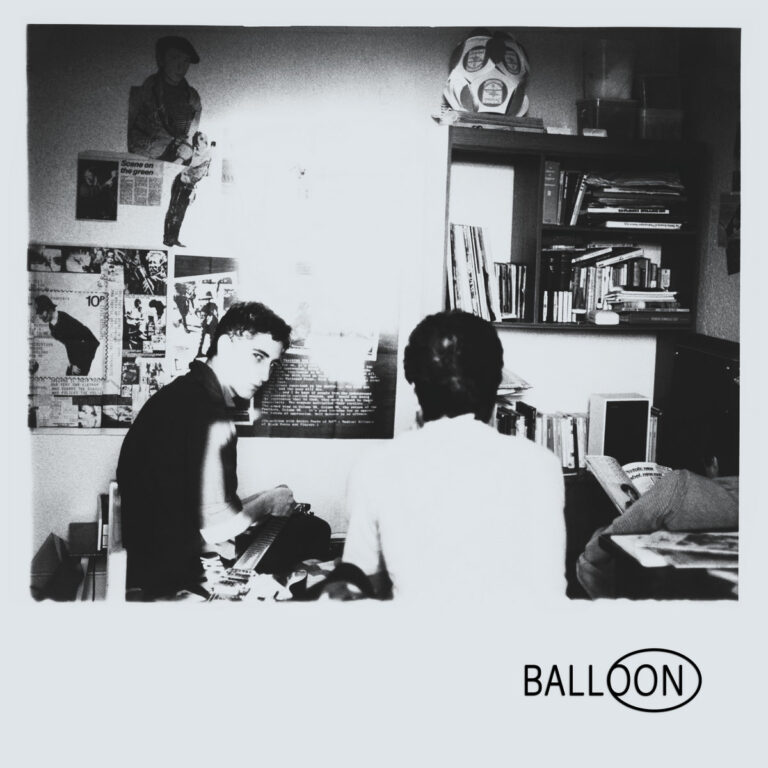
Yes, my father did a brief stint as a rodeo clown in the 80s. I actually discovered letters he wrote in that time where he mused about his role as a rodeo clown being someone who stands in the gap – this Biblical concept of sacrificing yourself in order to keep other people safe. Another name for a rodeo clown is a rodeo protection athlete. It was a crazy coincidence, since I had explored similar impulses in my record A House With Windows Open, which was already in the process of being mixed. A film photo of him in the bull ring ended up being the cover of that record. I like this thought experiment you’re posing. I think the bull for me that I face down in the music industry is that it’s this faceless monolith that exists to extract capital from artists and to commodify us – commodify us without paying us, I’ll add – artists get very worn down and hard on themselves because of this constant, granular valuation of their work. It’s like a bottled water company that has convinced a stream it’s a product and not a life-giving substance. Evan Eisenberg talks about how there was no music industry before records, but music itself has been central to religion and ritual for time immemorial. I try to embody the message that artists aren’t counters, we’re conjurers. And we should carry ourselves accordingly. Just because these corporations have sprang up beside our wild waters to try and bottle us and sell us, doesn’t mean we’re only that. We sustain life.
What is the most unexpected place you’ve found a sense of home since you’ve been on the run?
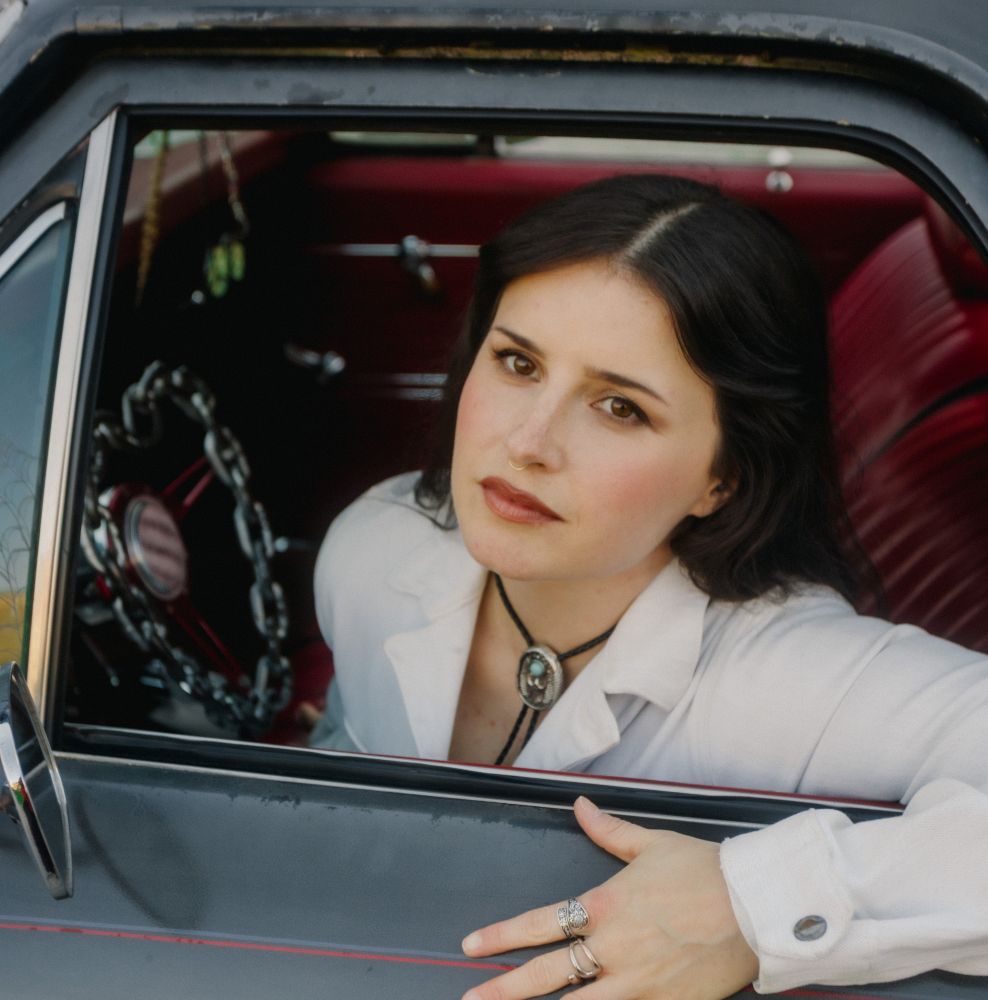
The dashboard of a vehicle is honestly the most safe and familiar place for me, from those early days driving through the Southwest trying to get my existential bearings to driving a 26-foot RV across the country with my band. It doesn’t matter where you wake up, the road is there for you. I love the vistas, truck stops decorated for the holidays, road angels giving you a jump… The car is also the best place to listen to music, of course, which was part of how the Big Truck EP came to be.
How does the landscape of Los Angeles influence your writing compared to the open prairies of the Midwest?
Oh, you’re speaking my language now. Los Angeles is a place where no dream is too big to be laughable. You shine as bright as you can alongside everyone else doing the same. I don’t experience Los Angeles as a competitive place as far as what I do, it’s a very celebratory place, an expressive place, with genuine appreciation for each other’s unique gifts, vibrant DIY scenes and subcultures, and really amazing community events. I just love it here. I like the pursuit of excellence and our collective enthusiasm for mass art. If you’ve never spent Halloween in Los Angeles, I highly recommend it. Our Halloween season starts in August.
And I love leaving and performing anywhere I can – Midwestern prairies, Northeastern bridges – because it feeds my soul to put my body in unfamiliar places and be a beginner. It’s such a massive privilege in these times to have an excuse to explore America in person, not just through a screen, and to have real conversations with real people. My sense of belonging that I’ve only just begun to find in Los Angeles is much newer to me than the years I spent as an outsider, and that’s still where I feel most comfortable, on the road, bearing witness. Loving the stranger.
If your music were the soundtrack to a specific landscape, where would we be standing?
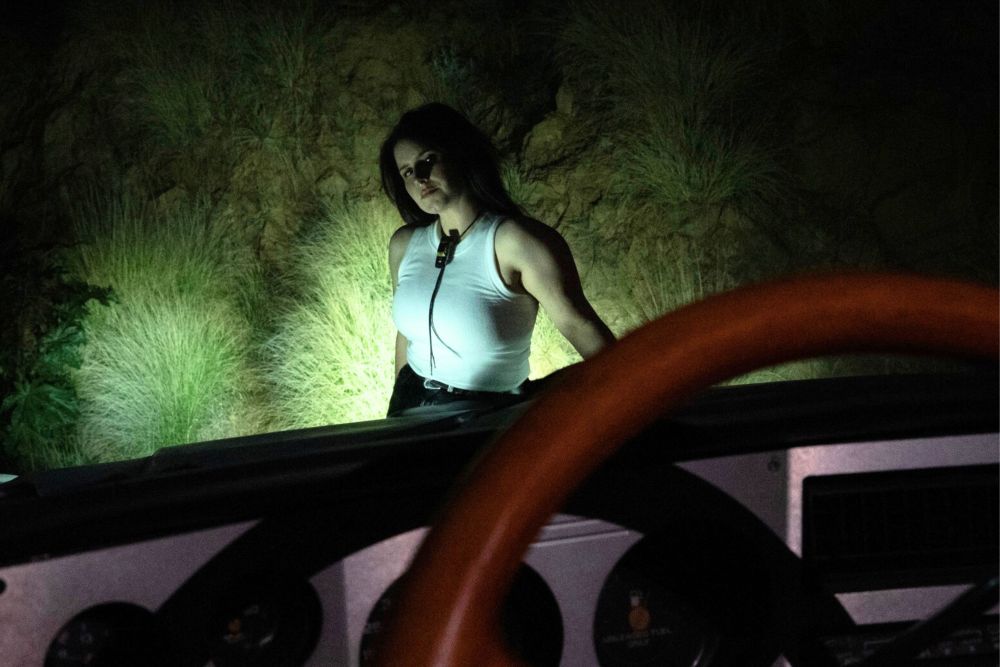
Honestly, it changes from record to record. The Big Truck EP is definitely a truck cab at night on the highway, surrounded by harsh desert landscapes, with something romantic playing on the car stereo, and a strong female character in the front seat.
Check out June Swoon’s Big Truck EP on Bandcamp.
About the Author