Mudqueen
From Montana to Austin and back, Mudqueen’s sound is built on the belief that art belongs in human hands—even if it requires a physical sprint across a basement to hit the drums.
In the quiet, tight-knit art communities of Montana, where the scenery is vast and the DIY spirit is a necessity, the project known as Mudqueen found its spark. Born from a love for the “taped-together” brilliance of 90s indie legends like Pavement and Sparklehorse, Mudqueen’s sound is a masterclass in beautiful imperfection. After a journey that took the artist from the “overdub-hell” of early recordings to a hippy commune in Austin and back home again, Mudqueen has emerged with a sound that is intentionally raw—a deliberate middle finger to the modern automated world.
This latest record isn’t just an exercise in fuzz pedals and basement acoustics, though; it’s a vital emotional bridge. Crafted in the wake of a deeply difficult year and the loss of a close friend, the music serves as a vessel for processing grief through 7-hour marathons of pure, unfiltered creation. Backed by a creative partnership with his wife, Taylor, and a refusal to let AI touch the process, Mudqueen’s world is one where mic’d-up microwaves and glitchy Eventide loops coexist with profound vulnerability. We sat down with the mind behind Mudqueen to talk about the power of seeing others create, the ritual of “snack-motivated” songwriting, and why the most rewarding drum tracks come from sprinting across a basement.
Every artist has a “spark” moment. Looking back at your life in your hometown, when did you first realize that music was going to be your primary way of expressing yourself?
I think my spark came from meeting other artists. I grew up in a smaller city in Montana where there are a lot of tight knit communities of artists. Luckily, there was a small group of local musicians I met that made similar styles of music to what I like.
I think there’s a lot of power to seeing other people do something that you want to do. It made me feel more comfortable to push my writing seeing other people doing it in my orbit.
How would you describe your music to someone who hasn’t heard Mudqueen yet?
It’s indie rock – but unpolished. The kind you might hear from bands like Pavement or Sparklehorse where it feels a little taped together and raw. I like to think it feels warm – maybe textured or something. It ventures into noise and punk, but can be calm too. I guess it doesn’t stay in the same place constantly.
How did your musical journey lead you to the specific sound of Mudqueen? Were you in other projects before this, or is this the first time you’ve really felt like “yourself” on a record?
In high-school, I found a local studio in town to record over top of my overdub-hell of a first project called Woziskee. It was a great first step into recording and I later took the project with me into college and found two friends willing to find a practice space. We got some gigs around Bozeman playing taco shops and a few house parties.
After college, I moved to Austin to pursue music and lived in a sort of hippy/musician commune that’s now a parking garage. Outside the commune, I interned at a professional studio called Estuary Recording where I got most of my production knowledge. I did that for about a year before missing home and feeling frustrated with my songs enough to come back home.
Back in Montana I got into better jobs and married the love of my life. Getting more settled helped me get back to recording with a fresh set of ears. Additionally, I read the most important book of my life which is “How to Write One Song” by Jeff Tweedy.
When I record now, I want results.
Instead of letting things sit on my laptop for years, when I get into a session, I sit down alone for 7-8 hours and finish the song that day, every instrument, every overdub, I get it done, even if it’s shit. Otherwise, I never record full songs.
You’ve noted that this album was a response to a difficult year and the loss of a friend. Do you feel like the guitar acted more as a shield to protect you from those feelings, or a bridge to help you cross them?
I think that guitar, writing, all seem like a bridge to me. I am a big fan of therapy. Last year, I had a close friend die of cancer in their twenties. It was the most intense thing I’ve ever gone through. We got news in a slow drip, with all this extremely painful waiting to hear updates on surgeries and diagnoses. There’s nothing you can do in that waiting period that feels normal, if your skin is tingling from adrenaline for weeks, you just gotta do something.
Recording in basements brings a very specific “breath” to a record.
What was the most challenging—or surprisingly rewarding—part of self-recording in those spaces rather than a polished studio?
Since I recorded on my own, the biggest challenge was my drum setup. I like to separate mics from my computer with some good distance because my desktop is fairly noisy. But since I’m working on drums alone, I would move every track to about 20 seconds, hit record, run to the drum set, put on headphones and start drumming when the music came in (I hate overdubbing/comping). It was a terrible way to do it technically speaking but I liked having that added pressure to nail drum tracks.
You made it a point to mention that no AI was used in this project. In an industry that is rapidly moving toward automation, why was the “human-only” element non-negotiable for you?
Art should be in the hands of artists, if I introduce AI into my process, then it distances my hand in it.
Taylor is credited as your biggest supporter and a “compression-lover.” How does having a partner who understands the technical and visual side of things change the way you approach your art?
I’ve had creative projects for my whole life and Taylor has always been there and digs whatever weird stuff I make. She is a really amazing painter so when i paint with her, it’s like, “Holy shit that looks so good, we should hang that” and she’ll kind of brush it off. I also kind of do the same thing when I show her demos. I think it’s important to take feedback and use it.
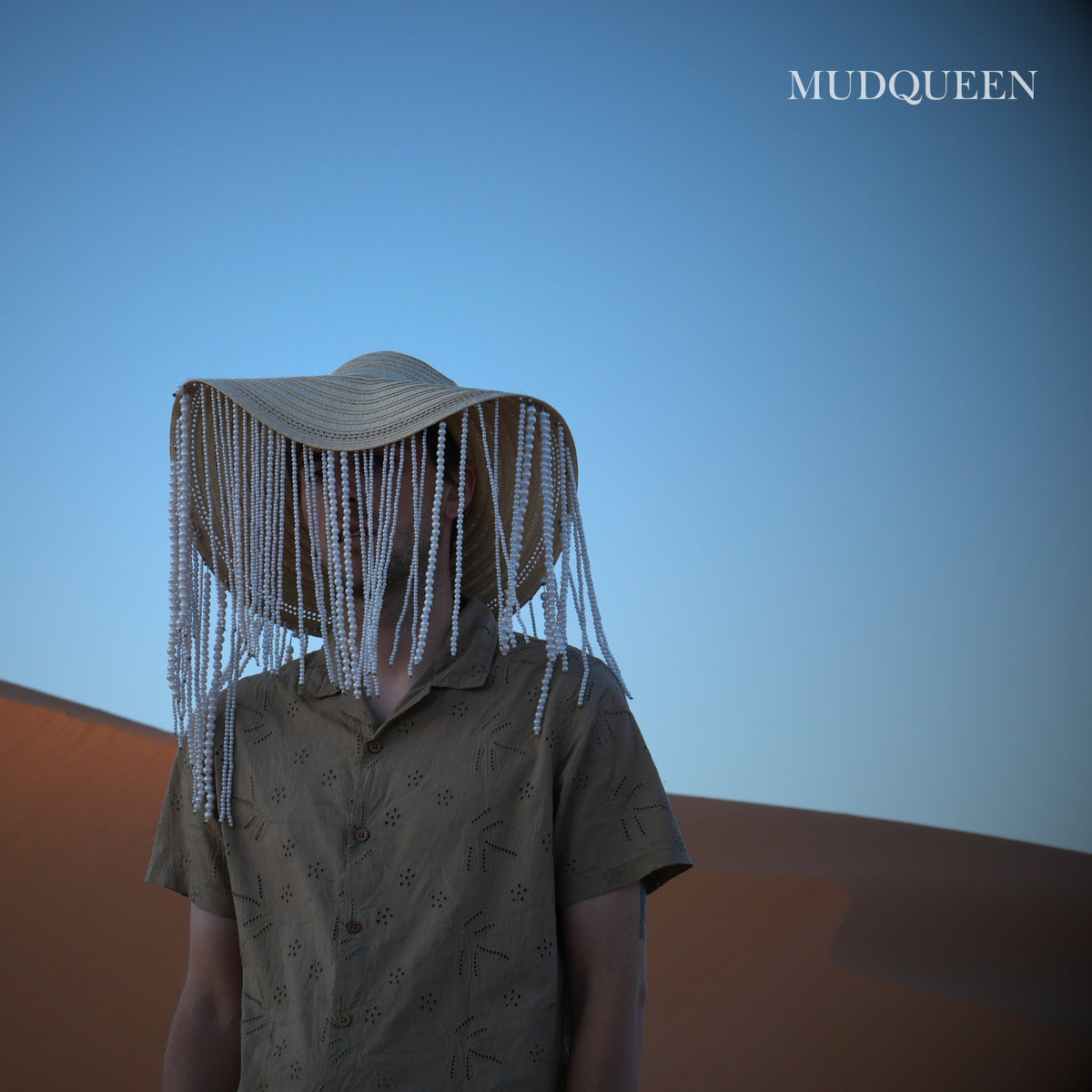
Staying on the visual component, we both worked on that hat for probably 20 hours and took photos near Zion for the cover. We made a lot of fun memories just organizing stuff for the visual components, and it definitely wouldn’t have gotten done without her help.
Working with John Michael Landon at Estuary Recording is a big deal.
What did he teach you about the “final touch” of mixing and mastering that changed the way you hear your own music?
We’re good friends so it was an easy fit when I wanted help with a final pass on mixing and mastering. He’s great to work with because he understands what an artist wants and how to respect their vision, but can also push for sonic changes when there’s head scratching at a mix. Until Next Time, the last song on the record I was the most unsure about bringing to the studio. He added this weird glitched freeze sound from an Eventide H3000 that looped on the intro guitar part, and fit perfectly with the rest of the record. I couldn’t be happier about the final sound.
“La Brea” is a focus track that features drum tracking help from Brandt. How did that collaboration come about, and what did he bring to the table that helped define the energy of that song?
Well earlier I talked about my janky drum tracking setup. I got tired enough of it one day so
I invited him over to count me in. I was also excited to show him a song I was making that I knew was gonna go on the album while making it. Having someone there to count you into a track can be a nice way to mix up a session if you’re spending 100 hours recording in a basement alone.
You mentioned Geoff is a great source for new tunes. If we were to look at your “Recently Played” list right now, what artists would we find alongside the Sparklehorse and Pavement influences?
Recently a lot of MOMMA, Geese, Wetleg, Good Morning, Horsegirl. Geoff loves his MOMMA.
“Radio Dial Skull” is an incredibly evocative title. Can you tell us the story behind that track? Is it literal, metaphorical, or something else entirely?
Kind of metaphorical. I think about how we are guided through noise, static, anxieties in life. We change a dial in our brain to try to do what’s best for ourselves at any moment. I relate that to floating through water in the song.
You mentioned that you found a writing process that let you have fun despite the circumstances. What does a “fun” day of writing look like for you? Is it spontaneous, or do you have a specific ritual?
It’s all about motivation through snacks and beverages haha. That usually makes the difference between a good or bad session. If I can start with a day with no plans for a song and a good cup of coffee, usually something good comes out of it.
“Ice Machine” is another focus track for the album. Sonically, where does that song sit in the “Mudqueen” universe compared to the rest of the record?
Everything on the album I recorded in 2025, but Ice Machine was a song I had banked from 2017 that I ended up re-recording. I like to put feedback behind the mix in most songs, but I liked the original recordings’ drone so much that I put it front and center. When I originally recorded it, the drone was at a much slower bpm so I ran it through enough reverb and gain and that it sort of lined up closer to the bpm I wanted. Sonically, it makes the song feel really ominous and spacey.
Now that the album is out on streaming, how do you plan to bring these songs to a live audience?
I’m excited to experiment on stage.
We’ve got a band together and are curious about hitting the road. We’ve got microwaves mic’d up to loop pedals, costumes and too many fuzz pedals. Aiming to start playing this summer, should be fun.
Listen to Mudqueen on Bandcamp.
About the Author