Wolf Whistle Wounds
An inside look at the cinematic synth-core and strikingly honest lyricism behind the most confrontational chapter of the Wolf Whistle Wounds saga yet
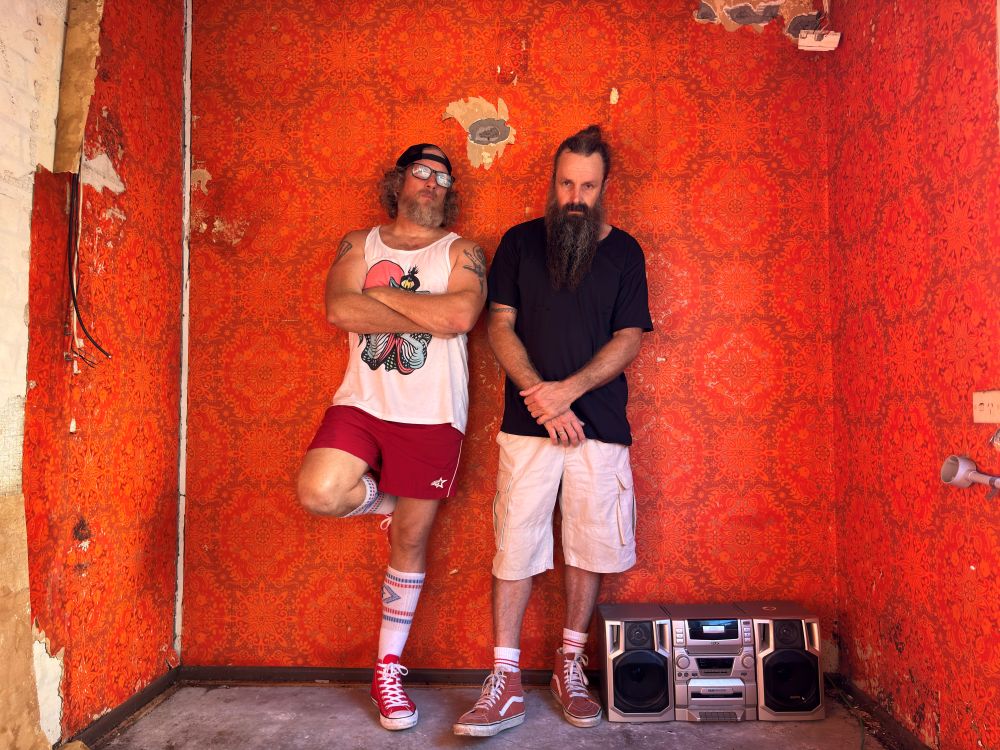
If the industrial-rock movement of the 90s was a cold, mechanical factory, Wolf Whistle Wounds have broken in to install a beating, anxious heart. Described by Blank Magazine as “Rage Against The Machine if ‘the machine’ was a heart,” the duo—composed of the multi-hyphenate Buffy Prescott and death-metal-veteran-turned-maestro Flames Benson—crafts a sound that is as cinematic as it is claustrophobic. Their latest single, “Imposter Sindrone,” is a relentless dive into the “quiet panic” of domestic insecurity, trading typical genre bravado for a hauntingly honest vulnerability. Engineered by Jeff Lovejoy, the track leans into a “dirty filthy” tension that refuses to resolve, capturing the cyclical nature of self-doubt through a sonic lens that feels like a live-action battle scene for the soul.
Building on the noir-ish foundations of their debut, The Gaslight District, the pair has managed to bridge the gap between “Golden Age” backpack rap and the abrasive textures of industrial synth-core. It is an idiosyncratic alchemy where the ghost of Brian Molko meets the production grit of El-P, resulting in a sound that sits comfortably alongside heavyweights like Death Grips and Nine Inch Nails. As they gear up for their self-titled 2026 LP, Wolf Whistle Wounds are exploring the “sin drone” of modern existence—that buzzing feeling that we are doing everything wrong, yet finding a kind of liberation in the noise.
Take us back to the beginning: how and when did you both first cross paths, and what was the specific ‘spark’ or conversation between Buffy and Flames that made you realize Wolf Whistle Wounds needed to exist?
Flames was a respected guitarist in the local death metal scene. I was a Golden Age and backpack rap fan who identified with early-80’s punk. Over the next decade we would collaborate on several projects – from full-blown seven-piece rock acts to guitar-drums-vox experimentation. As those bands fell apart, I delved into the solo Buffy Prescott project seeking producers to contribute music to my ‘ImMature’ alt-rap saga. Flames’ offerings to that body of work just showed beyond doubt that an undeniable alchemy existed. Soon after, Covid hit and we took that time to focus on fashioning something original; combining all of our vast influences into something singular. Those songs became ‘Wolf Whistle Wounds’.
We’re picking up a heavy NIN vibe from the new single—that industrial synth-punk energy is incredible. Your sound pulls from so many different places; besides the obvious industrial icons, who are the ‘under-the-radar’ influences that helped you bridge the gap between rock and experimental hip-hop?
Thank you! That’s welcome company.
I guess the lesser-obvious artists that helped inform the ‘Imposter Sindrone’ DNA would be – glassjaw, Avalanches, Speed, DJ Shadow, El-P, Kenny Beats, One Day As A Lion and N.E.R.D
Bonus: the vocals in the breakdown answer the question, “What if Brian Molko tried to rap…?” Ha.
The title is spelled “Sindrone” rather than “Syndrome.” Is this a nod to the “drone” of industrial textures in the track, or does it represent a specific “drone-like” state of mind when dealing with insecurity?
Interestingly – a bit of both. We set out designing the music to reflect the feel of the narrative. And if the story here is about crippling self-doubt, we want the music to represent that.
It is also a little nod to a collective feeling that we are constantly doing the wrong thing = Sin drone.
You’ve mentioned the song intentionally leans into tension rather than resolution. In a world of “radio-friendly” structures, why was it important for you to leave the listener feeling a bit unsettled?
That tension is truth. The insecurity addressed isn’t the kind that just disappears with a simple solution. It revisits in cycles. You can feel like you have it figured out for a stint and then BOOM you’re crashing out again with self-doubt.
As a listener, I respect that kind of honesty; and I want to pay that forward and provide comfort for people in a similar predicament – I may not have the answer, but know that you are not alone.
Asking “Why would this person settle on me?” is a hauntingly honest lyric. Was it difficult to take a “tough” genre like industrial/electro-punk and inject it with such raw, domestic insecurity?
If we want to give ourselves (and by default, listeners) something original, we can’t be concerned with the expectations or boundaries a genre is supposed to have. No matter the sonic ‘style’ of the vehicle, I think vulnerability is key when you are trying to present something sincere. Rules be damned.
Like, there is an erotic take on the chorus that references the pressures of bedroom performance; not a topic usually addressed by stereotypical genre ‘brutes’.
You worked with Jeff Lovejoy on this track. Having worked with legendary Aussie acts like Regurgitator and Powderfinger, what “flavor” did he bring to the sessions that helped define the Wolf Whistle Wounds sound?
A lot of the work we had done previous to WWW was very DIY and sonically lacked polish and a professional finish. But these new songs demanded more respect.
We were blessed to have Jeff agree to collab with us and give these songs that expert gloss. He introduced a few structural shifts, but his ear and talent mainly serviced the textures of the aural story we were trying to tell. He made big HUGE, dirty FILTHY and the breathing DYNAMIC. All while giving the many, many elements we layer their own lane. It is an honour to have him in our corner.
There’s a lot of talk about your music being “cinematic.” If Imposter Sindrone was the lead track on a film soundtrack, what kind of movie would it be?
I hope they never make this because the OG is so, so good, but I could hear this playing over a battle scene in a live action version of ‘Chainsaw Man’. That would be dope.
How does the creative dynamic work between Buffy and Flames? Is one of you the “chaos” and the other the “structure,” or do you both just jump into the noise together?
We never walk into a creative space and say “Hey, let’s make a song like ‘X/Y/Z’”. As I’ve mentioned, we just make a piece of music intended to frame the vibe of the lyrics or vice versa – “Do you have any music that sounds like these words I’ve written?”
Flames is definitely the maestro, though. I would be but a bad beat poet without him.
With a name like Wolf Whistle Wounds and a debut titled The Gaslight District, there’s a strong sense of noir-ish imagery. How much does the visual aesthetic of the band dictate the music you write?
If you are soundtracking life, then you can’t help but have visual elements attached. Wolf Whistle Wounds are describing real moments theatrically – the lyrics aim to recreate these incidents in your mind. But those images will differ for every listener, bringing their personal experience to the interpretation.
Music is aural first, obviously. But it creates images as well. Even if its just a colour.
How does Imposter Sindrone bridge the gap between your debut and the upcoming self-titled album arriving in 2026?
It is just a part of a bigger picture; one chapter in a larger story.
We create these songs so they can stand alone, but if there is still a breed of listener out there who enjoys an overarching narrative of an entire LP – dare I say ‘a concept album’ – there is going to be plenty of juicy story beats to dig into. And more instalments to come before the album drop, too!
My Chemical Romance and Prince Paul productions are high-water marks for that type of presentation and definitely an inspiration in how we painstakingly structured the album!
This track is relentless and “immediate.” How are you planning to translate this industrial, synth-core tension into a live stage show?
We are essentially a two-piece, so we navigate the soundscape with a couple of MPCs and a heavy-arse guitar. We build beats, collage samples and hammer frets between moving and murdering the mic.
The music demands that our stage presence remain high-energy and we want the audience to feel what we do and what we say.
That connection is everything.
Listen to Imposter Sindrone on Bandcamp.
About the Author