Scenius
Trust, Collective Creativity, and Embracing Brian Eno’s Idea of Communal Genius
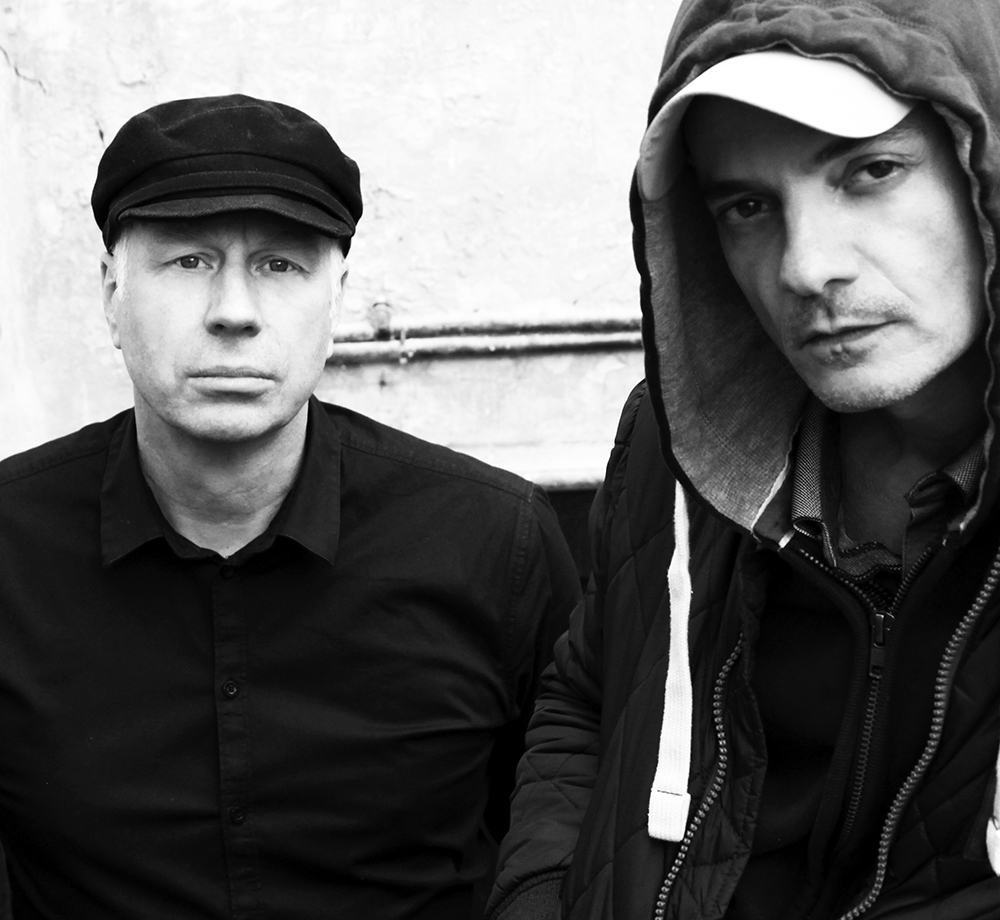
The Anglo-French duo Scenius—comprising UK producer Steve Whitfield and French vocalist Fabrice Nau—are proving that in the digital age, a shared vision is more potent than a shared studio. Known for their blend of “dark and accessible pop,” the band takes its very name from the Brian Eno concept of “collective creativity,” highlighting their belief that great ideas emerge not from a lone genius, but from a supportive, intellectual ecology. This philosophy is baked into their origin story: after first meeting when Steve engineered Fabrice’s debut album in Angers, France, the pair quickly bonded and began a cross-channel collaboration that saw them craft their debut, Enough Fears (2020), and subsequent albums, entirely remotely—a long-distance dynamic that predated and perfectly suited the constraints of the global pandemic.
Drawing heavily on the atmospheric tension of post-punk icons like Joy Division and New Order, filtered through the synthetic pioneering spirit of Kraftwerk and the ambient textures of Boards of Canada, Scenius has intentionally cultivated a sound that is both vintage and cutting-edge. Steve, the studio maestro, is an unapologetic advocate for analog equipment, crafting every sound from scratch on vintage synths and drum machines to avoid the “same drum machine” malaise of the 80s and the Auto-Tune saturation of the modern era. Meanwhile, Fabrice contributes his multilingual, lyrical sensibility, letting themes of introspection, technology, and the human experience organically surface from the music itself. As they continue to expand their sound—exploring more cinematic textures on recent singles and translating their intricate studio work to the stage—Scenius remains a fascinating case study in borderless creativity and the power of two minds working as one entity.
How would you describe your sound to someone who hasn’t heard your music before?
What first inspired you to start making music?
Steve: Dark and accessible pop. I think that comes from our joint love of classic pop music and post-punk.
Most of the music I listen to has an attitude and atmosphere about it. When I was a teenager I got into punk. It was at some of the early gigs I went to that I realised you didn’t have to be a virtuoso to write and play interesting songs. About the same time I got into Kraftwerk and knew I had to save up to buy a synth!
Scenius formed as a cross-channel collaboration between Leeds and
Angers — how did the two of you first connect, and what drew you to
work together?
Fabrice: We first met when Steve engineered and mixed the debut album of my first band. He had already worked with a few French bands signed to a label based in Angers, my hometown, which is how we heard about him just as we were looking for an engineer and a studio for our own debut. We really bonded during that session and stayed in touch afterwards.
Then, just before the pandemic, I asked Steve if he had any unused electronic instrumentals he could send me so I could try adding vocals. He sent over a few tracks, and I found them instantly inspiring. The first idea I sent back ended up becoming our first single, Glass Rain.
The name Scenius comes from Brian Eno’s concept of “collective
creativity.” What does that idea mean to you personally, and how does
it manifest in your creative process?
Steve: No-one has ever created without the influence of others, even The Beatles and David Bowie were influenced by other people. So we have to accept that we write because of what people have done before us.
Fabrice: Eno’s idea is basically common sense: the notion of “genius” as in “this person just has something in their DNA” is mostly a myth. Take any great writer, musician, or painter and place them in a time or environment where there’s nothing to feed their creativity — they’re not going to produce much. We’re all obviously shaped by everything that has happened before us and around us.
So yes, it’s something we all kind of know deep down. But Eno has a great mind for this sort of things, and he’s found a perfect way to sum it up by coining the word Scenius.
You began collaborating remotely before it became a necessity during
the pandemic. How did that early experience of long-distance creation shape the band’s identity?
Steve: The first couple of songs were written before the first lockdown, but most of the first album was during the pandemic.
Fabrice: We would have written our first album remotely anyway, simply because we live a thousand kilometres apart. The pandemic just happened to give us more time to work on it. And since then, we’ve written two more albums without ever being in the same room. I’m not sure the long-distance aspect has shaped our identity that much, though — I think our music would sound pretty much the same if we were sitting together in a studio. But working remotely has definitely made us more precise and concise when we exchange thoughts about an arrangement, a mix or a master. You can’t really faff around in a late-night email the way you might when you’re chatting in person 🙂
Your music has been described as a fusion of classic synthpop and
modern electronic textures. How do you strike that balance between
vintage and contemporary sounds?
Steve: Although I use a lot of old synths, I just don’t want to copy what’s gone before. I also use a few virtual synths, mangle loops and the occasional guitar on the new album. I’d say we’re contemporary because of how we use these old synths. I spend a lot of time crafting the sounds.
Artists like Kraftwerk, Joy Division, and New Order clearly influence
your sound. Are there any unexpected or lesser-known influences that
have shaped your work?
Steve: For me I’d pick out Boards Of Canada, they’re still well known but not as much as the bands you mentioned. I think I’m influenced by a lot of stuff, not just the post-punk stuff. Classic pop music, some dance music like Orbital and Leftfield, and even artists like Jonny Cash and Leonard Cohen. Both of us have pretty wide tastes in music.
Where do you find inspiration for your lyrics or compositions?
Fabrice: Mostly by listening to music we connect with. That’s usually how you get into making music in the first place, so it’s best not to forget that. Nothing inspires you to write a song quite as much as someone else’s great song. For vocal melodies, I’m also very lucky that pretty much every new musical idea that Steve sends me is very inspiring. There’s nothing I enjoy more in the creative process than that moment when a melody suddenly fits perfectly with the tone and atmosphere of an instrumental.
As for lyrics, I usually come up with a vocal melody by singing along to the music, and once I’m happy with the melody, there are usually a few bits of actual lyrics hidden in the gibberish I’ve been singing. I tend to keep those lines, because I feel that they’ve come straight from the music itself. So I use them as the starting point for the rest of the lyrics.
You’ve spoken about avoiding digital presets in favor of physical drum
machines and vintage synths. What’s the creative significance of using
analog equipment in today’s digital age?
Steve: I really like that my old synths don’t have presets. I have to create every sound we use from scratch, it forces me to come up with my own sounds. I don’t like that period of pop music in the 80’s when everyone got the same drum machine, the Linn, and used the same sounds. Like that bloody DX7 bass sound that everyone used. Before that everyone had to make their own sounds and it made all the bands sound different from each other. Today I guess it’s things like Autotune that are making so many artists sound the same. Although we do use some old drum machines, I also make a lot of drum sounds on my synths.
How do your respective backgrounds — Steve’s production experience and
Fabrice’s multilingual, lyrical sensibility — complement each other in
the studio?
Steve: I may be the studio guy but Fab’s ears are fantastic. He contributes massively, albeit remotely, to the mixing process.
Fabrice: I think what really works between us isn’t just that each of us has our own strengths — it’s that we both trust that any idea we come up with is only truly great if the other one loves it too.
Your debut album, Enough Fears (2020), was released during lockdown
and touched on themes of isolation and introspection. Did the global
mood at the time directly influence your songwriting?
Fabrice: Obviously, the mood you’re in and whatever is happening around you have a huge influence on the lyrics you end up writing. My writing process doesn’t rely on defining a theme first; I prefer to let the theme make its own way into the writing. I don’t sit down thinking, “For this new song, I’m going to explore this particular theme or emotion.” It’s only once the song is written — or has written itself, as I should probably put it — that I realise what it’s about: things I’ve heard, lived, learned, or thought.
And the lockdown, the whole pandemic period, was such a unique moment. I would’ve been surprised if it hadn’t surfaced in the lyrics I was writing at the time.
On Life Is a Thing (2023), you expanded your sound and explored
post-pandemic themes. How did your approach to writing and production
evolve between the two albums?
Fabrice: I think it evolved mainly because our relationship to this strange process of writing songs remotely had evolved. On the first album, it was mostly me trying to sneak my vocals onto the tracks Steve had composed — I would even try to stick as closely as possible to the original structure.
But on Life Is a Thing, once we’d gained confidence that this way of working actually worked, we allowed ourselves to dig deeper into the different directions each idea could take. Like, completely changing a structure, dropping a synth part, replacing a snare sound, or even changing a chord or two to better suit a vocal idea.
Your 2025 singles Swift As Light and Beat The Light have a distinctly
cinematic feel. How important are visuals and atmosphere in your
music-making process?
Steve: I’d love to do some music for a film. I do listen to a lot of film composers like John Barry and Thomas Newman. Although melody is important, whenever I make music, atmosphere is the vital element I’m looking to create.
The accompanying music videos are striking — how do you approach the
visual side of Scenius, and how involved are you in shaping the imagery?
Steve: We are completely involved! All the ideas come from us as we don’t have budgets to use anybody else. A couple of friends have also helped on a couple of them, but generally I edit it all together and then send it Fab so he can dirty it up a bit.
Fabrice: We approach the making of our visuals, covers and videos, in a pretty punk DIY way. Neither of us was trained as a graphic designer or filmmaker, but we know what we like — and what we don’t — which is really the most important thing. Skills are just tools to get you there, and more often than not, having fewer skills forces you to be more creative, and in a more personal way.
You’ve recently begun performing live. How does translating your
studio sound to the stage change your relationship with the music?
Given your remote working dynamic, what’s it like finally sharing the
same physical space during rehearsals or gigs?
Steve: It’s great getting together to rehearse and play gigs, although we both do a lot of rehearsing apart as well. Like all bands, when you start playing live the songs start to change a little. I think that’s a good thing, I wouldn’t just want it to sound exactly like the studio versions. We have changed some of the arrangements so they work better live.
Have you considered bringing additional musicians or collaborators
into the live setup or future recordings?
Steve: It would be great to have someone hitting things at the back but it would never turn into a rock drummer over playing. But at the moment with budget constraints, it makes sense to keep it just the two of us.
Much of your work deals with introspection, technology, and the human
experience. What recurring ideas or emotions drive your songwriting?
Steve: I like music that isn’t too perfect. So using a lot of old analog synths helps with that, they are quirky and sometimes things happen that you weren’t expecting. I also record a lot of synths parts by hand, without quantising or editing, which gives an organic feel to some of it.
As a Franco-British duo, do you think your cross-cultural perspective
influences your sound or worldview?
Steve: I love France and French culture and I think Fabrice feels the same about the UK, so I guess something must have seeped into the music but not on a conscious level.
With technology enabling global collaboration, do you see Scenius as
part of a broader movement toward “borderless creativity”?
Steve: Well it’s certainly easier than any other part of history to create with someone who doesn’t live around the corner!
How do you hope listeners feel when they engage with your music —
especially those discovering you for the first time?
Fabrice: We hope they feel the same excitement we do when we stumble upon a song or an album that really resonates with us. It’s such a special feeling — one that, for me, very few things can match. I love books, films, art, and a good glass of wine, but music is just in a category of its own.
So I guess, in a way, when you make music you’re trying to give back even a small part of what you’ve received from the music that has moved you.
Finally, what’s next for Scenius? Are there plans for a fourth album,
collaborations, or a tour on the horizon?
Steve: We already have most of the fourth album written! And we are aiming to do a lot more gigs!
Fabrice: There’s also a few remixes and collaborations in the pipeline. And we hope to be playing gigs more regularly.
Listen to the album 13 Billion Dark Years here.
About the Author