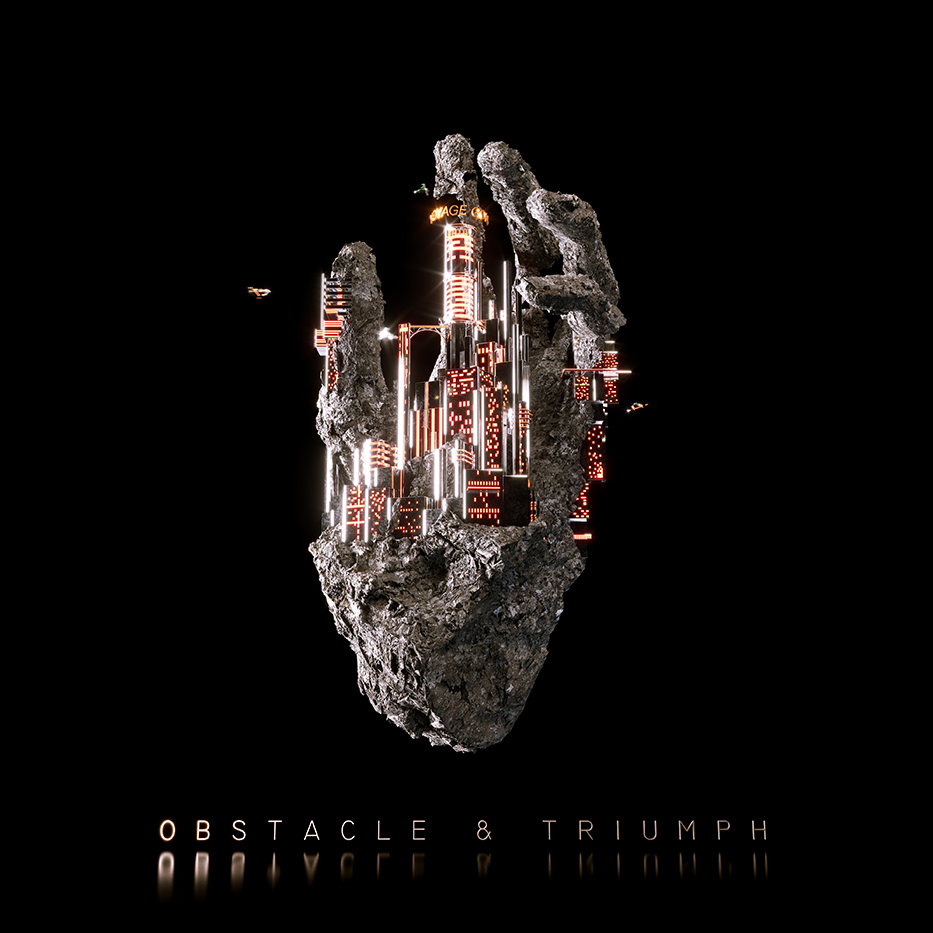
Obstacle & Triumph
From Shared Vision to Six-Headed Symbiont: The Unconventional Evolution of Voyage Gold’s Creative Collective
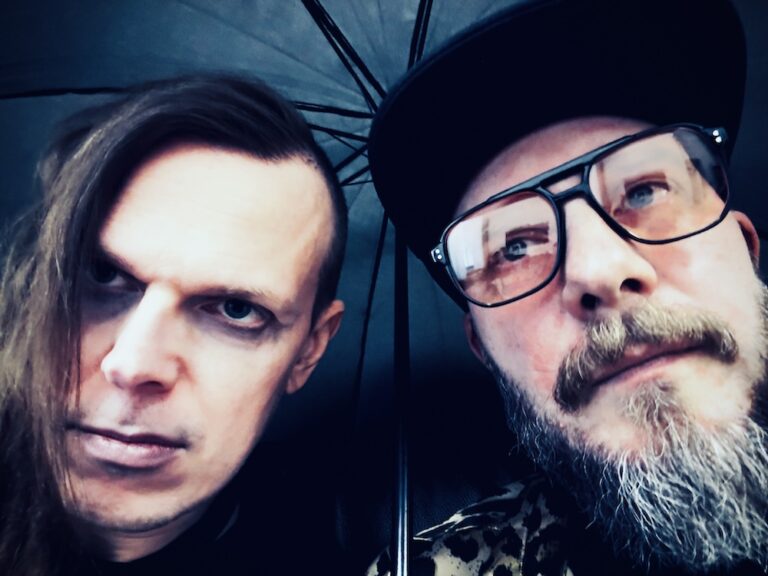
When Voyage Gold first emerged a decade ago, they began with a singular, almost mystical vision: “one guitar and four hands,” synchronizing minds and bodies to chase a sound so pure, so ideal, it might never be fully reached. That search quickly became a collective quest, transforming the core duo into a six-limbed organism, a “symbiont” group that connects their creative synapses into a single entity. The resulting sound—a bold, “retro-futuristic” alchemy of post-punk gloom, new wave shimmer, and epic, stadium-scale choruses—immediately set them apart in the musical landscape. Now, the collective marks its tenth anniversary with the release of the high-density EP, Obstacle & Triumph, a compact 24:50 minute journey designed to “hit hard—from the first minute to the last.”
This anniversary EP is not just a reflection on the creative “triumphs and hurdles” that define any artistic process; it’s a confident, philosophical statement on existence itself. With tracks described as “a hymn, a star in its own cosmos,” Voyage Gold confronts humanity’s sense of loneliness in the universe by offering a “cosmic mirror” through their music. They see their work as transforming “the mosaics of our being into sound,” encapsulating the “essence of earthly existence” in repetitive, insightful “sound capsules.” From the intense opening of “AI Nemesis” to the gentle release of “Ultimate Beauty,” Obstacle & Triumph distills a decade of exploration—including sampling tennis hits and dinosaur screams—into an intense, exhilarating listen that confirms the six-headed collective is just reaching its rebellious, yet focused, adulthood.
How did Voyage Gold first come into being, and what has changed since those early days?
Ronny: We started with one guitar and four hands. With this innovative technique, we were able to synchronize our minds and bodies to awaken a shared vision of the ultimate sound. This sound then began to lead a life of its own—an ideal we chase without ever fully reaching it. To get closer, we searched our circles for support. Other enthusiasts also searching.
Each new symbiont connected their synapses to the organism known as Voyage Gold. A creature with six limbs that move, develop, and twitch together. Two are better than none, and six are better than four.
“Obstacle & Triumph” marks your 10th anniversary. What obstacles and triumphs shaped the creation of this album the most?
Matt: Every creative process consists of triumphs and hurdles that you go through until you emancipate yourself from your artwork. When the work is finished, the confrontation ends. From then on, artist and artwork go their separate ways. We turn to new things, and our work will resonate out there in the world—be it the music industry, the art world, or the emotional introspection of every music lover.
A ten-year anniversary is a good moment to acknowledge that process. We want to look at it with joy and not leave it as a heavy, work-laden field. It’s a milestone in our band’s history, just like the guiding theme of this album.
Going into each individual detail would go beyond the scope here. We’d like to refer again to the research of Arpa Netrowica, who already delved deeply into the creative process of Voyage Gold a few years back. And yes—congratulations to her as well; her new book, The Creation of Voyage Gold – Will the golden era ever stop?, will be published in a few months.
The EP is only 24:50 minutes long yet aims for an epic scale. Was the compact, high-density format intentional?
Ronny: Yes, the album was meant to hit hard—from the first minute to the last. And besides, that’s exactly the amount of time it takes to walk from our apartment to the rehearsal room. No one taking that route should ever be bored again. That’s why this album exists.
How would you describe the emotional arc of the album from “AI Nemesis” to “Ultimate Beauty”?
Matt: Each song is an intense experience in itself. You’re pulled in at the beginning and gently released with a homage to earthly life. Every song is its own world—its own new and distilled experience.
You describe every song as “a hymn, a star in its own cosmos.” What cosmic or existential ideas guided this record?
Matt: Humans often feel alone in the universe. Yet there are already 8.2 billion of us—well, as of mid-2024; you have to mention that nowadays given how fast it’s changing. But yes, our existence is unique, and it’s good to be confronted with that. The cosmic mirror, in all its vastness, seems like a fitting answer. We can all look at the stars. It’s something connecting and yet incredibly individual.
We try to capture that in our music—transforming the mosaics of our being into sound.And in some study from the eighties at Stanford, it was found that hymns, on average, move people the most. We saw that as a kind of guaranteed success. Delivering humanity’s insights in repetitive sound capsules through us onto the stage. But well… it is what it is, right?
Compared to previous releases, what new sonic territories or production techniques did you explore?
Matt: As music nerds, we always want to explore new sonic spheres. We experimented with synths, refined our beat-making methods, and also returned to the electric guitar with a fat amp and a punchy bass.
But above all, it’s the Easter eggs our most fanatic fans will love. On Champions on the Court, for example, we sampled tennis hits and turned them into a synth. And we hid other interesting sounds in less obvious places—just like we did back on Tales of the Timehunter with the dinosaur screams.
These are the things that excite the super-listeners, when after many replays they still discover something new.
Your music blends post-punk, new wave, pop, and stadium-scale choruses. How do you maintain cohesion within such a wide spectrum of influences?
Ronnie: At the end of every process, there should be a hymn—something that grabs and excites us. That joy is the connective thread of our work.
You call your sound “retro-futuristic.” What does the future sound like for Voyage Gold?
Matt: That’s a great question! But we let the future be the future and just enjoy seeing what happens when we turn on the machines. We’re already working on new songs guided by a somewhat darker mood. But we’re also excited to hear what our sound will be like in 20 or 30 years. It’ll be fun. And one thing’s certain: it will only get better.
With six people forming a single sound-entity, how do you make decisions as a consensus-based collective?
Ronny: In every process there are “aha” moments where all symbionts look at each other and wonder how they got here. Then we know we’re on the right path.
Every person at their instrument is first and foremost an executing organ. It has the motor skills and the ability to play it. A first idea, a sequence of notes—these things are placed in the room, the ego is sacrificed to the organism, and in return it receives creative wishes and impulses.
What role does your ghostwriter, Moses Tyler Head, play in your creative process?
Ronny: Moses Tyler thought of everything and chose us. Thanks, Moses.
You mention “10 years of overwhelming unsuccess.” Is this self-irony, a critique of the industry—and how do you personally define success?
Ronny: Managing to stay under the radar of the almighty algorithm for ten years with such good music is unbelievably unsuccessful for us. Just imagine if the Beatles had only ever been heard by themselves throughout their entire career—that would also be remarkable.
Looking back at “Democracy Data VII,” “Disconnection of Nebula One,” and “Volcano Drive Sessions,” how has your creative philosophy evolved over the years?
Matt: While Democracy Data VII is clearly the birth, Disconnection of Nebula One can be seen as a beautiful childhood. Volcano Drive Sessions, on the other hand, is more like a rebellious teenage phase—all that experimentation, and why does nobody sing on some of the tracks?
With the new work, we’ve finally reached adulthood—but really, things are only just beginning.

How important was it for you to honor your early punk and hard-rock roots on this new album?
Ronny: That’s the foundation. Without punk’s DIY attitude and hard rock’s massive sound as our goal, we would have made different music. Maybe something with singing bowls… who knows.
What has been the most defining moment of your decade-long journey as Voyage Gold?
Ronny: Every recording session has its own defining moment. A first breakthrough, the moment when the song reveals itself to us in all its beauty and we know we’re on the right path. From then on, there’s no more trying or doubting—because it’s going to be good. We just have to submit ourselves to the song.
Your discography is filled with cosmic imagery—nebulae, galaxies, holograms, titans. What draws you so strongly to outer-space metaphors?
Matt: Some things can be explained well with simple words, while others need metaphors to describe the absurdities of existence itself. Life is a feeling, just like music is. Just as someone battles their inner demons to grow, we need a cosmic language to highlight our own insignificance.
It was understood long before the internet existed, and it will be understood long after the last human logs off.
“Obstacle & Triumph” carries an almost heroic tone. Do you see Voyage Gold as myth-builders within the post-punk landscape?
Ronny & Matt: No, we don’t create myths—we just tell what’s already there. Beautiful melodies in a dark world.
What does a typical writing session look like for a six-headed collective?
Ronny: Every session begins with the journey to the studio. Planning, packing, setting up—that’s part of the ritual. Only then can we begin. At the start we jam briefly to open our minds to the group. Suddenly, the host enters the room—usually materializing as an idea. We symbionts pounce on it, approaching from all sides. All elements of the song develop side by side with the approving cheers of the various disciplines. Ideas swirl everywhere. The room is filled with laughter and champagne. Until it’s enough. Then Moses Tyler Head captures all impressions in his machine and outputs a structured artwork—the song.
Mixing and mastering were done by Vincent Wedel and Robert Wenzel. What influence did they have on the album’s final character?
Matt: We’ve been working with both of them for several years. Beyond the professional collaboration, there’s friendship. When you’ve known each other that long, you can align the vision more easily.
How do you decide which ideas become singles and which remain album tracks?
Matt: On this album, every track could be a single. That’s why it’s so short—we intentionally left out the fillers.
Your music strives for epic stadium energy. What does your live show look like today, and how might it evolve during this album cycle?
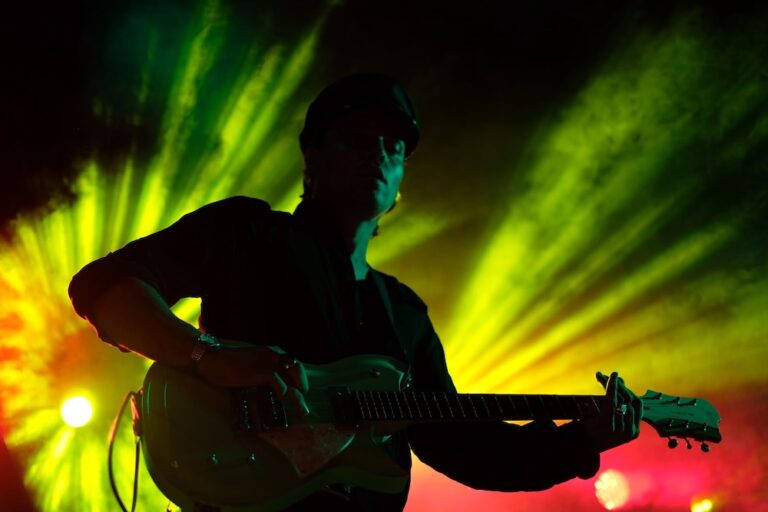
Matt: We’re currently working on a new concept for the live shows. The Voyage Gold Management Team has requested confidentiality. I can only say this: it’s going to be awesome! It’s set to kick off in summer 2026. First info on the campaign and tour dates will come around early next year. So stay tuned. And one thing the Management Team can already promise: no one will have to travel more than 100 km to the nearest location.
After 10 years, what does success mean to Voyage Gold now?
(Guitarhero Moon Unit enters the room) Moon: Success is a metric that the Voyage Gold project does not wish to subordinate itself to. The infinity of the universe should be the benchmark for the music that springs from it. What success means cannot be measured within our lifetime.
If this album sends another “signal into the galaxy,” what do you hope listeners — or extraterrestrials — hear in it?
Ronny: The essence of earthly existence.
What’s next after “Obstacle & Triumph”? More singles? Another EP? A completely new phase?
Matt: As mentioned, we’re already working on new songs. The band is always a few steps ahead. But for now, we wish you lots of fun with the new record. Keep on rocking!
About the Author