Uday Benegal
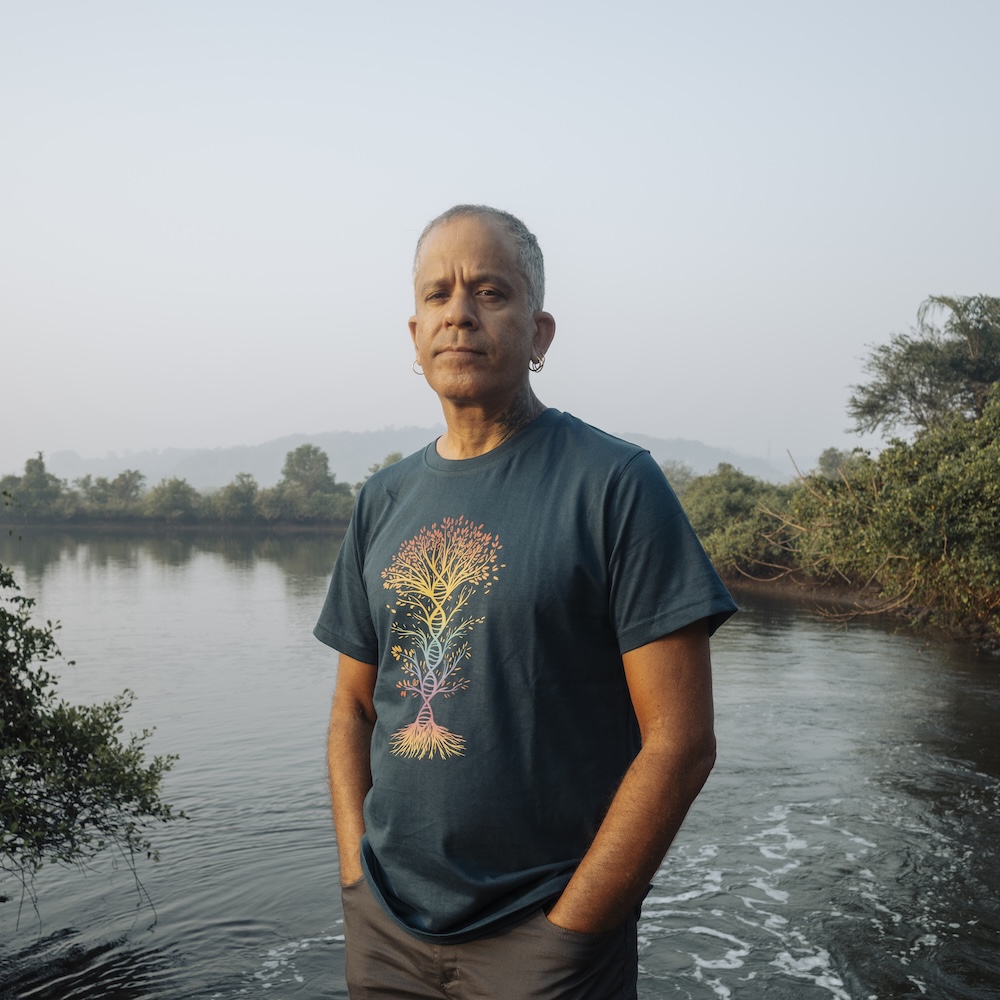
The Indus Creed frontman reflects on building Indian rock from the ground up, embracing vulnerability on his first solo release and why Human Be is the beginning of a new creative journey.
For more than four decades, Uday Benegal has remained one of the defining voices of Indian rock, helping lay the foundations for the country’s independent music movement long before it found mainstream recognition. As the frontman of Rock Machine—later reborn as Indus Creed—he played a pivotal role in taking Indian rock beyond college festivals and into the national consciousness, earning critical acclaim, devoted fans and industry recognition along the way. From pioneering original rock music in the 1980s to releasing acclaimed albums such as Evolve, working with Grammy-nominated mix engineer Tim Palmer, receiving VH1’s inaugural Hall of Fame honour, and most recently opening for Def Leppard before a packed Mumbai audience, Benegal’s journey has been one of constant evolution without ever losing sight of his artistic identity. Yet despite the milestones and accolades, his focus has always remained firmly on the music rather than the mythology, choosing authenticity over nostalgia and creativity over comfort.
Now, the legendary frontman is stepping into deeply personal territory with Human Be, his first-ever solo release. Produced by Aria Nanji, the five-song EP trades arena-sized riffs for intimate acoustic arrangements and meditative songwriting, introducing what Benegal calls “peacecore”—music rooted in compassion, empathy and quiet reflection. Featuring an acoustic reimagining of the Indus Creed classic “Fireflies,” Human Be marks the beginning of a parallel creative journey, one that sits comfortably alongside his hard rock legacy. In this exclusive conversation with Indie Sound, Benegal reflects on the albums that changed his life, the birth of Rock Machine, the evolution of Indus Creed, and why, in an increasingly noisy world, vulnerability may be the most powerful sound of all.
Can you take us back to the very beginning? What first sparked your interest in music?
Uday: I guess the interest was first sparked by all the music my dad played at home on his record player. Very loudly. It was mainly Indian and Western classical, but he’d occasionally put on some Beatles or CCR… or something like George Harrison’s Concert for Bangladesh. The interest turned into passion, fixation and obsession the day my older brother (I was still in school when he joined college) brought home an album by The Who called Quadrophenia. My life changed right there and then.
Who were your earliest musical influences, and how did they shape your sound?
Uday: The Who, mentioned above, was probably my biggest influence in the early years. Even more specifically, it was Pete Townshend—the guitar player, songwriter and occasional singer for that band. I was also very heavily into bands like Led Zeppelin, Deep Purple, Santana, Yes, Steely Dan, Thin Lizzy, CSNY and many more. More than shaping my sound, they shaped me. I’ve never wanted to emulate or sound like any other band or singer in terms of my personal style. But their vibe, energy, lyrical content and form deeply affected me and the way I wanted to create music. The movie Woodstock (1969) also made a massive impression on me. As 13-year-old me sat alone in Eros cinema in Bombay (as it was then called), I was gobsmacked beyond description at how that concert and the ideas of rock music, personal freedom and free love impacted me. From Joe Cocker to Jimi Hendrix to Sly and the Family Stone, I was hooked for life. There was nothing I fantasised about more than being on stage with a rock band.
Was there a defining moment when you realized music was more than just a hobby—that it was what you wanted to pursue?
Uday: The day I got a job! After refusing to do more college than my 12th, I did a hotel management course to train myself vocationally. Ten days into my role as a trainee room service manager doing the night shift at the Ambassador Hotel in Bombay (the universe works in strange and beautiful ways), I realised if I didn’t quit the drudgery I would forever be a slave to that version of life. And worse, I would have to quit the band I was in—Rock Machine was my lifeline to fun and freedom. There was no way I was letting anything or anyone take that away from me.
What was the music scene in India like when you first started performing?
Uday: There was no scene. No TV, no radio, no internet (obviously). No clubs or bars to play in either. It was pretty much the occasional end-of-academic-year college festival and the even rarer public concert put together by some enthused and dedicated promoter.
How did the original members of Rock Machine first meet, and what brought you all together?
Uday: The original members (who did not include me or Zubin Balaporia, our keyboard player) met in college. I even saw them play a gig live at Mumbai’s Cooperage Grounds. I actually fantasised about singing for them even though I didn’t know or have access to any of them—or any plan to try and meet them, for that matter. They already had a singer and I was no one! Serendipitously, right around the time their vocalist was moving out of the country, Mahesh Tinaikar heard me sing and asked me to audition for the band. One song later I was in. When they mentioned that they were looking for a keyboard player, I introduced them to Zubin, who I had once played alongside at a college talent show. Zubin, Mahesh and I are the only originals left in the band.
When you formed Rock Machine, what kind of band did you envision becoming?
Uday: A straight-up, no-holds-barred, loud, brash, fun and supertight hard rock band.
Human Be feels like a very different musical statement from what fans associate with you. What was the emotional journey that led to this EP?
Uday: It’s a lot of things that brought me to Human Be, but fundamentally it’s the state of the world today. The human race has normalised cruelty to such an extent that it’s stripping us of our compassion and our empathy, qualities that I believe make us human at our very essence. The form of capitalism that we have been co-opted into is actually dehumanising us. Human Be is my little-voiced appeal to people to look within and recognise the essential beauty of spirit within every single one of us.
You’ve described the sound as “peacecore.” What does that term mean to you, and why did you feel the need to define it?
Uday: The world, and the world of music and entertainment, has become a display of loud, brash performativity. Everything’s in your face—the music we hear, the movies we watch, the fashion we wear, the attitude we carry. The louder and flashier, the better seems to be the current global trend. Peacecore, a genre that didn’t exist until now (as far as I know), represents a way to return to one’s centre through music and sonic frequency. It’s a sound that allows the listener to be still, listen with intent and go within themselves. It’s non-titillating, non-entertaining, non-attention-grabbing. It’s simple and gentle and designed to offer a contrast to all the heavy “-cores.” (Factoid: It’s also a play on Peace Corps, the human- and planet-serving organisation set up by beneficent members of the US government many years ago.)
The songs revolve around love, compassion, forgiveness and empathy. Why did these themes feel especially important to explore now?
Uday: Because of the world as we know it today. Cruelty is normal, greed is encouraged, revenge is celebrated, hate is actively propagated. I couldn’t think of anything more important to address than countering those traits by reminding people of the fundamental good within them.
Was there a particular moment in your life that sparked the writing of these songs?
Uday: As with all the songs I’ve written, there are many factors that contribute to them. It’s a combination of personal experiences (though my intention always is to try and universalise them rather than make them about me) and observations of the world around me.
Did creating Human Be change you in any way, personally or creatively?
Uday: All the music I make changes me, personally as well as creatively. I would say that making Human Be with Aria Nanji (who produced it) and all the musicians and technicians involved affected me in the most incredibly positive ways. It has renewed me within so many layers and on so many levels because everyone who participated in the project came in with such an open-minded and open-hearted outlook that I became the recipient of more love, creativity and positive energy than I could have hoped for. I learned so much from the process too. I’ve long loved collaborating with young creative people and this bunch taught me a hell of a lot.
Your lyrics have often balanced introspection with powerful rock energy. How did your songwriting process evolve for these quieter, more intimate songs?
Uday: The songs on Human Be sort of arrived stealthily and quite insidiously—but in a positive way. At the start of 2025 I was already well into a seven-year creative drought where I had no desire to even unpack my guitar, let alone attempt to write any songs. So it was quite to my surprise when a couple of song ideas started to bounce around my mind demanding my attention. When I relented and picked up my guitar to doodle, the songs “Human Be” and “Afar” just kind of poured out. It had been quite a while since I had had any song ideas come to me, so I chose to just go with the flow of them and see where they led me. I realised at some point that somewhere within me my first solo project had begun to take shape even before I was aware of it. I love the big rock sound. But I’ve also always adored quieter, simpler and gentler music. I just hadn’t thought of exploring it more deeply until now.
“Fireflies” appears here in its original acoustic spirit. What made now the right time to revisit the song in the way it was first imagined?
Uday: The almost-hermit that I’ve become, I don’t find myself in too many social situations. But on the few occasions that I do, people sometimes ask me to play a song or two if there’s an acoustic guitar lying around. “Fireflies” is the inevitable choice. What has also often followed my living room performances is the request to point them to a gentler, acoustic recording of the song. They might love the Indus Creed version but also feel drawn to the simpler, bare-bones rendering of it. So when I decided to record the EP, I asked Aria if she would rearrange “Fireflies” in her own way, as I had played it with Indus Creed so many times by then that I was out of ideas on how to do it differently. As Aria’s arrangement unfolded, I knew it was absolutely the right decision.
Is there one track on the EP that you’re most emotionally connected to, and why?
Uday: I’m too close to the songs I write to have favourites. Different songs at different times might resound within me more than the others, but they all have their time and place. The songs on Human Be each have a very special place in my heart and a unique role in my journey of expression. This bunch is particularly special to me.
How do you know when a song is finished, especially one that comes from such a personal place?
Uday: A song has many different finish times for me. The first, and most important one, is when it feels like I’ve said with honesty what I set out to within a structure that feels right—when the words, melodies, chords and rhythm align seamlessly to tell the story with integrity and truth. The next time is when the musicians craft their parts with me in rehearsal until it feels ready to go into the studio to record them. The energies and ideas of each player, and how they relate to each other, are crucial here. The final finish is when the recording, mixing and mastering are done and there is no doubt in my mind that this layered and polished creation remains true to the skeletal core it began as. Integrity is key here, from its original intention to its final production.
What do you hope listeners take away from your music beyond simply enjoying it?
Uday: What I always hope happens with anyone who connects with any song that I write—that they are able to make it theirs in whatever way works for them. It could be something in the words or energy of the song that connects to something in their life, helping them better understand themselves and the memories or feelings the song has connected them to.
You worked with producer Aria Nanji and several respected independent musicians on this project. What did they bring to the music that surprised you?
Uday: It’s not so much a thing I was surprised by rather than very enriched by. I hadn’t worked with most of them before, so a lot was waiting for me to be discovered through the experience. And what I experienced was working with a crew of tremendously talented and creative musicians who are blessed with immense grace, humility and honesty. They each gave themselves to the songs with so much heart, skill and love in ways I felt so fortunate to witness and receive.
Was there a conscious effort to avoid overproduction and let the songs breathe?
Uday: Yes, that was very much at the heart of it all.
You’ve witnessed the evolution of Indian rock from the days of Rock Machine and Indus Creed to today’s independent scene. What excites you most about where Indian music is headed?
Uday: It’s less about where the indie scene in India is headed (which I have no clue about) and more about where it stands right now. The indie scene isn’t thriving at the moment. But that hasn’t deterred scores of bands and artists from keeping at it, regardless of the commercial and infrastructural gaps affecting the indie movement. As for the future, the sheer determination of fearless, brilliant and incredibly young players emerging with each successive generation gives me a sense of immense optimism.
When you look back at your journey with Indus Creed—from pioneering Indian rock to opening for global acts—what moments still feel surreal?
Uday: Surrealness has been endemic to my entire journey.
Do you ever feel the weight of being regarded as one of the pioneers of Indian rock, or has that simply become part of your story?
Uday: I don’t like to give any attention to glories of any kind. Each achievement is simply a validation that I’m on track and an encouragement to keep going. The past is over. Everything is in the now.
If you could speak to your younger self in the Rock Machine days, what advice would you give him?
Uday: Well, if that pig-headed fellow listened to me, I’d tell him to lighten up, have fun and stop taking life so seriously.
Looking back, what’s one lesson the music industry has taught you that you wish you’d known when you started?
Uday: To never give away control of my songs.
Today’s artists often chase algorithms and trends. Human Be feels almost like the opposite. Was that intentional?
Uday: The intent when making Human Be was to be truthful to the whole process—to let the songs evolve into their own form and tell their stories completely. That necessarily meant disregarding the rules and constraints imposed by today’s technologies and platforms. Honest expression cannot work with algorithmic demands.
Do you think audiences today are craving more vulnerability in music?
Uday: I think human beings need to return to their own vulnerabilities if they want to evolve. Music is the greatest way to get them to agree to it.
Streaming has made music more accessible than ever, but also more disposable. How do you navigate creating meaningful work in that environment?
Uday: First by knowing your truth and understanding yourself. Then go for it and keep at it despite what anyone else says. Everyone wants to be successful, but you’ve got to first determine what success looks and feels like to you.
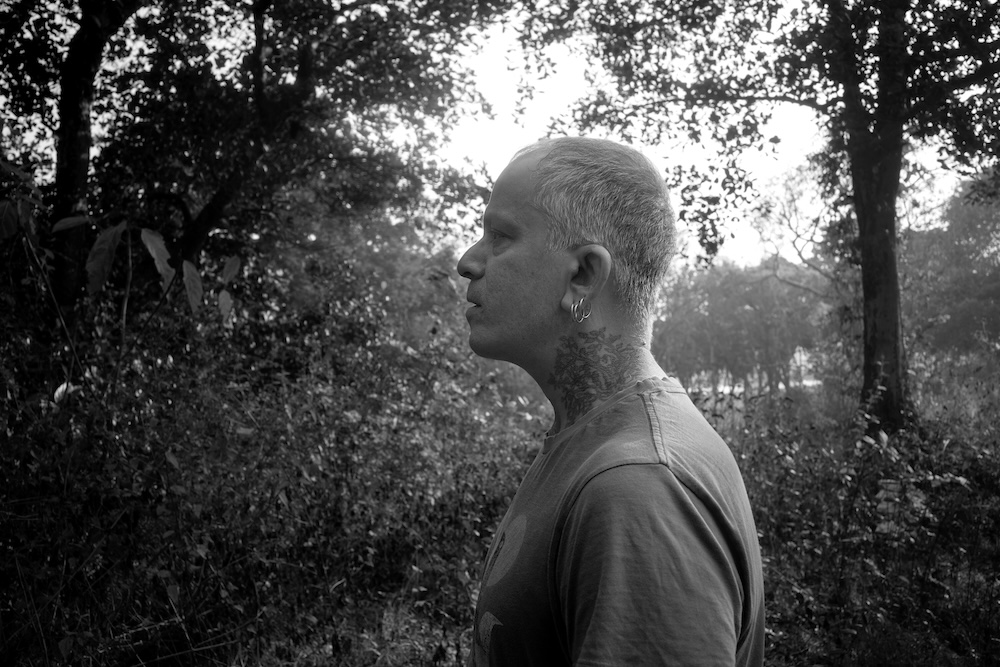
How would you describe yourself as an artist today compared to the musician you were in your twenties?
Uday: In my fifties! Ok, almost 60. 🤪 Honestly speaking, it’s always been about the stage one is in rather than the age that’s stamped on my travel document. Now is the only moment that exists, so I just try to be true to the moment I am in. I hope that in this moment, and in every moment that I make music, I do it with truth. Earlier this year Indus Creed opened for Def Leppard in Mumbai; I LOVE being in a big, phat rock band and that gig was big, phat and fun to the max! But the very small, gentle and intimate gig I played a few weeks later to launch Human Be was equally enriching, even though it was the opposite in every way. I guess I’d say I’m better at exploring a wider bandwidth these days.
After decades in music, what continues to inspire you to write?
Uday: Life. People. Love.
How has your understanding of success changed since your early days with Indus Creed?
Uday: I know it now to be more a feeling than an outcome.
Outside of music, what practices or experiences help you stay grounded?
Uday: Living close to nature, hanging out with the street dogs who live outside my apartment complex, and reminding myself that each and every one of us is no more or less special than anyone else.
Is Human Be a one-off personal project, or do you see this becoming a parallel creative path alongside Indus Creed?
Uday: I’d like to keep this going. Now it’s up to me.
Is there something about you that fans often misunderstand?
Uday: Only the ones who think I’m a stereotypical “rocker” who parties hard and late and loves people’s attention.
Can fans expect live performances of these songs, and would they differ from a traditional rock show?
Uday: I’ve played these songs live twice already. I intend to play them for audiences a lot more often. The difference from a traditional rock gig would be in the size, scale and volume of the show. Otherwise, it’s still a band playing for people who love music.
What’s next—for you as a solo artist and for Indus Creed?
Uday: I’m waiting to find out myself.
Three albums that changed your life?
Uday: Quadrophenia by The Who. Rock ‘n’ Roll Renegade by Rock Machine. Evolve by Indus Creed.
One musician you’d still love to collaborate with?
Uday: Well, two of them I’m still collaborating with—Zubin and Mahesh. But two musicians I miss playing with are Ashwin Andrew and Sankarshan Kini, from a band I once had called Whirling Kalapas.
A song you wish you had written?
Uday: “Happy Birthday.” The royalties would be most liberating.
Vinyl, CD or streaming?
Uday: All of them. Each form has its value.
One word that defines Human Be?
Uday: Heartfelt.
One piece of advice for young independent musicians.
Uday: Be chill and have fun. Always respect others and love yourself.
Official website of Uday Benegal.
About the Author