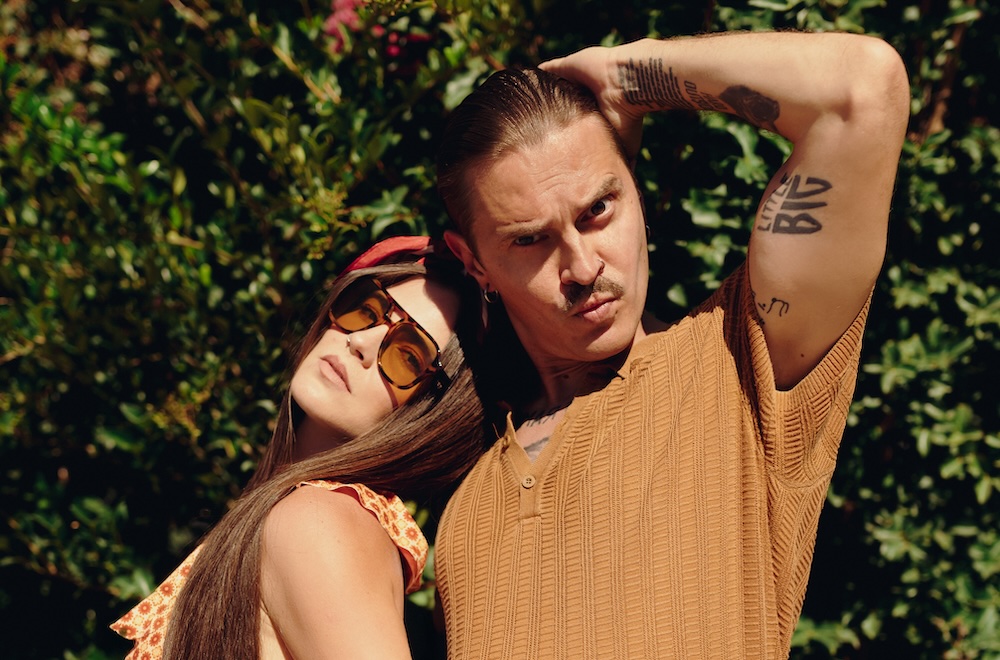
LITTLE BIG
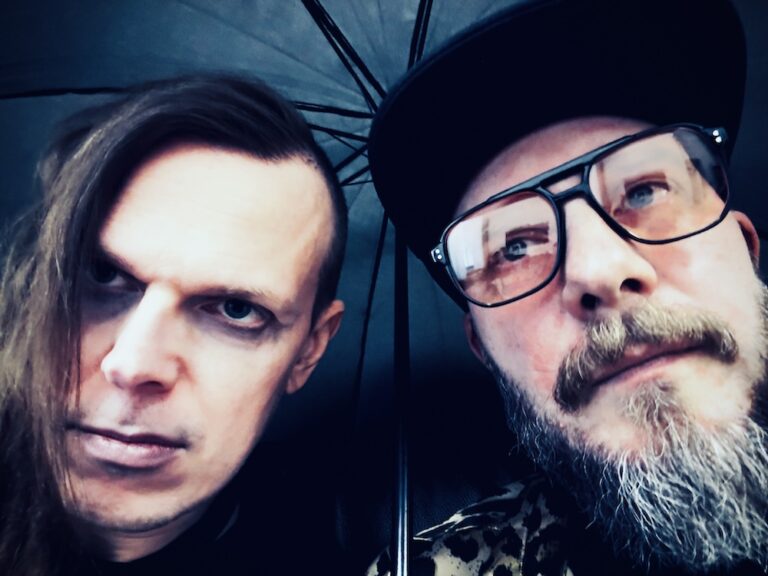
With “TAKA TAKA” out today, viral hitmakers Little Big discuss THREE STRIPES NATION, life after leaving Russia, Eurovision, and what inspires them.
For more than a decade, Little Big have occupied a space in popular culture that very few artists have managed to carve out for themselves. Emerging from Saint Petersburg in 2013 as what was initially intended to be little more than an April Fools’ joke, the group rapidly evolved into the most internationally recognizable act to emerge from Russia in decades. Their unmistakable blend of pounding rave, punk attitude, hyper-pop aesthetics, and razor-sharp satire transformed music videos into cultural events, with elaborate choreography, surrealist comedy, and social commentary becoming just as essential to their identity as the songs themselves. Viral phenomena such as “Skibidi,” “Faradenza,” “Hypnodancer,” and “UNO” helped propel the band to more than four billion YouTube views, while their unmistakable visual language influenced countless creators across the internet. Along the way, Little Big collaborated with artists including Oliver Tree, Tommy Cash, and bbno$, built an intensely loyal international fanbase, and cemented themselves as one of the defining internet-era bands—one capable of turning the bizarre into the mainstream without ever compromising its artistic identity.
The last few years, however, have marked the beginning of an entirely new chapter; following their public opposition to Russia’s invasion of Ukraine in 2022, Ilya Prusikin and Sonya Tayurskaya relocated to Los Angeles, where they rebuilt both their personal lives and creative process while continuing to expand the Little Big universe.
With today marking the release of their explosive new single, “TAKA TAKA,” and their forthcoming album THREE STRIPES NATION on the horizon, Indie Sound sat down with the duo to discuss the unlikely origins of the band, the accidental success that changed their lives forever, the legacy of Eurovision and “UNO,” life after leaving their homeland, the return of the beloved Faradenza universe, the philosophy behind their uniquely absurd creative vision, and why, despite global fame, billions of views, and more than a decade of success, they still believe the best art comes from making exactly what they love.
Having originally been dubbed “the Russian Die Antwoord” due to your groundbreaking style and your debut stint as their opening act back in 2013, how did you initially decide to form Little Big, and at what moment did you first realize that music was your true passion? What was the reason for specifically choosing the name Little Big? Which artists serve as your primary musical and visual influences? How have your musical tastes evolved over the years?
LITTLE BIG: It started in 2013 as nothing more than an April Fools’ song. We weren’t planning to form a band, but the video took off, and Ninja messaged us and invited us to open for Die Antwoord. We told him we didn’t have any songs. He said, “You’ve got a month.” We wrote an entire set in that month—and realized we were a band.
We chose the name because we had two little people performing with us—that’s where Little Big came from. Over time, they left to pursue solo careers. Sadly, Anya Castellanos passed away. We were friends, and it was a huge loss for us.
First and foremost, Andy Warhol, who showed that anything could become part of pop culture. Salvador Dalí showed us that art could be absolutely anything, even something rooted in dreams. Musically, Kurt Cobain, The Prodigy, and Aux Raus—a tiny band from the Netherlands.
Our musical tastes are still changing. We listen to music, not genres. We love Lil Texas and Cannibal Corpse—there are unique artists in every genre on the planet that we want to listen to.
With over four billion views across your channel, you stand alongside t.A.T.u. as one of the most internationally successful groups to emerge from Russia. Tracks like “Skibidi” and “Hypnodancer” highlight how vital the visual component is to your music—specifically your use of intricate sketch comedy and surrealism. During your brainstorming sessions, how do you know when an idea crosses the line from “perfect” into simply “too weird”?
LITTLE BIG: We never come up with something specifically because we want it to blow up—anyone who makes art will tell you the same thing. We just make things, and some of them take off. Usually, only about ten percent do. That’s what creativity is: you never know whether you’ve hit the bull’s-eye or missed completely. You only find out after you’ve made it.
From the “Skibidi” leg crossover to the “UNO” finger-pointing, you create dances that the whole world mimics. Do you actively design choreography with the intention of it going viral, or does the rhythm just dictate the movement naturally?
LITTLE BIG: The moves just come naturally—we simply love being goofy. We love being ridiculous. We’re huge fans of absurdity and cringe. Every piece of art needs both—that’s what makes it honest. Nobody’s perfect; we all have different sides to us.
You’ve previously teamed up with total genre-benders like Oliver Tree, Tommy Cash, and BBNO$. What is the energy like in a room when two completely chaotic internet forces collide to write a song?
LITTLE BIG: It’s a fascinating process, and it’s never the same—it’s always changing. Sometimes we’re on the same page; sometimes we’re trying to prove to each other what works and what doesn’t. It’s a genuinely creative process, and it works the same way within our own team.
Your track “UNO” was famously set to represent Russia at Eurovision 2020 before the contest was canceled due to the COVID-19 measures, yet the music video still went on to become the most-watched video in Eurovision history, and was the overwhelming favorite to win the contest. Looking back, how do you think that specific moment changed the trajectory of the band, and do you feel like you achieved the “Eurovision dream” even without stepping onto the physical final stage?
LITTLE BIG: There’s no point in wondering what might have happened. It was part of our lives, and things are what they are now. We have no idea where we’d be without it.
We never had a Eurovision dream. We did it for a laugh: we sent in a demo, and the broadcaster chose us. We weren’t hoping to win—it was more of a joke.
The contest has increasingly embraced the exact kind of theatrical absurdity that you mastered years ago, with acts like Tommy Cash, Käärijä, Joost Klein, and Baby Lasagna dominating the conversation. Do you feel a sense of pride seeing the current Eurovision landscape evolve into something that feels so inherently aligned with the Little Big aesthetic? Are you planning on collaborating with any of these artists again in the future?
LITTLE BIG: We’re always up for collaborations. Who knows—maybe today or tomorrow we’ll make something crazy together.
Yes, of course we’re proud that our Eurovision entry and the concept behind it influenced the contest, and that other artists are now carrying those ideas forward and finding success with them. It means a lot to us, and yes, it’s flattering.
Congratulations on the expansion of your family over the last couple of years! Navigating life in a completely new country is hard enough, but you are also creative partners, romantic partners, and now parents. How has parenthood shifted your creative dynamic, and does it change the kind of “absurdist” art you want to make going forward?
LITTLE BIG: It hasn’t affected our style at all. But moving and having a child obviously change everything. Our studio is in the garage now, so we work on music and new concepts faster because it all happens at home. Our team jokes that we’re like real American entrepreneurs—we’re starting our American business in a garage.
In 2022, you made the difficult choice to publicly oppose the war in Ukraine and relocate to Los Angeles, leaving your home country behind. How has moving from Saint Petersburg to California changed your art?
LITTLE BIG: We said what we thought in 2022, and since then we’ve had nothing to add to it and nothing to take away from it. The move changed everything: a different pace, different people, a different level of freedom in terms of what you can create and show.
Any kind of migration—especially when it’s forced—is an enormous emotional blow, a lifelong trauma. Creatively, it has shown up like this: on the one hand, we’ve started making more upbeat music, but there’s a lot of reflection and pain inside it. It’s like a sad clown.
Given how vast the cultural differences are, what was your initial experience with culture shock when relocating to the US? What aspects of American life did you find most unusual, and what required the biggest adjustment? What ultimately drew you to settle in the United States rather than a country in Europe?
LITTLE BIG: Honestly, the cultural differences don’t feel that enormous anymore because the whole world has become so globalized. The hardest things to adjust to were the bureaucracy and having to drive everywhere. Without a car, you basically don’t exist here.
The United States is the center of the entertainment industry, and it’s the only country where we could take things to the next level. We love Europe, though, and we’ll be touring all across it this fall 2026.
Since transitioning to a leaner core lineup with just the two of you, how has your creative shorthand changed? Do you find yourselves agreeing faster, or do the creative debates get louder? How does the creative process happen—how do you delegate responsibilities between each other?
LITTLE BIG: When it comes to the music, there aren’t just two of us onstage—there are three. And the team behind the scenes is still the same. Nothing has changed in terms of writing music.
We don’t argue any more than we used to: there were always plenty of arguments, and there still are. But that’s exactly where our creativity is born.
Rave culture thrives on unity and losing yourself in the crowd. Given how fractured the world has felt over the last few years, what do you want people to feel when they stand in the crowd at your current European Tour?
LITTLE BIG: The idea behind our next album is unity—not around nationality or religion, but around the desire to live and feel joy. The album title represents an archetype: someone who goes to raves, lives for today, and builds their future here and now. Because without the present—without a love of life and coming together in shared joy—your future has no meaning.
We want people, for two hours, not to care where they come from or who is standing next to them. The dance floor is one of the few places where that’s still physically possible: there’s no such thing as being “right” on a dance floor. We don’t think we have the right to preach to anyone. We play together with the crowd, and in that moment we become one. That’s enough.
What is the single weirdest prop currently sitting in your Los Angeles garage from a video shoot?
LITTLE BIG: The lobster-shaped guitar from the Lobster Popstar video.
When people see you on stage or on YouTube, they see total wildness. But when the cameras turn off and you’re just at home in Los Angeles, what’s a totally normal, boring, or unexpected hobby you both have that your fans would be surprised to learn about?
LITTLE BIG: Ilya, our vocalist, paints. He started during the pandemic, in 2020. He now has a collection featuring 51 bears that he hopes to show publicly soon. Sonya loves cooking, and she’s phenomenal at it.
Many young artists feel like they have to copy whatever is trending to get noticed. You proved that being completely, unapologetically different can actually win the world. What advice do you have for people starting out in the industry?
LITTLE BIG: The only advice we can give anyone is: don’t listen to anyone’s advice. It worked for us. People were constantly telling us to change our style and our direction. Just do what you do, and whatever happens, happens.
If you could slip back in time to 2013—to those two young artists who were just stepping onto the stage to open for Die Antwoord, completely unaware of the global fame, the four billion views, the heartbreak, and the beautiful family waiting for them—what would you whisper to them?
LITTLE BIG: We’d just walk right past them. We wouldn’t change a thing. What happened, happened.
Your choreography has become just as iconic as your music. What does your collaboration with choreographers actually look like? Do you come to them with a vision, or do they often surprise you with ideas you never would have imagined?
LITTLE BIG: The thing is, we’ve never had a choreographer. Ilya is our choreographer—which is exactly why the dances are so stupid.
The title “TAKA TAKA” is immediately catchy and memorable. What does it mean to you, and how did you know it was the perfect title for the song? What kind of world does “TAKA TAKA” invite listeners into?
LITTLE BIG: TAKA TAKA is a track featuring Faradenza, and it continues the Faradenza universe we created. The song is written in an invented language, just like Faradenza. We love this universe because it’s completely carefree, like something out of a 1960s film. That’s the style we return to in TAKA TAKA. Everyone should decide for themselves what it means—and whatever they decide is the truth.
If you had to describe “TAKA TAKA” using just three words, which three would you choose—and why?
LITTLE BIG: “La bocca de la cocca.” That’s Faradenza right there.
“TAKA TAKA” marks the return of Faradenza, one of the most recognizable characters in the Little Big universe. What inspired you to bring Faradenza back now, and how has that character evolved alongside the band over the years?
LITTLE BIG: He never went anywhere—he was just waiting for the right music. To us, Faradenza isn’t a character from a video; he’s a type of person: completely self-confident, completely ridiculous, and a winner all the same. Over the years, he has changed the same way we have. He used to be purely a joke; now there’s more tenderness to him. We no longer laugh at him—we laugh with him, and that’s a big difference. Bringing him back only made sense once there was a track that gave him room to go all out.
Sonically, “TAKA TAKA” combines classic rave energy with football chants, whistles, house influences and unexpected Eastern-inspired melodies. Was there a particular moment during its creation when you realized you had found something that felt both nostalgic and completely new?
LITTLE BIG: The thing is, we write our songs without worrying about whether a track will land or not. If we fall in love with it, then it gets to live. That’s exactly what happened with TAKA TAKA: we fell in love with it and realized it would be a track featuring Faradenza.
“Faradenza” became one of your defining songs and one of the biggest viral moments of your career. Did revisiting that world come with any pressure, or did it simply feel like reconnecting with an old friend?
LITTLE BIG: We didn’t feel any pressure—it really was like seeing an old friend. We genuinely love this universe, and perhaps one day it will grow into a standalone universe beyond Little Big.
You’ve described your current era as “THREE STRIPES NATION”—a world that seems to extend far beyond just the music itself. What does that concept represent to you, and how do you envision fans becoming part of it?
LITTLE BIG: THREE STRIPES NATION is the title of our new album, and that’s where this era begins.
The idea behind the album is unity—not around nationality or religion, but around the desire to live and feel joy. The album title represents an archetype: someone who goes to raves, lives for today, and builds their future here and now. Because without the present—without a love of life and coming together in shared joy—your future has no meaning.
Without giving too much away, what can listeners expect from the record that they haven’t heard from Little Big before?
LITTLE BIG: Let’s release the album first and hear what people say. It would be strange for us to explain the album ourselves—what people have to say matters far more to us. Our music and our art should speak for us.
Official website of LITTLE BIG.
About the Author