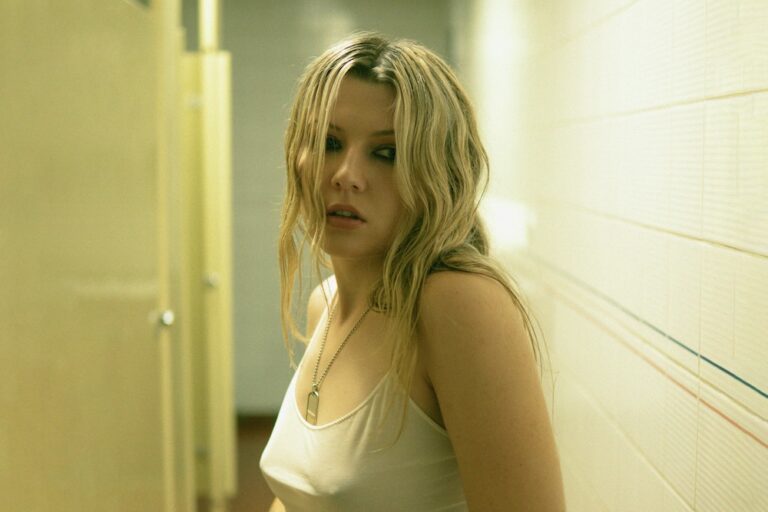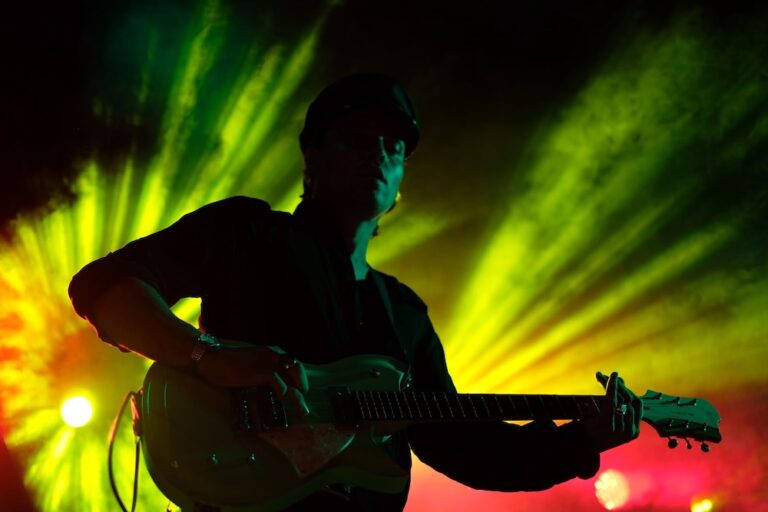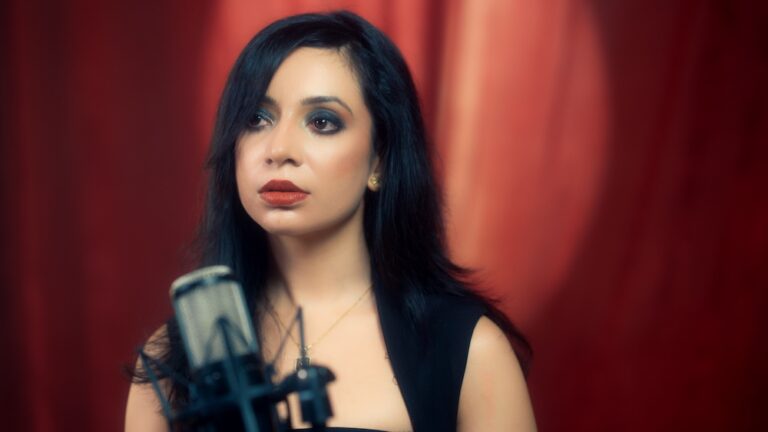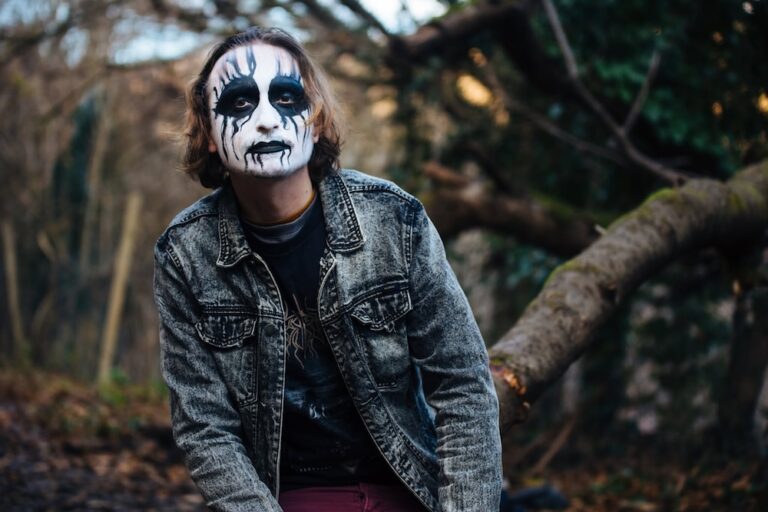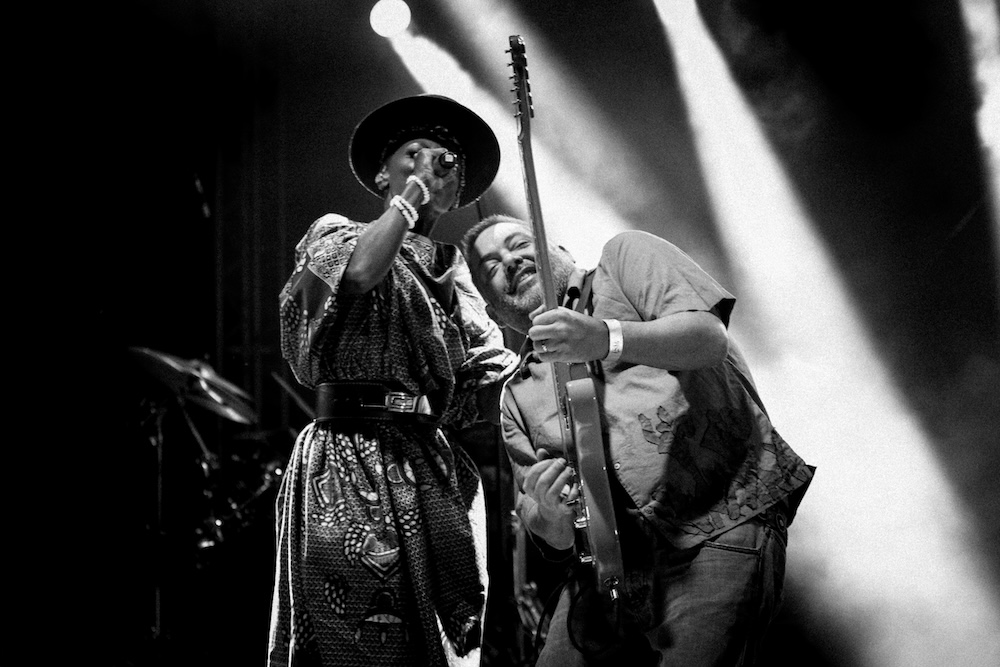
Morcheeba, photographed by Dino Mihovilović
The legendary downtempo band Morcheeba reflect on their remarkable journey, the stories behind their songs, today’s music industry and the creative partnership that continues to inspire them.
Since emerging from the British trip-hop movement in the mid-1990s, Morcheeba have established themselves as one of the most distinctive and enduring acts of their generation. Formed by brothers Ross and Paul Godfrey with vocalist Skye Edwards, the band forged a sound that transcended genres, effortlessly blending trip-hop, downtempo, blues, psychedelic rock, folk and soul into something unmistakably their own. At a time when the Bristol sound was reshaping alternative music, Morcheeba brought a warmer, more melodic sensibility, defined by hypnotic grooves, lush production and Edwards’ effortlessly soulful voice. Their acclaimed debut, Who Can You Trust? (1996), introduced a band with a unique musical identity, while landmark albums including Big Calm (1998), Fragments of Freedom (2000), Charango (2002) and Blood Like Lemonade (2010) cemented their reputation as masters of atmospheric songwriting. Songs such as “The Sea,” “Rome Wasn’t Built in a Day,” “Otherwise,” “Enjoy the Ride,” and the haunting “Blood Like Lemonade” have become modern classics, soundtracking films, television series and deeply personal moments for listeners around the world. Across more than three decades, multiple lineup changes and eleven studio albums, Morcheeba have sold millions of records, toured extensively across the globe and built a devoted international following through a catalogue that continues to resonate with new generations of fans.
Morcheeba have remained committed to artistic authenticity, allowing their music to evolve organically while preserving the qualities that first captivated audiences thirty years ago. In this exclusive interview with Indie Sound, the duo reflect with candour on the remarkable journey that has shaped Morcheeba’s legacy—from the making of their latest music and the realities of today’s music industry to the enduring influence of the trip-hop era, the stories behind some of their most beloved songs and the creative partnership that continues to inspire them after more than three decades. Accompanying this feature are striking photographs by Croatian photographer Dino Mihovilović, who was born on the island of Korčula and has built an international career photographing internationally acclaimed musicians, actors and other high-profile personalities.
Your latest work maintains that classic atmospheric DNA while feeling completely current. How do you approach production today to ensure you are evolving without losing the core sound your fans fell in love with?
Ross: I don’t really think about it too much. The changing technology changes the workflow enough to allow new experiments to happen, but the core music writing process remains unchanged. I just sit with a guitar or a piano until I have something cool going on, then try to find a beat to play along to. I don’t listen to much modern music, not that that matters, as music hasn’t really changed in the last 25 years. I listen to Jimi Hendrix, Dinosaur Jr. and Aphex Twin most of the time.
How different is today’s Morcheeba from the band you imagined in 1995? What motivates you now compared to when you released your first record?
Ross: The band hasn’t changed much, to be honest. We just blend different influences together to find new recipes. When we first started, making a record was so exciting—and very expensive. Now it is more of a home-based experience and doesn’t cost much at all. Music is its own motivation. You want to bring the tracks to life and release them into the wild.
You’ve always embraced analog warmth, but production has become almost entirely digital. What did your studio setup look like while making the latest record, and are there still pieces of gear you simply couldn’t live without?
Ross: The instruments and processing we use are all very vintage and analogue. Unfortunately, we don’t use tape anymore—it all ends up in Pro Tools and is edited before going back out onto a desk to mix it. My favourite instruments are my EMS Synthi, Hammond B3, sitar and Wurlitzer A100 piano.
After singing songs like The Sea and Rome Wasn’t Built in a Day for nearly three decades, how has your relationship with your own voice changed, both technically and emotionally?
Skye: When I first started performing with Morcheeba, I was a very shy, timid singer. The band had to play quietly and the audience would say, “We can’t hear you—turn it up!” So I went and got singing lessons from a vocal coach called Roger Kain. I still use those singing practices today. My voice is stronger and more powerful, and I’m much more confident when I perform on stage. Roger Kain sadly passed away, but you can still find the Full Vocal Workout booklet and CD online with my voice on it.
When you first emerged in the mid-1990s, everyone from Massive Attack to Portishead and Morcheeba was placed under the “trip-hop” label. Thirty years later, does that label feel like a badge of honor or a creative limitation?
Ross: It feels quite cute. It was a broad church, so it gave everybody room to find their own corner to be comfortable in. I don’t think we appreciated it at the time, but as music is so homogeneous these days, it seems a privilege to have been part of one of the last big genres of music before the internet mashed everything into slop.
Which Morcheeba album was the most difficult to make, and why? Was there a particular record where you deliberately reinvented your production approach?
Ross: Fragments of Freedom was challenging because I didn’t really like the upbeat soul direction we were going in. There are a couple of albums that were torturous, and I just pretend they don’t exist and won’t even mention their names.
Looking back, is there anything about the business side of your career that you wish someone had explained to you when Morcheeba first started? And what’s the one thing about today’s music business that worries you?
Ross: We met a nice gentleman named Patrick Campbell Lyons, who had a group in the ’60s called Nirvana, and he explained a lot of stuff to us, which really helped, so we were lucky. We knew the major labels would give us terrible deals, but that was the only path to becoming an international act—you had to dance with the devil. Now it’s all social media videos and crap like that. I don’t think I would have bothered if I was starting out now. Also, Spotify pays such bad royalties it makes the whole thing pointless.
Your guitar style blends blues, psychedelia, folk and electronic textures so naturally. Which musicians shaped your musical identity when you were developing the Morcheeba sound?
Ross: I love the old blues guys like John Lee Hooker and Lightnin’ Hopkins, then the ’60s cats like Eric Clapton and Ry Cooder. Guitar playing was awful when I grew up in the 1980s, so I listened to old music mainly. Then when grunge hit, we finally had cool fuzz sounds again, and I loved My Bloody Valentine and Sonic Youth.
You stepped away from the band for several years before returning. Looking back now, what did that time apart teach you about the chemistry between you and Ross?
Skye: In 2003, when I was told by our manager that I wasn’t wanted in the band anymore, I was relieved. There was tension in the band—we’d released four albums and toured constantly. It was good for all of us to have that break. It was necessary to have that time apart. When they asked me to come back in 2009, we had a newfound appreciation for each other.
If you could travel back to 1995, just before releasing Who Can You Trust?, what single piece of advice would you give your younger selves?
Ross: I wouldn’t want to spoil it, so exactly nothing.
Skye, is that intimacy something you consciously aim for when recording?
Skye: I only started writing lyrics for Morcheeba from the Blaze Away album onwards. I have written lyrics for my four solo albums. And I will release my fifth solo album in 2027.
I want the listener to feel as though I’m singing into their ear. I like to get my mouth as close to the mic as possible, especially for the quieter, mellow tracks.
Looking back, what’s one risk you took that proved absolutely worth it?
Ross: Taking loads of magic mushrooms before headlining a stage at Glastonbury in the late ’90s.
What has been the biggest lesson you’ve learned from failure?
Ross: Making music is 90% mistakes and 10% accidental beauty.
Which emotion is the hardest to capture honestly in music?
Skye: For me, I think happiness is hardest to capture. It’s a fine balance trying to make it sound genuine without it feeling too sickly sweet.
Ross: Music is abstract. It can convey emotions that are impossible to describe otherwise, so I’d say there isn’t anything that is hard about it if you let yourself channel inner feelings.
What would surprise your fans the most if they spent a day with you?
Skye: I think fans would be surprised at how much I say the word “fuck”. And how crude I can be. Touring for 30 years in a band with boys/men, the jokes can be quite funny and rude.
Ross: How much time we spend in airports waiting for delayed planes with 20 flight cases.
Fans often tell you that your music helped them through grief, anxiety or difficult periods in their lives. Are there any stories from listeners that have stayed with you over the years?
Skye: I met a fan in Shoreditch, East London at the Rough Trade record shop. Ross and I were signing copies of our vinyl album Escape The Chaos. This guy gave me a note explaining how my solo album Mind How You Go saved his life—he had felt so low and suicidal. He was in tears. We hugged and I cried too.
It made me realise just how important music is to people and to me also. The right song can really help you to keep breathing. The right song can make you want to dance, or cry. It can lift your mood, or help you to relax. It is therapeutic and cathartic.
You’ve survived vinyl, CDs, downloads, streaming and now social media algorithms. Which era of the music industry was actually the hardest to navigate as a band?
Ross: Today is much more convoluted than it used to be. I miss record shops.
Has there ever been a song where the original demo captured such a special magic that, despite all the production, you kept coming back to that first version?
Ross: The song “Oh Oh Yeah” from Blackest Blue had a wicked cool demo version that I used to listen to over and over again.
Looking back across your catalogue, is there one song that wasn’t a major hit but means more to you personally than people might expect?
Skye: It’s a song from the Skye & Ross album called “Hold On”.
The lyrics are about my youngest daughter. She was born at 27 weeks premature. It was such a frightening experience giving birth to her so early. She weighed just 1 lb. She’s 11 years old now and thriving, getting ready to join senior school. She’s an absolute angel. A true heaven-sent gift.
If Morcheeba were forming for the very first time in 2026 instead of the 1990s, do you think the band would sound the same, or would today’s musical landscape lead you somewhere completely different?
Ross: I think I’d be a geologist or physicist and not a musician at all in today’s music business climate.
After more than thirty years together, what still excites you most when you walk into the studio? What keeps the creative spark alive after all this time?
Skye: I love the creative process and how a song can come together. When Ross plays me something he’s been working on, either a beat or a guitar riff, or something cool on the Rhodes, I can’t wait to come up with a melody and lyrics. It can be instant or maybe take weeks, sometimes months, to perfect it. Sometimes the joy is in the struggle, like piecing together a jigsaw puzzle. When that last missing piece slots into place, it’s so satisfying!
Ross: Turning on the Hammond organ. It takes ages and is like starting a 1920s car from a Laurel and Hardy film.
If you could spend one day in the studio with any artist—living or dead—who would it be and why?
Ross: Jimi, of course. Maybe Marvin Gaye.
Skye: I’m sure Ross would say Jimi Hendrix. And I would be very happy to sit in on that session. Not only to make music but to talk and hear all the wonderful stories Jimi could share.
What advice would you give independent artists trying to build a sustainable career?
Ross: Make music that you like and you will never feel like an imposter.
Official website of Dino Mihovilović
About the Author