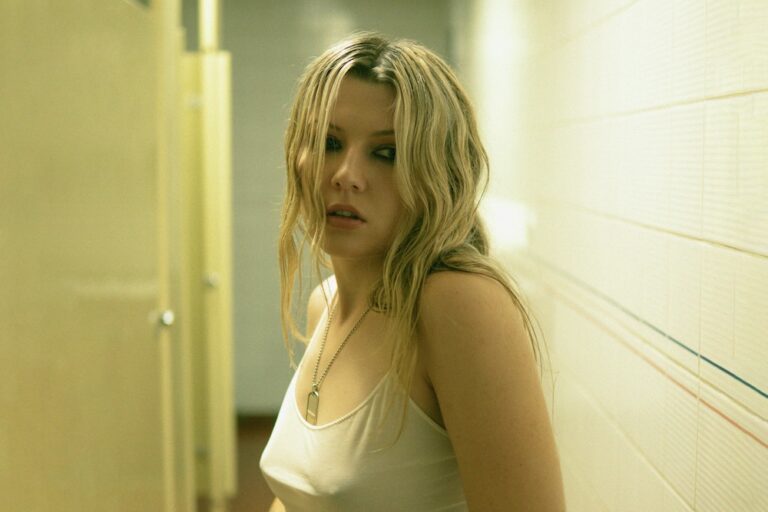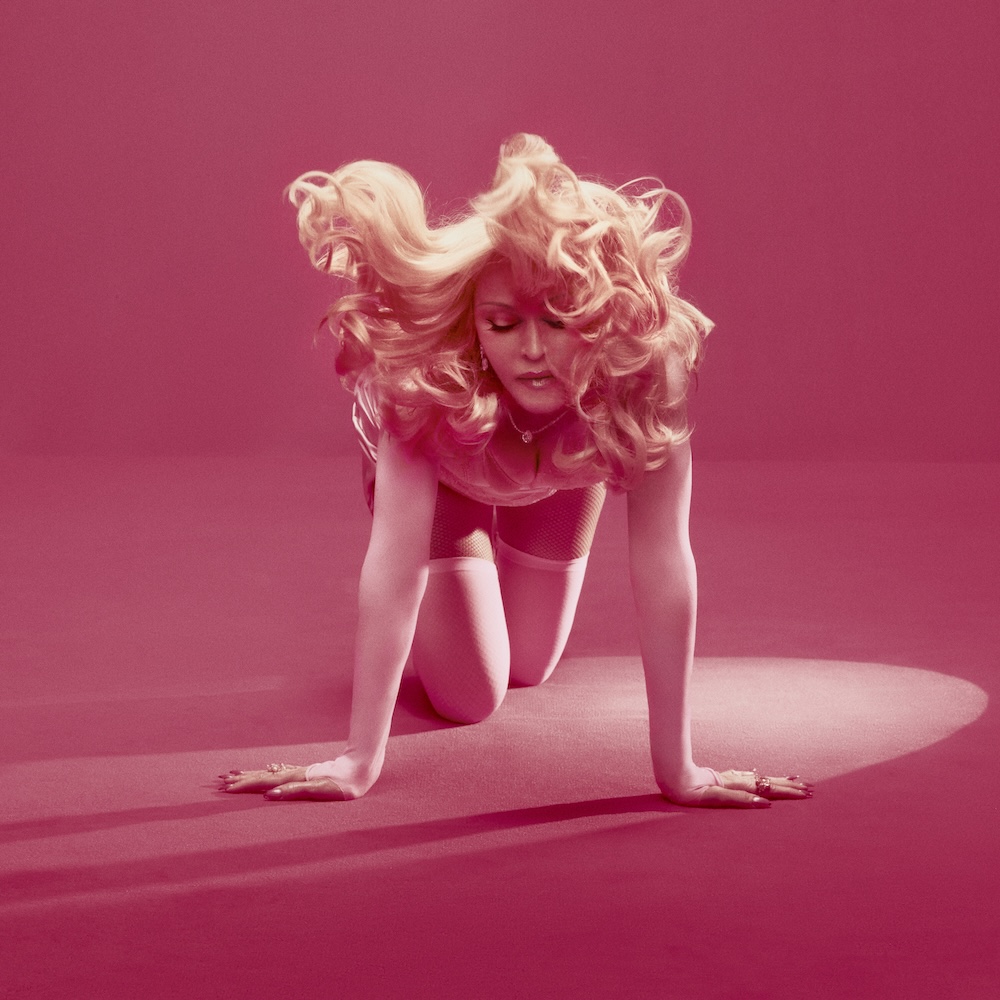
Madonna, photo: Rafael Pavarotti
The production glitters, but the personality is gone—leaving longtime fans wondering where Madonna herself disappeared
There was a time when reviewing a Madonna album meant accepting that she was probably going to make at least half the room uncomfortable.
She chased trends only to warp them into something unmistakably hers. She made expensive mistakes. She overreached. She embraced contradictions. Critics often met those swings with hesitation—sometimes hostility—before history eventually caught up. Albums now considered essential were never greeted with universal applause. That friction was part of Madonna’s artistic identity. She never seemed particularly interested in giving reviewers exactly what they wanted.
Which makes the excessively warm critical reception surrounding Confessions 2 feel oddly backwards.
This is arguably one of the safest records of Madonna’s career.
Not because it’s dance music. Madonna has always understood dance music better than almost any mainstream pop star. Not because it revisits an earlier era. Revisiting Confessions on a Dance Floor is an idea with enormous potential. The disappointment comes from something much more fundamental.
For perhaps the first time in her recording career, Madonna herself seems absent.
The production is technically satisfactory. Every kick drum arrives on cue. Every synth pad blooms exactly when expected. Basslines glide efficiently beneath pristine electronic textures. The mixes sparkle with contemporary precision. Yet the songs rarely generate excitement because nothing feels discovered. They feel mass-produced, as though they rolled off a pop-music assembly line.
It’s music that resembles what a robot thinks a Madonna record should sound like—without understanding why Madonna’s records mattered in the first place. There is no soul here.
The greatest irony is that Confessions on a Dance Floor wasn’t simply a collection of club tracks. It was possessed by momentum. Songs bled into one another with almost evangelical conviction. There was joy, melancholy, sexuality, loneliness, confidence and vulnerability all occupying the same glitter-covered universe.
Confessions 2 attempts to replicate the aesthetics while somehow draining away all the electricity.
The central problem, however, is impossible to ignore.
Madonna’s voice has always been criminally underrated.
For decades, discussions around her focused on image, reinvention, controversy and business instincts, often overlooking what made her recordings instantly identifiable within seconds. She possessed extraordinary vocal control, an unusually rich lower register, crystalline upper notes and a timbre that belonged to no one else. Her greatest performances—from whispered confessionals to soaring choruses—combined technical assurance with emotional intelligence in a way few of her contemporaries managed.
Even when surrounded by maximal production, she always sounded like Madonna.
Here, she doesn’t.
The vocals feel strangely flattened, as though every imperfection has been polished away until personality disappears alongside it. At times they resemble a rather primitive artificial reconstruction of Madonna rather than the woman herself—a simulation that has studied her inflections without capturing the emotional impulses underneath them.
It becomes unsettling less because of technology than because of familiarity. Longtime listeners know these songs should contain tiny imperfections: breaths, little hesitations, unexpected warmth, that uniquely human grain which survived every stylistic reinvention from the ’80s through the 2010s.
Instead, much of Confessions 2 sits squarely in the uncanny valley, its vocals carrying a grating metallic quality.
Naturally, there has been endless online speculation attempting to explain this transformation. Some corners of the internet have ventured into outright conspiracy theories, even claims that Madonna has somehow been “replaced.” The fact is, we don’t know what has happened.
After all, artists age. Voices change. Serious illness, touring, injuries, medical treatments and simple physiology can all affect vocal performance in ways that are impossible for outsiders to diagnose. Any number of factors could explain why Madonna sounds different today.
But even if her voice has genuinely changed, that alone doesn’t explain this album.
History is full of singers whose instruments evolved dramatically over time while their artistic identity remained unmistakable. The rasp deepened, the range narrowed, the notes became more selective—but the personality only grew stronger. Madonna had a remarkable range, and even a narrower one could have been fascinating.
The problem with Confessions 2 isn’t merely vocal deterioration.
It’s the startling absence of artistic character.
Listening through Madonna’s catalogue—from her debut through Rebel Heart—one hears an artist animated by relentless curiosity. Even flawed records contain moments of outrageous inspiration. Erotica alienated listeners before becoming canonical. American Life was dismissed before being reassessed. Even MDNA, long treated as a lesser entry, revealed flashes of wit, melodic invention and emotional directness that feel truly luxurious compared with the generic display here.
The same could be said for Hard Candy. Or American Life. Or Rebel Heart. None are perfect. Yet they are. All are recognizably the work of an artist thinking in real time.
Rebel Heart, especially, now feels like the last moment Madonna sounded entirely like herself. The voice retained its expressive elasticity. The performances still carried that mixture of confidence and vulnerability that had defined her career. Even amidst uneven songwriting, there remained an unmistakable joie de vivre—a mischievous intelligence pushing every track somewhere unexpected.
That quality has entirely evaporated here—the songwriting rarely surprises, hooks drift by without embedding themselves, lyrics gesture toward resilience and transcendence but often remain frustratingly bland.
Perhaps most frustrating is how competently all of this has been executed.
There are no spectacular failures.
There are simply very few memorable successes.
The album often resembles the output of an extraordinarily sophisticated algorithm trained exclusively on Madonna’s previous work: identify the disco pulse, insert shimmering synths, reference liberation, layer immaculate production, smooth every vocal edge, repeat.
Everything is technically present.
And yet nothing feels alive.
That may explain why so many critics have embraced the album—it satisfies contemporary expectations of what a legacy pop album should be: polished to death, respectful of its own mythology and professionally crafted. But Madonna became Madonna by refusing exactly that kind of approval—her greatest records often divided opinion because they were impatient with consensus.
She wasn’t trying to satisfy critics.
She was an artist creating a legacy.
The critical conversation has become oddly monolithic—one publication after another declares this Madonna’s best album in decades, as though reading from the same script. The chorus grows so repetitive that it begins to resemble parrots reciting the approved line rather than critics wrestling with the music in front of them. Consensus, in this case, feels less earned than performed.
If this is the Madonna album that earns broad critical comfort, it may be because it demands so little of the listener.
For many, this may function as an elegant, glossy electronic pop record.
For real fans, however, it’s harder to escape the sense of loss—not simply because a remarkable voice may have changed with time, but because the fearless creative instinct that once transformed every Madonna release into an event seems to have vanished altogether.
Nobody expected another Like a Prayer or Ray of Light. Great artists aren’t required to repeat themselves.
But they should still sound irreplaceable.
Confessions 2 is the first Madonna album that leaves the unsettling impression that pretty much anyone could have made it.
About the Author