Clowns in America
The Finnish artist’s post-punk fever dream confronts the performance, paranoia, and mythology surrounding modern power
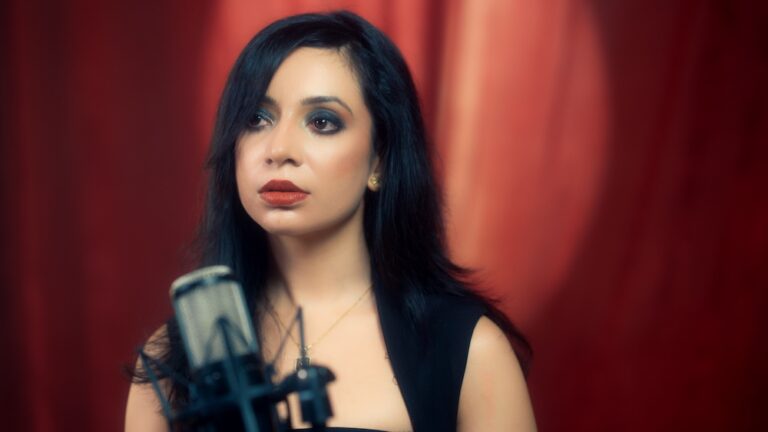
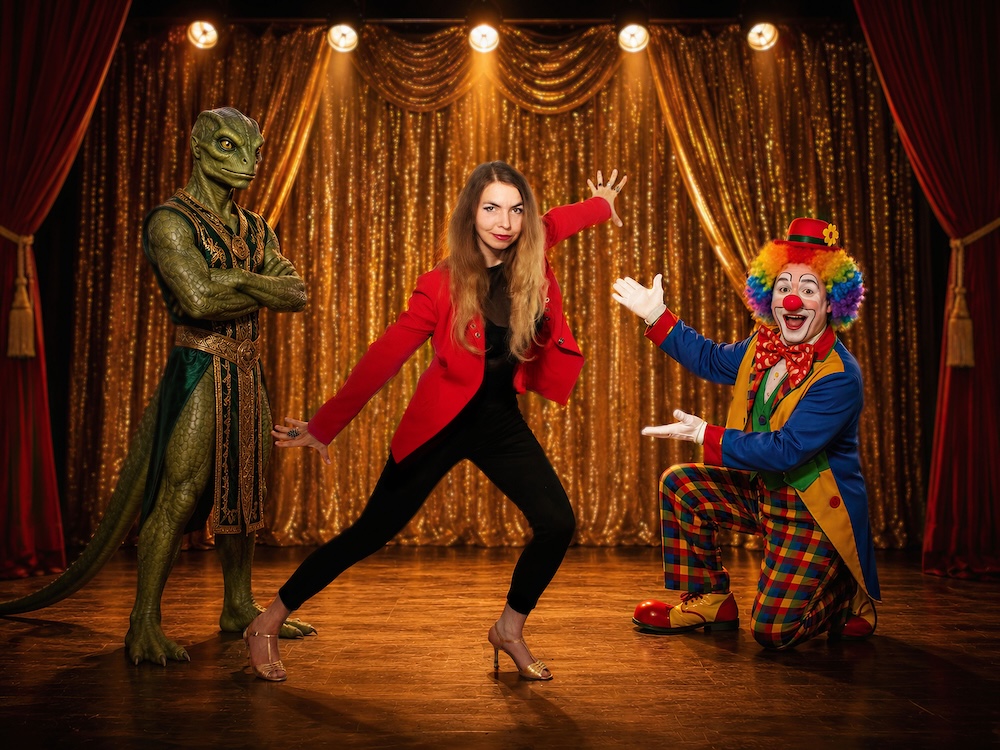
Citizens, the circus opens on July 3 and you are invited to examine Diana Ringo’s new sonic apparatus, Clowns in America. Be careful: the circus might just explode your brain the moment the clowns are released.
Somewhere between political exhaustion, internet psychosis, and religious symbolism exists this album. Protest record. Satire. Fever dream.
Notably, the album’s release directly coincides with the eve of the United States Semiquincentennial on July 4, 2026. As America marks its 250th anniversary amidst massive national spectacles — Ringo’s record arrives as an eerie, perfectly timed soundtrack to the grand American theater.
There is a moment where Ringo sings, “Everything’s beautiful when it’s strange,” and the line functions as the album’s governing law. Nothing here remains stable for long. Identities dissolve into performance, politics mutates into entertainment, and entertainment itself becomes a form of social control.
Ringo’s music has always existed outside easy categorization, and Clowns in America continues that tradition. The record pulls from synth-pop, post-punk, industrial music, glam decay, and electronic noise without becoming a nostalgia exercise. Safe, predictable art has no place here.
While there is less of the feral screamo energy that cut through her previous album CYBERWOLF, this record is no softer. It sounds like someone attempting to process state violence, erotic obsession, religious imagery, conspiracy culture, televised humiliation, algorithmic manipulation, and nightclub euphoria all at once.
Which is to say: just your average Monday.
That collision of the political and the personal is entirely intentional. “I don’t really separate the psychological from the political because society inevitably enters the subconscious,” Ringo says. “We absorb the pain of the world around us whether we like it or not.”
Ringo cites “America” by Killing Joke, “Amerika” by Rammstein, and American Life by Madonna as influences, but Clowns in America does not simply revisit political music from the past. It creates its own unstable world — one where spectacle has replaced reality.
Ceci n’est pas un cirque.
This is not a circus — it is an analysis of a global export mechanism that monetizes human misery.
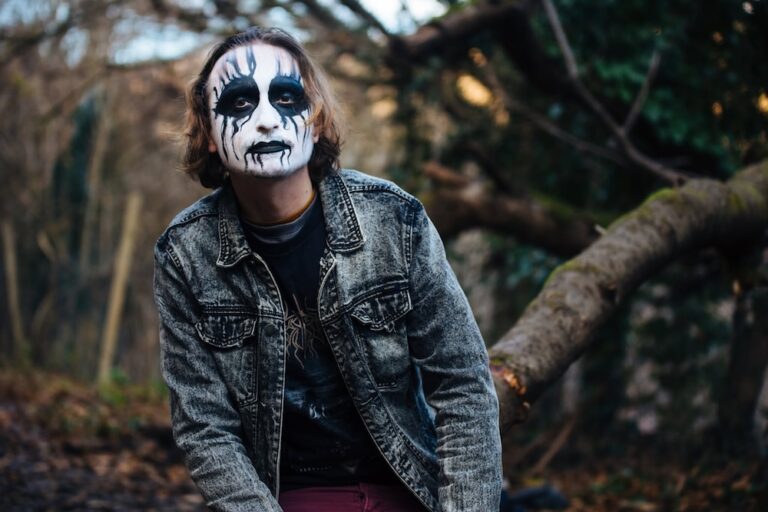
“Anyone can hide behind a painted face,” she explains. “A saint or a killer.”
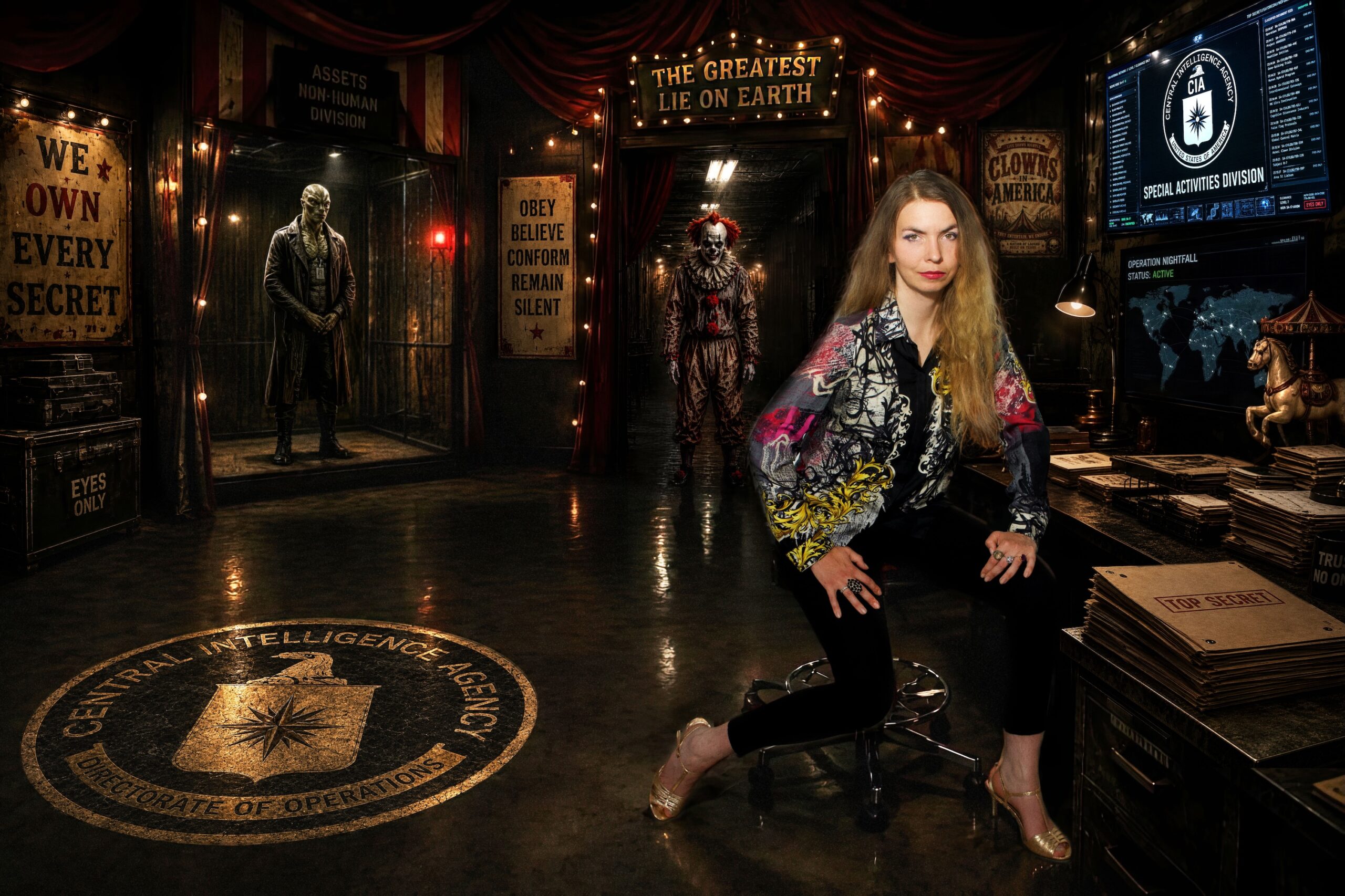
That ambiguity becomes the album’s central logic: Ringo imagines America less as a nation than as a circus apparatus where scandals arrive with shinier packaging and every catastrophe becomes monetized content. As she puts it, “It feels as though the circus swallowed the White House and nobody noticed. Every scandal arrived with shinier packaging. Every tragedy became content to be consumed and instantly forgotten. The red and the blue, all part of the same single circus.” Red-versus-blue politics barely matters in this framework; everyone is still performing beneath the same collapsing tent.
Importantly, Clowns in America never limits itself to American politics specifically; America functions here as both a literal superpower and an allegory for the global systems of media, spectacle, and power whose influence now shapes much of the world.
“Politics becomes farce, farce becomes politics, media becomes mind control,” she says. “People become slaves performing for the circus master.”
Musically, the production mirrors that psychological instability. Synthesizers smear across the tracks, rhythms feel both danceable and threatening, and Ringo’s vocals constantly shift between distance, aggression, seduction, and collapse.
“They feel closer to modern consciousness than traditional instruments do,” Ringo explains. “They can sound seductive, mechanical, cold, euphoric — sometimes all at once.”
That contradiction defines the record. Beauty and disgust exist together. Attraction turns into discomfort. Sincerity and irony occupy the same space.
The title track is the clearest example: a dystopian post-punk circus where political satire, media paranoia, and spectacle culture collide.
Lines like “Confetti is falling like trust / As you are canceled and turned to dust” capture the album’s central fear: that modern propaganda no longer needs to look threatening. It can look entertaining. Friendly. Addictive. Just another show to watch. The Brave New World Order built on lies, where everyone is both performer and prisoner.
“The punk sound simply took me over,” Ringo says. “Punk is all about raw truth and tension.”
Her understanding of punk rejects polished rebellion and nostalgic imitation; instead, she embraces experimentation, discomfort, and contradiction. The result is music that refuses to reassure the listener.
“Reptile” is one of the strongest examples. The song moves through images of serpent worship, sexuality, paranoia, and transformation without settling into one meaning. Over metallic synths and a slow, predatory rhythm, Ringo sings “Cold-blooded skin in a silver pool”: the image feels less like a metaphor and more like a hallucination. The serpent becomes a symbol of endless cycles: power shedding its skin, reinventing itself, and returning again as it gets re-elected at the White House.
There is also more humor here than the dark imagery initially suggests. Ringo understands that reality already feels exaggerated beyond parody, so she does not need to force satire. “Reality already feels surreal now,” she says. “Sometimes contemporary life feels more absurd and psychologically disorienting than fiction.” She simply presents absurdity as it exists.
“We are all plugged in to be alone” sounds almost like a joke until the surrounding atmosphere turns it into something unsettling.
Songs like “Titanic” push the album deeper into dystopian territory, exploring surveillance, algorithmic influence, performative identity, and emotional exhaustion. But beneath the political imagery is something older: a spiritual fear.
By the closing track “Alpha & Omega,” the album moves toward biblical territory.
“The spiritual dimension enters when people begin asking what survives after the world falls apart,” Ringo says.
Tracks like “Price of Admission” explore the compromises people make to survive inside damaged systems. Evil rarely appears here as something monstrous. More often it appears polished, fashionable, and socially acceptable.
That may be the album’s defining idea.
Clowns in America is not interested in telling listeners exactly what to think. Ringo avoids straightforward preaching because she sees it as artistically limiting. Instead, she creates dream logic: surrealism contaminated by headlines, nightclub music infected with spiritual anxiety.
Reality already feels surreal enough. Or, as Ringo herself puts it, “I am not interested in normal.”
The album rejects art as decoration or escape. It refuses to make collapse feel comfortable. It offers no simple conclusion and no easy emotional release.
By the time the final warnings of “Alpha & Omega” disappear, one question remains:
If everything has been turned into a performance, what remains of the human soul underneath the makeup?
Enter the circus at your own risk.
Stream the album now on Bandcamp and on Spotify.
About the Author