Lynn Hollyfield
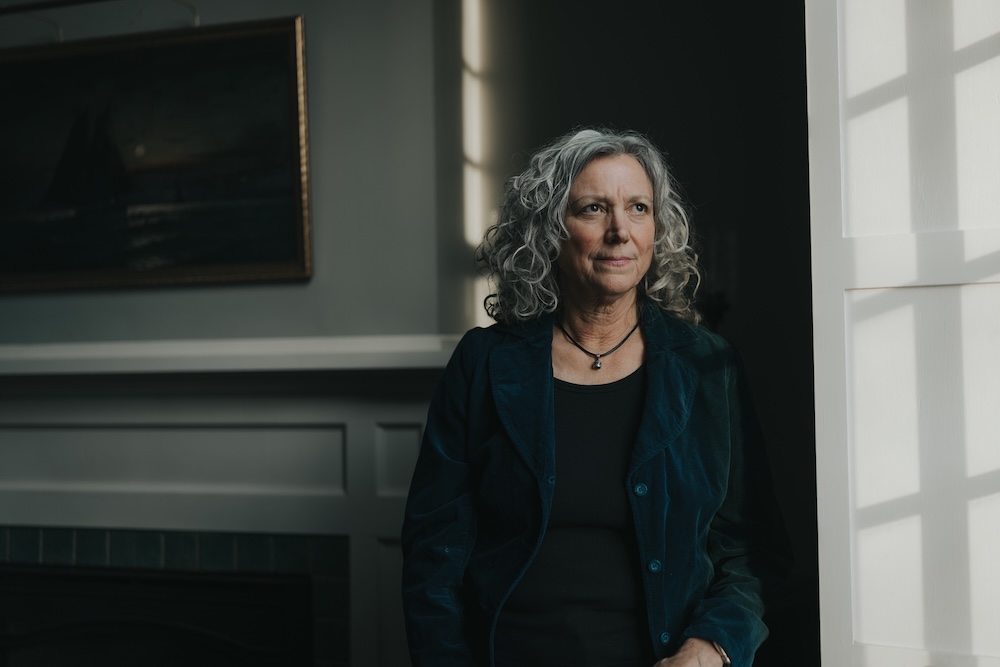
Every tragedy leaves behind a story. Some leave behind a question. With “Blindspot,” acclaimed folk singer-songwriter Lynn Hollyfield transforms unimaginable grief into one of the most affecting songs of her career, confronting the devastating ripple effects of the fentanyl crisis through quiet reflection rather than easy answers. Produced by Grammy-nominated Seth Glier, the single is a deeply personal meditation on loss, regret, and the haunting question so many survivors carry: Could I have done more? Paired with a heart-wrenching music video, “Blindspot” serves as the emotional centerpiece of her forthcoming album, Diving In, a collection that embraces vulnerability with remarkable honesty.
For Hollyfield, whose warm alto, intricate acoustic guitar work, and thoughtful songwriting have earned comparisons to Mary Chapin Carpenter and Bonnie Raitt, authenticity has always come before spectacle. From her early days writing songs as a shy teenager on Staten Island to recording Diving In live with an all-star group of musicians inside a snow-covered New England church, she’s remained committed to music that unfolds patiently and leaves a lasting impact. In our conversation, Hollyfield opens up about the personal tragedies that inspired “Blindspot,” the healing power of songwriting, collaborating with Seth Glier, and why, in an increasingly distracted world, folk music still offers a sacred space to reconnect with what matters most.
You began performing locally at a young age, but your relationship with songwriting actually started back in your teenage years on Staten Island. Looking back at that younger version of yourself, what was the very first spark that made you realize songwriting was something you had to do, rather than just a hobby?
The first song I wrote helped me see that songwriting was another way I could communicate and connect to others. I was very shy and introverted. Still am, but better. Having a guitar in hand and singing felt a lot less intimidating than standing up in front of people and talking. I felt the connection it could bring. It was like nothing I had experienced before. What a gift.
“Blindspot” is incredibly poignant and tackles a very heavy, personal subject. What was the turning point for you where the grief and the questioning (“Was there anything I could have done?”) transformed into a song?
I asked myself that question, right after I found out my friend and nephew were gone and for many months afterwards. It wasn’t until I took the Spring Songwriting Challenge, 2025, that it came into a song. The songwriting prompt was ‘ignore.’ It brought back all the questions. Things I noticed and did not act on, times where I thought something was off and did not question it. That’s how the song came to be.
The title “Blindspot” is so evocative. In the context of the fentanyl crisis and losing loved ones, what does that word mean to you personally, and what do you hope listeners take away from it?
They say hindsight is 20/20. It’s easy to look back after the fact and see things clearly when often things are so close to us, and we may not be taking time to notice, to listen, to offer help even when someone is right there with us. So close, but in my blindspot. I think many people have had similar experiences of losing a loved one, a friend, a co-worker and wondering what they could have done. My hope is they take from the song that they are not alone in that feeling. I hope the listeners see it as a reminder to be present for others in whatever way they can so the person going through the crisis, feels the support and knows they are not alone.
You’ve described the song as a “hard life lesson – too little too late.” Folk music has a long history of being a vessel for social truths and raw human experiences. Was it frightening to be that vulnerable, or did it feel necessary for your own healing?
There had been enough time for me to really look at myself in those situations and that is where the lines came from, for the pre-chorus:” How could I be so careless with you, how could I be so careless with you.” Yes, admitting that I was careless, acknowledging that, being human was helpful for healing and processing the grief.
The single is accompanied by a heart-wrenching music video. How did you translate such a deeply internal, reflective song into a visual medium? What was that filming process like for you emotionally?
I worked with a videographer and asked them to create a video that told the story. I reviewed my relationship with my friend, what she looked like, how she’d present herself and our relationship. I tried to think of what she was going through. It took some edits to get the right feel. I asked him to put the car mirror in because it’s such a powerful metaphor and image. These are character actors. The videographer did a great job setting up the story and capturing the emotion and concern.
You met Grammy-nominated producer Seth Glier at a songwriter’s retreat, which led to recording 11 songs in just 5 days. Can you take us into that whirlwind week? How did that intense creative energy shape the sound of your upcoming album, Diving In?
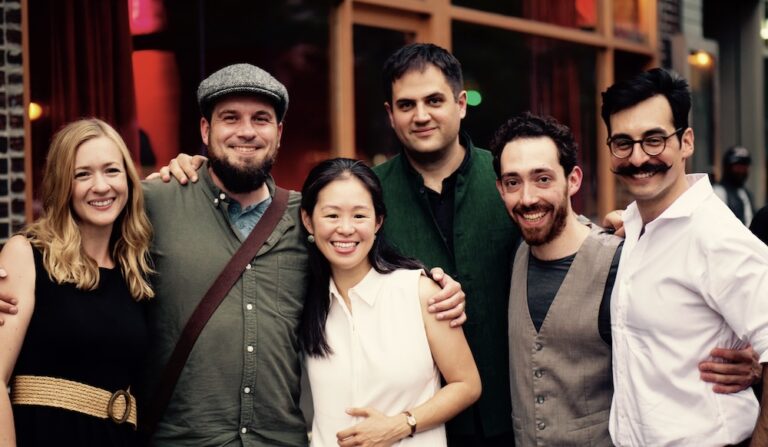
We had done pre-production of the songs and Seth wrote up the chord charts and everyone had rough MP3’s. We started each day at 10am. When I first walked into the studio space, it was unbelievable. All the microphones were set up, in a circle so that we could see each other. The huge pipe organ from the old church was there, on the far wall. The tall, floor to ceiling, windows on the outside walls of the church were in view and snow was falling. The only person I knew was Seth Glier. I met the other artists that day: Abbie Gardner, Reed Sutherland, and Rob Griffith. Andrew Oedel was the engineer. As we set up in our places it felt like we were in someone’s living room. I’d play the song alone and everyone would listen. Seth would set the tempo and Rob would put down a shaker track. Then we’d play the song through a few times and record it. We’d then listen back to it, see what we liked and make adjustments, as needed. We’d go back out and play the song 2-3 more times and then go on to the next song. It was fresh, real, and fun! I’ll never forget it. Within 5 days, we recorded 11 songs. It was amazing!
The album was recorded a week before Christmas in a historic New England church-turned-studio while it was snowing. That sounds magical. How did the atmosphere of the space and the winter weather influence the mood of the sessions?
It was magical. I really couldn’t believe that everything seemed to fall into place, and we were able to accomplish so much! I had even made some last-minute lyric edits on a few songs. Nothing like having total support and a deadline on time to get things done. Recording in a circle, felt warm and cozy. It was a comfortable, safe space to create music.
You tracked the album playing “in a circle” with an incredible lineup of musicians (Seth Glier, Abbie Gardner, Reed Sutherland, Rob Griffith, and Kelly Halloran). How did that physical setup change the chemistry and the “live” feel of the music compared to traditional studio tracking?
Having such seasoned, talented players enabled us to record the songs live without over dubbing. It was a new experience for me. I’ve recorded a few things live on past albums but not the whole album. I think the live energy, sitting in that circle, really comes through the recording. Being able to see each other and react, in the moment was invaluable. Truly it is what playing music live with others is all about and the ability to capture those magic moments as they unfold.
“Blindspot” was the first song recorded for the album. Why was it important for that specific track to set the tone for the rest of the recording sessions?
Seth chose it. It was the one that I played for Seth and asked for his feedback at the Dar Williams Songwriting Retreat. I’m not sure why he chose it but It did feel really comfortable to start with that song.
Your sound has been described as “Mary Chapin Carpenter meets Bonnie Raitt with a touch of George Gershwin.” Growing up on Staten Island, you were exposed to everything from Ella Fitzgerald to Neil Young. How do you balance those sophisticated jazz chords with the raw, rootsy storytelling of contemporary folk?
The lyrics and melody inform what kind of chord progressions and chord shapes I’ll use. The subject of some songs are told better with a jazzy feel and others have a more contemporary/traditional folk style or blues or latin style. I play by ear and using 7ths and diminished chords and other variations can add to the beauty of a line or help drive home the feel of the lyric. I just go with what sounds good.
When a listener sits down with your songs—whether they are driving, sitting in a dark room, or watching you live—what is the core emotion or feeling you wish they would walk away with?
That there is something they can identify and relate to that connects with them on some level.
You spoke beautifully about folk music creating a “delicate sacred space” that acts as a “return to something real in a world that constantly forces us to live too fast.” How do you protect that sacred space in your own life and writing process?
That was actually a quote from ‘Analog Hype Machine.’ I write from experiences that I have gone through. Exploring the emotions that are underlying and bringing it out in a song is a way I remember I’m human. I’m not perfect. Life is hard and there are struggles. Honoring that in the music, keeps things real and is something that can be revealing and sometimes healing in the process of writing.
Your music is praised for not “demanding” attention but earning it with “patience and grace.” In an era of short attention spans and social media algorithms, how do you maintain the confidence to let your music unfold slowly?
I’ve been doing this a long time. It’s something that gives me joy in using this art of songwriting to connect with others. I am playing and writing whether people are listening or not. It’s a beautiful thing when sharing a song has meaning for someone else. That’s such a gift and an honor to hear when I’m just keeping on, doing what I love.
Beyond your solo career, you are heavily involved in the community—hosting the Songwriter’s Association of Washington open mic and serving as a Music Director. How does mentoring and holding space for other musicians feed back into your own creative cup?
I love helping people and I know what it means and how it feels when someone is supportive and offers you a chance to play. It’s about community and no one does this in isolation. There are so many steppingstones along the way that help us continue, move forward and grow. Helping others does that for me. Countless people have helped me along the way. It’s really a win-win situation.
During the pandemic, you took a creative detour and published a children’s book (The Tree, The Ship and Me). Did stepping into the world of children’s literature change the way you approach writing lyrics for adults?
This question made me smile. My answer is not really. Since I was a little girl, I had always wanted a tree house. We have an amazing White Oak in our back yard. I just started writing by returning to my childhood self and what that may have looked like. The song was written first. A friend said she thought it would make a good children’s book. I ran with the idea and the song became the narrative of the book. I think the similarity when writing songs for adults is keeping the imagination flowing.
The new album is titled Diving In, which implies vulnerability and taking a leap. Looking at your journey from a teenager writing songs on Staten Island to this upcoming release, what are you “diving into” next on a personal level?
Trust. Trusting the process. Trusting the journey and following my heart and gut. At the beginning of last year, I had a feeling of uncertainty about where I was going with the music. I just knew I wanted to keep working on songwriting and being a better songwriter. The universe answered that desire with many things: the Spring Songwriting Challenge with Cary Cooper, the Dar Williams Songwriting Retreat, the many songs that I wrote, the serendipitous meeting of Seth Glier that led to the scheduling of recording a full album, a week before Christmas, at Ghost Hit Recording Studios in West Springfield, MA. I felt pushed out of my comfort zone on many of these things and wondered if I could do it. I persevered. I am grateful I did. Last year held so many incredible experiences and opportunities. A great reminder to trust the process.
Official website of Lynn Hollyfield.
About the Author