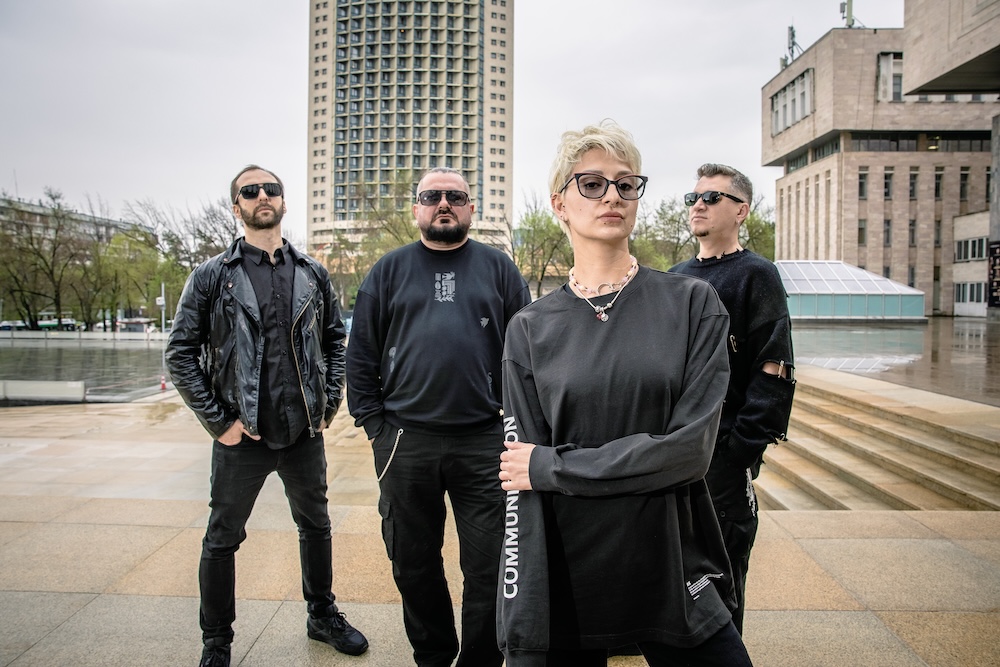
Tupik Furmanova
The Kazakh band discusses their debut album, the streets of Almaty that shaped its sound, and why honesty matters more than nostalgia.
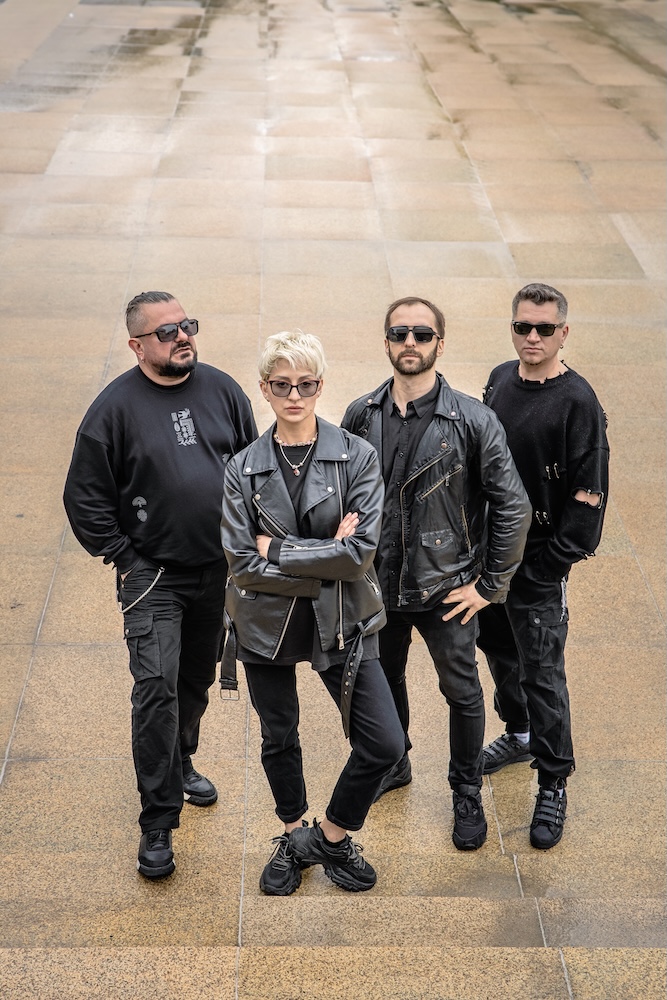
Tupik Furmanova didn’t emerge from Moscow, London or Berlin—the cities that have long dominated conversations around post-punk. Instead, the quartet quietly built its identity in Almaty, Kazakhstan, drawing inspiration not from scenes or trends but from the everyday landscapes that surrounded them: endless rows of apartment blocks, empty courtyards, long evening walks and the quiet melancholy of ordinary life. Since forming in 2023, the band has developed a sound that feels unmistakably their own, balancing the emotional weight of Soviet post-punk with the melodic sensibility of British new wave while avoiding the trap of simple revivalism. Their debut album, Heroes of Our Time, written, recorded, mixed and produced by Maxim Muntaniol and brought vividly to life by Aida Tairova’s striking vocals alongside Roman Panin and Mikhail Zasukhin, has become one of the most compelling independent releases to emerge from Kazakhstan in recent years. Newly remastered for its first vinyl edition through Maqom Soul Records, the album introduces international listeners not only to one of Central Asia’s most exciting new bands, but also to a distinctly Kazakh perspective on contemporary post-punk.
When we spoke with the band, they reflected on the philosophy behind Tupik Furmanova, the creative partnership that shapes every song, and why they believe music is most powerful when listeners are free to discover their own meanings. They also discussed recording Heroes of Our Time, Kazakhstan’s growing independent scene, the emotional experience of hearing their music on vinyl for the first time, and why, for them, the real heroes of our time are ordinary people quietly going about their lives.
How did Tupik Furmanova first come together? Do you remember the moment you realized this wasn’t just another project, but a real band?
Tupik Furmanova: As soon as we started recording our first song in 2023, we knew this wasn’t just another music project. Right from the beginning, we made a decision that music would be our life’s work. This is what we want to do.
We always believed the band had a bright future ahead of it. Of course, there was still a lot of work to do: finding our own sound, taking those first steps, figuring things out. But deep down, we never doubted that we were on the right path.
Today, that belief is even stronger. More than anything, we want our music to reach people, to resonate with them, to help them experience different emotions and become part of their lives. That’s why Tupik Furmanova exists.
You once described Tupik Furmanova as “not a place on the map, but a state you find yourself in sooner or later.” Has that idea changed since you first said it?
Tupik Furmanova: No, it hasn’t changed. If anything, it’s become deeper and taken on new meanings that we continue to share through our music.
With every new song and every concert, we find ourselves sinking further into that state and understanding it more clearly. Each member of the band becomes part of this shared space, a conduit for the emotions, thoughts and experiences that our music grows out of.
Almaty feels deeply present throughout your music. What parts of the city have shaped the way you write and record?
Aida: Max and I both grew up in ordinary residential neighbourhoods. We were surrounded by grey apartment blocks, repetitive architecture, empty courtyards, endless streets and a kind of quiet, almost romantic melancholy that seemed to hang in the air.
Those places left a lasting mark on us. They shaped the way we see the world, teaching us to find beauty in everyday life, to notice mood in the simplest things and to feel an atmosphere that many people simply pass by.
So if there’s one thing that shaped the way we write music, it’s the places where we grew up. They’re still present in our songs today—not in a literal sense, but through the emotions, the memories and the state of mind we’re trying to share with the listener.
How does a Tupik Furmanova song usually begin? Is it a lyric, a melody, a guitar part, or simply a mood?
Tupik Furmanova: Every song begins with Max’s state of mind and his lyrics. From there, we follow a fairly natural process: Max builds the musical foundation, Aida creates the vocal melody, and then we bring everything into the studio and start recording with the rest of the musicians.
Aida, your voice has become one of the band’s defining characteristics—it’s powerful without ever feeling overstated. How did you develop your vocal style, and were there any singers who influenced the way you approach melody and emotion?
Aida: Honestly, I never consciously tried to develop a particular vocal style. I simply sing the way I feel. To me, a voice isn’t just about technique—it’s also a reflection of what’s happening inside a person.
Over time, my style emerged naturally. It comes from the heart. I’ve never tried to sound like anyone else or imitate a particular singer. I’m not interested in delivering a technically perfect performance. What’s more important to me is living through the song. If the listener can feel that emotion, then it was all worth it.
Your songs leave plenty of space for interpretation. Do you prefer listeners to find their own meanings rather than explain the lyrics yourself?
Tupik Furmanova: We never explain the lyrics to our songs. We believe that the moment we start breaking down their meaning in detail, listeners lose some of the space to experience and interpret them in their own way.
What’s important to us is that everyone finds something personal in the songs, filters them through their own life and experiences them differently. The fascinating thing is that, more often than not, people end up understanding our songs exactly as we intended, even though we’ve never pointed them in that direction.
That’s the real magic of music: everyone discovers something deeply personal, yet somehow arrives at the same feeling in the end.
Are there songs on Heroes of Our Time that changed completely between the first demo and the finished recording?
Tupik Furmanova: Yes. In fact, that applies to almost every song on Heroes of Our Time.
Maxim recorded, mixed, and produced the album himself. How does having one person oversee the entire process affect the band’s sound?
Tupik Furmanova: Maxim really is the band’s constant leader. He oversees the entire process, from recording and mixing to production, and that naturally has a direct impact on the band’s cohesive and recognisable sound.
At the same time, it would be wrong to say that everything revolves around one person. Max always gives every member of the band room to contribute their own ideas, parts and musical discoveries. Anyone can suggest something that might make a song more interesting, fresher or more alive, and if it works for the track, it stays.
But of course, Max always has the final say. (They laugh.) That is probably what allows us to maintain a unified musical vision without losing the energy and individuality of each member of the band.
Were there any records or artists that influenced this album in ways listeners might not immediately recognise?
Tupik Furmanova: It would be difficult to say that the album was inspired by one particular artist or band. As we mentioned earlier, it is first and foremost shaped by the years we have lived through, the emotions we have experienced and the different stages of our lives that we simply wanted to express through these songs.
Which artists had the biggest influence on you when you first started making music?
Tupik Furmanova: Our biggest influences were The Cure, Depeche Mode and Pet Shop Boys.
The album has now been remastered specifically for vinyl. What was it like hearing these recordings in that format for the first time?
Tupik Furmanova: It is difficult to put into words. When we first put the record on and heard our songs on vinyl, it genuinely brought us to tears.
We finally heard the sound we had been working towards for so long: warm, alive and real. Sometimes music speaks for itself, and that day we truly had no words.
Does releasing music on vinyl change the way you think about an album compared to releasing it digitally?
Tupik Furmanova: No, not at all. The meaning of the songs and the melodies remain the same. We do not see any reason to change our relationship with the music depending on the format it is played on.
Heroes of Our Time is reaching listeners outside Kazakhstan through this release. What do you hope people discover beyond the music itself?
Tupik Furmanova: We genuinely hope that this release will introduce listeners outside Kazakhstan not only to our music, but also to Kazakhstan itself.
It’s a country with a rich history, a beautiful Eastern culture, deep-rooted traditions and a unique atmosphere. We want people to get a sense of where we come from and who we are through our songs.
If this album inspires someone to become curious about Kazakhstan, its culture and its contemporary artists, that will mean just as much to us as gaining new listeners.
How would you describe the independent music scene in Almaty today?
Tupik Furmanova: It’s difficult to describe the independent music scene in Almaty as a whole because every artist has their own path, their own sound and their own vision.
We’re probably better off talking about ourselves and what we create. (They laugh.) We’ve always tried to follow our own path rather than chase trends, making music that reflects our inner world, our thoughts and our experiences.
So instead of trying to sum up the entire scene, we’d rather tell people about Tupik Furmanova, our story, our music and the world we’re building together with our listeners.
Are there artists from Kazakhstan that international listeners should be paying attention to?
Tupik Furmanova: Kazakhstan is home to a huge number of talented artists who genuinely have something meaningful to say and share with the world. We have many original musicians, but unfortunately independent original music still doesn’t always receive the support it deserves.
Because of that, many gifted artists are forced to take a more commercial route, playing covers in bars, cafés and restaurants simply to make a living while continuing to create their own music.
That said, we truly believe the future of Kazakhstan’s independent music scene is bright. And of course, we’d love international listeners to discover us as well—to discover Tupik Furmanova. We make music honestly, we pour our own stories into it, and we hope our songs will resonate with people wherever they are.
What are the biggest challenges of being an independent band in Kazakhstan?
Tupik Furmanova: One of the biggest challenges for independent bands making original music in Kazakhstan is simply reaching a wider audience and getting the support needed to grow.
We often face a lack of suitable venues, media attention and opportunities that would allow a band to develop more quickly within the country.
Quite often, Kazakh artists only begin to receive recognition at home after they’ve already gained attention abroad. It’s only then that larger venues start inviting them and people begin talking about their work more seriously.
Still, we believe things are gradually changing, and that the future of the independent scene is promising. The most important thing is to keep making honest music and keep searching for the people who connect with it.
The title Heroes of Our Time carries a lot of meaning. Who are the “heroes” in your view?
Tupik Furmanova: To us, a hero of our time isn’t necessarily someone famous or someone you see in the headlines. A hero is every ordinary person.
It could be your friend, your neighbour, your colleague—or anyone who simply goes about their work every day. A doctor, a shop assistant, a police officer, an astronaut, a teacher—it doesn’t matter what they do. Every person contributes something to the world, and every person matters.
First take or twentieth take? Or hundredth?
Tupik Furmanova: Always the first. At most, the second.
Vinyl or cassette?
Tupik Furmanova: Both. We love both formats. They each carry a certain sense of nostalgia and remind us of our childhood.
One artist everyone should hear?
Tupik Furmanova: There are artists whose music transcends generations, and everyone should hear them at least once. From the classical works of Rachmaninoff, Wagner and Tchaikovsky to timeless bands like The Beatles, Metallica and The Prodigy.
Most underrated post-punk band?
Tupik Furmanova: If we’re talking about Kazakhstan and the neighbouring countries… then definitely The Cure. (They laugh.)
Favourite Soviet-era record?
Max: Any record by Kino.
Aida: Muslim Magomaev and Tchaikovsky.
Favourite contemporary band?
Max: Molchat Doma.
Aida: The Prodigy.
Analog or digital?
Tupik Furmanova: Analog.
Pre-order the album now on Bandcamp.
Official website of Tupik Furmanova.
About the Author