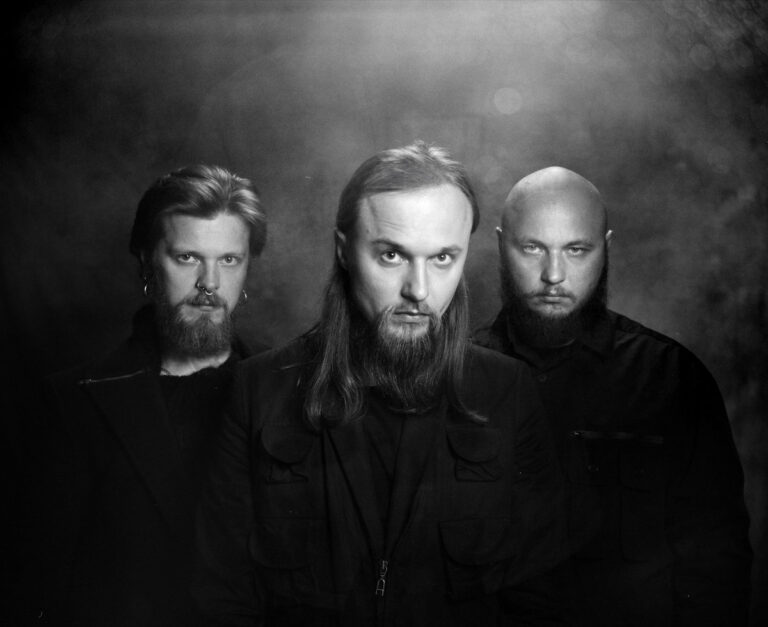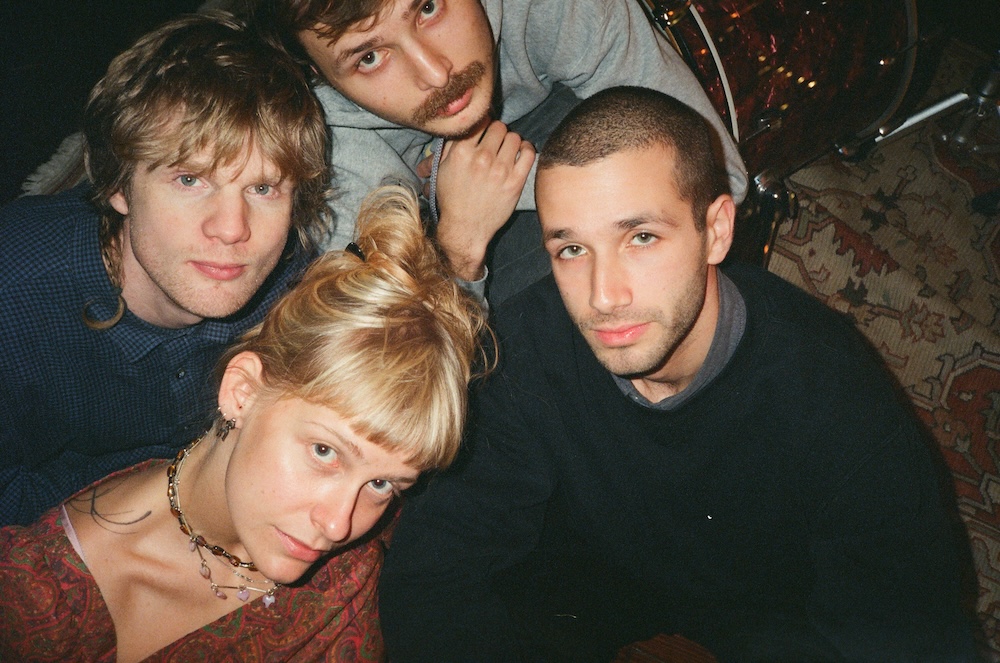
Linda 917
The Swedish artist behind LINDA 917 on building a world where avant-garde experimentation and pop songwriting collide.
Some of the most exciting music today lives in the space between genres, and Alicia Lindberg has claimed that space as her own. The Swedish singer, composer, producer, and recording engineer first emerged with her acclaimed 2022 debut album Before You Go, which was named one of the year’s Top 10 albums by OrkesterJournalen for its fresh approach to vocal jazz. But rather than settle into the Scandinavian jazz tradition that first introduced her, Lindberg chose reinvention. After relocating to New York City in 2023, she immersed herself in the city’s fiercely independent experimental scene, where improvisation, noise, electronic production, and artistic risk became central to her creative identity. The result is LINDA 917, her Brooklyn-based ensemble and artistic alter ego, a project that allows her to blur the lines between composed music and free improvisation, Scandinavian songwriting and avant-garde experimentation, intimate confession and cinematic sound design.
That philosophy reaches its fullest expression on ONLINE, the band’s self-produced and self-engineered debut album, arriving September 18. Across thirteen tracks, Lindberg explores themes of identity, digital intimacy, body image, and the hidden emotional lives of young women while pushing contemporary pop into avant-garde territory through free improvisation, textured electronics, and fearless production. Released today, the single “In My Hand” offers a compelling introduction to the album’s emotional and sonic landscape, pairing vulnerability with adventurous production that encapsulates the project’s artistic vision. In this conversation with Indie Sound, Alicia Lindberg discusses the artistic freedom she discovered after leaving Sweden, the creation of her alter ego LINDA 917, the challenge of producing her own music, and why imperfection, curiosity, and emotional honesty have become the defining principles of her work.
When did you first realize that music was something you wanted to pursue seriously?
I think after I had been studying music for a few years, when I got deeper and deeper into the theory and started writing music for real, it sparked a kind of curiosity I felt eager to follow no matter what it took. I was in my senior year of high school when I had my first paid gig at this brunch buffet every Sunday all summer, and I remember feeling like I never wanted to go back to a different career after that because of how it made me feel.
What was your earliest memory of creating or connecting with music?
When I was a kid, my dad would play blues guitar, and I would improvise with him. We would make up these stories and sing together, and it made me feel like singing was play and it didn’t have to be so serious or nerve-racking. I never took voice lessons until I was a teenager, but as a kid I just knew that I could sing because I had done it at home and I didn’t think too much about it. It was just play and fun.
For listeners discovering LINDA 917 for the first time, how would you describe the project and the world you are building through it?
With Linda 917, I’m building a world where synth pop is allowed to have more open frames and is put in a more avant-garde context. Each song has a different take on this, but the thing they have in common is how we experiment with expanding the limits of how conventional we can make the experimental and how unconventional we can make the pop music. At the point where these two limits meet is where our magic happens, when a synth pad is combined with a free drum and bass improvisation, or a pop ballad with too much dissonance and crunchy textures.
You moved from Sweden to New York City in 2023. How has that transition changed your artistic identity and the way you approach music?
New York has this way of showing you who you are in relation to others, and what I quickly realized was that I had been trying to blend in with my artistic identity in Sweden, and here that was the opposite of what everyone was doing. The artists I met were all so niche, so specific, so in tune to what they wanted and who they were becoming, and this became such a relief for me because I was so sick of trying to fit into a genre or become relatable or recognizable for something. So I started to figure out how I could make the music that I wanted to make for myself without any rules or frameworks, how I could combine parts of my curiosity into something that I would want to listen to.
LINDA 917 combines Scandinavian pop traditions, experimental music, jazz, and electronic textures. Where do these different influences meet for you?
In all of these forms of music, there is a nerve of melancholia combined with a playful carelessness that I am constantly chasing. Whether it’s Verdis Que by Daft Punk or All My
Life by Ornette Coleman or Tabula Rasa by Björk, they all have this way of playing with melancholia and extremely deep emotions in a playful and open way, which makes it much easier to access and feel. The saddest thing you can ever hear is always going to be, for me, most simply and subtly. Whispered in the back, something you don’t realize until it has already happened. Or a set of notes that are not supposed to fit together or be put so close together, but it works in the context, and the tension that is built up triggers this primitive emotional response to dissonance. These types of feelings are what I find in all these genres and have been trying to recreate for years: the subtle and simple playful melancholia.
What does the name LINDA 917 represent, and how did this identity emerge separately from your work as Alicia Lindberg?
Linda 917 is a kind of artistic alias for me, the version of myself that is overly curious, fearless, brave, sometimes outrageous, and has no desire to fit in musically or artistically. I tried for so many years to fit all my artistic desires and inspirations into one person, but I found it so hard to have to pick and define myself as an artist when I also wanted to do so many different things at the same time. It became easier for me to step into a new artistic name that was a part of me but not all of me and to expose this part isolated.
Your previous album Before You Go was recognized by Orkesterjournalen as one of the top albums of 2022. What feels different about your artistic voice now compared to that record?
I released my first album very early in my career, basically fresh out of jazz school, and at the time I didn’t really know who I wanted to be as a composer or singer. I tried a little bit of this and that and tried to be a kind of sample of everything. For me, that album represents almost like a portfolio of who I was then and there and what kind of artist I thought I was going to become. There are hints of who I actually became in my own songs in there, like Oh Man or League, for example. My artistic voice is now equally curious and exploratory, but perhaps just older and more sure of my unique voice as a composer. I had to try doing everything to know what I wanted to do, and I am glad it was documented; otherwise, it would have been lost in memory probably. Now I can surely know who I am as a composer and not try to please anyone but myself with my music. It has a life of its own.
ONLINE is described as an album exploring cinematic pop, noise, free improvisation, and lyrical synth pop. What was the initial idea or feeling that started the album?
We started this album by live recording four tracks with the intention of making an EP in August 2025. When I later got the files from the recording, I got the idea to start adding more layers to it and chopping up parts of the improvisations, and from there it took a new turn as I got deeper and deeper into it. I added my own synth parts to the already existing freely improvised parts and also chopped up some of the intros and outros to open up the form. Eventually I started adding tracks of my own, seeing an album that was like a long piece from start to finish with transition tracks, and then all of a sudden I had 13 tracks that had solo Linda 917 songs, orchestral parts, ambient transition tracks combined with the four core songs we recorded with the band.
The album blends carefully composed material with improvisation. How do you balance control and unpredictability in your creative process?
All the songs that we play as a band have set forms and structures with designated parts for improvisation, but the more we play them, the more we stretch these structures and find different routes through the songs. Some of the songs sound very different now when we play them live from when we recorded them a year ago because of the explorations we’ve done while playing them live. Each time we play, we get a different version of the songs, and I think thats the part I love the most about playing it with a band where you have this kind of trust and freedom to develop things as you go. I like that the songs change with us as we grow as a band and that they become structures that we relate to but not forms that we are restrained to. As someone who has a lot of control issues in general, this is a good practice in letting things be organic and naturally develop together with other people.
You recorded the core of the album with your band and then spent a year transforming the recordings through production. What did that post-production process reveal about the music?
I got challenged by one of my mentors, Emilie Weibel, an amazing producer and sound artist, to view the stems of the band and samples not just as a live recording of a band. Emilie encouraged me to start messing with things, reversing parts, making them longer or shorter, and this really changed the whole game for me. All of a sudden I had these recordings that I could do whatever I wanted with and was allowed to turn into something very different than what they sounded like initially. Once I was playing the tape manipulation game with it, I couldn’t stop; the songs became something very different and something I could never have seen them become. This way of producing became the building stones from which the album took off and then became what it is now.
As the producer and recording engineer of the album, how did being responsible for the entire production shape the final sound?
I grew a lot with this project, and it feels as though the project and I developed simultaneously. I hadn’t fully produced anything before this, and by experimenting with our album and finding which techniques worked for me, I found a new way of expressing my creativity and artistic ambition. By working with the material, I found my voice as a producer that I will now keep on developing with the next project.
Was there a moment during the creation of ONLINE where you realized the album had become something different from what you originally imagined?
Once I started adding shorter tracks that I had made myself and allowed for different kinds of sounds and perhaps a more pop approach, I realized how this album could reach many more people and become something grander than what I first imagined it being. This album is the first chapter of who Linda 917 is, and it has allowed me to expand my dreams and ambitions for this music tremendously.
The album moves between intimate moments and large, cinematic soundscapes. How do you approach creating emotional contrast in your music?
I like to play with the idea of putting “ugly” things in a pretty setting, especially with sounds. In this music, I played around with adding rough textures or dissonance to simple melodies or complex melodies to simple or more bare harmonic backgrounds. These types of contrasts are for me reflections of what we experience every day, especially in a city like New York where you have a wedding and a couple fighting side by side, or flowers with a pile of dog poop on the side. Nothing is ever pretty or perfect just on its on and for me, giving “pretty” things a chaotic or rough contrast is what makes it emotional for me. It somehow reflects the internal battle between good and bad.
Why did ONLINE feel like the right title for this body of work?
ONLINE is a double meaning in this sense both because the album represents what Linda 917 sounds like online, whereas we do sound a little bit different when we play live as the Linda 917 band. It is also the title track of this album, which is a song about having relationships with people online and how it affects you.
You describe your goal as finding a new sound for alternative pop and indie music. What qualities define that sound for you?
What I wanted to find with this project was how we could have an indie band kind of artistic identity and combine it with the mentality of the underground experimental scene. I like to write sad songs about being a girl and combine them with elements of noise, chaos, and almost a punk attitude to electronic effects. I wanted to combine elements of music that made me feel things like free improvisation and complex harmonic structures while keeping the branding and DIY aesthetic of alternative indie pop.
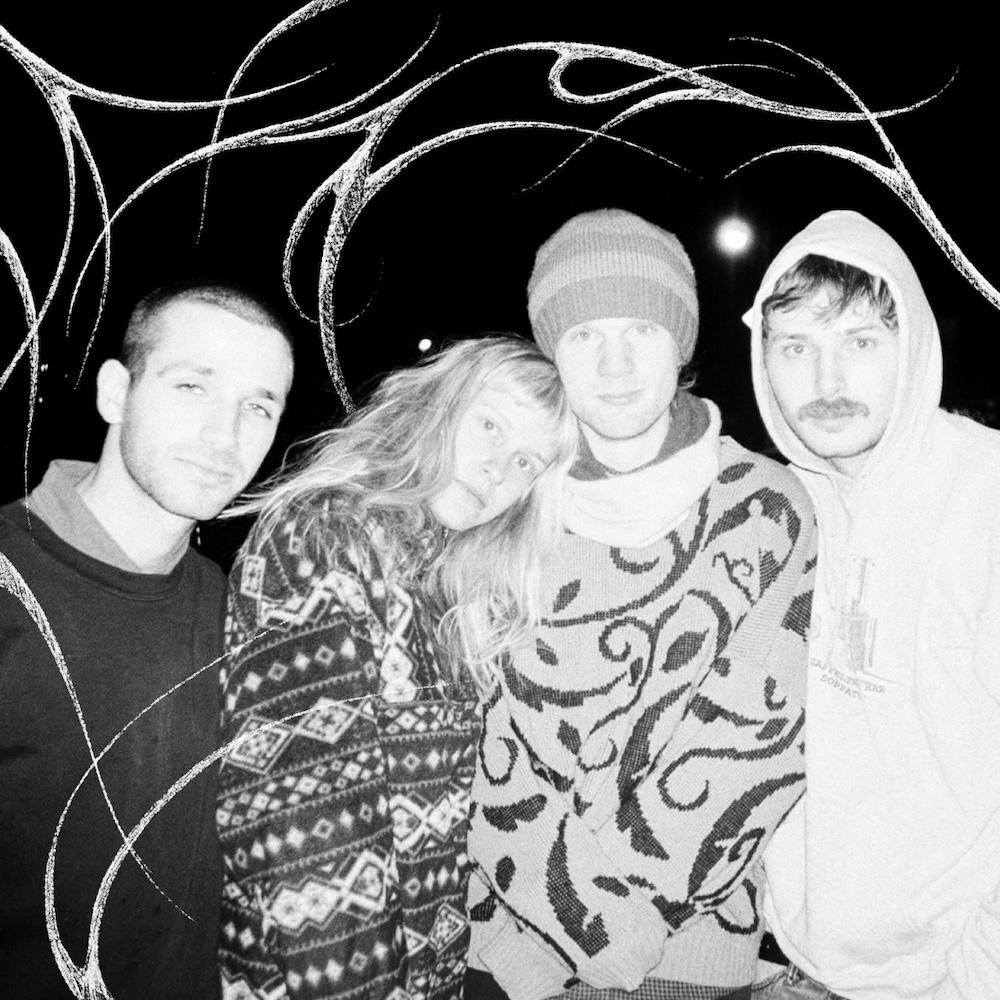
How do you think about the relationship between your voice and electronic processing? Is the voice an instrument, a character, or something else?
I see my voice definitely as my first and foremost instrument. Having been a singer all my life it is also deeply rooted in my personality and identity. I believe that playing with electronic processing allowed me to explore different ways I could use my voice and it being more than just “a pretty voice in the front”. I love the freedom of being able to add textures or effects to my voice to give it more power than just singing without effects, especially with this kind of music where it can get very loud or chaotic. With my effects and when I also play my synthesizer at the same time, I can function more as a part of the sound world that we build together and shape the songs with. Sometimes I loop things or explore more percussive sounds, and sometimes I am in the front singing the lyrics; the effects give me the power to decide where I should be in the stereo and dynamic field.
Your production combines unconventional textures with pop structures. How do you decide when an experimental idea serves the song?
Some of my less conventional ideas often come out of mistakes or just by coincidence. In jazz school, the longer you stay, the more you learn that there is no such thing as a wrong note; it’s just a different possibility, so you just have to repeat it. This mentality helps when exploring different combinations of sound, and it’s often when something sticks out or is “wrong” that it speaks to me.
Which artists or movements have influenced the sonic language of ONLINE?
ONLINE is inspired by movements like the avant-garde free jazz movement in the 60s, the technological influence on jazz and pop in the 80s and 90s, and how innovators like Kate Bush and Björk took these technological possibilities and made them their vessel for experimental exploration in pop.
Kate Bush is mentioned as an influence. What do you admire about her approach to songwriting and production?
She had such a unique creative ambition in what she wanted things to sound like and look like, and I love that she followed her instinct and curiosity regardless of what anyone thought about it. She just had to explore it no matter what. Her innovative storytelling and combination of technological curiosity, using new technology and creating sounds never heard of in that context before. The way she formed her artistry into a solely unique sound and personality with many unconventional aspects, while guiding the mainstream audience into her world, is remarkable. I think many people don’t even realize how unique and influential she was for this certain development in music, especially for women in this scene.
How has being part of the New York experimental scene influenced your relationship with sound?
Seeing and hearing people challenge the concept of sound or noise vs music and how they can interact but also be the same thing changed my opinion of what something is supposed to sound like or make you feel. I think it’s good for us as artists and human beings to experience new things, get surprised by sounds, and hear things that we’ve never heard before, especially hear things we initially don’t like. When you start questioning why you don’t like this or why you like that, you open your mind to a larger palette of options when it comes to sound and making music.
Are there specific instruments, techniques, or production choices on ONLINE that were especially important to creating its atmosphere?
What stands out sonically with ONLINE is the combination of acoustic instruments and electronic effects. While producing the album, I almost saw them as two different sound worlds that sometimes coexist and sometimes just exist side by side. This is something I played around with in the production, having things move around in the stereo field with panning or adding rooms of different sizes to the acoustic elements for them to either blend in or stick out.
ONLINE explores themes including body image, mental health, vulnerability, and the hidden experiences of young women. What made you want to approach these subjects through music?
When I write the lyrics to my songs, I tend to improvise the meanings of the thoughts I am currently having, so it’s often a reflection of what I am currently going through. This music has been a way for me to work through these emotions and thoughts of becoming older, existing as a woman in the world, and how I want to relate to it. For me, it’s kind of like writing a diary or talking to a friend.
There is a sense of protest woven throughout the album. What systems, expectations, or cultural ideas were you responding to?
The expectation that music should be a comfortable experience is something I’ve actively worked against by being too literal or confusingly vague. There is maybe an idea that I, as an artist, should adjust to the demand of a mainstream ideal or things like trends, but I personally want things to be more ugly, more vulgar, and imperfect because thats who we are as artists. The quiet protest woven in ONLINE is against the perfectionism I felt controlled by for a long time, letting things be unsettling or uncomfortable because it serves my music more than doing the opposite.
How do you transform personal experiences into something universal for listeners?
As listeners, we always make our own interpretations of what the music is about and relate it to us somehow, so the songs will always have a different meaning for me than for someone else, but what I try to do is write songs that I would relate to and see myself in, with the hope that maybe someone else will, maybe they won’t. But when it comes to big touchy subjects like self-image, self-doubt, becoming an adult, being angry at your ex, for example, I think many people can relate because they are simply reflections on human experiences in the time that we live in right now.
The album explores vulnerability while also feeling powerful and defiant. How do you see those two qualities interacting?
I think being vulnerable is the only way to feel defiant and powerful because it relates to how open we are to ourselves and other people. To be able to be vulnerable, you have to have a lot of bravery and feel safe, so I think it’s very much connected in that way.
Are there songs on the album that were particularly difficult or meaningful to write?
At the end of In My Hand, I added an old voicemessage from my mom as the outro, and almost every time I got to that part in the production phase I had to hold myself back from crying or get too emotional just because of how intensely it made me feel to hear my mom’s voice in that context. Living in New York for over 3 years has put me very far away from my family, which has become a big inner battle of guilt and sorrow, but it was very beautiful to be able to add that detail to this meaningful song.
The track titles suggest a tension between connection and isolation (ONLINE, Offline, “so I go home and watch you on my screen”). What does digital connection mean to you?
I think about this a lot and like to write about it because I think we have become such digital people, and I notice in myself how I feel almost a split personality of who I am online and who I am IRL. With phones being such a big part of our lives, I think they affect our relationships to ourselves and other people tremendously, and I like to write about this experience because it is something that is happening to almost all of us and will probably have complications in the future that we can’t see yet.
You describe ONLINE as a distinctly feminine voice within two traditionally male-dominated spaces: music production and jazz performance. How has that shaped your experience as an artist?
I have always felt the need to prove my knowledge or credibility in these spaces as a producer, recording engineer, and bandleader, and even though it makes you very skilled, it does make you very tired sometimes. Being nerdy or knowledgeable is not something that is as expected of us as women, and with time, we probably pick up a lot of male traits like being loud and taking up a lot of space to fit in. What I wanted to focus on with this album was using this loudness and space to speak up about some of these experiences being a young woman and things that are less spoken about in the more experimental context.
Do you think the experimental music world has changed in its openness toward women producers and composers?
We are seeing so much change happening just within our generation of musicians and artists, and I think the future is definitely more open and equal in all various ways. In a city like New York, I have had the privilege to study with and be surrounded by such amazing female artists and composers, and it is something that has inspired me in making this music and talking about these things.
What kinds of narratives about women in experimental music do you hope your work challenges?
Probably the idea that something can be very inherently feminine and vulnerable but still be complex and rough.
Do you feel there is a particular perspective you bring to experimental music because of your background and experiences?
I think being a women automatcally gives you a different perspective than the one that is often being told in these kinds of music, and also being from Sweden and coming from that cultural heritage.
What advice would you give to young women who want to enter fields like production, composition, or improvisation?
Just play around and have fun, honestly. You can get so far by just being curious and wanting to explore things, not knowing exactly what it is you’re doing. No one knows what they’re doing anyway.
LINDA 917 is built around collaboration with musicians from different backgrounds. What qualities do you look for in collaborators?
I look for a similar emotional expression in their language and connection to music.
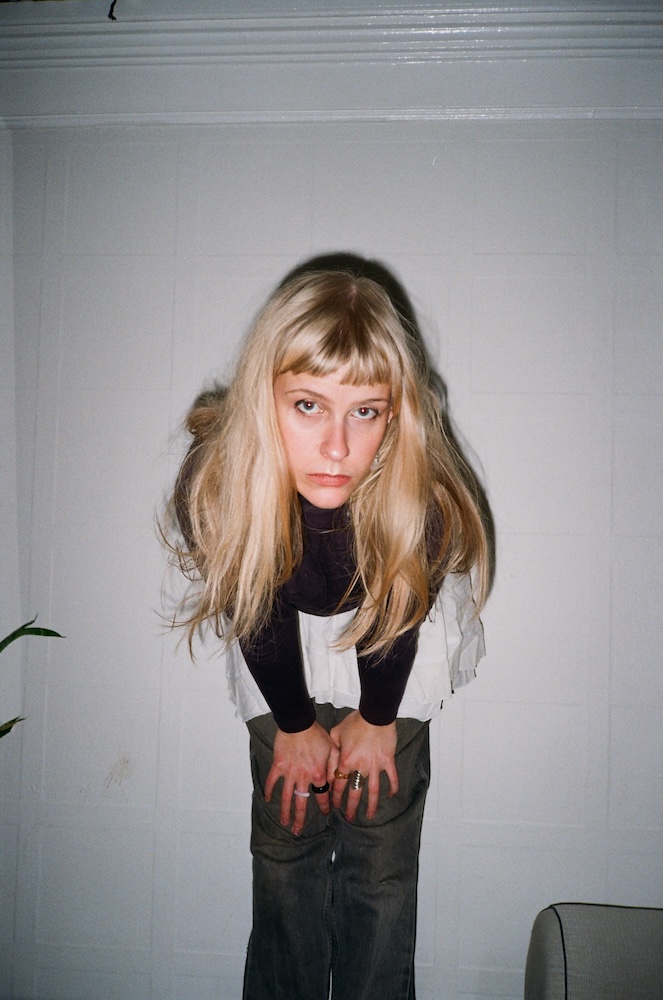
How do the musicians in the ensemble influence the direction of the music beyond simply performing your compositions?
I try to give my musicians as open hands as possible to explore how they want to interpret the music, and by improvising a lot of the material, we get a long way quickly, where we are all forced to make our own imprint on the material.
How does writing for a live ensemble differ from writing music alone in the studio?
The music I wrote for the ensemble took years to finish because I kept polishing it and changing it all the time, whereas the songs I wrote in my studio (bedroom) took only a few hours from start to finish and were mostly improvised.
Can you describe the creative relationship between improvisation and composition within LINDA 917?
I like to have improvisation within certain frameworks, and by composing most of the material and leaving space, I try to have the improvisation do the work of taking the composition that extra mile and bringing in spontaneity and impulsivity.
Are there moments on ONLINE where the musicians surprised you with something unexpected?
When we recorded Flush, Isaac (playing keyboards) and I were supposed to do the version that we had practiced and performed, but then he came up with the idea of breaking up the chords into this arpeggiator-sounding melody, and it totally became the whole song and is my favorite part of the whole album probably.
“Companion” opens the album with a long, immersive structure. Why did you choose this piece as the introduction to ONLINE?
I love having companion as the introduction to our sound because of the dramatic structure and build of the song and how it leads you into this world slowly by repetition and this mantra that keeps just building and building.
The album moves between very short pieces and expansive compositions, including the eight-minute closing track “Better.” How did you think about the album’s pacing?
I wanted the album as a whole to feel like a piece itself and be a listening experience from start to finish. Thats why I intentionally made many songs move into each other, placed out the four main tracks Companion, Online, The Story of The Two Hearts, and Better, with transition tracks and interludes in between.
“Godnattvisa” translates to “lullaby” in Swedish. What role does your Swedish heritage play in the album?
I do a lot of what we call a “pedal bass” movement in all my songs, basically the bass just going between the root and the fifth of the chord, and this is something that I can’t seem to not do when I write music on the piano because thats simply how I hear the harmonic structure and voicing. Things like these are leftovers from Swedish folk music that I also hear in other Scandinavian composers’ music.
The song “Flush” explores intense textures and emotional shifts. What inspired that track?
I wrote this song right after I got dumped a few years ago, and I was so so angry at this guy. I have actual voicememos of singing this song crying while it was composed. Now I see it as a funny anecdote to a song about learning the hard way to not put all the eggs in one basket, so to speak.
What do you hope listeners take away from the final song, “Better”?
It sort of a happy ending after all the sad stories coming one after the other, a nice way to close it off and end the chapter, which was the last years of my life.
What does success look like for LINDA 917 at this stage of your career?
I am so glad we were able to do this album and that it turned out the way it did. This is the first time I created something out of pure creativity and curiosity, and I learnt so much during this whole process. I would love for people to hear it and like it, but even if not a single person heard it, it would still feel important for me. This is just the beginning of this journey, and as long as I can keep playing and releasing new music, I would consider myself successful.
How do you hope this album changes the conversation around experimental pop and contemporary jazz?
I hope that ONLINE can spark an interest in how you can transform improvised music or jazz in post-production and how pop structures can benefit from more open forms or unconventional textures.
After spending so much time building the world of ONLINE, what feels like the next creative challenge?
I am already eager to record our next album, which I believe will take this concept even further, and that is already in the works. I would love for us to expand our live setup to resemble the recording more and perhaps add more instruments and members to the core structure of the band.
What kind of artistic space do you hope LINDA 917 creates for listeners?
I hope that this album creates a space where people can listen to this music and be taken on a journey internally. Whenever I listen to music and close my eyes and see my life flashing before my eyes, I know that music is working on me, and I wish to give that experience to the listeners with this music.
If someone listens to ONLINE from beginning to end, what journey do you hope they experience?
ONLINE is a journey of love and loss and self-discovery through music, and when listening to it from start to finish, I hope they can hear my vision of this whole album as a piece of itself.
A song on ONLINE that surprised you?
The track Unorganized was not supposed to be in there and was added just the last week of production; it was first recorded as a reel for my Instagram, but now when I hear it, I am very glad that it made its way in there.
A sound you could not live without?
Voices in close intervals.
What is your favorite part of the production process?
Making the first bounce and listening to it on the subway.
Is there a place in New York that inspires your creativity?
Going over the Manhattan Bridge with the subway. There is almost no song that doesn’t fit that view.
What is one artist or album you think everyone should hear?
Emilie Nicolas – Tranquille Emilie !!!!
What is one piece of advice you wish you had when you started producing music?
Just start!! Stop waiting for the right time or gear.
What is one word you associate with ONLINE?
Fearless.
Official website of Linda 917.
About the Author