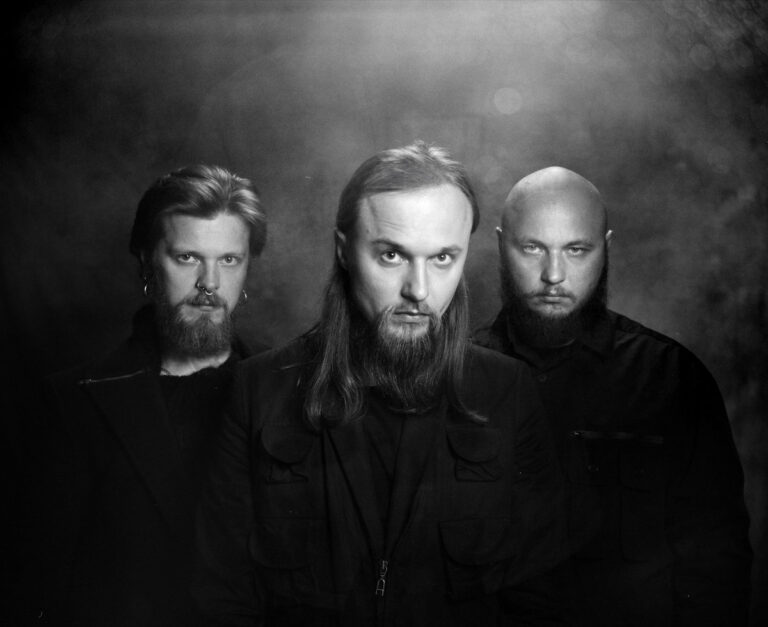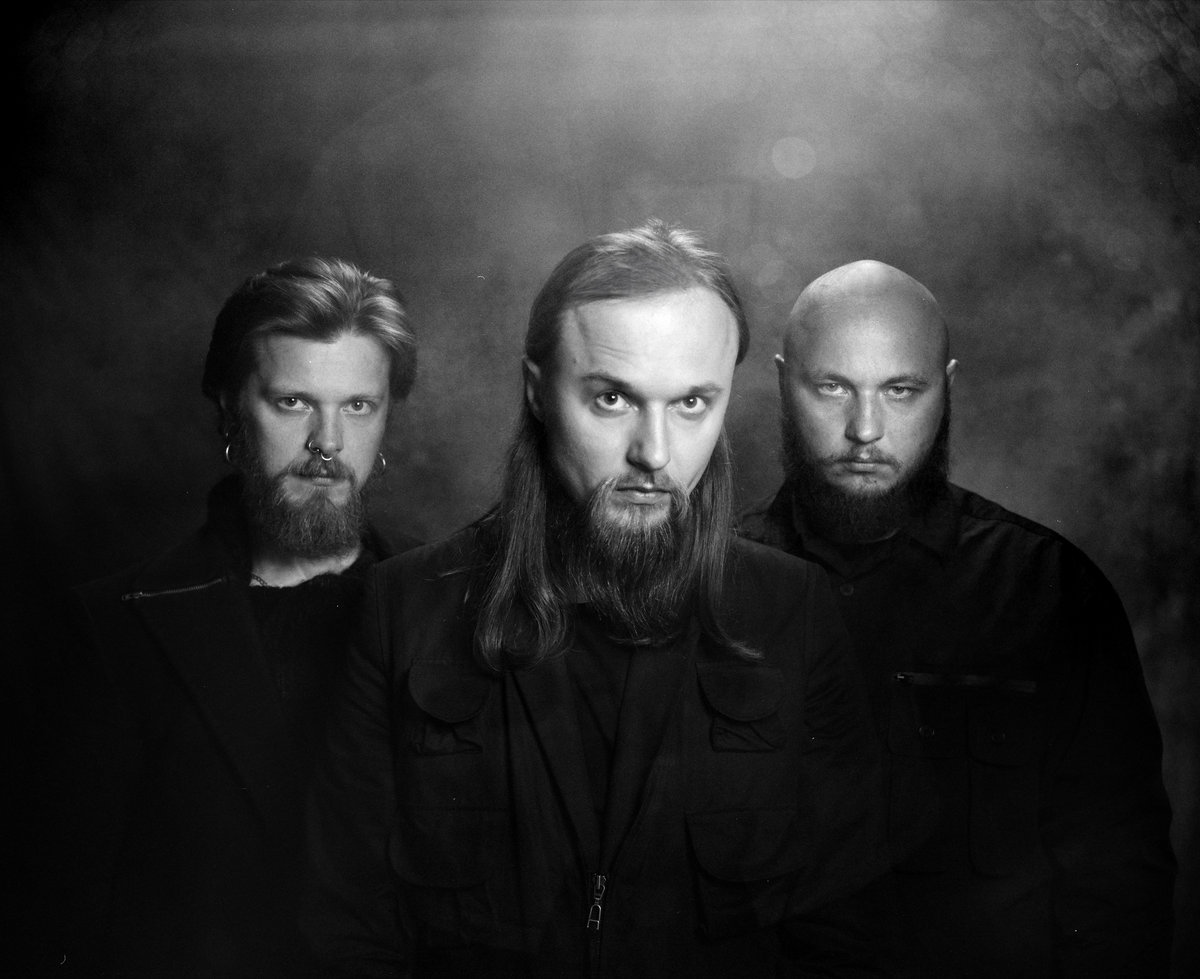
Molchat Doma
From frozen apartment blocks and provincial isolation to neon-lit dance floors and internet-age alienation, these artists turned post-Soviet uncertainty into one of the most distinctive dark sounds of the 21st century.
A distinctive sense of melancholy runs through much of Russian-language alternative music, but there is no single source for its darkness—it can emerge from concrete apartment blocks and industrial landscapes, from provincial isolation and urban anonymity, from romantic longing, political anxiety, personal vulnerability or simply a fascination with the nocturnal and the strange. For some artists, it reflects the unresolved presence of Soviet history; for others, it belongs entirely to the present—shaped by the internet, changing cities, contemporary subcultures and the search for identity in a rapidly shifting world.
But this sound did not emerge from nowhere.
Long before a new generation of artists turned post-punk and darkwave into the soundtrack of the internet age, late-Soviet musicians had already developed a powerful vocabulary for alienation, melancholy, and urban anxiety. Bands such as Kino, Nautilus Pompilius, Grazhdanskaya Oborona, and Agatha Christie helped establish an emotional and aesthetic foundation that would continue to echo long after the Soviet Union itself disappeared. Across the wider Soviet rock and new-wave underground, these artists demonstrated that gloom did not have to be imported wholesale from Britain—it could become a distinctly local language for describing reality.
For the generation that came of age after 1991, those influences never really disappeared: the apartment blocks were still there, so were the factories, the provincial isolation, the crumbling infrastructure, and the ghosts of a system that had vanished without taking its architecture—or its memories—with it. But everything surrounding those landscapes had changed.
Darkness was no longer simply an aesthetic borrowed from goth clubs or British post-punk records. It was embedded in the environment. Increasingly, it became part of cultural memory.
Drawing from Soviet new wave and underground rock while absorbing the influence of Joy Division, The Cure, and Depeche Mode, a new generation began assembling something distinctly its own. Post-punk collided with coldwave, darkwave, synth-pop, shoegaze, industrial electronics, and DIY punk. Even as Western bands provided the initial blueprint, many artists increasingly began pushing against that template, rejecting its familiar post-punk clichés in search of something messier, more local, and impossible to neatly translate.
And despite the tendency of Western audiences to treat the scene as a single national phenomenon, Russian-language alternative music has always extended beyond Russia itself. Artists from Belarus have played a crucial role in shaping its contemporary identity, while musicians across the former Soviet space have used Russian as a shared creative medium—often for reasons of history, audience, and cultural exchange rather than as an uncomplicated expression of political or national identity.
That distinction matters. This is not one scene, one city, or one sound. It is a loose constellation of artists connected by language, aesthetics, influence, and a shared attraction to the emotional debris of the post-Soviet world.
Think Eastern European post-punk begins and ends with Molchat Doma? These 25 artists prove otherwise.
1. Molchat Doma
Style: Post-punk / coldwave / synth-pop
Essential track: “Sudno (Boris Ryzhy)”
Molchat Doma are the most internationally successful group associated with the modern Belarusian and Russian-language post-punk revival. Formed in Minsk in 2017, the trio consists of vocalist Egor Shkutko, guitarist and synthesizer player Roman Komogortsev, and bassist Pavel Kozlov. Their first two albums, S krysh nashykh domov (2017) and Etazhi (2018), established the stripped-down sound that would make them internationally recognizable: drum-machine rhythms, synthesizers, melodic basslines, sparse guitar and Shkutko’s unusually deep baritone.
A key part of Molchat Doma’s appeal is their deliberately lo-fi, a kind of worn sound, which can evoke the experience of finding an old cassette tape and discovering music that feels as though it has been forgotten for decades. Etazhi became the band’s breakthrough record. Its cover, featuring a photograph of the Hotel Panorama in Slovakia, also became closely associated with the visual culture surrounding the group online. Musically, the album drew comparisons with Soviet new wave as well as Western post-punk and coldwave artists, particularly Joy Division, Depeche Mode and The Cure, although Molchat Doma’s repetitive song structures and combination of bass and synthesizer gave them a distinctive identity.
“Sudno (Boris Ryzhy)” became their defining international hit after spreading widely on TikTok and other social-media platforms in the late 2010s and early 2020s. The song takes its title and lyrical inspiration from the work of poet Boris Ryzhy and appeared on Etazhi. Its slow build, memorable bassline and stark vocal delivery made it especially adaptable to short-form video, introducing millions of listeners outside the former Soviet Union to Russian-language post-punk.
2. Ploho
Style: Post-punk / coldwave
Essential track: “Zakladka” (“Cache”)
The name Ploho—Russian for “bad”—has a certain kind of beautiful bluntness, it is an almost absurdly economical name for a band that has spent much of its career turning bleakness into something hypnotic. The Novosibirsk band became one of the most recognizable names in the Siberian branch of the modern Russian post-punk revival. They formed during the 2010s around vocalist and songwriter Viktor Uzhakov and developed a sound rooted in minimal arrangements, drum-machine rhythms, repetitive guitar figures and prominently melodic bass.
Ploho’s music draws on Siberia’s stark landscape while combining coldwave’s economy with the directness of underground rock and Soviet-era new wave, using restrained arrangements, repetition, and subtle melodic shifts to create tension rather than dramatic climaxes.
“Zakladka” (“Cache”) captures the stark, repetitive side of Ploho’s sound, pairing a steady post-punk pulse with cold synth textures, melodic bass and Viktor Uzhakov’s detached vocals. The track also reflects the band’s knack for making bleak, distinctly Russian-language subject matter feel strangely immediate and hypnotic, an approach that helped carry Ploho from Novosibirsk’s underground into the wider international post-punk revival.
3. Electroforez
Style: Darkwave / synth-pop / electronic post-punk
Essential track: “Zlo” (“Evil”)
Electroforez are a Saint Petersburg electronic duo formed by Ivan Kurochkin and Vitaly Talyzin. Since the mid-2010s, they have developed a sound that combines darkwave and synth-pop with electronic production, theatrical vocals and lyrics that frequently move between romantic obsession, alienation and deliberately exaggerated melodrama.
Their music differs from guitar-centered post-punk in its emphasis on synthesizers and programmed rhythms. Kurochkin’s vocal style is central to the band’s identity: dramatic, expressive and often deliberately stylized rather than conventionally naturalistic. This theatrical quality has helped Electroforez develop a strong following among listeners interested in dark electronic music as much as traditional post-punk.
“Zlo” (“Evil”) captures the group’s combination of accessibility and darkness. The song is built around a direct electronic hook and dance-oriented rhythm, but its atmosphere remains firmly within the darker traditions of synth-pop and darkwave. Electroforez therefore represent an important shift in the broader Russian-language scene from guitar-based post-punk toward electronic music designed for both headphones and clubs.
4. IC3PEAK
Style: Dark electronic / industrial pop / experimental
Essential track: “Smerti bolshe net” (“No more death”)
IC3PEAK do not fit neatly into post-punk, but their importance to the broader Russian dark-music landscape makes them impossible to leave out. Formed by Anastasia Kreslina and Nikolay Kostylev, the Moscow duo fuse industrial electronics, trap-influenced production, distorted and processed vocals, noise, gothic imagery and confrontational performance art. Their music is inseparable from their visual identity: stark videos, grotesque imagery and deliberately unsettling performances turn individual songs into larger audiovisual statements.
“Smerti bolshe net” (“No more death”) became particularly prominent for its combination of aggressive electronic production and politically charged imagery, illustrating how Russia’s contemporary underground could use internet-native music and visuals to reach audiences far beyond traditional alternative-music circles.
In 2024, Nikolay Kostylev launched his solo project sputn1k, exploring a different side of his songwriting and production. While IC3PEAK is built around aggressive electronic experimentation and the striking contrast between Kostylev’s production and Kreslina’s ghostly vocals, sputn1k moves toward a warmer, more intimate sound, with Kostylev’s own voice bringing a notably soothing quality to its indie-rock-influenced songs, primarily performed in English.
5. Uvula
Style: Post-punk / shoegaze
Essential track: “Ty i ya” (“You and me”)
Uvula offer a more guitar-driven and emotionally open variation on the Russian-language post-punk sound. Rather than relying primarily on drum machines and rigid minimal-synth arrangements, the group makes extensive use of reverb-heavy guitars, layered textures and melodies that connect post-punk with shoegaze, dream pop and indie rock.
“Ty i ya” (“You and me”) reflects this approach, combining melancholy with warmth and melodic openness. Uvula are useful evidence that the modern Russian-language post-punk scene is not defined by one production formula: the same emotional territory can be explored through dense guitar textures and vulnerable vocals rather than exclusively through synthesizers and coldwave minimalism.
6. Srub
Style: Dark folk / post-punk
Essential track: “988”
Srub occupy one of the most distinctive positions in the broader Russian dark-music landscape. The project, associated with Igor Shapranovsky, combines post-punk and gothic rock with folk influences, Slavic mythology, rural symbolism and imagery connected to forests, death, ritual and folklore.
“988” demonstrates the project’s ritualistic atmosphere and its use of dark imagery without abandoning the rhythmic drive of rock and post-punk. Srub’s importance lies in showing how post-punk-derived music can absorb local folklore and mythology rather than simply reproducing the visual and musical codes established by British and Western European bands.
7. Svidetelstvo o smerti
Style: Dark post-punk
Essential track: “Petlya” (“Loop”)
Svidetelstvo o Smerti represent a darker and more underground strand of Russian alternative music. Their work is associated with stripped-down arrangements, bleak melodies and an intensely personal emotional tone rather than the polished production or dance-oriented structures found elsewhere in the contemporary darkwave scene.
The music places alienation and psychological exhaustion at the center of the listening experience. Songs often feel deliberately close and unvarnished, with relatively simple arrangements allowing the vocal delivery and melodic mood to carry most of the emotional weight.
“Petlya” (“Loop”) represents this raw approach particularly well, rather than turning darkness into a theatrical aesthetic, the song’s power comes from its directness and lack of obvious ornamentation.
8. Konets Solnechnykh Dney
Style: Lo-fi post-punk
Essential track: “Deti nemoi strani” (“Children of the deaf land”)
Konets Solnechnykh Dney represent the intensely DIY end of the contemporary Russian-language alternative underground. The project’s identity is closely connected to lo-fi recording aesthetics: guitars, vocals and percussion are often presented with little attempt to create the polished, spacious production associated with mainstream rock or modern electronic music.
“Deti nemoi strani” is representative of this emotional directness – the music combines melancholy with a deliberately unvarnished presentation, making the song feel closer to a personal document than a carefully staged post-punk production. Konets Solnechnykh Dney therefore illustrate an important development in Russian-language underground music: post-punk’s emotional vocabulary has increasingly moved beyond formally defined bands and scenes into bedroom recording and internet-native independent projects.
9. Gleb Samoylov & The Matrixx
Style: Post-punk
Essential track: “Lyubovyu” (“Love”)
As the primary songwriter behind the gothic rock juggernaut Agatha Christie, Gleb Samoylov was already an architect of Russia’s darkwave and post-punk identity throughout the 1990s. But when that chapter closed, Samoylov launched The Matrixx in 2010—a sharper, unvarnished, and aggressively electronic evolution that traded stadium gothic-rock for gritty, industrial-tinged post-punk. The release of their debut Prekrasnoe Zhestoko (Beautiful Cruel) shocked both Agatha Christie’s established audience and critics, as Samoylov made a complete and daring stylistic break from the moody, gothic, Cure-like sound of his former band to the snarling, electronically charged aggression of The Prodigy, transforming both the music, vocals and style into something radically confrontational.
“Lyubovyu” serves as the definitive manifesto for this second act. The track strips away any remaining mid-tempo classic rock polish, relying instead on relentless drum machine beats, serrated bass synths, and Samoylov’s new signature, theatrical vocal delivery—equal parts sneering cabaret and existential breakdown.
True to Samoylov’s lyrical universe, “Lyubovyu” doesn’t treat love as romance; it treats it as a dangerous, intoxicating madness set against a bleak post-Soviet backdrop. It’s a bridge between coldwave, dark electro, and Russian post-punk, proving that one of the genre’s founding fathers could reinvent himself without losing an ounce of his signature bite. The music video for “Lyubovyu,” was deliberately conceived as a provocative piece by director Artem Pugach and its explicit imagery led YouTube to remove the video twice.
10. Peremotka
Style: Indie / post-punk influence
Essential track: “Vstrechnaya” (“Wrong lane”)
Peremotka occupy a warmer and more nostalgic corner of the contemporary Russian-language indie scene. Their music shares certain musical and emotional characteristics with post-punk—melodic basslines, guitar repetition and a fascination with distance and memory—but the overall atmosphere is usually more romantic than bleak.
The group’s songs turn nostalgia into something deeply personal, evoking journeys, lost relationships and the feeling of looking back at an earlier version of oneself rather than longing for any particular historical era. The video associated with “Vstrechnaya” (“Wrong lane”) reinforces this mood through footage from Richard Linklater’s 2004 film Before Sunset.
Musically, “Vstrechnaya” demonstrates why Peremotka appeal to listeners who enjoy post-punk but want something with a more romantic vibe. Jangling guitars and memorable vocal lines replace coldwave’s severe minimalism, turning melancholy into a form of sentimental reflection rather than despair.
11. Shortparis
Style: Experimental post-punk / art rock
Essential track: “Strashno” (“Scary”)
Shortparis are one of the most artistically ambitious groups to emerge from Saint Petersburg’s alternative music scene. Formed in 2012, the band developed a reputation not only through their recordings but also through performances where Nikolai Komyagin, the band’s lead vocalist, keyboard player and one of its founding members, stood at the centre of this identity, with his intense physical performances and theatrical vocal style becoming inseparable from Shortparis’s artistic language. Komyagin tragically died on 20 February 2026 at the age of 39, leaving behind an unforgettable body of work in which his distinctive presence helped define one of the most experimental voices in contemporary Russian alternative music.
Their sound moves freely between post-punk, electronic music, industrial rhythms, experimental rock and theatrical performance. Conventional verse-and-chorus structures are often replaced by repetition, abrupt transitions and escalating rhythmic tension. Vocals can shift from intimate and restrained to shouted or highly theatrical, giving the music a dramatic range unusual in conventional rock.
“Strashno” (“Scary”) by Shortparis is a haunting avant-garde anthem where a sensitive vocal delivery, hypnotic repetition, and theatrical intensity create an increasingly unstable, ritualistic expression of collective anxiety, fear, and vulnerability.
12. Kedr Livanskiy
Style: Electronic / ambient / dark pop
Essential track: “razrushitelny krug” (“Circle of destruction”)
Kedr Livanskiy is the stage name of Moscow electronic musician and producer Yana Kedrina. She emerged from Russia’s independent electronic scene during the 2010s and became internationally recognized for music that combines ambient textures, dream-pop vocals and influences from house, techno and other forms of dance music.
Her music balances restrained, dance-derived rhythms with layers of synthesizers, reverb and processed vocals, creating a hazy atmosphere that bridges experimental electronic music and dream pop. “razrushitelny krug” (“Circle of destruction”) demonstrates the hazy and cyclical quality of her songwriting, rather than constructing a sharply defined narrative or dramatic climax, the track develops through texture, repetition and atmosphere.
Kedr Livanskiy represents a parallel route through the same cultural landscape, reaching the alienation and nostalgia of post-punk through synthesizers, electronic rhythms and deliberately blurred production rather than guitars and coldwave rhythms.
13. Pasosh
Style: Punk / indie / post-punk influence
Essential track: “Kogda tebe grustno” (“When you’re sad”)
Pasosh emerged from the Russian-language DIY alternative scene with a sound that combined punk’s directness with indie-rock melody and the emotional openness associated with emo and internet-era youth culture. Their songs are generally faster and more physically energetic than coldwave, with distorted guitars and urgent vocals replacing the controlled, mechanical rhythms associated with classic post-punk.
The video for “Kogda tebe grustno” (“When you’re sad”) adds another dimension to this aesthetic through whimsical animation by Evgeny Dzerzhinsky and Dasha Khudyakova. The playful and surreal imagery contrasts with the song’s emotional vulnerability, making sadness appear strange, imaginative and even absurd rather than purely hopeless.
Pasosh represent an important generational shift within Russian alternative music, their work shows how the emotional concerns associated with post-punk—loneliness, alienation and difficulty connecting with others—could be translated into a louder, more immediate punk and indie-rock language.
14. Super Besse
Style: Post-punk / coldwave / electronic
Essential track: “Holod”
Super Besse brought a more electronic and dance-oriented perspective to the Belarusian post-punk scene. Formed in Minsk, the group combined post-punk guitars and bass with synthesizers, drum machines and influences from electronic club music, creating a sound that connected coldwave with contemporary dance music.
“Holod”—Russian for “cold”—is a fitting introduction to the band’s aesthetic. The track builds its atmosphere through mechanical rhythms, repetition and icy electronic textures, while maintaining a sense of physical momentum that distinguishes Super Besse from more traditionally guitar-driven post-punk acts.
Rather than simply recreating the sound of 1980s coldwave, Super Besse incorporated elements of techno, EBM and modern electronic production. Their music demonstrates how the Belarusian post-punk revival extended beyond melancholy and nostalgia into darker, rhythm-focused music designed as much for movement as introspection.
15. Diana Ringo
Style: Noise rock / alternative rock / post-punk
Essential track: “Matrosskaya tishina” (“Sailor’s Silence”)
Finnish artist Diana Ringo brings a harsher, more confrontational edge to Russian-language dark alternative music. Her work moves between noise rock, post-punk, industrial textures and experimental alternative synth-rock, using distortion and dissonance as expressive tools.
“Matrosskaya tishina” (“Sailor’s Silence”) is a particularly powerful example: its title refers to Moscow’s notorious Matrosskaya Tishina prison, while the song itself addresses violence, militarism, propaganda and the human cost of war. Ringo’s music strips away much of the nostalgic romanticism associated with post-Soviet post-punk and replaces it with anger, grief and resistance.
In spirit, her approach recalls Sonic Youth’s abrasive, art-rock sense of experimentation, but channels it through a more synth-driven palette with pronounced deathrock elements. The result feels less like music about a decaying world than music actively confronting the forces responsible for that decay.
16. Otto Dix
Style: Gothic darkwave / electronic
Essential track: “Antichrist”
Otto Dix are one of the most recognizable names in the Russian gothic and darkwave tradition. Formed in Khabarovsk in 2004, the project developed around electronic programming, dramatic vocals and an elaborate visual aesthetic that connected darkwave with theatrical performance.
Vocalist and lyricist Michael Draw became particularly central to the group’s public identity through an immediately recognizable operatic vocal style and stage presentation. Otto Dix’s music draws heavily on electronic darkwave rather than guitar-based post-punk, using synthesizers and programmed rhythms to create dense, gothic atmospheres.
Their lyrics and imagery explore mortality, religion, alienation, sexuality and psychological conflict, giving the music a theatrical quality where songs function more like dramatic scenes than conventional rock narratives.
“Antichrist” from the 2006 album Gorod (“City”) combines severe electronic textures, dramatic vocals and religious imagery into a dark theatrical performance rather than conventional rock.
17. Deathhawk
Style: Dark electronic / industrial / post-punk
Essential track: “Mefedronschik” (“Mephedrone user”)
Deathhawk operate on the harsher and more underground edge of contemporary Russian dark electronic music. Their work draws from industrial electronics, deathrock and the repetitive structures associated with post-punk, often prioritizing rhythm, texture and atmosphere over conventional verse-and-chorus songwriting.
The Svetoboyazn EP, released in 2021, includes “Mefedronschik,” (“Mephedrone user”) a track whose title directly references mephedrone use. The song places chemically charged nightlife and self-destructive behavior at the center of its imagery, using electronic repetition and claustrophobic production to reinforce its subject matter.
18. Mirofange
Style: Alternative / darkwave / post-punk
Essential track: “Svoi” (“Ours”)
Mirofange represent a more atmospheric and introspective direction within contemporary Russian-language alternative music. Their work sits between post-punk, darkwave and hazy electronic alternative, relying on repetition, space and subdued intensity rather than the dramatic gestures associated with gothic rock.
“Svoi,” (“Ours”) released in 2023, is a good introduction to that approach: the track feels suspended between memory and the present, gradually drawing the listener into its circular rhythms and emotionally distant atmosphere. There is a sense of music designed less for a crowded room than for solitary listening: late at night, headphones on, with the outside world reduced to a blur.
19. Roman Rain
Style: Gothic / darkwave / alternative
Essential track: “Koroleva” (“Queen”)
Roman Rain represents one of the most distinctive voices in Russian gothic alternative music, embodying its romantic and theatrical side. Active since the 2000s, he developed a unique artistic identity built around dramatic vocals, dark romantic imagery and a highly stylized aesthetic closer to gothic performance traditions than the severe minimalism of coldwave. His work stands out for its embrace of emotional intensity, transforming themes of desire, obsession and melancholy into grand, theatrical expressions rather than detached displays of darkness.
“Koroleva” (“Queen”), which circulated during the early 2010s, is representative of this romantic approach. The song transforms desire into something ceremonial and theatrical, using the language of idealized love while maintaining a dark emotional atmosphere.
Roman Rain provides an interesting contrast with artists such as Molchat Doma, where minimalist post-punk can make loneliness feel anonymous and architectural, Roman Rain makes it intensely personal. Darkness is connected to relationships and desire, and romantic emotion becomes a central dramatic subject rather than an abstract mood.
20. AIGEL
Style: Experimental electronic / dark pop / alternative
Essential track: “Chudovische” (“Monster”)
AIGEL is an electronic project created by vocalist and lyricist Aigel Gaisina and producer Ilya Baramiy. The duo occupy an unusual position within contemporary Eastern European music, combining experimental electronic production with elements of hip-hop, spoken-word performance, alternative pop and darker electronic styles. Their work is also notable for its multilingual approach, moving between Tatar, Russian and German, with language becoming an essential part of the project’s identity and emotional expression rather than simply a means of communication.
Gaisina’s writing and vocal delivery are central to the project, her voice can move between singing, speech and rhythmically controlled recitation, allowing lyrics to remain prominent even within highly electronic arrangements. Baramiy’s production often leaves substantial space around the vocals, using bass, percussion and electronic texture economically rather than filling the arrangement with conventional rock instrumentation.
“Chudovische” (“Monster”), from the 2020 album Ofigenno (“Awesome”), demonstrates the psychological intensity of this approach. The title figure can be understood as a metaphor rather than simply a literal creature, allowing the song’s imagery to move between relationships, memory, fear and internal conflict.
21. Tupik Furmanova
Style: Post-punk / coldwave
Essential track: “Mirazhi” (“Mirages”)
From Almaty, Kazakhstan, Tupik Furmanova demonstrate how far the contemporary post-punk revival has spread beyond the Russian and Belarusian scenes most closely associated with its international breakthrough, yet their music draws on the familiar language of coldwave and post-punk: restrained rhythms, atmospheric guitar parts, subdued vocals and arrangements built around emotional distance rather than dramatic excess.
“Mirazhi,” released in 2026, develops themes suggested by its title—illusion, distance and impermanence. The image of a mirage is particularly appropriate for a style built around repetition and atmosphere: something appears emotionally close while remaining impossible to fully reach. Evocative vocals by Aida Tairova add an additional melodic and atmospheric dimension to the group’s restrained arrangements. Rather than overwhelming the music, the voice becomes part of its sense of distance and ambiguity.
22. Deform
Style: Gothic / darkwave / alternative
Essential track: “Myortvaya romantika” (“Dead Romance”)
Deform belong to the darker and more theatrical branch of Russian alternative music. Their aesthetic is built around gothic imagery, melancholy, emotional isolation and the idea of romance as something inseparable from decay and loss.
The 2006 album Myortvaya romantika (“Dead Romance”) provides one of the clearest expressions of this worldview. Its title itself establishes the central contradiction running through the music: romance is not presented as rescue or fulfillment but as something already shadowed by mortality and disappointment. The title track extends beyond six minutes, allowing its atmosphere to develop gradually rather than relying on the compact structure of conventional pop or punk songs.
Where coldwave often creates darkness through emotional restraint and mechanical repetition, Deform are more openly dramatic – their music treats sadness and desire as parts of a larger gothic environment in which intimacy, loss and fatalism overlap.
23. Ivan Kurochkin
Style: New wave / dark pop / post-punk
Essential track: “Lyubov — eto tma” (“Love Is Darkness”)
Ivan Kurochkin is best known as the vocalist, songwriter and frontman of Electroforez, where his theatrical delivery and distinctive voice give the duo’s synth-driven music its peculiar blend of melodrama, intimacy and artifice. His solo work explores similar territory through New Wave, dark pop and synth-driven romanticism, using electronic rhythms, prominent synthesizers and brooding vocals as the foundation for contemporary songwriting.
“Lyubov — eto tma” (“Love Is Darkness”), released in 2026, draws on the melodic and electronic vocabulary associated with 1980s synth-pop and New Wave while presenting it through contemporary production. The track’s relationship to artists such as Depeche Mode is audible in its combination of brooding vocals, electronic rhythm, dark atmosphere and romantic ambiguity.
The title captures a recurring theme in dark alternative music: love is less an escape than a tangle of obsession, vulnerability, uncertainty and emotional risk.
24. Glasnost
Style: Minimal synth / darkwave / new wave / electronic post-punk
Essential track: “Gde ty” (“Where Are You”)
Glasnost represent the electronic side of the contemporary post-Soviet underground, where the emotional language of post-punk is transformed through synthesizers, minimal arrangements and cold electronic textures. Their name comes from glasnost—literally “openness” or “transparency,” one of those distinctly Soviet-era words that carried both idealistic promises and complicated historical baggage. The Moscow project, created by Alexander Chiesa and Alina Vaulina, describes its own approach through a combination of minimal keyboards and cold vocals, creating music that sits somewhere between new wave, synth-pop, darkwave and experimental electronic music.
Their 2020 album Dom Kultury (House of Culture) presents a world of urban isolation, artificial light and emotional distance, with “Gde ty” (“Where Are You”) standing as one of its most memorable songs. The track captures one of the central feelings running through this entire scene: the search for connection in a world where people increasingly exist behind invisible walls.
Rather than the raw guitars of traditional post-punk, Glasnost create melancholy through space, repetition and atmosphere. Their music feels like a late-night journey through a modern city, where neon lights, fading memories and unanswered questions blend together.
25. Fanny Kaplan
Style: Post-punk / no wave / experimental rock
Essential track: “Edemov sad” (“Garden of Eden”)
Fanny Kaplan occupy a more experimental and abrasive corner of the Russian post-punk underground. The band’s name references Fanny Kaplan, the Russian revolutionary who was accused of attempting to assassinate Vladimir Lenin in 1918 and was subsequently executed. Drawing on post-punk and no wave, the band’s music moves away from the polished melancholy and synthesizer-driven sound associated with many contemporary darkwave acts and toward a rawer, more unpredictable approach.
Their track “Edemov sad” (“Garden of Eden”) reflects this experimental identity. The title invokes the biblical image of Eden, but within the context of the band’s darker musical world, the reference becomes less about paradise than ambiguity, tension and decay.
Fanny Kaplan bring a more confrontational edge to Russian alternative music, using no wave’s dissonance, repetition and noise to push post-punk beyond nostalgia and conventional rock structures. “Edemov sad” is therefore a useful reminder that Russian post-punk extends beyond coldwave aesthetics and viral melancholic anthems into a much stranger and more experimental underground.
Spotify Playlist
Want more? We’ve curated a playlist dedicated to Soviet and post-Soviet goth, post-punk, and darkwave music. More than 7 hours of music, listen right now on our Spotify channel!
About the Author