PleasureMore
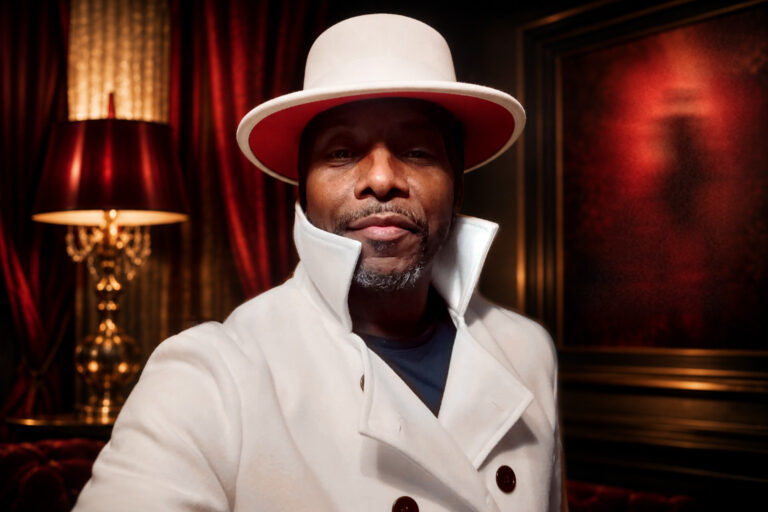
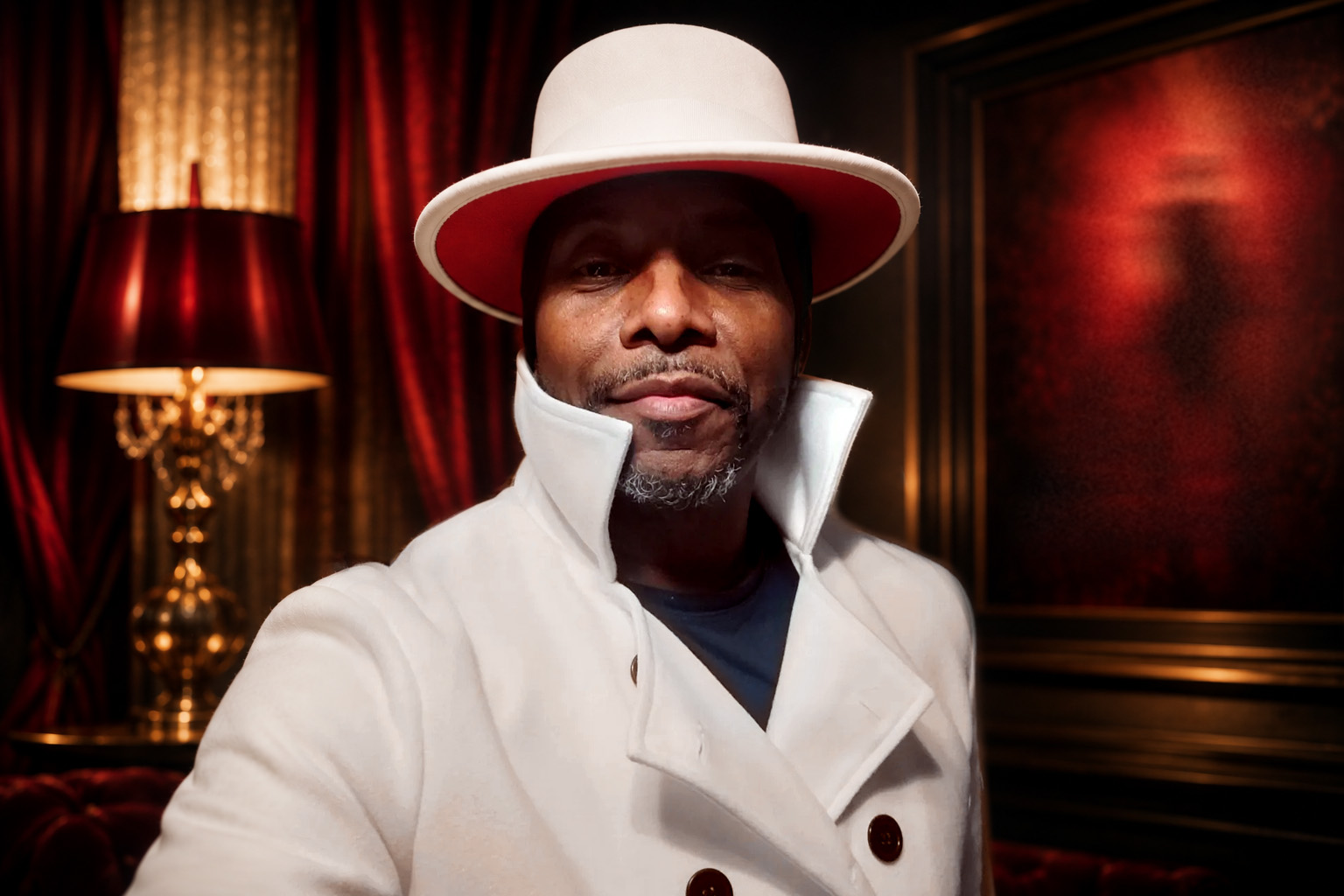
The Dayton-born funk veteran who came up alongside the Ohio Players and Roger Troutman is still making magic decades later.
The Ohio-bred musician spent his career alongside the architects of Dayton funk. Now, after decades of recording, touring, and building his own independent music empire, he’s back with “Getty Up”—a thunderous reminder that some grooves never leave you. Before the records, before the touring buses, before the CBS Records deal and the television appearances, there were garbage cans. There were pots and pans, too.
For PleasureMore, the singer, songwriter, record producer, drummer, and musician from Dayton, Ohio, rhythm wasn’t something he discovered in a studio. It was something he found wherever he could. Growing up in a city that would become synonymous with some of the most influential funk music in American history, he was surrounded by a musical culture that made the groove feel less like a genre than a way of life. Dayton produced the Ohio Players, Zapp, Lakeside, Slave, Heatwave, Faze-O, and other bands whose records helped define the sound of American funk.
His uncle, Darius “Boze” Black, was a singer and performer, and PleasureMore remembers dancing between his uncle’s sets with his older brother Art during intermission. “My uncle Darius (Boze) Black was a singer and performer when I was little boy, back in the late 60’s and my older Art, and I used to dance between their sets, during their intermission. Showbiz has always been a part of my life since I was a child.”
That childhood exposure eventually became something more instinctive. Long before he understood the mechanics of recording, he understood rhythm. “From day one when I used to beat on garbage cans and pots and pans in the kitchen and in the backyard and was able to make funky beats and stay on rythem with a consistent beat.”
In Dayton, that instinct had a particular context. The Ohio Players had helped establish the city as a national center of funk, while Roger Troutman and Zapp would later push Dayton’s sound into a new electronic and futuristic direction. “It was a blessing to be around musicians that was well rounded with a blend of talents, and instrumentation that has shaped my work ethics creating great music.”
One of the people who helped shape that work ethic was Marshall Jones, the Ohio Players bassist who became a mentor to PleasureMore. Jones wasn’t simply teaching him how to play; he was teaching him how to survive a career. “Be patient, trust the process, and believe in yourself and have confidence, never quit or give up and polish your craft.”
Those words would soon be tested in the studio. In 1981, PleasureMore had his first professional recording session with the Ohio Players, playing drums on “Try to Be a Man,” from the group’s Try A Little Tenderness LP. It was an extraordinary introduction to professional recording: not a rehearsal room, not a local stage, but a studio with musicians who had already helped define funk. “Musical geniuses at work and working with great musicians.” The experience changed his understanding of what a record could be. “Working with the Ohio Players taught me tricks on how to make great music.”
The education didn’t stop there: in 1982, Marshall Jones introduced PleasureMore and the Thomas Brothers to Roger Troutman. That meeting became another turning point. Troutman and Zapp were at the center of Dayton’s emerging funk mythology, and Troutman’s use of the talk box would eventually become one of the most recognizable sounds in funk and R&B. For PleasureMore, the meeting represented something larger than a new opportunity. “It would be an extension of my hard work and perseverance to be amongst the greats.”
The connection led to a CBS Records deal and two New Horizons albums produced by Roger Troutman: Something New in 1983 and Gonna Have Big Fun in 1984. “The atmosphere was great working with Roger.” Troutman was not simply another producer in the room. He was a visionary who understood how technology, rhythm, personality, and performance could collide. His work with Zapp had already helped redefine what funk could sound like, and his later solo career would produce the 1987 hit “I Want to Be Your Man.”
PleasureMore watched closely, learning “how to be a professional with recording and performing,” a lesson that would follow him onto stages around the world. PleasureMore contributed vocal ad-libs to the remix of Roger Troutman’s “I Want to Be Your Man,” and from 1986 through 1992 he toured with Roger and Zapp, playing drums and background vocals. The years were filled with airports, hotels, soundchecks, long nights, and the peculiar exhilaration of realizing that music had become a passport: “It was fun, adventurous, and very demanding traveling around the world. Great experience.”
Among the performances that remain especially vivid was a 1989 appearance on BET Live with Roger and Zapp. “I made history by sharing the stage with a legend; Roger indeed was an angel, and in my opinion that was the best televised performance with Roger and Zapp.” What made Troutman’s music last, PleasureMore believes, wasn’t simply technique. “Roger was authentic, original, and was a gifted talent and entertainer.”
That distinction—between technical ability and identity—has become increasingly important to PleasureMore as his own career has evolved. After leaving Troutman’s camp, he began building his career as an independent artist. The path was considerably less glamorous than being part of an established recording and touring machine, but it gave him something else: control.
Today, PleasureMore is also involved in the business side of music, with his own recording studio, independent label, and music and e-commerce production company. His career has become as much about ownership and infrastructure as it is about performance. “The consequences of being independent without the music machine behind you financially keep you in a box. One of the main challenges is having the seed money to support everything that needs to be done with being in control of your career with your name, image, and likeness.” That reality has changed the way he thinks about being an artist: “It can be very difficult at times and is very humbling to accept financial responsibilities.”
But independence has also given him a perspective that many younger artists don’t get until much later. “Learn as much as you can about starting your own business, stay away from drugs and other controlled substances that can ruin your life and be true and dedicated to your craft.”
And ownership, to him, isn’t a slogan: “This is the most important part of the industry. To maintain and own their intellectual property is everything that an artist must do if he or she wants to always be in control of their assets.” The music industry PleasureMore entered in the 1980s bears little resemblance to the one he navigates now. The gatekeepers have changed. The technology has changed. Distribution has changed. The economics have changed.
But he sees some things as more complicated than simply blaming technology. “The main difference today is that payola is very active unfortunately. Another major difference is some radio stations and publications will not acknowledge your body of work until after you as an artist have become a household name. Promotional budgets is the key to success in the music industry today.”
There is also one thing he believes today’s musicians have lost: development. “How to be professional, because there is no artist development today directly from record labels.” Still, PleasureMore has never been interested in remaining trapped in one era; over the course of his career, he has explored funk, Southern soul, R&B, pop, and soulful romantic ballads. The experimentation wasn’t an attempt to abandon where he came from. It was an attempt to see how far he could stretch. “I had to challenge myself to get out of my comfort zone to explore different genres. Also, to appeal to multiple demographics.”
Eventually, however, the pull of funk became impossible to ignore: “Sometimes, you just can’t stay away from where and what you were taught from the beginning. The 70’s with bands like ‘Kool & the Gang’ the Ohio Players, and the funk legend like James Brown, you just can’t stay away from music that touches your spirit and soul. The root of music is funk.”
That sentence explains much of what PleasureMore is doing now. His newer music isn’t an attempt to pretend the last four decades didn’t happen. It is the sound of someone carrying all of them at once. “Experience, maturity, and redefining my vocal approach.”
That evolution can be heard in the music he has released as an independent artist. “Break Up to Make Up” and “Stop Teasing Me” helped establish his contemporary R&B lane, while “I Can’t Tell Ya,” released in March 2022, accumulated more than 2.67 million streams worldwide and more than 1.36 million in the U.S. on SoundCloud, according to his current artist materials.
His single “Key to My Heart” reached No. 1 on the Urban Influencer R&B/Soul Chart, another reminder that an independent artist can still find an audience without the machinery that once defined the record business. PleasureMore calls the achievement a blessing, particularly because the song’s heartfelt quality resonated with listeners.
Then came “Getty Up.” The new single is a return to the physical side of funk—the bass, the beat, the hook, the invitation to move. PleasureMore didn’t set out to reconstruct a lost era. The song, he says, happened organically. The inspiration was simple: “Getting people to enjoy themselves while dancing.”
The creative process was equally direct. “Infectious beat, and clever hook.” There was no elaborate manifesto behind it. “Getty Up happened organically.” The song blends funk, pop, and R&B, but PleasureMore isn’t interested in choosing between honoring the past and speaking to the present. “By staying in the moment and being true to my abilities as a singer and feeling what’s inside my soul to produce something of quality rather than quantity.” What should listeners feel when they hear “Getty Up”? “Just good vibes.”
PleasureMore still wants the song to make you feel something. He also believes younger listeners are finding their way back to funk and classic R&B. “I believe people put themselves in the song with their life experiences at the time he or she may hear music that resonates, with their own individual lives that makes the song real to them. A song that hits home (your soul and spirit) will always connect with people no matter the generation. Good storytelling is what it’s all about.”
That may explain why an artist whose career stretches back to the Ohio Players can still make music aimed at listeners who weren’t alive when those records were made. The foundation remains. “The roots and elements of R&B music.” For PleasureMore, longevity isn’t about refusing to change. It’s about retaining the emotional center while everything around it evolves. His own message to listeners is almost disarmingly simple: “PleasureMore is true to his craft.”
And after decades in music, what keeps him recording? “The blessing to be able to do what I love and to see and hear people of all ethnicities respond to what I create is priceless. That’s what inspires me. It’s in my soul.”
There are more singles coming after “Getty Up,” followed by a forthcoming LP. He isn’t naming potential collaborators yet, though he admits there are artists he has in mind. “Right now, I rather not mention any artist, but I have a few in mind.”
Yet there is something revealing about the advice he would give the younger version of himself—the musician walking into that Ohio Players session for the first time. He wouldn’t tell that kid to become a star. He wouldn’t tell him to chase a hit. He would tell him to understand that he was the student. Be ready to learn. Listen. Ask questions when appropriate.
More than four decades later, PleasureMore is still following that instruction.
His favorite memories include performing alongside Roger Troutman on international tours in Brazil, Amsterdam, and elsewhere around the world. His proudest moments include the records, the television appearances, the independent successes, and the songs that found listeners far beyond Dayton. But the throughline is work: learning from the people around him, absorbing what they knew, experimenting when necessary, returning to his roots when the music demanded it, and continuing to make records when he could have stopped.
The kid who drummed on garbage cans and pots and pans eventually found himself in studios with the Ohio Players and Roger Troutman. He crossed oceans with Zapp. He learned the machinery behind the music and then built some machinery of his own. He moved through R&B, soul, pop, and ballads, only to find himself circling back to the sound that first grabbed him.
Funk, he says, will survive because it is universal, because its history will live forever.
And PleasureMore is still chasing the groove.
Listen to PleasureMore on Spotify
About the Author