Mixed Signals
From an unexpected charity gig to sold-out shows, Mixed Signals reflect on finding their identity through honest songwriting and the personal experiences behind “Ghosts.”
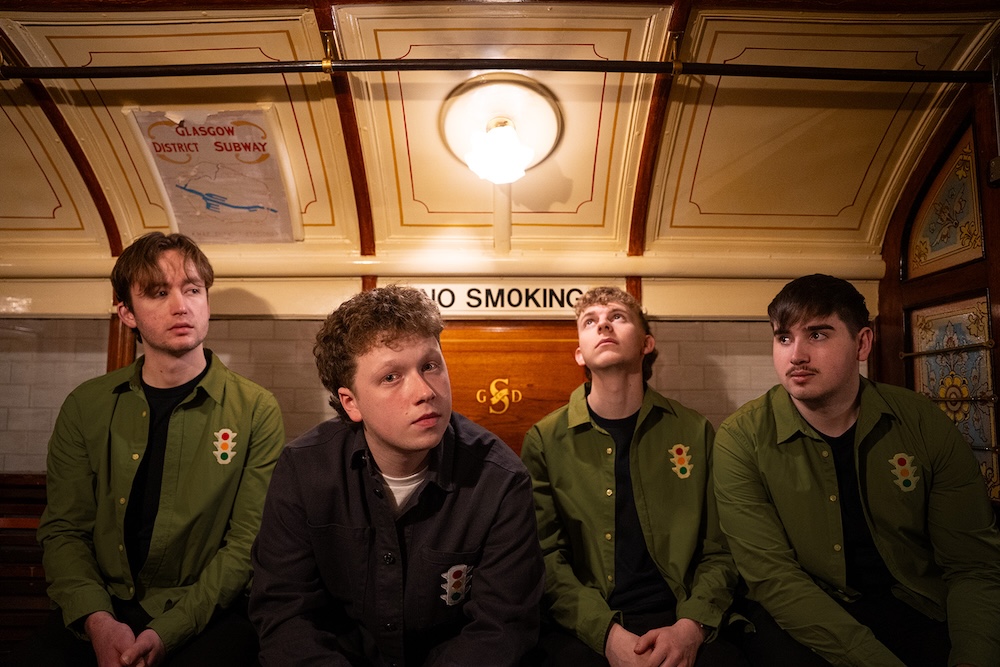
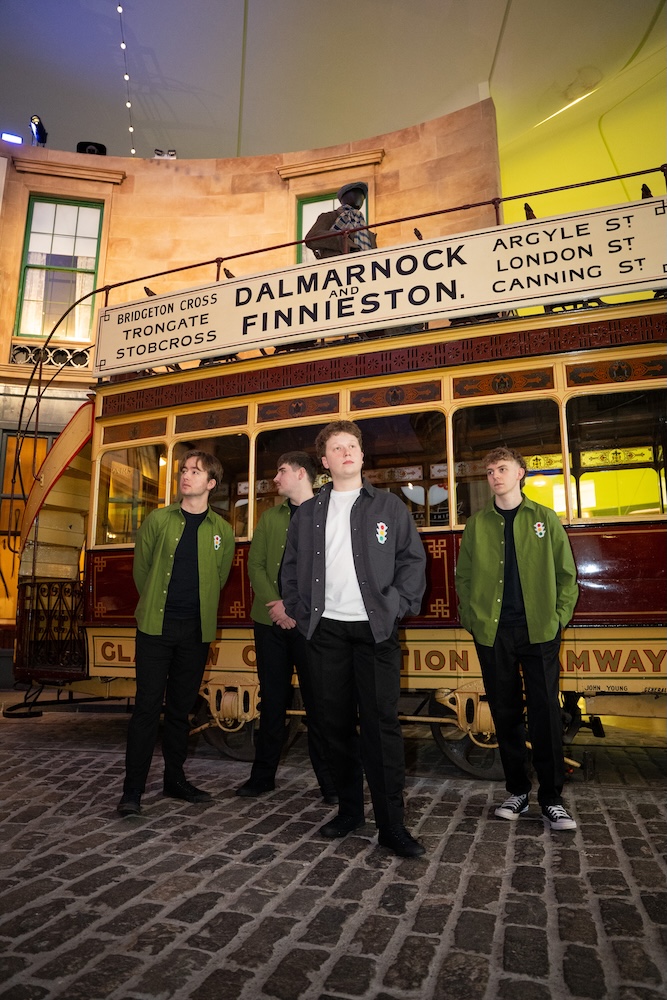
Scottish rock has always had a knack for turning ordinary lives into extraordinary anthems, and Mixed Signals are chasing that same instinct with remarkable speed. Formed in early 2024 after what was meant to be a one-off charity gig, the Ayr quartet came together almost by accident when frontman Ben Gardiner recruited university friends James Armstrong, Leon Calder, and Nathan Christie to back him for a single performance—a collaboration that quickly snowballed into one of Scotland’s fastest-rising alternative rock acts. Their name, borrowed from a song by The Night Café, reflects a band built on instinct rather than calculation, while their sound draws from the melodic urgency of Inhaler, the emotional weight of Biffy Clyro and Wunderhorse, and the expansive ambition of Radiohead, Muse, and Snow Patrol, with flashes of Oasis swagger and Foo Fighters grit woven throughout. In little more than a year, they’ve gone from writing songs in rehearsal rooms to selling out their debut headline show at Glasgow’s Audio, landing a coveted headline slot at King Tut’s Wah Wah Hut, performing at the Isle of Wight Festival, and watching their breakthrough single, “Are You Satisfied?”, surpass 300,000 streams—a rise that has made them one of Scotland’s most exciting emerging rock bands.
That momentum feeds directly into “Ghosts,” a reflective rock anthem that captures the uneasy moment when comfort starts to feel like confinement. Written during an open-hearted songwriting session in Glasgow between Gardiner and Elizabeth Elektra, the song emerged from conversations about growing up in small towns, leaving familiar places behind, and confronting the lingering pull of old habits, relationships, and past versions of yourself. Rather than framing those “ghosts” as something to fear, Mixed Signals turn them into symbols of growth, pairing vulnerable storytelling with soaring hooks, cinematic guitars, and driving basslines that mirror the emotional push and pull at the heart of young adulthood. It’s a song that feels both deeply personal and universally relatable, embodying the band’s gift for balancing melancholy with hope. In this conversation with Indie Sound, Mixed Signals reflect on the accidental beginnings that shaped their identity, the imposter syndrome that came with playing major festival stages so early in their career, and why their biggest songs often begin with the simplest, most honest conversations.
“Ghosts” explores the feeling of outgrowing your surroundings. Was there a specific moment or experience that inspired the song?
Not necessarily. Elizabeth and I were just chatting about growing up in our hometowns, and we realised we’d both had similar experiences of eventually moving away. That conversation naturally sparked the idea for the song.
The “ghosts” in the song represent old habits, relationships, and past versions of yourself. Which of those ideas resonated with you most while writing it?
In a way, all of it did. We shared so many of the same experiences—going to the same bars, meeting the same kinds of characters, and hearing the same stories. Then we both had the opportunity to move somewhere new. It wasn’t about escaping where we came from; it was more about having the chance to start fresh in a different environment, and that’s something I’ve experienced myself.
You wrote “Ghosts” during a session in Glasgow with Elizabeth Elektra. What did that collaboration bring to the songwriting process?
I think it all came from having an open and honest conversation. We realised how many of our experiences overlapped, and that made it much easier to bring the song to life because it came from a genuine place.
The song captures the tension between staying somewhere comfortable and taking a leap into the unknown. Is that something you’ve experienced personally?
I moved away from home when I was 18 to study at university in Ayr. At the time, it felt like a huge step because I’d never really planned on leaving home. But when the opportunity came along, I decided to go for it. It felt like a real fresh start—a place where nobody knew me and I could grow into my own person.
There’s a real sense of urgency in “Ghosts.” How did you want the music to reflect the emotions in the lyrics?
We never really overthought it. We had a chord progression that we loved and wanted to build on lyrically. Once that foundation was there, the rest of the band added their own influences and ideas, and the song naturally evolved into what it is.
You say your music often unintentionally revolves around the highs and lows of relationships. Why do you think those themes keep finding their way into your songs?
I think those themes are so universally relatable. Everyone has experienced change, growing up, or leaving something familiar behind in one way or another. Whether you’re living through it or looking back on it, there are always positives and negatives. I find those kinds of emotions really interesting to write about because they’re honest, and they’re something people can connect with in their own way.
Mixed Signals came together almost by accident for a charity gig. At what point did you realize this was more than just a one-off project?
Shortly after that gig, we found ourselves naturally starting to write our own music. It wasn’t something we had planned—it really happened by accident. We’d spend hours jamming together in a rehearsal room, throwing ideas around and seeing what stuck. Before long, those jam sessions started turning into full songs. As we kept playing and writing together, we slowly built up a catalogue of original material. It was a really organic process, and that’s what made it feel so genuine. Looking back, those early writing sessions were the foundation of the band and helped us discover the sound and identity we’ve continued to develop ever since.
You all bring different musical influences to the band, from Radiohead and Muse to Biffy Clyro and Oasis. How do those influences come together without overshadowing your own identity?
I think, like every musician, our influences naturally find their way into our songs, whether that’s through the way we play, the structure of a riff, or the overall feel of a track. A lot of the time it’s quite subtle rather than something we consciously try to include.
For example, the influence of Biffy Clyro comes through in a lot of our rhythmic and syncopated parts, as well as in James’ approach to guitar playing. Ben takes a lot of inspiration from 90s Britpop, particularly bands like Oasis, and you can hear that influence come through in his songwriting and melodies. We all bring different influences into the band, and I think that mix is what helps shape our sound.
Your debut single “Are You Satisfied?” has surpassed 300,000 streams. Were you surprised by the response?
We were completely blown away by the response to Are You Satisfied?. We were fortunate enough to have the song featured on one of Spotify’s playlists, and at first, we genuinely thought there had been some kind of mistake. We couldn’t believe the numbers we were seeing and wondered if there was a fault with our page.
But then it just kept growing and growing over time. Watching people discover the song, connect with it, and share it has been incredible. It’s now surpassed 300,000 streams, which is something we never expected when we first released it. We’re just incredibly grateful that the song has reached so many people and that it continues to find new listeners.
In just over a year, you’ve gone from forming the band to selling out headline shows and playing the Isle of Wight Festival. Has everything happened faster than you expected?
Definitely. We have a lot of pride in what we do and real confidence in our music, but the response we’ve had has still been overwhelming. We’re incredibly grateful for every opportunity that’s come our way and for everyone who’s supported us along the journey. We’re excited to keep moving forward, growing as a band, and seeing where the music takes us next.
What was it like stepping onto the stage at the Isle of Wight Festival knowing how quickly the band has grown?
I think, looking back, we definitely had a bit of imposter syndrome at the Isle of Wight Festival. It came so early in our career that, if I’m honest, we probably weren’t ready for it. We had an incredible time and it was an amazing opportunity, but with hindsight, I think we would have appreciated it even more if it had come a little later, when we had more confidence in ourselves as a band. It was a huge learning experience, and it’s something we’ve taken with us ever since.
You recently headlined King Tut’s Wah Wah Hut, a venue that’s launched so many iconic artists. Did that performance feel like a milestone for the band?
Definitely. This was our third time playing King Tut’s, and we’ve always had an amazing experience there. Each show has been a step up from the last. The first time we played, we were one of the support acts, and it was one of our first proper gigs. It was also Ben and Leon’s first time playing King Tut’s, which was a huge moment for them as massive Oasis fans.
Our most recent headline show at Tut’s was incredible. We were only around ten tickets away from selling it out, but the atmosphere was unbelievable. It was the first time we really felt like everything was moving in the right direction for us as a band. Hearing the crowd singing our songs back to us was emotional and something we’ll never forget. It was one of those nights that will stay with us for the rest of our lives.
Ben, your lyrics often balance vulnerability with anthemic energy. Is it ever difficult putting such personal emotions into songs?
No, i never struggle to put my own emotions into songs. I think it’s because everyone can relate to it in their own way. Writing lyrics gives me the chance to reflect on different moments and experiences in my life. At the same time, I know that when people hear those songs, they can put themselves into the story and connect with it through their own experiences.
James, your guitar work has a cinematic quality. How do you approach building riffs and melodies that serve the emotion of a song?
I always try to let the emotion of the song lead the way. Most of my riffs start with a feeling or a mood rather than trying to write something technically impressive. I like to build parts that support the vocal and the overall atmosphere, whether that means creating tension, adding weight, or giving the song room to breathe. Melodies are really important to me as well—I’m always looking for little themes or hooks that people might not notice straight away but that help tell the story of the song. If a guitar part serves the emotion and makes the song stronger, then it’s doing its job.
Leon, your basslines are melodic as well as driving. How do you see the bass shaping the band’s overall sound?
I always try to play what’s right for the song. During the choruses, I like to drive the song forward with a solid, energetic bass line, while in the verses I focus on leaving space and supporting the arrangement. When I’m writing bass parts, my priority is always serving the song, but I also look for little opportunities to add melodic moments that complement the music without getting in the way.
Scotland has a rich history of producing influential rock bands. Do you feel connected to that tradition, or are you more focused on carving your own lane?
I think it’s a bit of both. We love paying tribute to some of our favourite Scottish artists because they’ve had a huge influence on us, but at the same time, we always want our music to feel fresh and have its own unique edge. In the past, I think we got a little caught up in trying to sound like other bands. Are You Satisfied? was the first song where we really felt we’d found our own identity. It was the first time the sound truly felt like ours and not anyone else’s.
What have you learned about each other since forming the band that has made Mixed Signals stronger?
Whilst being in a band has lots of jobs, i think we have learnt that everyone has the roles. Leon takes control over our live rig e.g. in ears, click tracks, backing tracks. Ben takes a more of a leaders role, taking care of admin, emails, communications and songwriting. James takes control of
If someone is hearing Mixed Signals for the first time through “Ghosts,” what do you hope they take away from it?
I think the main thing we hope people take away is a feeling and a connection. Ghosts is a song that comes from a very honest place, and we want people to be able to find their own meaning within it. Everyone carries their own experiences, memories, and things from their past that stay with them, and I think that’s something a lot of people can relate to.
If someone is discovering Mixed Signals for the first time through Ghosts, we hope they hear the emotion behind the song and get a sense of who we are as a band. We want people to connect with the lyrics, the energy, and the honesty of the music, but also leave enough space for them to make the song their own.
With the momentum you’ve built over the past year, what are your biggest goals for the rest of 2025? Looking ahead, where do you see Mixed Signals evolving both musically and as a live band?
We’re currently looking at a small line-up change, which is an exciting new chapter for the band. It feels like a really positive step forward and we’re looking forward to seeing how that develops both creatively and as a group.
Looking ahead, we’re really excited about finishing the year with a headline show in Glasgow. It’s always special being able to play in front of our home crowd, and after everything we’ve experienced and achieved recently, it feels like the perfect way to close out the year. We’re excited to bring everything we’ve been working on to the stage and hopefully make it a night to remember for everyone who comes along.
Official website of Mixed Signals.
About the Author