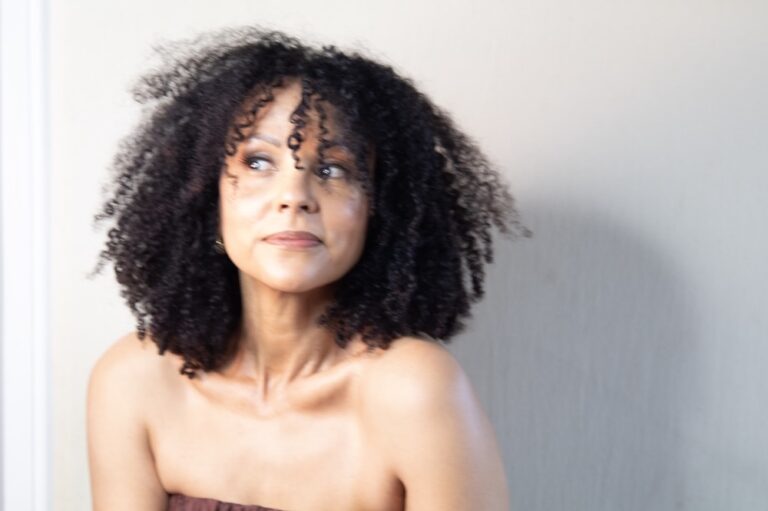
Merce
The Jazzyfatnastees founding member opens up about her debut solo album, the loss that shaped it, and discovering a new sense of creative freedom.
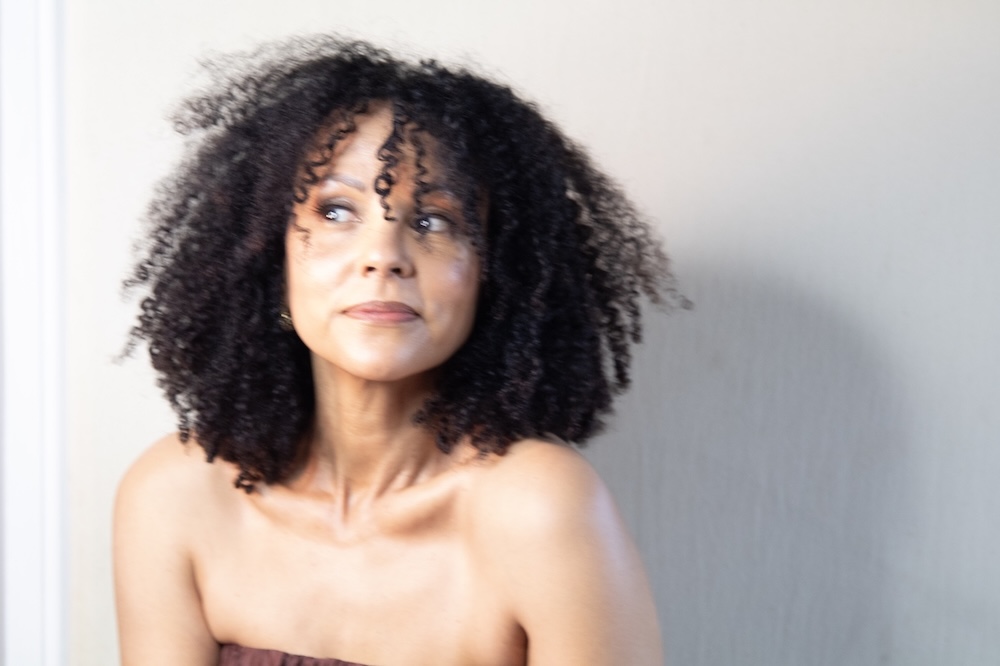
For more than three decades, Merce has been moving at the intersection of soul, hip-hop, and adventurous sound. A founding member of The Jazzyfatnastees, she emerged from the fertile ’90s Philadelphia scene that helped usher in neo-soul, collaborating with artists including The Roots, Stevie Wonder, De La Soul, and The Brand New Heavies while performing on stages from the Montreux Jazz Festival to London’s Jazz Café. She also helped build Black Lily, the influential live music and artist-development series that became a vital creative incubator for a generation of musicians. Now, as a solo artist, singer, songwriter, and producer, Merce is turning that expansive musical history inward with her debut album, ALIVE.
Created with longtime collaborators Rick Friedrich and Kush Oxford, ALIVE moves fluidly between acoustic warmth and electronic textures, anchored by Merce’s ethereal harmonies, plainspoken lyricism, and instinct for sonic exploration. Written in the aftermath of profound personal loss, the album traces a deeply personal journey through grief, resilience, transformation, and renewal, ultimately arriving at hope, self-definition, and creative freedom. Its lead single, “My Guy,” captures that evolution in miniature: what begins as a song about the wrong person becomes an affirmation of trusting the path ahead and believing that what is meant for you will not pass you by. Ahead of the album, Merce spoke with us about “My Guy,” the making of ALIVE, her roots in the neo-soul movement, and finding her way forward through music.
How would you describe your sound to someone hearing your music for the first time?
Vocals that lean towards the ethereal, layered harmonies, musical tones and textures that pull from different genres, a vibe.
Do you remember the moment you first realized music would be a lifelong passion?
I sang and harmonized with my brothers and sisters ever since we were little, but I knew I wanted to do this forever during my first recording session. I’ve always felt at home and lose all sense of time when I’m recording, writing and creating. It’s my happy place.
“My Guy” feels like a love song at first, but it’s really about reassuring yourself that what is meant for you won’t pass you by. When did you realize the song was actually an affirmation?
“My Guy” started as a list of this and that quality that proved why some guy wasn’t the guy for me but, as I got deeper into the writing, I realized that it wasn’t about the guy at all. It was the weakest part of the demo and easy to cut out. I was left with a song about knowing that I’m on my destined path and anything or anyone that’s not on it is not meant to be there, meanwhile I’m heading towards my highest self.
You describe “My Guy” as having a march-like quality that reflects your journey. How did the music help tell that story of resilience?
“My Guy” has an incessant forward movement that’s based in the drums and reinforced by the surrounding instrumentation, that’s moody, atmospheric and a little unpredictable, like life. The ooh’s and the flourishes at the end were our way of expressing that sense of self-realization musically.
You wrote ALIVE after experiencing profound personal loss. At what point did you realize these songs belonged together as an album?
I was just trying to create songs I loved and figured at some point we’d have a collection to consider, but I had a sense that the album was complete once Rick and I worked on ALIVE. For me it was the perfect bookend to the first song, “Overcome,” where I’m questioning whether my son and I can make it in this new reality. ALIVE is about making it good and worthwhile to be here, not just living, thriving.
The album traces a journey through grief, transformation, and renewal. Was there one song that became the emotional turning point for you?
Writing the song “In Time, On Time” was a moment of inspiration and an emotional turning point for me. It was the first song that hinted at a deep-seated belief that somehow I would, we would, make it through this moment, that we’d find a way by trusting in divine alignment.
The title ALIVE carries so much weight. What does that word mean to you now?
For me, being ALIVE means having hope and curiosity. Creating a life with meaning, purpose and vibrancy.
You worked with Rick Friedrich and Kush Oxford on the album. What did each of them bring to the creative process?
Rick is a multi-instrumentalist, which allows him to go just about anywhere we can think of with a song. It’s freeing to have all that room to play. Kush is a producer who uses primarily electronic elements and layers on instrumentation as needed. The fun in that is sometimes we did things that might be considered wrong in the traditional sense, but because neither one of us knew it to be the case, we tried it and stumbled upon some fire in the process.
As a founding member of The Jazzyfatnastees, you helped shape the neo-soul movement. Looking back, what do you think made that era so creatively special?
There was a brewing alternative soul/R&B/hip-hop scene happening in Philly at the time. The Roots were a major part of it. Watching them channel hip-hop with live instrumentation was inspirational. When we created our women-in-music artist development series, Black Lily, the timing couldn’t have been better. There was so much talent in the city. Artists who wanted to learn, grow and expand their ranges. We all loved the warmth of acoustic and electric instrumentation, the audiences ate it up and in turn it inspired everyone to keep leveling up their game. The result was an unforgettable time in our careers.
You’ve worked with artists including The Roots, Stevie Wonder, and De La Soul. What are some of the biggest lessons those collaborations taught you?
Working with artists of that caliber taught me the value of hard work and dedication. The life, especially at that level, can be quite the grind. Try to live as healthfully as possible in order to withstand it. Most importantly, love your art and do it because you love it, because commercial success is neither promised nor guaranteed.
You take creative control not only over the music but also the visual storytelling. Why was it important for every aspect of ALIVE to reflect your own vision?
ALIVE is a collaborative interpretation of my vision. I’ve never done anything like this before. I’ve always been in a group context, working with a manager, producer and executive producer. I found myself in the position of being without any of those elements and became curious about what I could create under these new circumstances. My only goal was to end up with a collection of songs I’m proud of and to have fun making them.
You created this album while navigating grief and raising your son. How did those experiences change your relationship with music?
Making music was my coping method and my saving grace. When I’m recording and creating, I’m not worrying and wallowing. There’s a richness and depth that comes from navigating and going through hard things that can’t be manufactured. I hate that I lost my partner, that my son lost his father, but going through it also made me a better, braver artist and person.
Rather than focusing only on loss, ALIVE ultimately feels hopeful. Was it important for you to leave listeners with a sense of possibility?
It was important to leave myself with a sense of possibility, and I think that’s a concept that most of us relate to. Life without hope isn’t really living.
As listeners discover “My Guy” and ALIVE, what do you hope they learn about who Merce is today?
I hope people learn that I’m a person who’s dedicated to bringing light, love and beauty into the world through my music.
About the Author