Pipit
In an industry where algorithms play gatekeeper, major-label budgets dominate, and AI-generated music is flooding the market, Pipit wants to put listeners back in control and give independent musicians a fairer shot at earning a living. We spoke with co-founder Ray Shingler about challenging the streaming establishment, defending human creativity, and bringing the thrill of musical discovery back.
Music has never been easier to access, and with millions of songs available at the touch of a button, listeners have more choices than ever. Yet finding something genuinely new can feel harder than it should, as recommendation algorithms recycle familiar sounds and corporate overlords decide what gets heard. For independent musicians, uploading a great song is no guarantee anyone will discover it, let alone help pay the bills. The paradox is hard to ignore: we have virtually unlimited access to music, but the people making it can still struggle to reach an audience — or earn enough to keep going.
And as AI-generated music becomes increasingly common, another question looms: in a world where machines can churn out songs at the push of a button, what happens to the human experience at the heart of making and discovering music? Is music simply more content to consume, or is the connection between an artist and a listener still worth protecting?
Pipit, a new music platform opening to fans on October 29, aims to address these problems by rethinking both music discovery and the relationship between artists and their audiences.
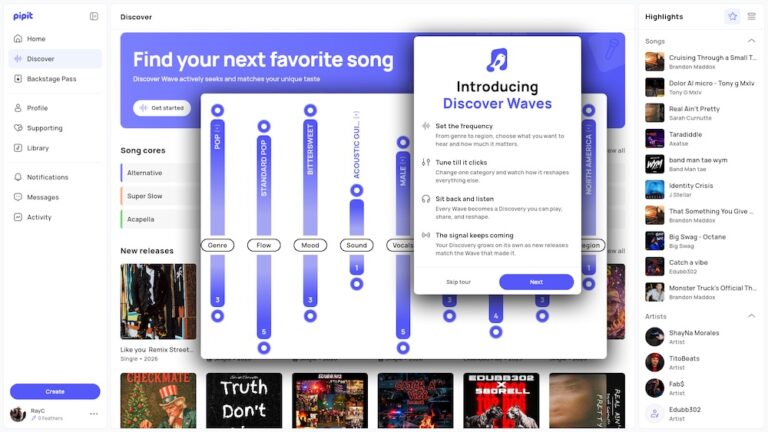
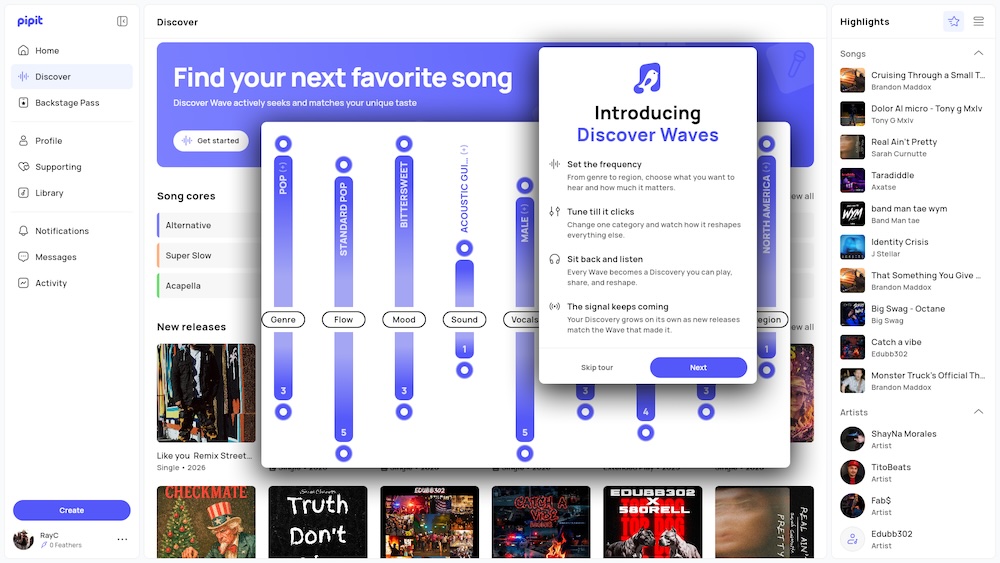
The platform is built exclusively around independent musicians, excluding major-label artists and music created or substantially replaced using generative AI. Its Discover Waves feature allows listeners to shape their own musical discovery experience through nine categories, including mood, sound, vocals, lyrics, tempo, production, and region. Meanwhile, its Support membership directs a portion of the monthly fee to an artist chosen by the fan.
Pipit also offers Backstage Pass, a feature designed to connect artists and fans through shared interests and personality, bringing a more personal dimension to music discovery.
We spoke with co-founder Ray Shingler, who has spent more than 25 years building digital products, about the thinking behind Pipit, its ambitions for independent musicians, and what it hopes to change about the future of music.
What inspired you to create Pipit, and what did you feel was fundamentally broken about the way mainstream streaming platforms serve independent artists?
Ray: I’ve spent over 25 years building digital products, and one thing that bothered me about music streaming was how difficult it had become for independent artists to get noticed.
Incredible music exists that most people will never hear. Why should an artist’s success depend on algorithms, promotional budgets, or follower counts?
We wanted to give music a chance to speak for itself while giving fans a way to make a real financial difference.
That’s where Pipit began.
You describe Pipit as a platform where “the fan becomes the algorithm.” What does that mean in practice, and how does it change the listener’s experience?
Ray: Remember the excitement of discovering a great song on your own? I think we’ve lost some of that.
With Pipit, fans create their own Discover Waves, choosing the sounds, moods, and musical characteristics they want to explore.
Instead of an algorithm predicting what you’ll like, you’re in control.
You might discover someone recording songs in their bedroom whose music you’ve never heard before. To me, that’s what makes discovery exciting again.
The assumption is often that talented musicians will eventually find an audience. What is the biggest misconception people have about what independent artists actually need to succeed today?
Ray: I think people assume that if you’re talented enough, someone will eventually discover you. Unfortunately, that’s not how it works.
An artist can spend months recording an incredible song, upload it everywhere, and barely get heard.
Most independent musicians aren’t expecting to become millionaires. They’d love to cover recording expenses or spend more time making music.
They need two things: people willing to listen and people willing to support them.
Pipit’s Discover Waves feature lets listeners shape their own discovery experience through nine musical categories. How did you choose these categories, and how do they help listeners discover music beyond their usual tastes?
Ray: We started thinking about why people love certain songs. Sometimes you hear a song, and it just connects with you, but you can’t explain why.
That’s where Discover Waves gets interesting. One of our nine categories is Flow, which describes how a song unfolds, whether it’s a big chorus build, a classic rock journey, or a particular song structure.
Fans can combine Flow with other musical characteristics, like mood, vocals, sound, and even weight, depending on what matters most to them.
We’re helping fans discover not just what music they like, but why they like it. And that can lead them to incredible independent artists they’ve never heard of.
Does giving listeners more control over music discovery risk creating another kind of filter bubble, where they hear only music that fits their existing preferences?
Ray: That’s a fair question.
But there’s a difference between an algorithm quietly deciding what you hear and making those choices yourself.
On Pipit, you’re not locked into any particular musical identity.
Today you might want soft acoustic music. Tomorrow you might want something loud and energetic.
You can change your Discover Wave whenever you want, and artists you’ve never heard of can appear.
I think that freedom can make listeners more adventurous.
With Pipit’s $3.99 monthly Support membership, $2 goes directly to the artist selected by the fan. Why did you settle on that price and revenue split, and how much difference could it realistically make to an independent musician?
Ray: We wanted supporting an artist to be almost a no-brainer.
People spend more than $3.99 on a cup of coffee. What if that same amount could help someone keep making music?
Of that $3.99, $2 goes to the artist or artists the fan chooses, and $1.99 helps us operate Pipit.
We cover payment-processing costs so artists receive their full support allocation. I believe lots of people contributing a little can make a big difference.
Let’s put some numbers behind it.
At $2 per fan, 100 supporters means $200 a month—five hundred means $1,000, and 1,000 means $2,000.
That’s assuming those fans stay subscribed and direct their full support to that artist.
It won’t make everyone wealthy, but $1,000 a month could pay for studio time, equipment, or another album.
Artists don’t need millions of streams to see meaningful support. They need fans who genuinely care.
Fans can redirect their monthly support to another artist. How do you balance giving fans that flexibility with providing musicians the predictable income they need?
Ray: I think the worst thing we could do is make supporting an artist feel like an obligation. Music is personal. Fans discover new artists, and their tastes change. Yes, an artist might lose a supporter, but they might gain another.
I’d rather have people supporting musicians because they genuinely want to, not because we’ve made it difficult to leave.
I think that freedom helps build stronger relationships.
Pipit excludes major-label artists and music created or substantially replaced using generative AI. Why were these two restrictions essential to the platform’s identity from the beginning?
Ray: Because we wanted Pipit to stand for something.
Independent musicians already compete against major-label marketing budgets and enormous promotional resources. We wanted to give them their own place.
And when I listen to music, I want to know there’s a real person behind the song who experienced something, felt something, and created it.
We’re a technology company, but we believe technology should help musicians, not replace them.
In an industry increasingly embracing AI-assisted production, where do you draw the line between acceptable digital tools and prohibited generative AI?
Ray: To me, the distinction is pretty simple.
Did a human create the music, or did they ask a machine to create it for them?
Synthesizers, drum machines, recording software, and pitch correction are tools musicians have used for years.
But having AI generate the lyrics, melody, instruments, or vocals is different. We’re not against technology. We believe the musician should make the creative decisions.
Spotify, Bandcamp, SoundCloud, and Patreon already serve musicians in different ways. What can Pipit offer that these platforms cannot easily replicate?
Ray: That’s one of my favorite questions because it gets to why we built Pipit.
Spotify makes listening convenient. Bandcamp helps artists sell music. SoundCloud helps musicians share and discover music. Patreon provides recurring fan support.
But why should independent artists need three or four platforms to get discovered, connect with fans, and earn money?
Pipit brings those experiences together.
Discover Waves helps fans find artists based on nine musical categories, not follower counts. Backstage Pass helps them connect through shared personalities and interests. And monthly memberships turn those discoveries into direct artist support.
We’re built exclusively for independent musicians.
We want artists to monetize the audience they have and discover the audience they don’t.
Your Backstage Pass feature matches artists and fans based on shared interests and personality. What led you to introduce compatibility matching into a music platform, and what kinds of meaningful connections do you hope it will create?
Ray: I’ve always found it interesting how connected people can feel to musicians they’ve never met.
You hear a song and think, “This person understands exactly how I feel.”
Backstage Pass takes that connection further. Artists and fans answer 12 questions, and Pipit shows their compatibility without revealing their individual answers.
Maybe they discover they have more in common than musical taste.
And maybe that turns a casual listener into a lifelong fan.
How will you demonstrate to artists that Pipit can provide a financially sustainable opportunity rather than simply another place to upload their music?
Ray: By showing them results. That’s really the only answer that matters.
We’re not asking artists to leave Spotify or anywhere else. We’re offering another opportunity built specifically for independent musicians.
If an artist gains new listeners, followers, and recurring fan support through Pipit, that’s something real.
We’re still early, and I’m not going to pretend we’ve proven everything yet. But that’s exactly what we’re working to demonstrate.
If a major streaming service introduced direct artist support or fan-controlled discovery tomorrow, what would give Pipit a competitive advantage?
Ray: First, I’d probably smile because it would mean we were thinking in the right direction! But having the same feature doesn’t make two platforms the same.
The major streaming companies serve enormous audiences and catalogs. We’re building Pipit specifically around independent musicians and their fans.
Being smaller also lets us listen, adapt, and respond quickly.
And if our ideas encourage larger platforms to treat independent artists better, I’d consider that a win for musicians too.
What is the biggest risk to Pipit’s business model, particularly if listeners are reluctant to pay for another monthly subscription?
Ray: The biggest challenge is convincing people that discovering independent music is worth paying for when they already have access to so much music.
Someone paying for Spotify may not want another subscription.
So we have to give them a reason to care.
Maybe it’s discovering an incredible artist or knowing their support helps someone keep making music.
And we have to earn that subscription every month.
If fans don’t see the value, it’s our responsibility to improve Pipit.
If Pipit succeeds over the next five years, what do you hope will change about the way artists earn a living and the way people think about the value of music?
Ray: I’d love to change how we define success for independent musicians.
Instead of millions of streams, imagine an artist with a few hundred or a few thousand fans who genuinely love their music and help them keep creating.
Maybe a young musician earns enough to record a second album, or a veteran artist discovers an entirely new audience.
There’s a real person behind every song.
If Pipit helps more fans appreciate that and helps more musicians earn meaningful income, we’ll have accomplished something important.

Discover Pipit:
Visit indiepipit.com to learn more about the platform.
*Presented in partnership with Pipit.
About the Author