Casii
The Tulsa-based singer-songwriter discusses her new single “Happy,” the loss of her father, and the stories behind her upcoming debut album
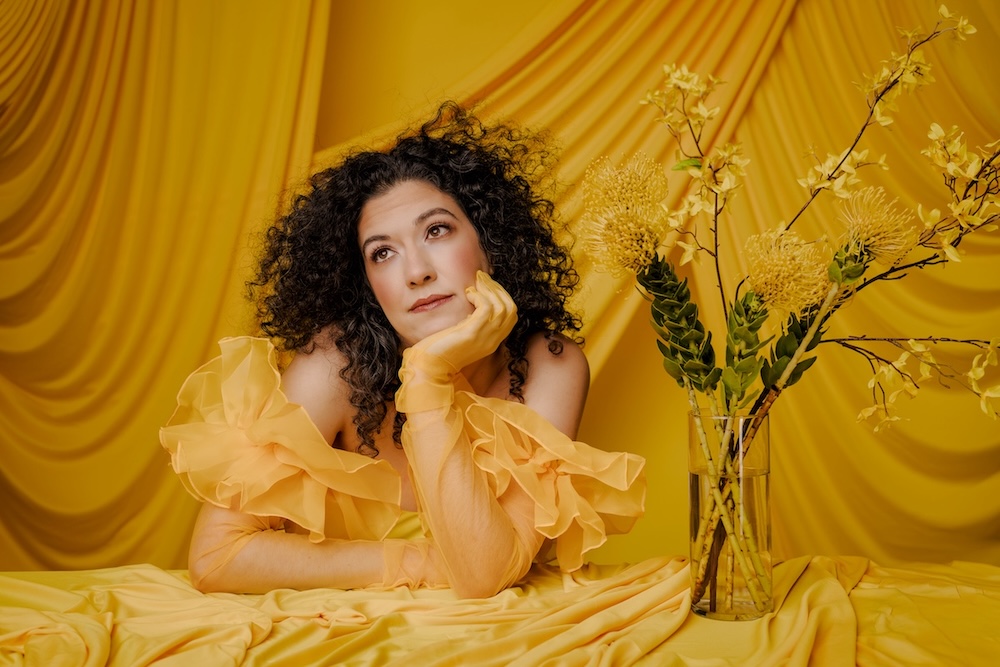
Minnesota-born, Tulsa-based singer-songwriter Casii Stephan moves fluidly between pop, soul, rock, and folk, as she approaches music primarily as a form of storytelling, using melody and lyrics to explore the questions that shape our lives. Her songs’ honesty leaves room for listeners to recognize something of themselves in them. Influenced by everything from Disney musicals and Celine Dion to contemporary artists such as Labrinth and Griff, Stephan has developed a distinctive musical identity built around powerful vocals, expressive songwriting, and a willingness to experiment. Her work has earned recognition from Billboard, NPR, SPIN, and American Songwriter, alongside several songwriting accolades in 2026, including recognition from the Kerrville Folk Festival. Now preparing to release her debut album, Let Her Have Her Flowers, in spring 2027, Stephan is entering a new chapter in her career with a collection that draws on some of life’s most difficult experiences: grief, loss, mortality, and the importance of loving the people who are still here.
The album’s first single, “Happy,” offers a particularly intriguing introduction to this new material. Written late at night while questioning her own relationship with happiness, the song wraps existential uncertainty in bright, nostalgic pop production, complete with playful vocal hooks and a sunny arrangement by producer Chad Copelin. Beneath its cheerful exterior, however, lies a more complicated reflection on sadness, personal struggles, and the pressure to feel happy even when life suggests otherwise. In our interview, Casii Stephan discusses the unexpected beginnings of her songwriting journey, the influence of Minnesota and Tulsa on her musical development, the experience of losing her father, and how grief ultimately changed her understanding of both life and music. She also explains why sometimes the simplest question—what actually makes us happy?—can lead to the most revealing answers.
How would you describe yourself as an artist to someone who has never heard your music before?
It’s cliche but I really just like to share what I’m going through and seeing how it connects to people in the audience. I like to use the genres of pop, soul, and rock to do that and I hope my live show makes you laugh, cry, and dance around.
What first drew you to music, and when did you realize that songwriting was something you wanted to pursue seriously?
Music always made me feel understood. It was a way for me to understand the emotions in my head. I didn’t consider songwriting a valid art form for me until a family friend told me I could write a song and I didn’t believe him. I set out to prove him wrong and ended up writing a song I liked and well, I was wrong and I was addicted. I filled my first journal and felt so proud. None of those songs will be released, but it wasn’t about that.
Who were some of the artists or songwriters who shaped your musical identity when you were younger? Have your influences changed over time?
I was a big fan of Disney musicals and Sound of Music and Celine Dion and Switchfoot. Now, I’m still a big fan of musicals, but also I’m digging what Labrinth is doing right now. I like Griff, Joy Oladokun, Madeline Edwards, and others. I just like digging into an album that you can feel they put time and thought into.
Your new single, “Happy,” begins with a deceptively simple question: what does it actually mean to be happy? Do you remember the moment that inspired you to start questioning happiness in this way?
Yes. I was pacing the floors where I live and knowing I needed another song for the album. I started asking myself if I was more comfortable with sadness and it was preventing me from being happy. Pulling on that thread really just started the whole song.
The song was written late at night, emerging from a series of existential questions. What was going through your mind when you began writing it, and did the song evolve into something different from what you initially expected?
Yes! I had a whole other chorus for the song. I built it out in Logic with harmonies and I came back to it the next morning and it was good, but I felt like I didn’t know what I was trying to say. I remember looking at the upright and just saying “I just want to be happy.” That was my “duh” moment. I sighed and went “well, there’s the chorus”. It’s so simple, but also just honest.
“Happy” has a bright, sunlit, almost nostalgic pop sound, but its lyrics explore a much more complicated emotional reality. Why did you want to place these existential questions inside such an upbeat musical setting?
My publisher kept sending updates on what kind of songs people were wanting – happy songs. So obviously I took that literally. lol. I just wasn’t feeling happy. I don’t know when the idea hit me, but I wanted to see if I could write the song that was honest with where I was but also could make someone think it’s a happy song. So that was the goal and Chad did an amazing job of making it happen!
The playful doo-doos and na-na-nas recall an era of pop music when happiness often seemed uncomplicated. Was that contrast intentional, and did you want to challenge the idea that happiness should always look or feel a certain way?
Oh totally! Like there was that period where you put all of those little things in a song to make it seem happy. And I love a good ironic moment.
The song arrives at a time when personal struggles and political anxieties can be difficult to separate. How much does the world around you influence your understanding of happiness, both as a songwriter and as a person?
Very much so. I’ve started watching Tik Toks about seal lions to help me cope. lol. But I’m also choosing to focus on what I have – the friends and family around me. It’s been a good mindset shift for me this year. I think Minnesota was such a good example of what we can do. Community is what made the difference. People just helping each other out. It’s our only way forward.
Your debut album, Let Her Have Her Flowers, explores grief, loss, and the importance of loving the people who are still with us. How did the experience of losing your father change the way you think about life, relationships, and making music?
I don’t think I realized how much it did when it happened, but looking back, I realize it made me face my mortality. And with that, made me ask the question of what do I want. I went to therapy and did some intense treatment called brain spotting. Highly recommend. And then what do I want to do with music. What kind of music do I want to create? There was almost this feeling of “I’ve lost my dad, what else can you do to me?” Like I’ve lived through this and I’m okay. So I can do more than I thought.
Was making this album a way of processing your grief, or did you discover that songwriting could take you to places emotionally that you hadn’t anticipated?
There was a period from 2023 – 2024 where I was just focusing on grief songs. This was new territory for me and I had to reach out to other songwriters to help me finish songs. I knew I couldn’t do it on my own. There are still songs that aren’t finished and I feel like it’s because I’m not ready to face the truth in the song yet. But I trust that when a song is meant to be written it makes itself known. It always does.
You’ve said that the album should demonstrate your range as a songwriter and artist. What sides of yourself do you think listeners will discover on this record that they may not have heard before?
Oh! I played with an 808 beat, which was fun. But also I do believe that I pushed myself as lyricist and having Kerrville Folk Festival recognize that was so gratifying. also just the genre play… it was fun to explore.
Your music moves between pop, soul, rock, and folk, with storytelling at its core. When you start writing a song, do you hear its musical identity immediately, or does the sound emerge as the story develops?
I usually can hear where it goes. Can’t Go Home started off as rock, but it moved into alternative cause I found that 808 beat to mess with. Starlight was originally folk, but I wanted something different for my live show, so I moved it into funk and soul and then in the studio it planted itself in disco. Meet Me at Dawn was always a stripped down ballad. That was obvious.
You were born and raised in Minnesota before developing your musical identity in Tulsa, Oklahoma. What did each place give you creatively, and can you hear those different influences in your music?
I really discovered the Minneapolis funk after I moved to Tulsa. I grew up with some connections to Prince, but never got to meet him. But I felt like he was there even though I didn’t understand who he was cause I was a little sheltered growing up. Tulsa pushed me into my live performance. Tulsa is so much about the live show and the songwriter. It wants a great lyric or for you to be a killer live show. There’s so much talent in Tulsa that touring bands have a hard time getting a show unless you know someone. We just can fill the local venues on our own. It’s a town that pushed me and still pushes me.
What do you hope listeners take away from Let Her Have Her Flowers? Is there a particular feeling, realization, or conversation you would love the album to inspire?
Oh man. I really hope people are more comfortable talking about grief and the scars we get from them. I think the more open we are the better we are about giving space to other emotions in our life. Death is tragic, but it’s an integral part of our lives. I love hearing palliative care nurses talk about death. They lay it out so beautifully, and yet so normal.
If someone listens to “Happy” and recognizes something of their own life in the questions you’re asking, what would you want them to understand about happiness by the time the song ends?
What makes them happy? I’ve had to work on my answer to that and I hope we all can answer that honestly.
Official website of Casii Stephan
About the Author