
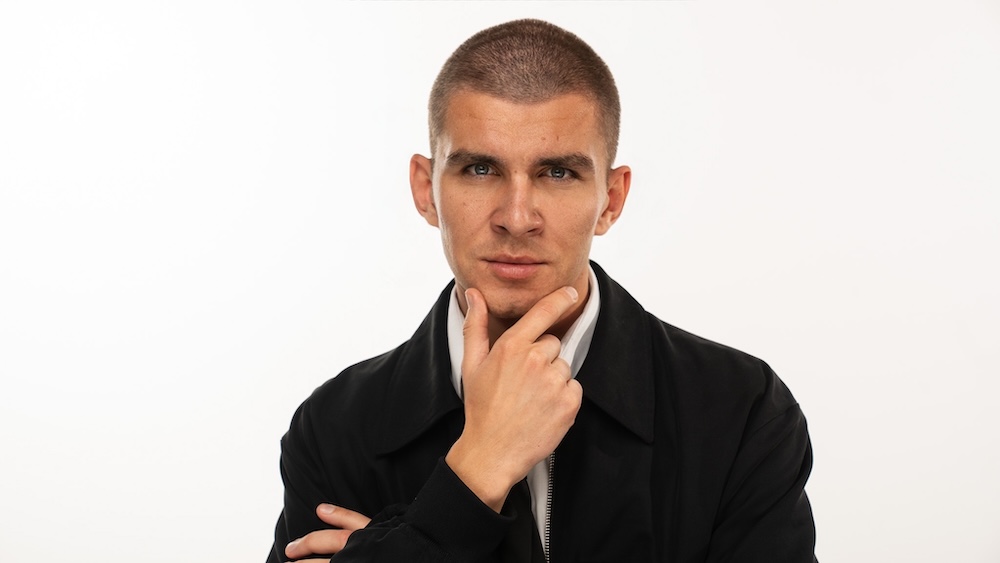
ARNY
With his new single Go Down, ARNY reflects on identity, freedom and the journey that brought him to London.
Pop has always thrived on reinvention, but the most compelling artists are often the ones reinventing themselves. For ARNY, that transformation began far from London’s clubs and recording studios, in a small coal-mining town in Eastern Ukraine where, for generations, the future seemed predetermined. His father spent more than twenty-five years working underground in the mines, his mother continues to work for the same mining company, and the work ethic he witnessed at home—long shifts followed by evenings spent helping build the family’s house—left a lasting impression. In a community where practicality was valued over artistic ambition and vulnerability was often mistaken for weakness, pursuing music seemed an unlikely path. Yet it was precisely that environment that shaped his determination to create a different future. After years of exploring other careers, including journalism, and working more than twenty different jobs, he eventually moved to London to study at the London College of Contemporary Music (LCCM), embracing the ambition he had carried since childhood and beginning the process of finding his own artistic voice.
Following the release of his new single, “Go Down,” ARNY is entering a new chapter of his career that reflects both his love of modern dance-pop and his commitment to authentic storytelling. While the track is an unapologetically feel-good anthem, it also marks the first time he has openly written about his experiences without filtering them to meet other people’s expectations. Future releases, including “Men Do Cry,” move into even more personal territory, exploring masculinity, vulnerability and emotional honesty through a pop lens. In this interview, ARNY reflects on the long journey from Eastern Ukraine to London, the lessons he learned along the way, the realities of building an independent career from the ground up, and why authenticity—not perfection—has become the foundation of both his music and his life.
You grew up in a small coal-mining town in Eastern Ukraine. How has that experience shaped who you are as an artist?
Growing up in a small mining town taught me things that have nothing to do with music, but everything to do with the artist I’ve become.
Where I grew up, your word mattered. If you promised something, people expected you to keep it. I’ve carried that into my career. If I commit to something, I want people to know they can rely on me.
My dad spent 25 years working underground in a coal mine, and my mum still works for the same mining company today. They’d come home after long shifts and then continue building our house. Watching that gave me the feeling that if you want to build a life, you have to work hard, stay consistent and keep going, even when you’re tired.
The downside is that I became very good at working and very bad at resting. I’m still learning that rest isn’t the opposite of hard work — it’s part of it.
What first made you believe music could become your career?
The honest answer is that I didn’t believe it for a long time.
Deep down, I always wanted to be a singer. I knew that from childhood. But wanting something and believing it’s possible are two very different things.
I grew up hearing that music wasn’t a practical career, especially if you came from a town where almost every man worked in the mines. So for years I looked for proof that other people believed in me before I allowed myself to believe in myself.
Because of that, I kept trying to find myself somewhere else. I’ve had more than twenty different jobs. I worked in journalism, explored different creative paths and kept telling myself that maybe one of them would be enough.
But every road somehow led me back to music.
Only recently I’ve realised that nobody can give me that certainty. My job is to keep improving, keep releasing music and build the career I want instead of waiting for someone else to tell me I’m ready.
How did moving to London influence your sound and your confidence as a performer?
I think both are still evolving, to be honest.
I only graduated from music college in London a few months ago, so I still feel like I’m discovering who ARNY is as an artist.
Studying here showed me that dance-pop is where I feel most at home. Since then, I’ve been exploring different sounds and influences that naturally fit into that world. I don’t think I’ve reached my final sound yet, and I actually like that. It means there’s still room to grow.
As a performer, London gave me confidence in a different way. Being surrounded by talented musicians made me stop trying to impress people and start focusing on becoming a better artist. That mindset changed a lot for me.
Your music combines dance-pop with emotionally honest storytelling. Why was it important for you to bring those two worlds together?
Dance-pop is simply the music I love. It’s the music that gives me energy, makes me want to move and instantly lifts my mood. I’ve never wanted to make music that feels heavy all the time. I want people to feel good when they press play.
But emotionally, I never wanted to hide behind the production.
«Go Down» might sound like a carefree pop song, but for me it also represents something much bigger. It’s the first time I’ve openly sung about being attracted to men. For a while I caught myself thinking, “Maybe I should write songs about women because that’s what’s expected.” Then one day I realised that made no sense. If people are listening to my music, I want them to get to know the real me, not a version of me that feels safer or easier to market.
My songs won’t always be deep or serious, but they’ll always be true.
Your songs often explore freedom, identity and self-expression. Why are those themes so personal to you?
Those themes are personal because I spent a long time trying to become the person I thought other people would accept, instead of figuring out who I really was.
Growing up, I often felt trapped. Not just by the place I lived, but by other people’s expectations. I was a kid who dreamed about becoming an artist in a town where very few people believed that was even possible. People laughed at me for dreaming bigger.
Then, as a teenager, I started hiding parts of myself. I was quite feminine growing up, and I got bullied because of it. After a while, you stop expressing yourself because you’re trying to protect yourself.
Now I’m 31, and in many ways I’m trying to get back to the child I used to be—the one who wasn’t constantly thinking about whether people would judge him, insult him or try to make him feel small.
So when I write about freedom, identity or self-expression, I’m not writing about abstract ideas. I’m writing about my own life.
Your new single, Go Down, feels playful and carefree. What inspired the song?
The idea actually came from a book called «The Song Machine» by John Seabrook. I was fascinated by the stories behind some of the biggest pop hits, especially Flo Rida’s «Right Round». There’s a line in that song, “when you go down-down,” and something about it stayed with me.
I sat down in front of my computer, opened a beat I’d had for a few years and started singing, “Go down, down…” Then “baby” appeared almost by itself. I keep trying to stop using the word baby in my songs, but pop music always seems to pull me back! As soon as I sang that hook, I had a feeling I was onto something.
What does Go Down represent for you at this stage of your career?
For me, «Go Down» represents the end of one chapter and the beginning of another.
I graduated from music college in London just a few months ago, and this song feels like everything I learned over those three years coming together.
It’s one side of who I am as an artist today. It’s playful, a little cheeky, sometimes a bit silly, and full of positive energy. There are other sides of me that people will hear in future releases, but this felt like the right place to begin.]
The song is all about confidence, attraction and letting go. What message do you hope listeners take from it?
Honestly, I don’t think every song needs to teach a lesson.
With «Go Down», I just wanted to create a genuine feel-good pop song. The kind you put on while you’re getting ready to go out, driving somewhere or simply trying to lift your mood.
If someone finishes the song feeling a little more confident and a little more positive, my job is done.
Can you tell us about the songwriting process behind Go Down?
I actually started as a university project during my final year in London. We had to write and release a song for our Artist Development class.
I remembered a beat that had been sitting on my hard drive since 2020 or 2021. I’d originally written a song in my native language over it, but it never felt quite right, so I left it unfinished. When I heard the beat again a few years later, it still sounded fresh, and I thought, “This deserves another chance.”
The hook came first: “Baby, go down, down.” I wasn’t trying to write a deep or complicated lyric. I just wanted something playful that people would instantly remember.
In my head, the song became about those nights when you meet someone on a dance floor, feel an instant connection and know it probably won’t last. Most of those moments don’t turn into relationships, but somehow you still remember them years later. That’s the feeling I wanted to capture.
Was there a moment in the studio when you knew this song was special?
Not really. To be honest, songwriting gets confusing at a certain point.
When I first write a melody or a lyric, I can usually tell straight away whether it works. But after listening to the same song hundreds of times, it’s much harder to judge it objectively. You start questioning everything.
That’s why I always play my songs to a few people I really trust. One of them is a friend who works in the music industry in Ukraine. He knows my music well, and when he heard Go Down, he immediately said, “This is the one. You have to release it.”
That gave me confidence, but I still had the same doubts every songwriter has: What if nobody likes it? What if it’s nothing special?
In the end, I accepted that the only thing I can control is making music that feels honest to me. I wasn’t trying to copy anyone with Go Down. I just wanted to write a catchy pop song that I’d genuinely want to listen to myself.
You describe Go Down as the beginning of a new creative chapter. What can fans expect from what’s coming next?
For the first time, I feel like I’m building something instead of starting over every year.
At some point it became obvious that releasing one song a year wasn’t enough if I wanted to build a real career. Over the past two years, I’ve been focused on developing my sound, finishing songs and creating a catalogue I can release consistently.
So fans can expect a lot more music. My next single is already finished, and there are more songs ready to follow.
Most importantly, they’ll get to know different sides of me. «Go Down» is just one part of who I am. Every release will reveal something new.
Your upcoming release, Men Do Cry, explores masculinity and vulnerability. Why did you want to tell that story?
With Men Do Cry, I wanted to talk about the kind of masculinity I grew up around. I was taught that men shouldn’t cry, complain or show vulnerability because that meant you were weak.
As I’ve got older, I’ve realised that’s simply not true. Before we’re men or women, we’re human beings. Every man was once a little boy who had emotions too.
I hope it reminds people that feeling deeply doesn’t make you less of a man — it makes you human, and shows that you’re alive.
How do you balance making music that’s fun to dance to with songs that carry deeper emotional meaning?
I don’t really think of it as a balance.
People aren’t just one emotion. Some days you want to dance. Some days you want to sit with your thoughts. I’m exactly the same, so it feels natural that my music reflects both.
I want my songs to show different sides of who I am. If one song makes you feel lighter and another makes you look a little deeper into yourself, then I think they’re both doing their job.
What’s one misconception people have about pop music?
I think a lot of people underestimate how difficult great pop music is to write.
People often assume pop is simple. But writing a song that feels effortless, stays in your head after one listen and still makes people want to come back to it — that’s incredibly hard.
The funny thing is that even rock, hip-hop or electronic artists often use pop songwriting techniques because they work. A great hook is a great hook, whatever genre you’re making.
So I’d never underestimate pop music. The simplest songs are often the hardest to write.
As an independent artist, you’re involved in every part of your project. What have you learned from building your career independently?
I’ve learned that every problem has two options: you can spend your energy complaining about it, or you can spend that same energy looking for a solution.
Being an independent artist means wearing a lot of different hats. And it’s challenging, but it’s also made me much more creative. When you don’t have a huge budget, you stop asking, “Why can’t I do this?” and start asking, “How can I make this work anyway?”
That mindset changed everything for me.
Your visual identity is becoming an important part of your music. How do visuals help tell your story?
I’m still discovering it.
For a long time I thought I needed to create a visual identity first. Now I think it works the other way around. The more I understand myself as an artist, the more naturally the visuals begin to make sense.
What inspires you outside of music?
People inspire me the most, especially those who built their lives without shortcuts or someone else doing the work for them.
I also love travelling. Discovering new countries and cultures always gives me fresh ideas, and I hope I’ll be able to do more of it in the future.
I read a lot as well. Right now I’m reading Thích Nhất Hạnh, and even a few pages of his books can completely change my state of mind.
And finally, boxing and yoga. They help me get out of my head and back into my body. I spend a lot of time thinking, so having something that grounds me is incredibly important.
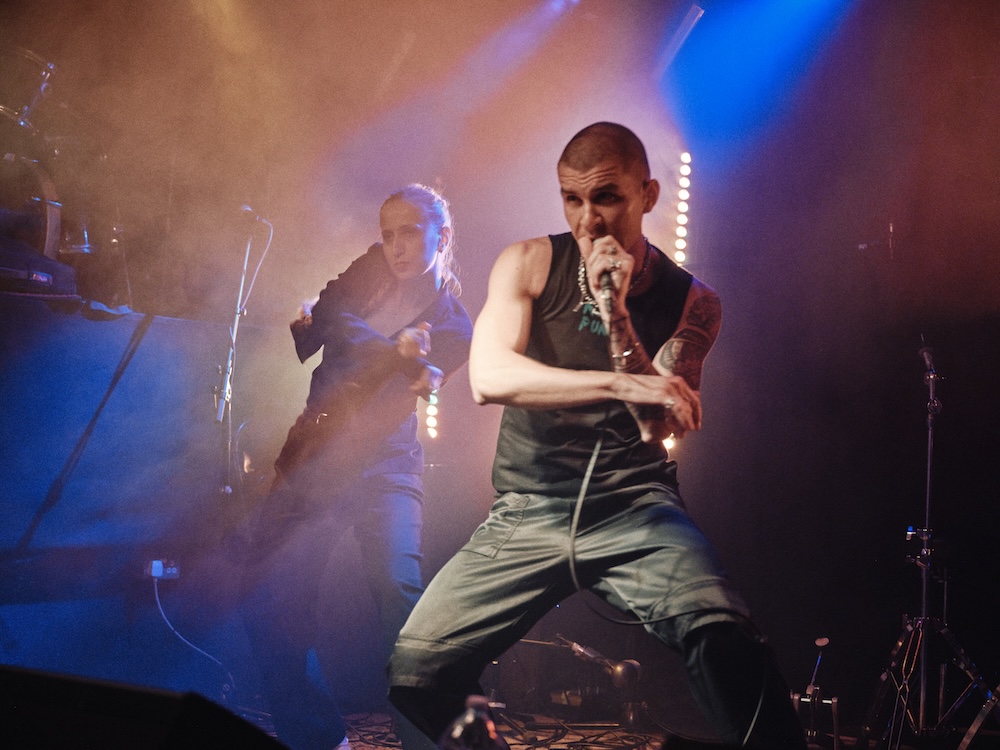
What do you enjoy most about performing your music live?
When you’re on stage, everything is happening in real time. You can’t pause, edit or do another take. I love that.
Of course I enjoy the attention, but even more than that, I love watching people let go for a few minutes and simply enjoy themselves. That’s a really special feeling.
For me, performing has never been just about hitting every note perfectly. It’s about creating an atmosphere. If people leave the room feeling lighter, happier or more alive than when they walked in, then it was a great performance.
Looking ahead, what are your biggest goals for ARNY over the next few years?
The biggest goal is consistency.
For a long time I’d release one song, disappear for a while, then start all over again. I don’t want to work like that anymore.
Now I’m building a catalogue of music, releasing consistently and giving people a chance to grow with me instead of only hearing from me once a year.
Of course I’d love to reach more listeners, play bigger shows and build a real audience. But more than anything, I want to keep becoming a better artist and keep creating music that feels right to me. If I do that consistently, I believe everything else will follow.
If someone hears your music for the first time through Go Down, what would you want them to know about you?
I don’t think you can really get to know a person through just one song.
With «Go Down», I simply hope people catch the positive energy behind it. If it makes them smile, lifts their mood or ends up on one of their playlists, I’ll be really happy.
And if that makes them curious enough to listen to the next song, then we’ve started a conversation.
What does success mean to you today?
Success means staying consistent, expressing myself honestly and not closing myself off from the world.
For a long time, I thought success was only about achieving something. Now I think it’s also about how you feel while you’re building it.
The older I get, the more I realise that inner peace is just as important as ambition. I’m still ambitious, but I don’t want to lose myself while chasing my goals.
What’s one thing people often misunderstand about you?
People often think I’m arrogant when they first see me.
Maybe it’s because of my photos or the way I present myself online. But if you actually meet me, you’ll probably realise I’m the opposite. I’m very open, easy to talk to and genuinely enjoy getting to know people.
If you could collaborate with any artist in the world, who would it be and why?
Right now, I’d probably choose a DJ or producer over another singer.
Tiësto, R3HAB and Alok make the kind of music I genuinely love listening to, and I’d love to create something with them.
I’d also love to work with INNA. I’ve always loved her sound and her style, since I was a kid.
What’s the biggest lesson your journey—from Eastern Ukraine to London—has taught you? If you could send one message to your younger self, what would you say?
I’d tell him, “There’s nothing wrong with you.”
I spent a lot of my life trying to become the person I thought other people would love and accept. I thought that if I could just be the right version of myself, I’d finally feel the love and acceptance I’d been looking for.
It never worked. It only left me feeling disconnected from myself, and from other people too.
The biggest lesson my journey has taught me is that you don’t find inner peace by looking for it outside yourself or by becoming someone else. You find it by discovering who you are, accepting that person, and deciding what you want to do with that.
That’s something I’m still learning every day.
About the Author


