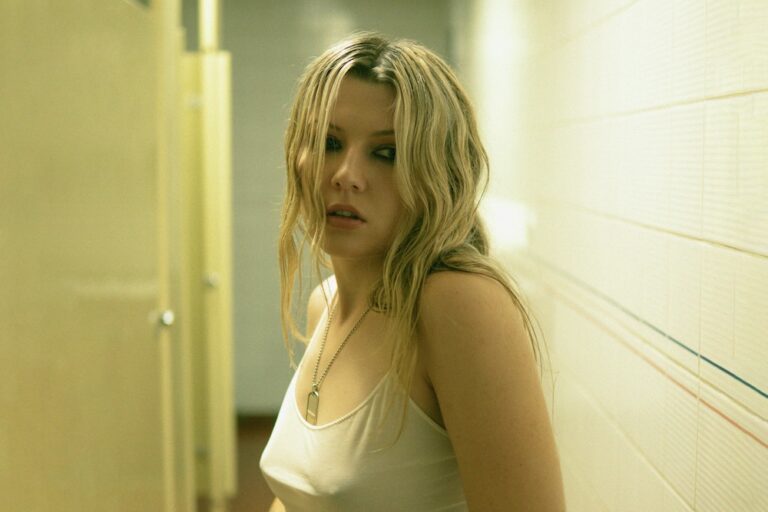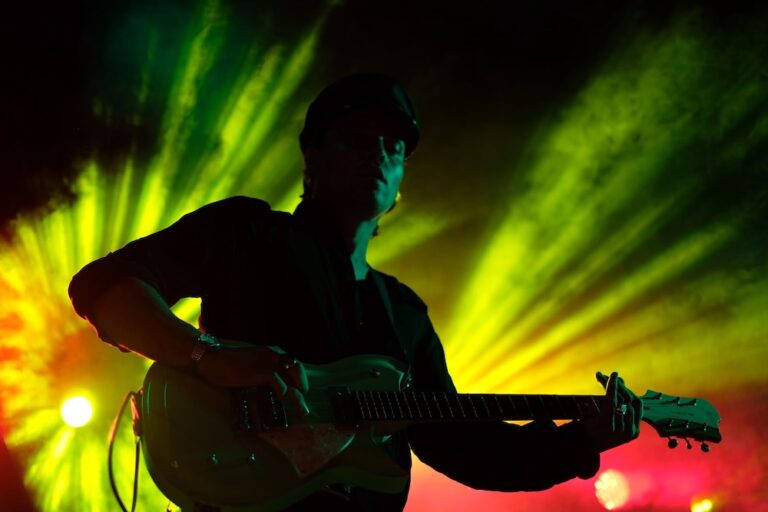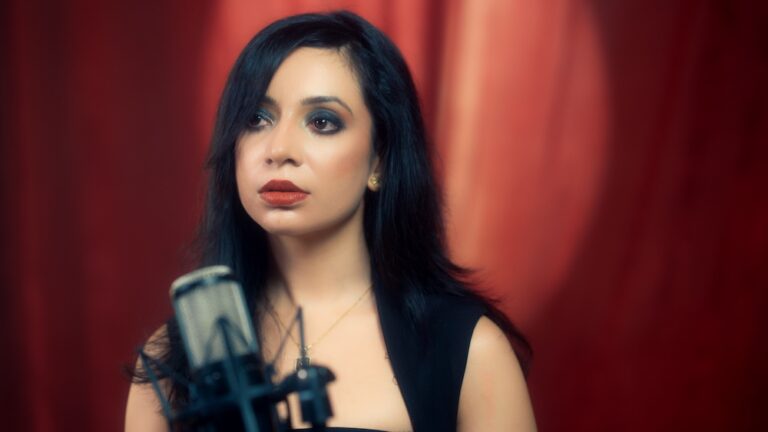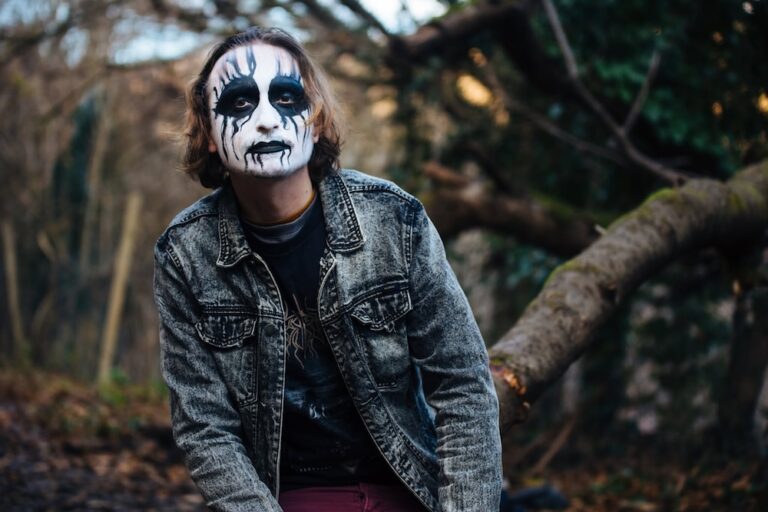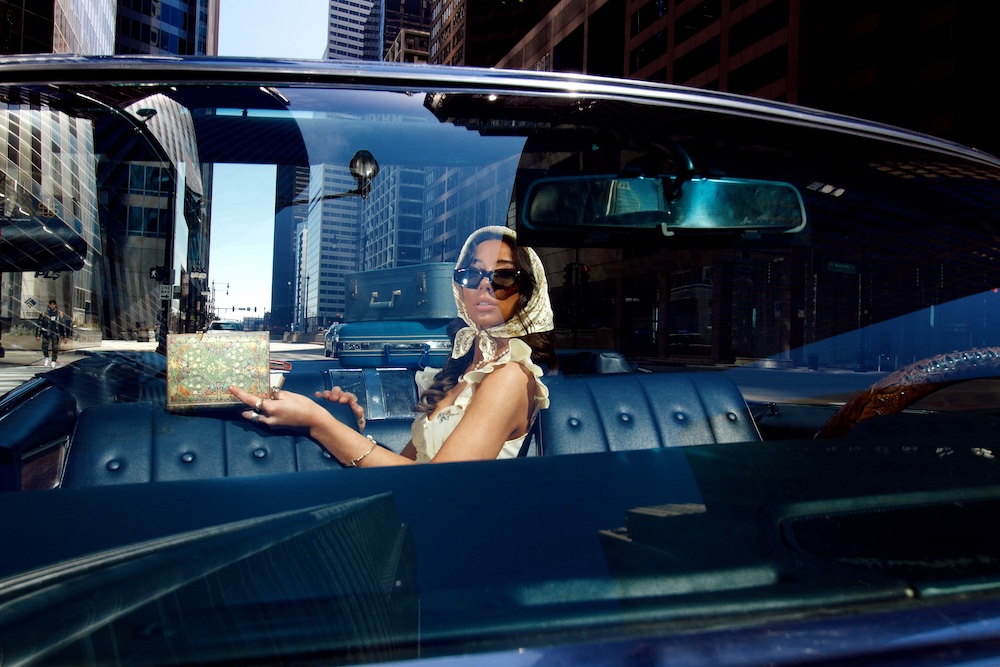
Alyssa-Gallarneau, photographed by Iman-Gum
The Chicago and Bloomington-based rising artist reflects on the experiences that inspired For The Record and the stories she was ready to tell.
With the release of her debut album For The Record, Alyssa Gallarneau introduces herself as a songwriter with a gift for cinematic storytelling, weaving together vivid imagery, heartfelt lyricism, and polished pop production. Blending elements of pop, folk, and singer-songwriter traditions, the Chicago and Bloomington-based artist has crafted an album that explores love, faith, longing, and self-discovery through songs inspired by real moments across three countries. Produced by acclaimed UK producer Ian Barter and released via MackLife Records, For The Record showcases Gallarneau’s ability to transform deeply personal experiences into stories that resonate far beyond her own life.
In this conversation, Gallarneau reflects on the emotions of releasing her first full-length record, the places and people that shaped its songs, and the creative partnership with her sister behind one of the album’s standout tracks. She also discusses her love of symbolism, the role of nature in her songwriting, balancing vulnerability with social media, and why the album’s title has taken on a deeper meaning since its completion. Looking ahead, she shares her plans for touring, returning to the studio with Ian Barter, and continuing to tell stories that connect with listeners around the world.
Congratulations on your debut album, For The Record. What emotions are you feeling now that it’s finally out in the world?
Thank you! I am currently feeling a mix of excitement and gratitude. It’s been really special watching these songs finally find homes with people. I recently hosted a listening party with some of my closest friends and supporters, and seeing each person connect with a different song reminded me that once the music is out in the world, it takes on a life of its own. There’s something really special about seeing these stories belong to other people now, too.
You wrote the album across three different countries. How did each place influence the songs that emerged there?
Honestly, each place sprinkled its own imprint on the album. In Florida, I was living on a boat, and that season of my life naturally gave life to “Ocean Air.” I was surrounded by docks, salt air, and the shoreline every day, so that scenery found its way into the song. Back home in Illinois, I wrote “Proverbs 3:5,” “Consider This The End,” and “I Don’t Want To Think About You” with my sister, Brittany, which became some of the album’s most personal and cinematic songs.
While recording in London, I also wrote “SoHo” and “All’s Fair in Love and War.” “SoHo” began as a love letter written in Soho, London, about falling in love but not quite getting it right. After it was released, it was really neat to watch people connect it to places like SoHo in New York or Florida and make the story their own. “All’s Fair in Love and War” began in my hotel room at The Swan in London. I remember working on it for hours after studio sessions, and staying up late to prepare it for recording with Ian during our final days together.
Mexico probably influenced me the most spiritually and lyrically. I was there on a mission trip with my church, writing beneath trees and surrounded by mountains, where “Love Business” and “Willow Tree” were born. I’ve always been fascinated by weeping willow trees, so “Willow Tree” became a metaphor for the patience it takes for both trees and relationships to reach their full maturity.”Love Business” was shaped by my faith and my hope of finding someone who values serving God and others alongside me. That’s why lyrics like “Fruit of the Spirit,” “Sundays for the Lord’s praise,” and “There was once a tree I sat and prayed beneath” became so personal to me. They were real and drawn directly from that experience.
Looking back, I don’t think this album would be what it is if it had been written in just one place. Every place I lived sprinkled a little bit of itself into the stories, and I think that’s what makes the album’s songwriting process so unique.
Your lyrics are filled with symbolism and visual imagery. Do you usually begin with a story, a lyric, or an image when writing?
My songs almost always begin with an emotion that’s itching to get out. From there, I start building a world around that feeling. Symbolism and visual imagery help me give those emotions a place to live, so that the listener can see the story as much as they hear it. It has become one of my favorite elements of songwriting.
The album explores love, faith, longing, and self-discovery. Which of those themes challenged you the most to write about honestly?
Love, without a doubt. It’s such a complex emotion because it so often exists alongside longing. This album lives in the tension between loving someone and waiting for your lives to meet at the right time. Writing honestly about that meant sitting with the patience, frustration, hope, and eventual peace that can all coexist.
“I Don’t Want To Think About You” was co-written with your sister, Brittany. What was it like turning your sibling relationship into a songwriting partnership?
Writing “I Don’t Want To Think About You” with my sister, Brittany, was one of my favorite moments from making the album. We wrote the song over two days, starting in my bedroom and finishing it on our family’s boat at the lake. There was something really special about getting to experience little breakthrough moments of laughing, bouncing ideas back and forth, and seeing “lightbulbs” go off. Even the ending gate agent announcement started as an idea we joked about for my producer, Ian Barter, to say, but it ended up becoming one of the song’s most defining moments. It’s one of those creative memories that I’ll always remember.
The image of someone arriving at the gate too late is incredibly cinematic. Did that lyric come from a real experience, or was it imagined?
That idea was born of a love that arrived too late. It was a push-and-pull between the age-old story of “you don’t want me” and “now you do.” The world Brittany and I built around it naturally cradled that idea in an airport setting. It reminds me of that moment when love doesn’t arrive on time, so it sprints after you to the gate when the plane has already taken off, and it’s too late.
Tracks like “Willow Tree” and “Ocean Air” suggest strong natural imagery. What draws you to using nature as a storytelling device?
I spend a lot of time outside writing songs. I find that nature grounds me in thinking clearly and being at peace with what I am trying to say. Looking out at the things around me, whether it’s trees, water, or even little bugs, I find a lot of inspiration and comfort in composing outside. When I am not outside, I tend to be looking out a window.
You’re known for energetic live shows. How do you translate the intimate storytelling of your songs into a larger stage performance?
My band and I are really intentional about creating space for slower, more intimate songs in our sets. Those songs give us an opportunity to break up the high-energy and chaos for a moment of intimacy with the audience. Songs like “Love Business (Sha-Boom)” and “Willow Tree” are almost positioned as romantic interludes.
Many listeners are discovering your music through social media before seeing you perform live. How do you balance creating content with protecting your creative process?
I enjoy creating content that keeps supporters in the loop of the behind-the-scenes of shows, sound checks, and my studio sessions. I’ve also taken a liking to writing letter-like captions that express how I am feeling about each project, whether it is nerves, excitement, teasing lyrics, or song titles. That said, my creative process is naturally protected since I create in private. Unless I am in the studio, I am typically alone, stirring emotions and trying to reach the most vulnerable parts of myself. I think striving for honesty in my songwriting is something that enhances my songs, and I find equal enjoyment in storytelling, even if a song is more fictional.
Is there a lyric on the album that feels especially personal or that means something different to you now than when you first wrote it?
Interestingly enough, the title “For The Record” has come to mean something different to me than when I first chose it. At first, it felt like a way of saying, “this is how I feel.” But now, it feels more like a confession and openness I’ve grown into. It’s less about clarifying a feeling and more about being honest enough with myself to let these feelings exist in the world and say it all for the record.
Finally, after such a significant debut, what does the next chapter for Alyssa Gallarneau look like?
My next chapter is about expanding my touring to more states and continuing to create new music! One of the most beautiful parts of growing as a songwriter is allowing each project to reflect a new version of yourself, and carrying that growth into whatever comes next.
I’m really looking forward to returning to London to work with Ian Barter again and to keep implementing new ideas into my music. More than anything, I am excited to keep putting out love, honesty, and wisdom into the world, for the record.
Official website of Alyssa Gallarneau.
About the Author