Drake
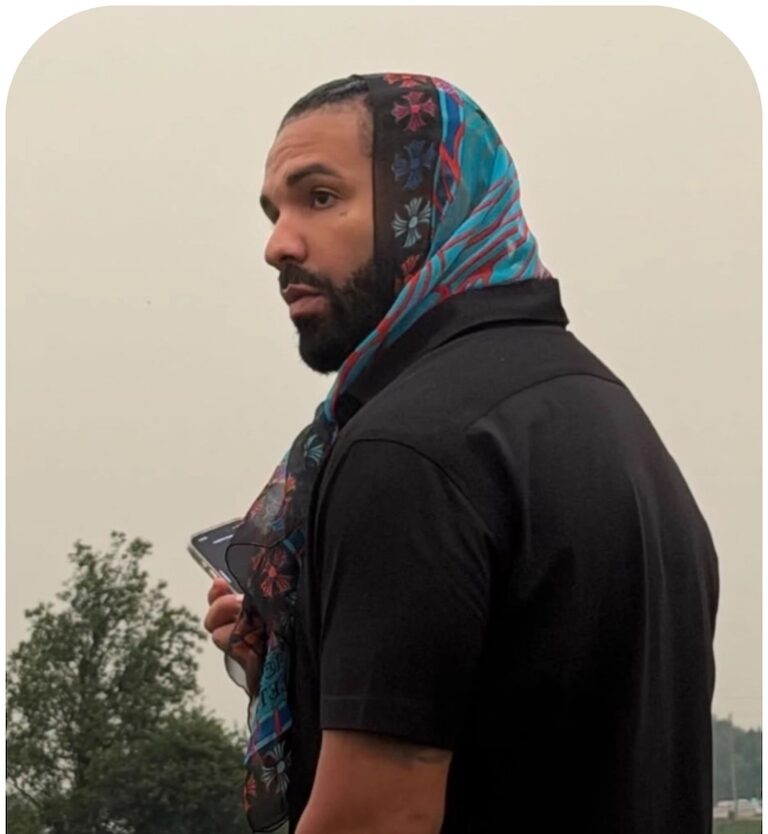
Apple Music names Drake its Best Rapper of 2026 after an extraordinary year that saw him occupy the entire Billboard 200 podium with three simultaneous album releases
There are successful album rollouts, there are ambitious album rollouts, and then there is what Drake did on May 15, 2026. In a move that seemed designed to test the limits of the modern music industry, the Toronto superstar released not one, not two, but three full-length projects on the same day: ICEMAN, HABIBTI, and MAID OF HONOUR. The result was a chart takeover of historic proportions, with all three records landing in the Billboard 200’s top three positions. It was the first time an artist had accomplished such a feat in the chart’s history.
Now, Apple Music has recognized Drake as its Best Rapper of 2026, adding another distinction to a year that has made one thing abundantly clear: whatever questions might surround his artistic direction, his commercial power remains extraordinarily difficult to match.
The three-album campaign was an audacious proposition even by Drake’s increasingly expansive standards. Across 43 tracks, the projects explored different corners of his musical universe, moving between hip-hop, melodic R&B, and dance-influenced production. Rather than concentrating an entire release cycle around one carefully curated album, Drake effectively turned a single release date into an event spanning multiple musical identities.
And the numbers were staggering; ICEMAN, the centerpiece of the campaign, debuted at No. 1 with 463,000 equivalent album units in the United States. It generated approximately 462.2 million official on-demand streams during its opening tracking week alone. Meanwhile, HABIBTI entered at No. 2 with 114,000 units, and MAID OF HONOUR claimed No. 3 with another 110,000. Together, the three albums accumulated approximately 687,000 equivalent album units in their first week.
It was a remarkable demonstration of audience mobilization in an era of fragmented attention, unpredictable listening habits, and relentless competition for cultural relevance. Yet the achievement carries significance beyond the spectacle of three albums occupying three chart positions. With ICEMAN, Drake secured his 15th Billboard 200 No. 1, tying Taylor Swift for the most chart-topping albums by a solo artist. Only The Beatles, with 19, rank higher in the all-artist tally. It is an extraordinary milestone for an artist who has helped shape multiple generations of hip-hop. Emerging as the boundaries between rap, R&B, and pop were beginning to blur, Drake spent the following decade pushing them further, building his commercial identity on an ability to move seamlessly between melodic confessionals, hard-edged rap, club records, and international collaborations.
The three-album experiment takes that versatility to an unusually ambitious extreme. Instead of asking listeners to embrace one particular version of Drake, the campaign offered three different entry points into his musical world. Whether that approach represents an entirely new model for major album releases or simply an unprecedented exercise in superstar economics, the results speak for themselves.
Streaming numbers provide another measure of the campaign’s reach. According to Apple Music’s year-end editorial coverage, ICEMAN became the first rap album released in 2026 to surpass two billion streams. The milestone suggests that the album’s opening-week explosion was not merely a temporary spike driven by curiosity or fan mobilization. Its audience continued to engage with the project well beyond release weekend, and that distinction matters—in today’s music business, generating an enormous opening is one challenge—sustaining attention is another. Drake managed to make the initial event feel like the beginning of a much larger commercial story.
Apple Music’s decision to name him Best Rapper of 2026, featured in its Rap Life: Best of 2026 editorial presentation, places an institutional stamp on what has already been one of the year’s most conspicuous hip-hop campaigns. The recognition also reinforces the long-standing relationship between Drake and the streaming platform, whose development coincided with his rise into one of the defining commercial forces of the streaming era.
Of course, the question of what makes someone the year’s best rapper is never entirely reducible to chart positions. Hip-hop has always measured its leading figures through a complicated combination of technical ability, originality, cultural impact, artistic risk, influence, and competition. Commercial dominance is only one part of that equation, however enormous the numbers might be.
Yet Drake’s 2026 campaign makes a compelling argument for a different kind of distinction: the ability to operate at a scale that few contemporary artists can even approach. Three albums released simultaneously. Three consecutive positions at the top of the Billboard 200. Hundreds of millions of opening-week streams. Fifteen career No. 1 albums.
In a genre where relevance can be brutally temporary, Drake has once again demonstrated an unusual capacity to turn a release into a cultural and commercial event. Whether listeners gravitate toward ICEMAN, HABIBTI, or MAID OF HONOUR, the larger achievement is difficult to ignore, Drake didn’t simply compete for the top of the charts in 2026, he occupied the entire podium.
And with Apple Music now declaring him its Best Rapper of the Year, his latest chapter arrives with a familiar message: the conversation around Drake may never be settled, but his ability to command the attention of the music industry remains very much intact.
About the Author