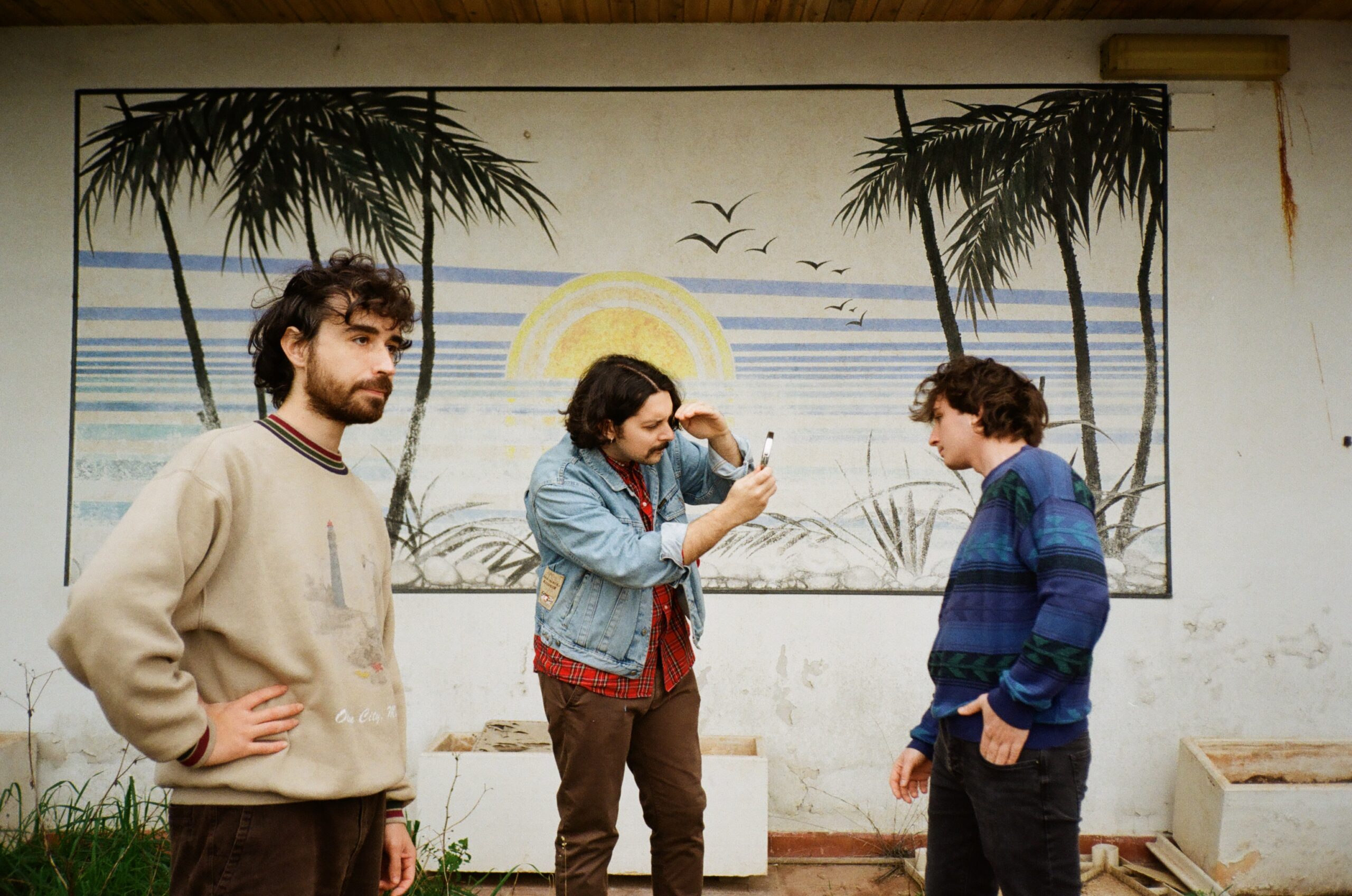
Moustache Prawn
How Three Childhood Friends Rediscovered Their Chemistry In A Surreal Italian Hermitage
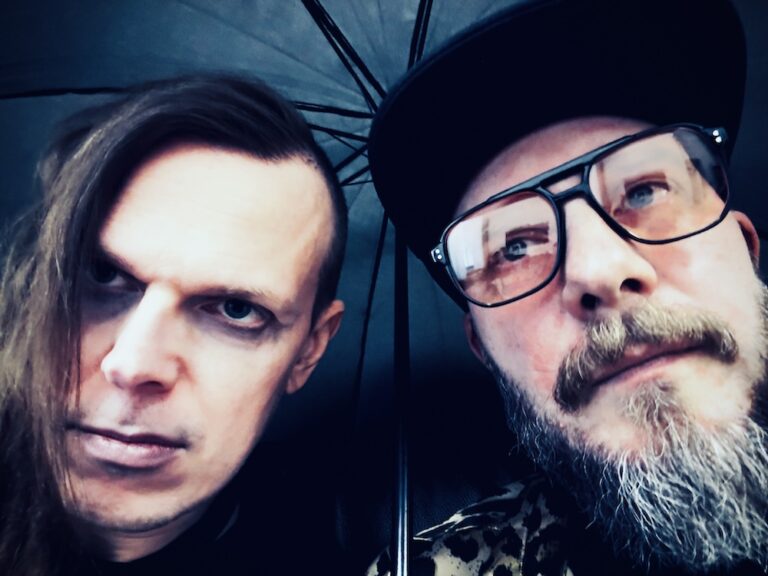
In 2010, Moustache Prawn was the kind of indie lightning-in-a-bottle act that lived it through a haze of Audacity-tracked demos and a DIY spirit that eventually carried them from the Puglia coastline to stages in Japan and Texas. They were the quintessential cult favorites—three eighteen-year-olds who found an “unspoken click” and turned it into a decade-defining journey of English-sung, Italian-bred alternative energy. But after the dense, conceptual ambition of 2015’s Erebus, the gears stopped turning; for eleven years, the story of Moustache Prawn remained a closed book, left on a shelf while the trio pursued parallel lives and solo projects, leaving fans to wonder if that specific chemistry had simply evaporated into the salty air of Southern Italy.
Now, in 2026, the trio has emerged from that decade-long hibernation—not with the maximalist weight of a comeback tour, but with a stripped-back vulnerability that feels like a collective exhale. Their new single, “The Monster,” is a departure from the “control” of their youth, opting instead for a minimalist, acoustic rebirth that embraces the “unpredictable” freedom of their new home at Dischi Uappissimi. We sat down with the band to discuss the “first crack” in their silence, the beauty of nonsense lyrics, and why, after all this time, the story finally felt ready for a new chapter.
Looking back to your origins in 2010, what was that initial, unspoken “click” between the three of you that convinced you Moustache Prawn needed to be a real band rather than just a casual jam session?
Back in 2010 we started writing our songs in Italian but we switched to English because we felt it more natural based on our musical backgrounds. When we started recording music with simple software like Audacity, that was the click.
After eleven years away, what was the specific catalyst that finally brought the three of you back into the same room to see “what would happen”?
We just felt the story wasn’t ended, we started the band as friends, and this had not changed among us after all this time. We thought we could still create music together, as adults, with other perspectives.
You’ve described “The Monster” as a bare and essential track. Was this minimalist acoustic direction a intentional choice to signal a “rebirth,” or did the song simply refuse any heavier production?
We just decided to make it essential, as we started. No heavy production. We just wanted to record what we are at the moment, without too many layers.
The lyrics mention feeling like a “monster wailing for a wrong tattoo.” What is the story behind that imagery, and how does it tie into the theme of transformation you’ve mentioned?
Some parts of the lyrics might sound like nonsense, and in fact, they are. They’re mostly made up of evocative imagery. But in between, there are lines with a clear and deliberate meaning.
The monster refers to the way we often see ourselves: we feel the urge to separate from who we are, especially from our darker side. It’s hard to understand it, and even harder to take care of it, so we try to hide it from others.
It’s an invitation to let go of the idea we have of ourselves, and to fully embrace change without resisting it.
Ronny, you directed the music video at the Eremo di Vincent. What was it about that specific location in Guagnano that felt like the right home for the characters in your music?
The Eremo had this fascinating lore, every chamber was telling a story, it was just so colorful and interesting to shoot inside this surreal place.
How does it feel to transition from the “concept album” energy of Erebus in 2015 to this more raw, stripped-back version of Moustache Prawn in 2026?
Back in 2015 with Erebus, everything was dense and conceptual, now it’s the opposite—we’re not trying to build a world, we’re trying to understand who we are. It’s less about control, more about letting things go, especially when it feels uncomfortable.
You’ve officially joined the Dischi Uappissimi roster. How does being part of a collective known for “unpredictable” productions influence the way you’re approaching this new chapter?
Joining Dischi Uappissimi was just a natural choice, we know it since it’s beginning. They work without expectations, they just let things happen providing their support and knowledge. The unpredictability is freeing, that is what we need now.
The chorus mentions trying to “catch in Hollywood” while the video is deeply rooted in the heart of Salento. Is there a tension there between local roots and global ambitions that you’re exploring?
We’ve never seen it this way, the chorus has been written exactly as it was in the original demo, we didn’t want to change the sound of the words.
After touring everywhere from Japan to Texas in your earlier years, how has your “strong live identity” evolved now that you’re returning to the stage a decade later?
We haven’t started touring yet, we are preparing for the new live and we are slowly realizing what we will want to communicate on the stage.
The song asks, “Isn’t something beginning to change?” Does this single represent a one-off experiment, or is it the first look at a much larger body of work?
This single isn’t just an isolated event. It’s the first crack. More songs will come, but we will take it slowly.
What did producer Fabrizio Semerano bring to the session that helped you capture the “lightness” you were looking for after such a long silence?
Fabrizio brought order in our thoughts, he was the glue. That’s the best way to put it. He knew when not to intervene, which is rare. He helped us protect the lightness instead of over-defining it, which is exactly what we needed after being silent for so long.
Having started this band when you were just eighteen, how has your chemistry as a trio changed now that you’ve all spent a decade pursuing parallel lives and projects?
Our chemistry now is just different, but we think it is still there. Back then everything was immediate, almost instinctive, of course we were younger. Now there’s more distance but that requires us to have more trust in each other, to find compromises. We don’t rush to fill gaps anymore.
If “The Monster” is a moment of transformation, what do you hope your long-time fans—and new listeners—discover about the 2026 version of Moustache Prawn?
I think with this song we just wanted to say “hello, we are back!”. It’s a return to our roots, to simplicity. There’s continuity, sure, but we don’t want to stick to the past. We are working on music the reflects exactly what we have become now.
What’s the primary vibe you want to project during this comeback press cycle?
Honestly, there’s nothing planned on the paper. Coming back to playing together is just a way for us to create music as good old friends. We continued working on solo projects during this time, but even if now it’s easier to play your own stuff without the need of anyone, we just wanted to rediscover the pleasure of sharing thoughts and experiences with each other when creating new music.
About the Author