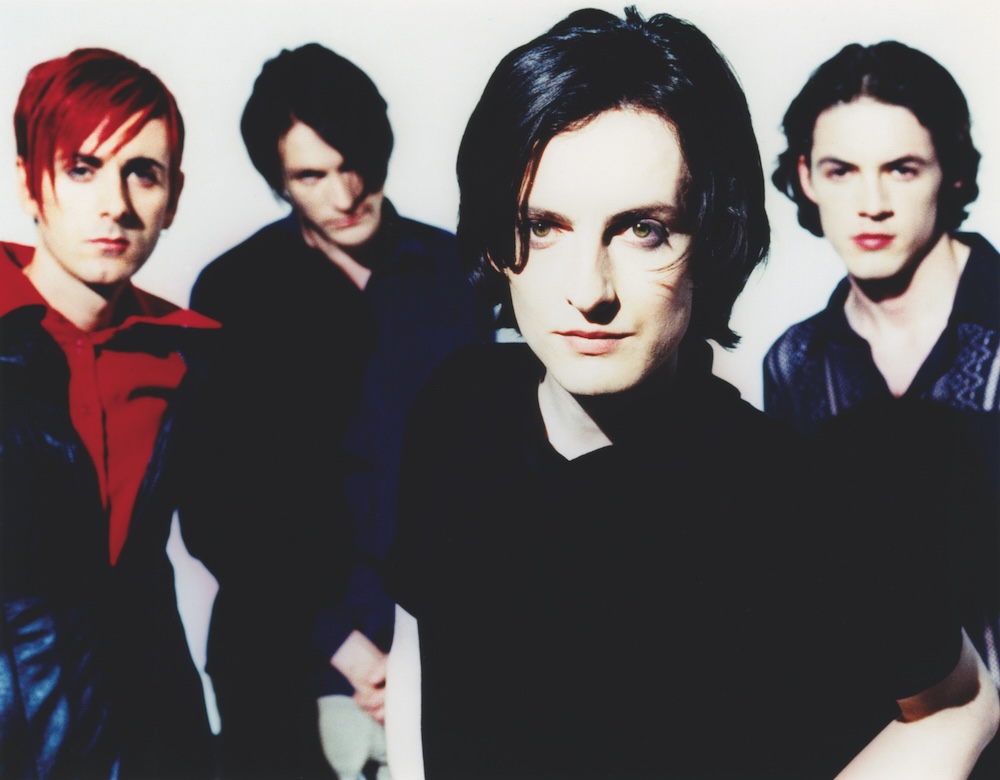
Belvedere Kane
Inside the secret history of Such Trying Times, the legendary lost synth-pop album by Barry Stone, which has finally been released thirty years later featuring a rediscovered Pete Burns vocal
In the glossy annals of British pop history, Barry Stone is a name that commands respect; as half of the songwriting and production duo The Alias (with Julian Gingell), he has been the force behind everyone from Sophie Ellis-Bextor to Miley Cyrus to creating the American Idol theme. But in 1996, Stone was on the verge of a different kind of immortality as Belvedere Kane, the stylish synth-pop outfit whose single “Never Felt As Good” was hailed by critics as one of the decade’s finest offerings. Then, as the industry shifted toward Britpop and the “Hit Factory” gears ground on, his debut album vanished into the ether; it became a piece of pop folklore, a “lost” masterpiece of the Romo era that remained frozen in time while Stone went on to define the sound of the modern charts for a new generation of icons.
Now, thirty years later, that time capsule is finally being pried open with the release of Such Trying Times. Far from a dusty relic, the album—dropping February 13, 2026—is an exhilarating collision of nostalgia and modern polish, anchored by the brilliant, club-ready collaboration “Legends (Forever Young),” which features a rediscovered vocal from the late Pete Burns. With its lush double-tracked vocals and cinematic nods to Isabella Rossellini and the ghosts of Dead or Alive, this is an album that refuses to stay buried and is currently the undisputed frontrunner for the most electrifying pop record of 2026. We sat down with Stone to discuss the surreal journey of reclaiming his youthful optimism and why this “lost” treasure is exactly what 2026 has been waiting for.
What made you fall in love with music? In those early years, were you primarily focused on developing your voice as a singer, or were you already gravitating toward the instruments and synths that would eventually define your career?
I’m not sure what age I was when I discovered the cassette machine in our house, but I would record everything: music off the TV, music off the radio, private conversations—the lot. I loved it. I remember in those days when the TV channels were off-air—yes folks, in the ’70s, TV only came on at a certain time and went off at around midnight… anyway, when it wasn’t showing “content,” they would have a thing called a test card. Accompanying the test card would be some random music.
Anyway, a great hobby of mine would be to turn on the TV when this random music was playing, hit record on my cassette recorder, and sing at the top of my voice the first things that would come into my head, complete with nonsense lyrics. I used to love doing that and then listening back. I’m sure one or two of these cassettes still exist somewhere 🙂 Anyway, this isn’t too dissimilar to how I write songs today; the only difference is that I make up the instrumentals to sing my nonsense over now.
In terms of the synths, most of the records I was gravitating towards as a kid had some electronic element to them—Hazel O’Connor, Toyah—but of course, The Human League’s Dare album cemented my love of electronic music and synthesizers. That word “synthesizers” is a very ’80s word, isn’t it? But in the Dare album credits, the band kindly listed all the keyboards used, and one of those synths on the list was the Casio VL-10, which was actually quite affordable. At age 11, I convinced my parents to buy it for me. It was quite basic, and I used to think the lead line in “Open Your Heart” came from it (which I’ve since found out it didn’t), but aside from the synths and the electronics, it was the production and studio recording techniques that I was really curious about… the double-tracking of vocals, the layering of backing vocals—all that stuff got me very excited.
But in 1985, I heard a record that had absolutely everything I loved about pop music condensed into 3 minutes and 19 seconds. The record was “You Spin Me Round (Like a Record)” by Dead or Alive. I fell hard for that song, the band that recorded it, and the producers (Stock Aitken Waterman) who were at the helm. I think from that moment on, there was no question about it: I was going to end up working in a recording studio, and preferably the same one SAW were at.
How much of that Irish upbringing and melodic sensibility do you think is still present in the music you create today?
I come from a very musical family. My Mum was a singer, both my grandfathers were musicians… music was all around me growing up. so yes, I think having all that music and melody—I always remember my Mum playing ABBA and The Carpenters in the house—it can’t not become part of you.
While Dead or Alive was the primary catalyst for your move to London, which other artists from that era defined your musical vocabulary and made you realize the music industry was your calling?
I just loved records that sounded like they were made in a studio… Heaven 17, The Human League, Depeche Mode, Yazoo, Erasure, Pet Shop Boys, Blancmange… I couldn’t get enough of it. I had to have it all, and preferably on a 12″.
Such Trying Times is a unique example of a “lost” album finally seeing the light of day after three decades. What were the primary factors that kept it on the shelf for so long? Was it a matter of complex rights issues, or did the momentum of your career as a producer for other artists simply take priority?
Returning to Belvedere Kane was never on my bingo card. Julian Gingell (my production partner) and I were so busy with Jewels & Stone, and then later The Alias, that there was never any looking back. What we were doing together was so exciting and rewarding—I feel very lucky to be able to still be doing the thing I love after all these years.
You mention being enthralled by the sound of Dead or Alive. From a producer’s perspective, what was the specific “magic” in the Stock Aitken Waterman formula that you tried to replicate—or perhaps subvert—when you started building the Belvedere Kane sound?
I think the main “magic” in SAW’s formula comes from the songwriting. Each of those songs has something very special within it before you even get into production, which in itself is a whole other ball game—and they were obviously masters in that field as well. But the songwriting element of those records is, I think, only now beginning to be re-evaluated and appreciated. Quite rightly.
In terms of the BK sound… obviously, working in that building, most of us were familiar with the recording methods or “formula,” if you’d like to call it that. The BK demos all followed those recording methods as they were written and first recorded at PWL. All the elements that would’ve excited me about DOA/SAW records, I’d obviously gravitate towards… but the songwriting sets it apart as I was going for something unique to me. In most of the songs on the album, you’ll find a character—it’s a part I’m playing. Even the covers I’ve done, I recognize the same type of character in the songs, which is why I gravitate towards them. The character in “Such Trying Times,” for instance (a song written in the 1960s and first recorded by Marlene Dietrich), to me, is a very similar character to the one in “I Want You, I Want You.”
You’ve been a vital part of the “Hit Factory” and have written for many global icons—in your professional opinion, what is the one non-negotiable element that every great pop song must have to become a classic?
Oh well, that’s the thing about pop music—I don’t think there are any rules. A lot of pop hits will follow certain patterns, but there will always be records that tear up the rulebook, and that’s the beauty of pop music. Isn’t that what keeps it exciting?
Take “Never Felt As Good” as an example. When I wrote that, I consciously didn’t allow myself to edit or try to constrain myself with patterns or rules. I let the song just grow into whatever it wanted to be. At first, I thought the chorus would be what is now the “it’s in the wind” section. The actual hook, “Never Felt As Good,” is something that originally only appeared once between verses. It was the most bizarre song I’d ever written. It was only when Ian Curnow heard it and said, “You need to repeat that ‘Never Felt As Good’ line twice,” that I realized it was that line that was the big hook. The song has so many sections to it—it doesn’t really follow any rules and it’s a complete one-off in terms of songs I’ve written. Back in the day, I spent a lot of time trying to write more songs in a similar style, but none had that certain ingredient, so I stopped trying to make “NFAG Part 2.”
You described Belvedere Kane as having “shades of Edward Scissorhands and Adam Ant.” In the mid-90s, when Britpop was becoming very “laddish,” did adopting such a theatrical persona feel like a deliberate act of rebellion?
The Edward Scissorhands and Adam Ant thing was much earlier, when I was just starting out… so early ’90s BK looked very different to mid-’90s BK.
How I wanted to present the band visually by the time the single came out, I guess, was going against the Britpop aesthetic of things generally, but there were others at it also—Pulp being one band that comes to mind. Minty, Suede, and Menswear being a few others. I don’t think it was a deliberate act of rebellion; it just so happened that was what I gravitated towards anyway.
Pete Waterman loved the song so much he wanted to pitch it to Cliff Richard or the Pet Shop Boys. That must have been an incredible, yet bittersweet moment. What gave your “younger self” the inner strength to turn down those legends and keep the song as your own ticket to becoming an artist?
There was no way I was giving this song to anyone else—I’d worked so hard to get that far. Pete’s suggestion of giving “NFAG” to another artist was all the confirmation I needed that he didn’t see me as an artist. From that moment onwards, I was on a mission to find a record deal elsewhere. In many ways, he put a rocket up my arse, so I am forever grateful for that, but also generally for how encouraging he’d been of my songwriting and for giving me that very early break.
You moved to London specifically because of Dead or Alive, and then ended up co-producing Nukleopatra and becoming friends with the band members. How did you navigate that transition from being a “superfan” to becoming part of their inner circle?
As a 14-year-old, seeing Pete on TV performing “Spin Me” for the first time was like being struck by lightning. His energy was just so powerful, and being a shy young gay kid growing up in a small town, that powerful energy was very captivating. Don’t get me wrong—the music and the visuals were the main attraction, but without knowing it then, Pete represented something much bigger: a life where you could be whoever you want to be. I know that Pete’s early performances of that record had the exact same impact on many, many kids around the world.
So, I was drawn to London because of the band and the music of SAW. It was many years later, while working at PWL, that I was asked to work with them. It was a surreal experience, but I did manage to separate my fandom from the job I was being asked to do. It was completely serendipitous. The universe conspired to put me in a room with this band that I had idolized as a kid, and here I was getting to be creative with them and help make a brand-new album. You couldn’t write the script, as they say.
I’ve recently had a lot of time to think about this experience as I made a podcast all about making that album and how I got to be in the room with the band, etc. It’s called Nukleopatra: Making a Dead or Alive Album with Barry Stone, and I’ve spoken with a lot of people who were part of the Nukleopatra project, including Lynne Burns—Pete’s former wife and creative partner—who was in the room with us for a lot of the recording.
How did Pete Burns change your understanding of what it meant to be a “pop star,” and what wisdom did he impart to you?
Pete and Steve were obviously very knowledgeable about the industry, so they had many pearls of wisdom to pass on to me. They were both skeptical and scathing about record labels, as they had been particularly badly burned in the past. One thing I guess I learned from them is that no matter what drama the business side of things throws at you, you just have to focus on the music and let all the rest become white noise. It’s the music that has to be the main consideration.
“Legends (Forever Young)” is a standout highlight, especially given its origin as a rediscovered off-cut from the 1994 Nukleopatra sessions. You worked with Julian Gingell and Hannah Robinson to transform it into a tribute that captures the energy of early Dead or Alive. Could you take us behind the scenes of that process and explain how you built such a complex, modern arrangement around that original archival verse?
It was pretty straightforward, really, once I had the idea to use that vocal. The music of Dead or Alive is something I’m obviously passionate about, so creating something that paid tribute to the band came very naturally. Again, in the Nukleopatra podcast, I actually invited Julian and Hannah to chat with me about the writing process, so that’s worth checking out if you’re interested.
The track “Isabella Rossellini” is such a specific and evocative title. What was it about her persona in the ’90s that made her the ultimate muse for a Belvedere Kane song?
Who doesn’t love Isabella Rossellini? I watched a film called Fearless back in the ’90s, and in that film, Isabella’s character says the line, “Even when I hate you, I know I love you,” and I thought that would make a great lyric. That’s how the song was born. I remember we had a projector for our very first gig at Club Skinny in Camden back in the Romo days, and we projected an image of Isabella from Blue Velvet when we performed this song in 1996.
In your song “Magazines,” you list iconic titles like Select, Q, and The Face. Does it feel bittersweet to sing those names now that the era of the physical pop magazine has largely vanished?
I see it as paying tribute to a golden age of pop culture. It seems such a long time ago when you consider how we access everything in 2026. I feel incredibly lucky to have lived through that era. Magazines were everything back then, and I still have boxes of them. I do love this song, though—when I first thought of returning to this album, this was one of the songs that put a huge smile on my face, knowing I would get to finish it and put it out into the world.
You recruited Romo regulars to make Belvedere Kane “feel like a band” for the live circuit. How much of the project was about the music itself versus the performance of being a pop star in that specific ’90s subculture?
The music always came first, but how the thing was presented was very important to me. The first incarnation of BK was a very different affair and much more “otherly.” I think the BK of ’96 was much more accessible and, to me, looked way more like a viable prospect… shows what I know! 🙂
“Such Trying Times” is being described as a “love letter to your younger self.” While digitizing those tapes, was there a specific song or lyric that surprised you—something you’d completely forgotten you were capable of at 21?
Maybe the ones that I hadn’t lived with for as long as others. “Magazines” and “Never Said Goodbye” were both demoed pretty much at the end of BK in ’96, so hearing those was a nice surprise, and they were ones I really enjoyed working on. But honestly, I had fun with all of them.
There was a point before we did “Legends” when I only had nine tracks, and I had the idea to cover a record I absolutely loved from the ’90s. It was by an artist called Kerry Shaw, and the song is “Could This Be Love?”. The idea of recording that put such a huge smile on my face. That record was so inspirational to me in the early ’90s when I was trying to get a deal. I loved everything about it—Kerry’s vocal, the lyrics, the production… it was remixed by The Beatmasters, whom I adored at the time, and many of their records were an inspiration for what I was trying to do.
You mentioned that in 1996, there weren’t many slots for “alternative pop” because of the Spice Girls and Britpop. Looking at the charts in 2026, do you feel the world is finally “ready” for the sound of Belvedere Kane?
No, unfortunately, I don’t think it is 🙂 I don’t even have to look at the charts to know that BK is a very niche market, but that’s okay. I love this genre of music and will always gravitate towards this type of sound regardless of charts.
Beyond the music, what was the most emotional part of going through those old tapes? Did you find any notes, photos, or memories from your 21-year-old self that changed how you view your career today?
I am a bit of a hoarder and have lugged boxes around with me in every house move I’ve done, so I do have quite a lot of nostalgia pieces from back then—but I find most of my nostalgia comes solely from the music. There is so much attached to every lyric and musical note on this album. I guess what I find sweet is that I can hear how naive and innocent some of the song lyrics are; I can hear the youthful optimism in them.
When you finally held the mastered version of the album in your hands in 2026, did it feel like a closure of a chapter or the beginning of a brand-new “Belvedere Kane” era?
To hold the vinyl in my hand was very satisfying, and hearing how good it sounded was actually a huge surprise. I had to go to my manager’s office to listen to it; I hadn’t expected the vinyl to sound that good (I still need to buy myself a player, by the way). A closing chapter or new era? Hmm, never say never, but if there is going to be more, let’s hope it’s not in another 30 years!
Official website of Belvedere Kane.
Listen to Such Trying Times on Spotify.
About the Author