BURN
From Luxembourg to Poland, the duo turned distance into a defining creative workflow
BURN emerge with Chopped and Shattered as a study in distance, discipline, and shared instinct. Born from a long-distance collaboration between Luxembourg and Poland, the project began with fragmented exchanges of ideas, vocal sketches, and evolving demos that gradually coalesced into a unified sonic identity. What could have been a limitation instead became a defining creative framework—one that shaped both the pacing of the music and the way ideas were refined, revisited, and reshaped over time. Drawing on shared influences from 90s trip-hop and darker strands of electronica, the duo channel artists like Massive Attack, Portishead, William Orbit, and Kosheen while consciously pushing beyond nostalgia into something more forward-facing.
Across the record, BURN build a narrative arc that moves from tension to release, fragmentation to clarity, and restraint to emotional catharsis. That structure is most vividly expressed in tracks like “Late,” which captures the project’s shift toward self-liberation and contemporary electronic expression. Vocal chopping, layered production, and a careful balance between intimacy and expansiveness give the album its signature tension—one that mirrors its themes of loss, transformation, and release. As they reflect on the process, it becomes clear that Chopped and Shattered is less a collection of tracks than a cohesive emotional journey, shaped by collaboration, patience, and a shared willingness to evolve beyond the sounds that first brought them together.
BURN started as a remote collaboration between Luxembourg and Poland—how did that distance shape the sound and creative process behind Chopped and Shattered?
It was more about the creative process as certain things are challenging online. Nothing can replace the human contact, or simply sitting in the same room and brainstorming ideas. So, the creative process, especially at the beginning, took a bit longer. Until we worked out a “system” and got used to it. Then it became quite seamless as we both learned our way around it.
Do you remember the moment when this project shifted from casual collaboration into something more defined as BURN?
This must have been after the first official collaboration we made together, called “Run!”, which was released as part of the “Music From Poland” compilation. Initially, we were both contributing to our solo projects. Then, we realized that – after those projects were complete – we still wanted to keep going. So, we did, and that’s how BURN came into existence.
Your workflow involved exchanging fragments and ideas—did that fragmented process influence the emotional tone of the album?
It may have actually enhanced it. Especially when the idea of using vox chops came into play. We found it refreshing in the context of our own creative process. As well as in the context of electronica or trip hop genres which is where we started from. This “fragmentation” of the process also gave was more time to spend with individual tracks. And, in hindsight, it enriched it with additional ideas.
You draw from 90s trip-hop—how did artists like William Orbit and Kosheen influence your direction?
A lot of that influence comes from how William Orbit or Kosheen approached the rhythm of their songs and how they incorporated elements of darker sounds into their overall productions. At some stage, we both realized we come from a very similar musical experience – we used to listen to the same bands in the past. So, in addition to the aforementioned artists, we also shared fascination with Massive Attack, or Moloko, for example. There is definitely a trace of that 90s sound in BURN, but we tried to approach it as a starting point, rather than the main focus.
There are shades of Portishead in your sound, but it feels very contemporary—how did you avoid nostalgia and make it your own?
Thank you so much for noticing this. Portishead is definitely part of our DNA. However, we also knew that we wanted BURN to leave nostalgia behind and make it more contemporary. This was perhaps due to the fact that we already had a chance to work on strictly trip hop tracks in our past projects. So, here we wanted, or perhaps even needed to evolve. It felt quite natural, to be honest, as we didn’t feel like we were, say, rejecting trip hop. But we wanted to progress and explore other electronic realms as well.
The album balances dark electronica with classic trip-hop textures—what was your approach to blending those worlds?
This was, to a very large extent, a process that happened naturally. We started off with some older, already existing demos, but then we realized we had much more to say, musically, than just being influenced by the classic trip hop. We both needed to feel that sense of progress we mentioned before. And we definitely didn’t want BURN to be labeled as trip hop only. There is so much more to discover within this project!
There’s a clear emotional arc across the record, moving from tension to release—was that intentional from the beginning?
Yes. At some stage, very early in the project, it became apparent that we were telling a story. We wanted it to remain this way, so we needed this progression of emotions to be reflected in the lyrics and the compositions. The album starts with more tense moods and then develops into release as we approach the end, with the closing track, “Night”, being the final point. This approach also gave us structure that we could follow easily as we worked on tracks in a different order. But we always knew where they were going to be placed and what kind of emotions they should represent. This was very helpful to the overall process.
The tracklist forms a full sentence: “Pockets That Remain Broken Often Blossom Late At Night.” When did that concept come together?
Pretty early. It was the initial title of the album, actually, although in a different combination of words. At the beginning, the sentence started with “Pockets” and ended with “Broken”. We rearranged it to incorporate new ideas and to add a bit of hope. This is when the concept of “blossoming late at night” came into play, with “Blossom” representing the most positive and optimistic moment on “Chopped and Shattered”.
How personal are the themes of loss, transformation, and self-liberation within the album?
We view them as quite universal aspects of everyone’s lives. Each of us, at some stage in our lives, is affected by loss, needs to grow, or find their own freedom in doing things. As such, we could draw from our experiences, especially within the lyrics written by Ewa, but also keep them purposely open for other to relate. The aspects you have mentioned were quite important to us in building the overall arc of the story we wanted to tell.
“Late” feels like the emotional centerpiece—what makes that track stand out to you?
“Late” represents a shift in our approach to BURN’s sound. It was one of the tracks that came a bit later, at the point where we already knew the future direction for BURN. This “preview of the future”, sort of speak, is why it stood out to us. In this sense, “Late” represents the evolution and a milestone in our creative process. We wanted it to sound different, more contemporary, almost as a starting point of something new, exciting and different from what we did in the past.
The energy in “Late” builds from something melancholic into something almost defiant—how did you shape that progression?
The combination of Ewa’s lyrics and Bartek’s beats is where it began for “Late”. It was in the concept of “self-liberation” which Ewa wanted to convey and then Bartek tried to reflect through the track’s production. It is an intense build-up of emotions up to the point where, in the bridge, the words “hell no!” can be heard. This is the focal point of “Late”, the decision that the song’s protagonist has made for herself – to reject the love that was no longer there and to walk away feeling free.
Was “Late” always meant to be the focus track?
From the moment the idea for “Late” was created, we knew this could be something special, especially close to the end of the album, where this need for release of emotions becomes quite apparent. And then, yes, it first became our personal focus and once the album was finished, we were pretty sure this is the track we wanted our listeners to experience as the main preview of the whole piece of work. It contains various elements and reflects the core message of “Chopped and Shattered”, defining it as the starting point of self-liberation.
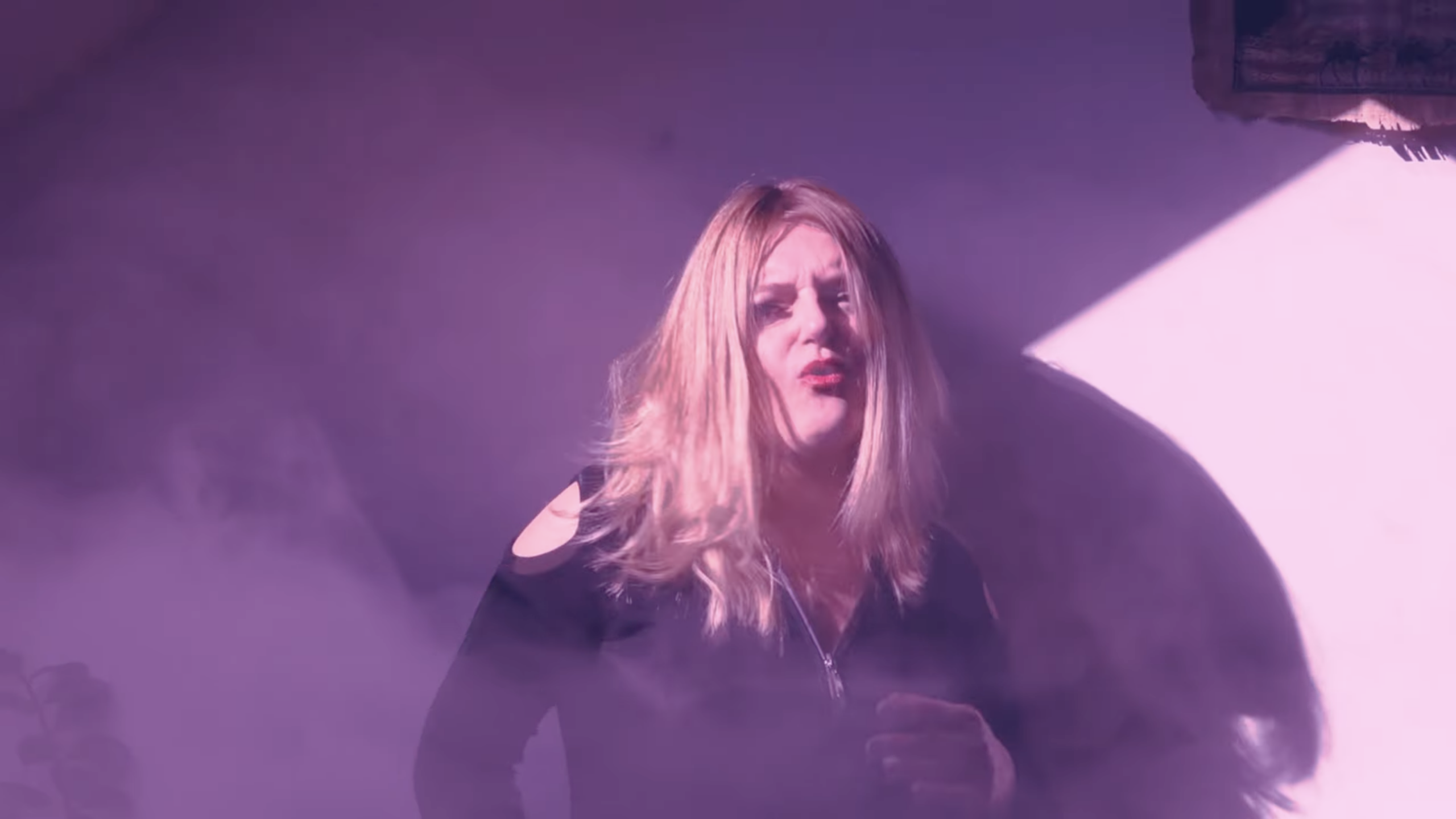
The video for “Late” adds a strong narrative—how did the collaboration with Ewa Baran and Andrew Bulloch develop?
There were a few iterations here and a ton of different ideas. The final effect is a result of a lot of those ideas being actually discarded to make sure the message was clear and in line with the rest of the album. This was done via the collaboration between Andrew and Ewa over the course of a few weeks resulting in what you can watch on YouTube now. A manifestation of inner strength and liberating one-self from the “chains of love”.
What does the visual element express that the music alone doesn’t?
The visual element provides an additional story. It sits on top of the lyrics and the music, complementing the two. It was important to us for the video to have a life of its own, drawing from the song, but also functioning as a standalone element, since it was meant to represent the entire album. In that sense, the visuals had to be clear and story-driven in order to convey the message easily in less than four minutes of the viewing time to, hopefully, leave the viewers interested in listening to the whole album.
Vocal chopping is a key part of your sound—how did that technique evolve during the making of the album?
Vocal chopping arrived very early, in the first track we made for this project, called “Pockets”. The technique, indeed, evolved over time. As we worked through the remaining tracks, it became our natural approach to the way we wanted BURN to sound like. At some stage it was part of our instinct to know which elements of the vocals will be chopped and looped. It was a lot of fun to experiment and play with different ideas as well!
The production feels both intimate and expansive—how did you achieve that balance?
As you listen to “Chopped and Shattered” in one go, the production evolves to incorporate many different elements, from quiet intros and big, almost fierce finales. “Night”, the closing track, would be the best example here. It starts as a pulsating ambient tune and then turns into an electronic feast of emotions, sort of speak. This balance between what’s intimate and what’s expansive is achieved through creating build-ups of tension and then letting them go. It’s as if the music was breathing with you, as well as guiding you through all the emotions we included in the songs.
Did working remotely push you into creative directions you wouldn’t have explored otherwise?
Yes and no. In the sense that, indeed, we were working on certain items separately and the experimentation was a more of a stand-alone task. But we also spent a lot of time talking online, discussing different ideas and then deciding what stays and what goes. This aspect was no different to working together in the same room, although we definitely had more time to digest the ideas on our own, before bringing them to the final version of the album.
How do you navigate creative differences when merging two distinct artistic identities?
Perhaps surprisingly enough, the creative differences were not really that big of an issue. This must have been due to the fact that we had similar experiences with listening to the same genres of music. Having said that, we made sure to communicate our ideas to each other and to see if they resonated with both of us. It was more of a creative discussion type of thing where we both had the right to say “yes, let’s go for it”, or “no, this does not fit”. It worked pretty well, actually.
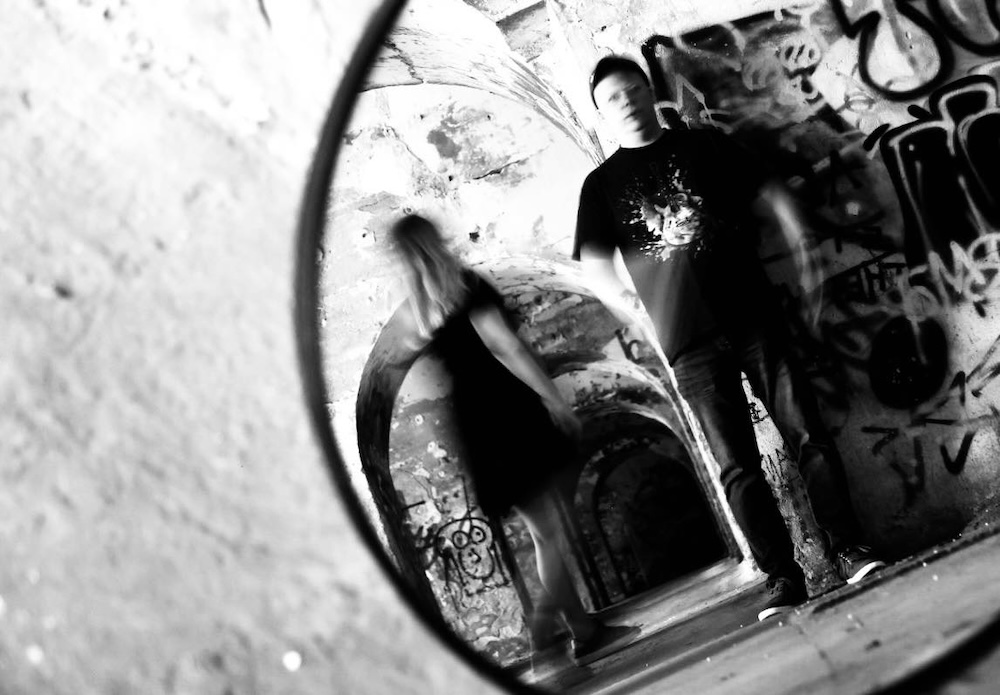
What changed after your first in-person meeting in Kraków?
It cemented the future of BURN as a project for sure! We spent a lot of time talking about it but also planned additional activities at the same time. We actually ended up going to one of the abandoned forts around the city of Kraków and recorded a lot of cool video material you can see in some of the song previews. Meeting in person was definitely key to further understanding of how we approach the creative process, too.
How does BURN differ from your individual projects?
It’s more dynamic, in a sense. It is definitely a combination of two personalities putting their heads together, creatively speaking. At the same time, it is different to, say, Ewa working on her solo album, or Bartek making his next solo track alone at 4 am in his room. It also feels more collaborative and by being able to bounce off each other’s ideas, it provided an interesting platform for exchanging bolder concepts. Or ideas you would not have thought about yourself. It enriches the creative experience.
What does releasing through Bezdech Records allow you to do creatively?
Bezdech Records is Ewa’s label, so it that sense we were not restricted creatively in any way. Having said that, it is, sort of, a sign of our times to have a label through which you release your own music. Being both DIY artists for quite a while, we enjoyed the freedom we had in constructing the story we wanted to tell without any external influences.
How did the support from Kultur | lx – Arts Council Luxembourg impact the project?
The support definitely came at the right moment for us. The album had already been finished and we were ready to release it. But the support of Kultur | lx allowed us to enhance our promotional capabilities and to try and reach out to new audiences we would have not had a chance to approach on our own. We feel very grateful we had this opportunity.
After nearly two years of work, how does it feel to finally release Chopped and Shattered?
It feels great! We wanted to share it with everyone as soon as possible but at the same time we felt the need to stick to some timeline. It is a rewarding feeling, once an album is out, to hear other people’s impressions and their feedback. And to find out their favourite tracks, which are often listened to through different individual filters, other than ours. It feels amazing to see how the songs we created start having their own life.
How do you imagine these tracks translating into a live setting?
We do talk about it and we would like to include a combination of electronic and live sounds. Working on a live show long distance has its limitations, though. It is difficult, if not impossible, to practice online, for example. But the subject is already being discussed and we are curious where it will lead us.
What’s next for BURN?
Definitely more music! We are already working on new tracks and we cannot wait to share them with others. We never stopped creating new material, so it feels like a natural thing that we already discuss future releases. “Chopped and Shattered” is just a starting point and we intend to build up on it!
Listen to Chopped and Shattered here.
About the Author