David McClelland
From the first writing session to the final production, UK artists David, Grant and Lucy explain how their shared love of trance and creative chemistry shaped every part of “Pieces”
There are moments when music becomes more than sound — when a melody, a lyric, or a voice becomes a way of making sense of what life has left behind. Built around grief, heartbreak and the difficult process of finding a way forward, the track turns intensely personal experiences into something melodic, uplifting and deeply human. At its heart is the simple but powerful idea of “picking up the pieces” after everything familiar has fallen apart. For David, that idea came directly from a period marked by the loss of his late Nan and the breakdown of a relationship, leaving him to confront emotions that could no longer be kept private. What began as a need to express those feelings gradually became a song about rebuilding, with Lucy’s intimate vocal delivery and Grant’s production helping transform that private story into something capable of reaching a much wider audience.
For David, whose work has found support from some of trance’s biggest names, “Pieces” also represents a meeting of worlds. Grant brings the perspective of a rising producer making his Future Sound of Egypt debut, while Lucy’s indie singer-songwriter sensibility gives the track its intimate emotional centre. Together, they have created a record that sits comfortably between the dancefloor and something far more personal: a song about picking yourself up, one piece at a time. We spoke with all three about grief, vulnerability, collaboration, the enduring power of trance, and the experiences that shaped one of their most meaningful releases yet.
“Pieces” was born out of one of the most difficult periods of your life. What made you decide to channel those experiences into music rather than keep them private?
David: Honestly, I couldn’t hide anything anymore at that point. The emotions that I’d been feeling in the immediate aftermath of what had happened to me personally were beginning to overtake, that I just needed to find a way of expressing this. All’s I wanted to do was to share my experiences, and perhaps, someone else listening may be able to connect in some way. I should add that wasn’t the primary intention, but it was still important for me to share. If someone was able to connect with it in anyway, and it’s had a direct impact, then I’m deeply honoured by that.
The lyric “I’m picking up the pieces” became the emotional foundation of the song. Why did that line resonate with you so strongly?
David: It was exactly where my head was at when me & Lucy first got together. I genuinely was picking up the pieces from such a horrible experience in losing my late Nan, as well as my relationship breaking down. Everything around me had completely crumbled, but I knew I couldn’t stay there in that dark place for too long. So, all I could do was rebuild from the wreckage. The process has been long for me to personally rebuild over the last year, but I do feel like I’m slowly coming out on the other side of all that happened. My family have been extremely supportive throughout all of this, going so far to say that I’ve come back stronger.
Looking back now, more than a year after writing the song, has its meaning changed for you?
David: Hard to say if the meaning has truly changed, though perhaps my perceptions have changed. I’m still trying to move on from all that happened, but that song was written last year in the immediate aftermath. Now that it’s been a year on since, it’s not so much that I’m ‘picking up the pieces’ of the immediacy, but more the point that I’m just trying to rebuild and I’m continuing to do so, day by day.
David, you’ve described Future Sound of Egypt as your artistic home. What has that label meant to your growth as an artist over the years?
David: From day one when I started out making Trance, Aly & Fila were one of the artists whom I’d deeply admired and a lot of the tracks on their label FSOE really did resonate with me. Often time, the melodies released on there had some kind of ‘storytelling’ quality, even the vocals.
Fadi was one of the first major Trance DJs I’d saw when I started to attend events frequently in my younger years. I always loved the more euphoric energy in his sets and his ability to weave in and out of different moods, but still with focus on the melody. Over time, I then got to know him and the rest of the team there well and I’ve been privileged enough to be releasing with them the past 6 years. I’ve also been privileged to have played on 2 of their flagship events in London with Trance Sanctuary, so it’s a real treat to have amazing support from a label who back what I do. A lot of love to Fadi, Stu, Paul, and the team.
Grant, this marks your debut on Future Sound of Egypt. What did it mean to join a label that has played such a significant role in the trance scene?
Grant: When I started my production journey I had a list of labels that I wanted to target. FSOE was one of them so it was an amazing feeling to finally release on the label. Getting a seal of approval from legends in Aly & Fila makes the journey of producing music all worth it. Hopefully it will be the first of many.
Lucy, your vocals bring an incredible sense of intimacy to the track. How did you approach delivering lyrics rooted in such personal experiences?
Lucy: Thank you so much! The emotions were genuine because the lyrics came from real experiences. I love co-writing with David and I think that we bounce lyrical ideas off each other really well. The song reflects losing both a relationship and a grandparent, so every line carries something that was genuinely felt. My approach was to be as honest and vulnerable as possible rather than trying to over-sing it. I wanted people to feel like they were hearing a real conversation rather than a performance.
How did the three of you divide the creative process? Did each person naturally fall into a particular role?
Lucy: The process felt like it happened very naturally. David and I focused on writing the lyrics and vocal melodies, making sure the story felt authentic. The production side was shaped by David and Grant, bringing their strengths and expertise in trance production to the arrangement. We all had the same goal of creating a beautiful track together.
David: Yeah, this was a real interesting experience for me, especially being so involved in the lyric writing. Me & Lucy had co-written on our previous single “Calling Out For You” together lyrically, then I began work on the production after writing the song itself firstly. After we’d written and recorded the vocals in my home studio, I then sent the main chords and vocals over to Grant for him to start work on the production and arrangement. Although Grant had worked on a vocal remix before, this record marked his first ever vocal original.
Were there any moments during the writing or recording process where the song took an unexpected direction?
Lucy: Originally, the lyrics to the first verse were different but after a bit of time passed, we all agreed that they could be stronger. It became more uplifting without losing its emotional core. The theme is very much about loss, but it also carries lot of hope.
David: Yeah, that was arguably one of the biggest changes that ultimately shaped the record into what it became. After the first writing session, Grant then began work on the club mix for a while before me & him then got together to work on this more.
The production combines darker, driving elements with melodic optimism. How intentional was that contrast?
David: Completely intentional. Actually, when Grant began work on arranging the club mix, he did have this a little darker to begin with. It then became apparent during the production process that it didn’t suit the vocal, which then resulted in some sounds and melodies changing ever so slightly to better fit the overall tone.
After me and Grant got together last summer to work on the club mix, even more so after me and Lucy then rewrote the verse, it then allowed me to really hone in on the sounds to really suit the overall direction where the track was going. There was those moments of darkness needed, especially given the subject matter, but then there still needed to be that big shift, to one of hope. So the melody that I’d ended up coming up with, based off what Grant had done originally, ended up being much better for the final release. Even the sound choice leaning into the more classic sounds was a key part in shaping the final version.
Grant, you’re quickly becoming one of the UK’s rising trance producers. How has your approach to producing evolved over the past few years?
Grant: I’d say my sound has evolved more over the last 6 months than the previous couple of years. My plan was to establish myself making a certain sound consistently at a high level. I feel I’m now in a position to start varying the tracks I release. I made a remix at the start of the year which was 134BPM (I’d never dropped below 138BPM before) I’ve just finished a track that has a more progressive trance feel which again is slower at 135BPM.
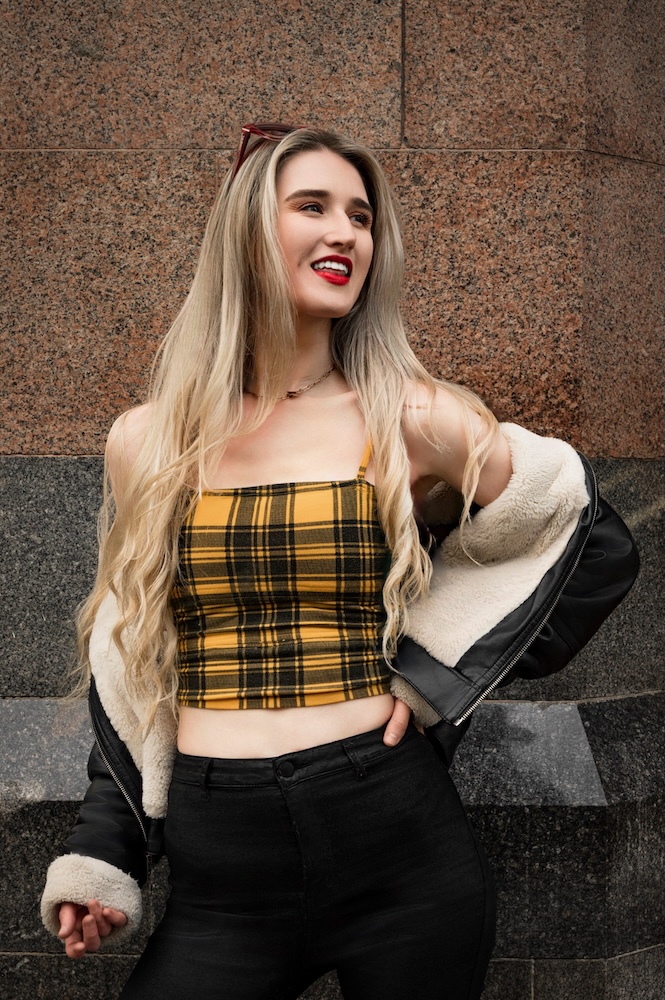
Lucy, you’ve built your career as an indie singer-songwriter before stepping into the trance world. What have you enjoyed most about working across genres?
Lucy: What I’ve loved most is discovering how the songwriting process translates across every genre. Whether it’s an indie rock song or acoustic a trance vocal track, people connect with honesty and heartbreak and loss are universal experiences. Trance has given me a completely different canvas to tell stories on.
What do you think each of you brought to “Pieces” that made it stronger than if any one of you had created it alone?
Lucy: I think we all challenged each other creatively and we were very honest with what we thought could be improved. The end result became something we are all proud of and I think that’s always the sign of a great collaboration.
David: Firstly, I’m not a singer by any means so you wouldn’t have heard me on it at all. But it was really important that I at least told my story and I’m extremely thankful for both Lucy and to Grant for putting their trust in allowing me to share something so personal. But without them both with their own amazing skills, this record simply would not exist.
How did you first discover trance music, and what drew you to the genre? Do you remember the first record or artist that made you think, “This is the kind of music I want to create”?
David: Actually my path to discovering Trance was at a really young age! When I was growing up and watching a lot of children’s TV, often Trance tracks were used as the background to some of these programmes. I didn’t know the names of these records until many years later when I was 13/14, but of those that I did find, tracks that really stood out to me were the likes of Paul van Dyk – Another Way, Ferry Corsten’s remix of the Adagio For Strings, Chicane – Saltwater and Mauro Picotto – Komodo. Damn, the sounds used, especially the synths, just blew me away.
I didn’t start producing my own music until I was 16/17 through a college course I was doing at the time. Tried a few different styles, but Trance always seemed to be the one that drew me in. Actually, some of the rock/metal bands I used to listen to in my teen years regularly incorporated a lot of Trance-like synths into their records, which really surprised me. But that’s a whole other story.
I then recall hearing some top Trance tracks at the time from the likes of Sean Tyas, John O’Callaghan, Will Atkinson, Activa and Daniel Kandi. Then thought ‘if these guys can make records like this, then so can I’.
Sean actually had a video series on Future Music’s YouTube channel at the time, where he broke down how he did his production. That was the real turning point for me actually going full throttle into making my own Trance tracks. To this day, I still owe a LOT to him! I actually messaged him recently about this very thing saying that I wouldn’t have started producing Trance if not for that video series.
Lucy: David and I first connected via Instagram and I listened to his music and really liked it and how ethereal and energetic it is. We decided to collaborated on my very first Trance track called ‘Calling Out For You’. Since then, he has introduced me to more of the Trance world and really opened my eyes to many of the amazing Trance songs and artists out there.
David, your music has been supported by artists including Armin van Buuren, Paul van Dyk, Aly & Fila, and Tiësto. Does that kind of recognition still feel surreal?
David: Yeah, completely surreal. I’ve tuned into A State of Trance when Armin’s played my music and to see him and the fans there enjoying it together is special. It’s that moment when you realise ‘yeah, this is a special one’. Of course, I never know if/when any of my tracks will be supported by DJs, especially at the top tier. Tiësto supporting my single with 0Gravity was completely unexpected, even with his return to Trance in recent months.
It’s one thing hearing your records on well-respected radio shows/mixes, but to be there when your tracks are being played live is something else. I’ve witnessed it first hand, not only when my own tracks have been played live, but tracks by friends of mine, and they’re in the crowd with me, or stood to the side of the DJs. Insane. Moments that stay with you forever.
Case in point, I was at Luminosity Beach Festival in Zandvoort at the end of June and Fadi (from Aly & Fila) was playing his set on the Sunday. I was stood to the side, he’d played tracks from myself, Aeon Shift and Doppenberg in his set. All of us were there and we each joined Fadi when he played out our tracks individually. Then seeing the reactions that those tracks got made the journey, the creative process, the stumbling blocks, the frustration, even more worthwhile. We really do give our everything as artists into our work, so to see it resonate with an audience is truly special. Not once is any of this taken for granted.
You’ve all experienced different paths in your careers. What advice would you give to emerging artists trying to establish themselves in electronic music?
Lucy: I would say to build relationships with people you genuinely enjoy creating with, keep improving your craft and try not to compare your journey to anyone else’s. The artists who last are usually the ones who stay true to themselves.
Grant: This might sound cliche, but find your own sound and journey in the scene. No 2 journeys are the same, so don’t try replicate or get caught up in what you see on socials from other artists. It’s easy to get caught up in what other people are doing and lose focus of your own goals.
What I found helpful starting out was working with a core group of labels who looked out for me. For example, I’ve released most of my music on Borderline, that’s cause Rob (Activa) always helped me with feedback, not only about my music but also the scene in general. It’s great when you’re up and coming in the scene to have someone with that knowledge who’s willing to pass it on.
David: I would absolutely agree with both Grant and Lucy here. I genuinely can’t stand the term ’networking’ – so cliche. But point still stands, you need to get to know people and show up where you can. Doesn’t have to be all the time, but at least make yourself known in the right way.
When it comes to production, there’s plenty of resources on there that you can access, but sitting in the studio with other artists is absolutely crucial. Learn as much as you can. Never stop learning.
As Grant said, linking yourself up and associating yourself with a core group of labels is vital, and you will begin to find your own support network as well. Even if one label rejected a demo, this comes with the territory. It can be so easy to become disheartened and jaded, but honestly, don’t give up. Keep going. Never stop.
For people who may be discovering trance through “Pieces,” what do you hope they take away from the genre?
Lucy: I would say that I hope people realise that trance isn’t just about songs you can dance to. It’s a genre full of emotion, storytelling and connection.
David: Yeah, arguably Trance is a form of dance music and is made for clubs. But there are these moments of beauty that really do speak for themselves. The melodies are a central part to Trance, and coupled with the sounds involve, really can take you to another place.
What’s next for each of you, and do you see yourselves collaborating together again in the future?
David: I’ve actually got 2 more releases incoming in September and October. September sees my return to RAM’s Nocturnal Knights imprint for a solo vocal single, this time teaming up alongside the incredible JSKA. Then in October, I’m back on FSOE again with a collaboration alongside 2 good friends from Australia – Bryce Keuris and Aylin Aloski. Fadi played that track out at Luminosity and wow. That was a really special moment just as the sun was starting to go down.
Me & Grant have already started work on another tune together! This time, an instrumental one, so will be a different approach here for sure. We’re aiming to get that ready for October for us to both play this out in our sets during the Amsterdam Dance Event (ADE) week!
I’m actively writing and working on plenty of new records for next year and beyond. I’ve recently been working on some exciting projects with Jackob Roenald, Robbie Graham, as well as with Peter Steele and Sue McLaren. I also need to make a start on something new with Inoblivion ahead of our ADE set in October, which I’m really excited about! Plenty more to be working on for the year ahead, so all systems go now!
Lucy: We’re all working on our own projects, but this collaboration has been such a positive experience that I’d absolutely love to work together again with David and Grant. I think we’ve found a creative chemistry that’s worth exploring further.
Grant: The next few months are busy for me with gigs and music being released. I’ve got gigs for Motion, Rated & Luminosity to look forward to. My next 2 tracks are being released on Yanada Recordings which is a label I help run. One being a remix of Peter Steele – Archangel and the other being a new collab with Luke Terry. I’ve also got one coming out on Subculture which is another label on my label target list.
I’ve recently started a new project with Factoria called Giants In The Mist. We already have a few tracks ready to send to labels. As David mentioned, we’re also working on a new collab, which will hopefully be ready for us to both play at ADE in October. Finally, I’m about to start work on another new collab which Lucy has provided vocals for.
One synth you couldn’t live without?
David: It would have otherwise be the JUP-8000V from Arturia that was released last year. I’ll admit, I’ve become an absolute fiend for it. It’s the closest thing I’ll get to owning a real JP8000 for now, since I don’t currently have any hardware. Hopefully that changes! That synth was heavily used throughout the production process on “Pieces”!
The first album you ever bought?
Grant: East 17 – Walthamstow. I must have been at primary school when it came out. Great album though.
David: One that always sticks with me that I vividly remember buying was Enter Shikari’s Common Dreads.
Lucy: I think it was ‘Let Go’ by Avril Lavigne 🤣🤣
Your biggest musical influence?
David: When it comes to Trance, especially for production and him being such an all round gent, immediately I would say Sean Tyas. Sound design freak I should say, so far as to leading me to design my own sounds for all my records over the years!
Listen to Amos & Riot Night on Spotify.
About the Author