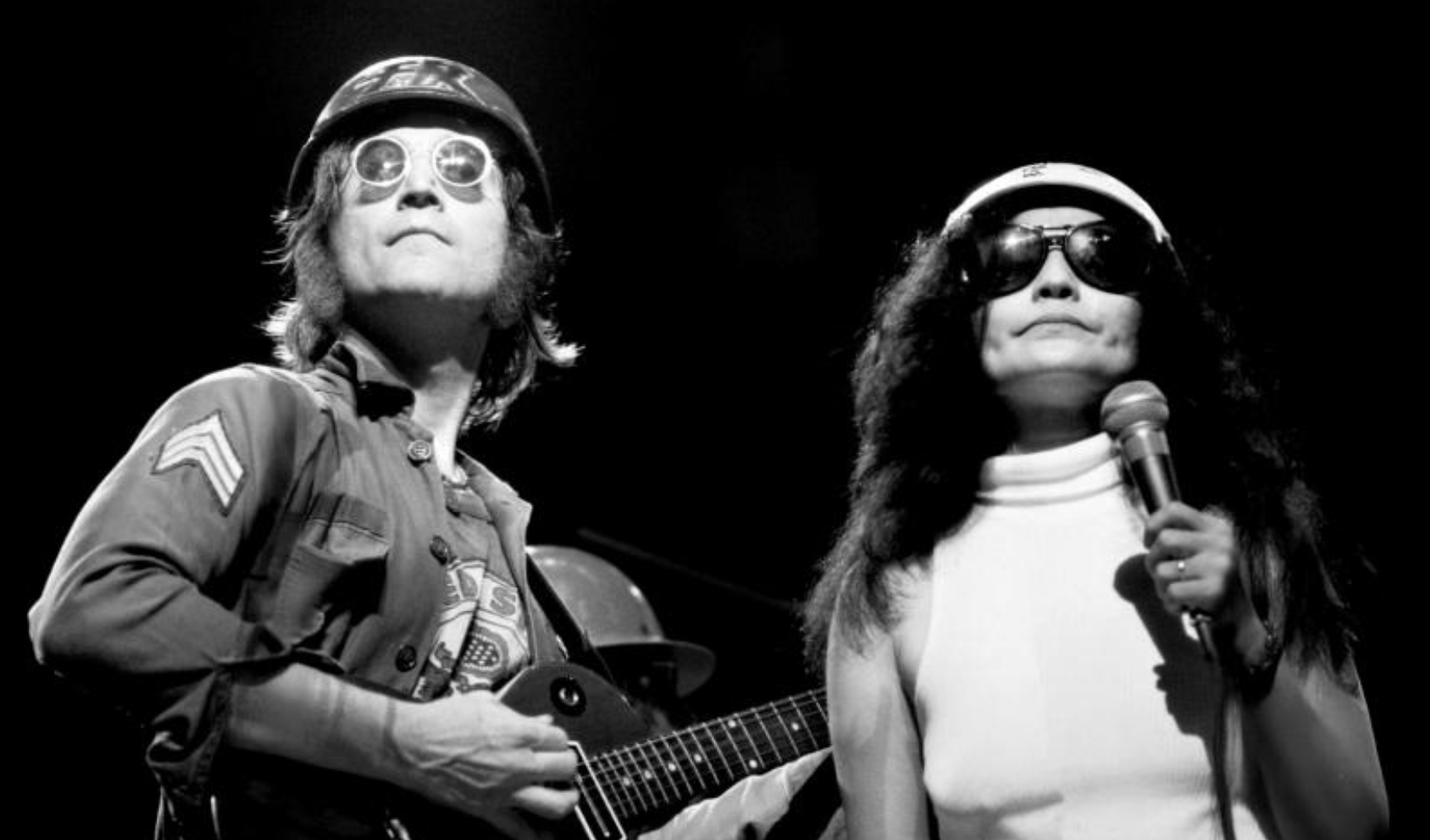
John Lennon and Yoko Ono
By the summer of ’71, John Lennon and Yoko Ono were done with the English countryside. They left Tittenhurst Park, ditched the burden of The Beatles, and landed in Greenwich Village—a pulsing New York City where politics and art collided on the streets. What followed was the most incendiary and politically charged chapter of their lives. Now, more than fifty years later, that period is being unearthed, remixed, and reframed in Power to the People (Super Deluxe Edition), a sprawling 12-disc box set and digital collection dropping October 10 via Capitol/UMe.
This isn’t just another Lennon reissue, it’s a deep-dive into the volatile years when John and Yoko declared war on the Vietnam War, embraced radical politics, and turned Madison Square Garden into ground zero for “rock for peace and enlightenment.”
For Sean, the excavation of this material wasn’t just archival—“People may not realize how special it is for me to hear my dad talking or to see him,” he explains. “I grew up with a set number of images and audio clips that everyone’s familiar with. So to come across things I’ve never seen or heard is really deep for me, because it’s almost like getting more time with my dad.” The collection boasts 123 tracks, 90 of them previously unheard: demos, home recordings, studio jams, raw acoustic tapes, and two historic concerts that have taken on near-mythical status.
At the center is The One to One Concerts—the matinee and evening shows Lennon once described as his best gigs since Hamburg. Backed by Elephant’s Memory, a scrappy New York band rooted in the city’s activist underground, and drummer Jim Keltner—with Stevie Wonder making a cameo—John & Yoko tore through “Imagine,” “Come Together,” and furious cuts from their new album Sometime in New York City. The concerts raised the equivalent of $11.5 million today for children with developmental disabilities at Staten Island’s notorious Willowbrook State School. Long bootlegged, partially issued, and out-of-print, the shows are now fully remixed in hi-def stereo, 5.1 surround, and Dolby Atmos, capturing Lennon at his most alive onstage after The Beatles.
But Power to the People goes further. It strips away Phil Spector’s wall of sound from Sometime in New York City, reborn here as New York City with rawer, sharper mixes of songs like “Angela” and “Born in a Prison.” It unearths Lennon and Yoko covering Chuck Berry and Buddy Holly during loose Record Plant sessions. It digs into live chaos with Frank Zappa, folk-fueled solidarity with Phil Ochs, and fragile hotel-room tapes where Lennon’s voice quivers against the hiss of cassette tape.
The early ’70s were Lennon and Ono against the world. Their outspoken politics quickly drew the ire of the Nixon administration. With the 1972 election looming, President Nixon and FBI Director J. Edgar Hoover launched an extensive surveillance campaign—tapping phones, tailing them through Manhattan, and amassing hundreds of pages of intelligence files. Immigration authorities even tried to deport Lennon, dredging up a 1968 misdemeanor marijuana conviction in the UK as pretext.
At the same time, Yoko was waging her own battle: to locate and regain custody of her daughter, Kyoko, abducted by her ex-husband Anthony Cox, who had disappeared into a religious cult in Idaho. Her grief over Kyoko’s absence haunted both her art and her private life, and gave her music during this period a raw, urgent edge.
That humanity pulses through this collection, you hear Lennon not as a Beatle on a pedestal, but as a restless artist, trying to chase meaning amidst chaos. Yoko’s contributions ring sharper too. Together they sound less like icons and more like people daring to venture outside the normal.
Half a century later, Power to the People reframes those turbulent years not as a messy detour in Lennon’s career, but as a vital burst of art and activism. It’s Lennon and Ono—standing against war and injustice.
“Imagine Peace. Peace is Power. Power to the People,” Yoko writes in the preface. It’s a call that still feels revolutionary, even in 2025.
About the Author