
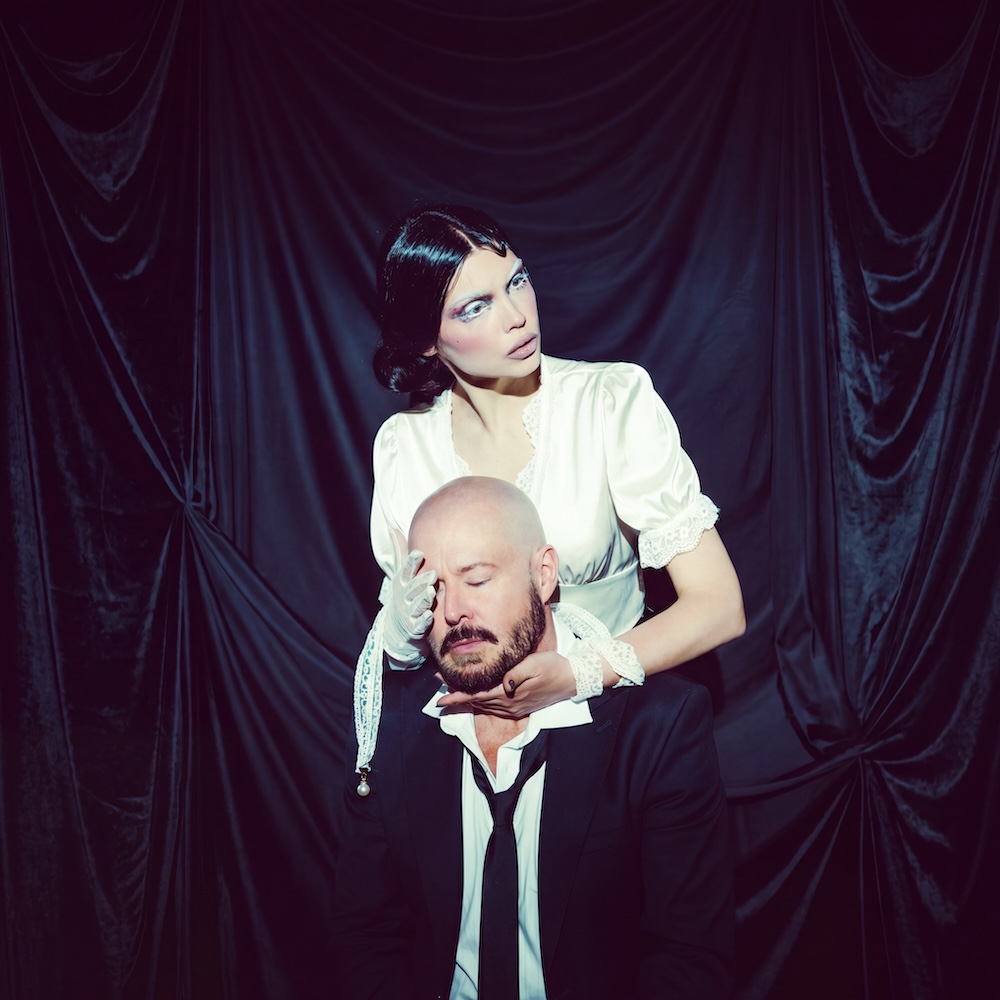
NOANNE and Gregory Darling
The artists reveal how a forgotten letter, Hitchcock-inspired suspense and the mysterious figure of Jack shaped their haunting new collaboration
Prague-based multidisciplinary artist NOANNE joins acclaimed musician, producer and singer-songwriter Gregory Darling for “Suite 17,” a cinematic psychological noir inspired by Hitchcock-era suspense, forgotten letters and the seductive pull of self-destruction. In this exclusive interview with Indie Sound, the artists explore the creative journey behind the single, which transforms music into a haunting world of mystery, memory and emotional obsession. The title’s dual meaning — “suite” and “sweet” — reflects the song’s central tension between beauty and danger, intimacy and destruction. Released deliberately on July 17th, “Suite 17” introduces the mysterious figure Jack, a presence suspended between memory, temptation and the destructive patterns we struggle to escape. Inspired by the story of a letter arriving after its sender’s death, the song explores how unresolved emotions and echoes of the past can continue shaping the present.
Known for creating immersive artistic worlds that blend music, cinema, theatre and visual storytelling, NOANNE crafts songs that explore the hidden landscapes of human emotion. Her collaboration with Gregory Darling — a four-time Billboard Top 30 artist known for collaborations with Julian Lennon and Gregg Alexander — brings together two storytellers with a shared instinct for drama, melody and cinematic atmosphere. Featuring orchestral strings performed by the Accademia Nazionale di Santa Cecilia and recorded at Rome’s historic Forum Studios, co-founded by Ennio Morricone, “Suite 17” captures the feeling of a psychological thriller while leaving its deepest mysteries open to interpretation.
“Suite 17” feels like a short psychological thriller. At what point did you realize this story had to become a song rather than a film?
NOANNE: I am not sure I see it as a choice between a song and a film. Gregory was the original songwriter behind the piece, and the song had been living with him for years before our collaboration gave it a new voice, a second perspective and, eventually, a much larger cinematic world.
The song may be the first form in which the story has reached the audience, but who says it cannot still become a film — or find its place within one as a soundtrack? To me, Suite 17 feels less like a finished destination and more like the opening scene of something that could continue across different mediums.
Music has the extraordinary ability to place you inside a room without showing you its walls. It can introduce a character without proving that the character truly exists. Suite 17 already creates that psychological space through sound alone. So perhaps the more interesting question is: if the song itself already feels like a film, can you imagine the impact of finally seeing that world on screen?
The title plays on the dual meaning of “suite” and “sweet.” Why was that duality so important to the song’s message?
NOANNE: The title emerged from the world Gregory and I gradually built around the song. The dramatic tension was already present in his original composition — there was something elegant, seductive and slightly dangerous inside it from the beginning. When I entered the project, I began imagining the psychological space surrounding that feeling: the room, the number, the character of Jack and the sense of returning somewhere you should have left behind.
The connection between suite and sweet captured that contradiction perfectly. Destructive things rarely introduce themselves as destructive. They arrive as comfort, intimacy, attention or the promise of being understood. Only later do you realise that what felt sweet may also be the thing keeping you trapped.
I think this is one of the reasons Gregory and I work so well together. We both understand how to introduce drama without announcing it too loudly. We are drawn to beauty that contains tension and tenderness that may conceal danger. In Suite 17, the room is elegant and the invitation is seductive — but you are never entirely certain whether entering it will save you or destroy you.
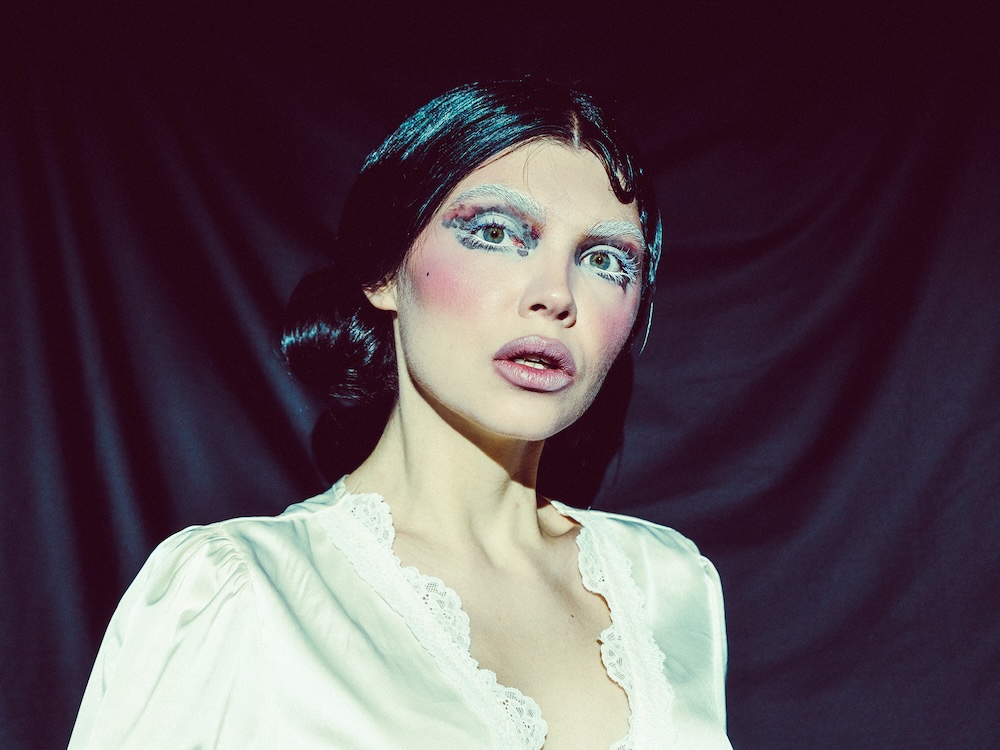
The mysterious character Jack is never fully explained. Was it important to leave his identity open to interpretation?
NOANNE: Absolutely. The song already had a mysterious male voice at its centre through Gregory’s original writing and performance, but I did not want to reduce that voice to one literal character with a complete biography.
As we developed the duet, Jack became something larger. He could be a former lover, a memory, an addiction, a destructive instinct or the part of yourself that appears when you are most vulnerable. Gregory’s voice can be heard as a real person addressing someone he is watching disappear, but it can also feel like a presence arriving from another time or from inside the listener’s own mind.
My contribution was to expand that ambiguity and build a psychological mythology around him. Gregory brought the original emotional tension, and I entered it from another angle, almost as though we were writing two versions of the same scene.
The moment we explain Jack completely, he becomes only one man. I wanted every listener to recognise their own Jack — and perhaps to wonder whether he has been waiting outside the door or living inside the room all along.
You describe the song as exploring the pull of self-destruction and emotional repetition. Was there a personal experience or observation that inspired those themes?
NOANNE: The song was not born from one literal autobiographical event. Gregory’s original composition already carried a sense of emotional danger, longing and inevitability. When we began working on it together, I recognised something very human inside that dramatic foundation: our tendency to return to situations we already understand.
We often believe that awareness will protect us. We can identify the pattern, describe the danger and even predict the ending, yet still walk back into the same room. Familiar pain can feel strangely comforting because at least we know its language.
That was the psychological layer I wanted to introduce more strongly. I have observed this in relationships, in other people and, naturally, within myself. We sometimes mistake intensity for love, repetition for destiny or suffering for evidence that something is meaningful.
Gregory and I both seem instinctively drawn to those heightened emotional states. That is one of the strengths of our creative partnership: neither of us is afraid of drama. We do not use it simply to make something sound bigger; we use it to reveal what people usually try to hide.
The idea began with a letter arriving after its sender had died. What was it about that story that stayed with you?
NOANNE: It was the cruelty of the timing.
The original musical idea had already been living with Gregory for years, almost like a message waiting for the correct moment and the right second voice to reach it. When I heard the story of a letter arriving after its sender had died, it felt emotionally connected to that history.
A letter is already a delayed form of communication. It contains the voice of someone who is absent. But in this story, the absence had become permanent before the message arrived. The recipient was suddenly speaking with the dead through words written when the sender was still alive.
That idea transformed the song for me. It suggested that the past does not disappear simply because time has moved forward. Something written, remembered or left unfinished can still arrive and alter the present.
Gregory’s original composition carried the emotional weight of something dormant but unresolved. I began building the narrative around that sensation: a room, a message, a voice returning too late and a character who may no longer belong to the living world. In that sense, our collaboration mirrors the story itself — something from the past arrived in a new moment and became another work entirely.
Hitchcock-era suspense clearly influenced this release. Which filmmakers, films, or visual artists shaped the atmosphere you wanted to create?
NOANNE: Hitchcock was an important reference for the world I developed around the song, particularly because danger in his films often exists beneath controlled and beautiful surfaces. A room, a gesture or an ordinary object gradually becomes threatening without losing its elegance.
But the cinematic quality was not imposed onto the music afterwards. Gregory’s original writing already contained suspense, emotional confrontation and a strong sense of scene. That is something we share creatively: we both tend to hear music dramatically. A song is never simply a pleasant sequence of chords to us; there is usually already a character entering, a secret being withheld or a relationship reaching a point of no return.
Classic film noir and Old Hollywood shaped the visual language, while David Lynch influenced the more unstable psychological elements — the possibility that a familiar environment may suddenly stop obeying reality.
I am also inspired by directors such as Christopher Nolan, Tim Burton, Guillermo del Toro and Denis Villeneuve, particularly in the way they construct complete emotional environments. Gregory and I may approach drama from different backgrounds, but we meet in the same place: we both want the listener to feel that something is happening beyond the frame.
Your music often blurs the line between reality and imagination. Why are you drawn to storytelling that leaves listeners questioning what’s real?
NOANNE: Because emotional reality is rarely objective. A memory can feel more vivid than something happening in the present. Someone may disappear from your life and still remain completely alive inside your mind. Fear invents evidence, desire rewrites history, and loneliness can give a voice to things that are not really there.
That territory interests me because it is often where our most truthful emotions exist. We may not remember exactly what happened, but we remember how it felt — and sometimes that feeling becomes more powerful than the event itself.
In Suite 17, the two voices can be heard as two people inside the same story, but they could also represent different parts of one consciousness: the person trying to escape and the force drawing them back. I like leaving that distinction unresolved because it allows the listener to enter the story through their own memories and experiences.
I do not want the audience only to ask, “What happened?” I want them to ask, “Why does this feel familiar to me?”
Your work combines music, film, theatre, and visual art. Do you think of yourself as a musician first, or as a storyteller working across different mediums?
NOANNE: I think of myself as a storyteller, although music is usually the first door into the story.
A song gives me the emotional truth before I fully understand the world surrounding it. From there, I begin to see characters, gestures, colours and fragments of a larger narrative. Film, theatre, drama and live performance then allow me to explore that same emotional idea from different perspectives.
With Suite 17, I heard much more than a duet. I imagined a room with its own history, two people who may not be reliable narrators and a character whose identity remains deliberately uncertain. The visual and psychological world grew from what was already present inside the music.
I do not see film, theatre or performance as promotional layers placed around a song. Each medium should contribute something new: another character, another point of view or a detail that changes what the audience thought had happened. Music remains the spine, but storytelling is the complete body.
The release date—July 17—was deliberately chosen. How much attention do you pay to symbolism and hidden details in your projects?
NOANNE: A great deal. I am extremely attentive to detail, sometimes to the point where it becomes both a creative strength and a creative obstacle.
I have very specific internal benchmarks for how a project should feel, look and unfold. Symbolism is never something I add at the end for decoration; it is usually built into the structure of the project from the beginning. Even a release date is part of the storytelling. I never choose one completely at random, so releasing Suite 17 on July 17 felt inevitable.
At the same time, this attention to detail can slow me down. I can wait too long for every part of a project to reach the standard I have imagined. That was partly why there was a year and a half between my releases. It was not because I had stopped creating, but because I needed to gather the energy and confidence to step back into that battle for people’s attention—and to return with something I could fully stand behind.
I enjoy leaving details that some listeners may never consciously notice: a recurring colour, an object from another chapter, a number or a word carrying more than one meaning. Not every symbol needs an official explanation. For me, these details are invitations. The closer the audience looks, the further the world extends.
You’ve spoken about embracing introversion as a creative strength. How has that influenced your songwriting and performances?
NOANNE: I am naturally quite private, and for a long time I saw that as something I had to overcome. Now I think introversion can be a real source of strength.
When you are introverted, choosing to step onto a stage is never passive. You make a conscious decision to be seen, to expose something deeply personal and to share your inner world with people you may not know. Every performance becomes an act of courage. The contradiction between being private and still choosing visibility creates a kind of inner resilience.
That resilience is essential in the music industry. You constantly face rejection, silence, disappointment and the feeling that you have to fight for every small piece of attention. For an introvert, this can be especially difficult, but it also becomes a form of training. Every time you continue despite the discomfort, you become stronger.
Introversion also shapes my creativity. I spend a great deal of time observing, processing and living with ideas before I reveal them. My work often begins in that private space and only later becomes something public.
So I now see introversion almost as a superpower. It is something I still struggle with, but that struggle gives me the emotional endurance to keep creating, keep performing and keep returning to the stage.
The orchestral recording with the Accademia Nazionale di Santa Cecilia adds a timeless quality. What did those strings bring to the emotional landscape of the song?
NOANNE: The strings revealed the scale that had always been hidden inside Gregory’s composition.
His original writing already contained intimacy, suspense and a strong dramatic arc. The orchestration did not manufacture those qualities; it expanded them. It made the story feel larger than the two people singing it, as though the characters were not only making choices but being carried toward an ending that had existed long before them.
That transformation also reflects why Gregory and I work well together. We both believe in allowing emotion to become theatrical without losing its humanity. Neither of us is afraid to make a song cinematic, but the drama has to come from something emotionally truthful. There is also something unmistakably human about real strings. You can hear pressure, movement and breath inside the sound. They can be beautiful without ever feeling completely safe, which was ideal for Suite 17.
Recording them at Rome’s Forum Studios, with its connection to Ennio Morricone, gave the project a remarkable cinematic context. But most importantly, the strings transformed the room into an entire landscape. They made the personal conflict feel timeless — like an old story repeating itself through different lives.
After Grammy consideration, Cannes recognition, and your growing international profile, how has your artistic vision evolved?
NOANNE: Perhaps the most important thing those milestones gave me was proof that almost anything is possible.
They showed me that work created independently, with a very personal and sometimes unconventional vision, can still reach places that once felt impossibly distant. At the same time, they also taught me that recognition is not a finish line. Even after moments like Grammy consideration or Cannes, there is still an enormous amount of space to grow.
There is something almost paradoxical about being recognised in certain prestigious corners of the industry while still remaining relatively undiscovered by a wider audience. You can achieve something that once seemed monumental and then return the next morning to the same work: introducing yourself, fighting for attention, building trust and trying to bring each new project to the people who might connect with it.
That is what I am working on now — closing the distance between artistic recognition and genuine audience growth.
There is no magic wand and no single milestone that suddenly changes everything. An artistic career is built through almost endless work, persistence and the willingness to begin again after every achievement. But those moments have made me more ambitious. They reminded me that the next seemingly impossible step may also be possible, provided I am prepared to keep working for it.
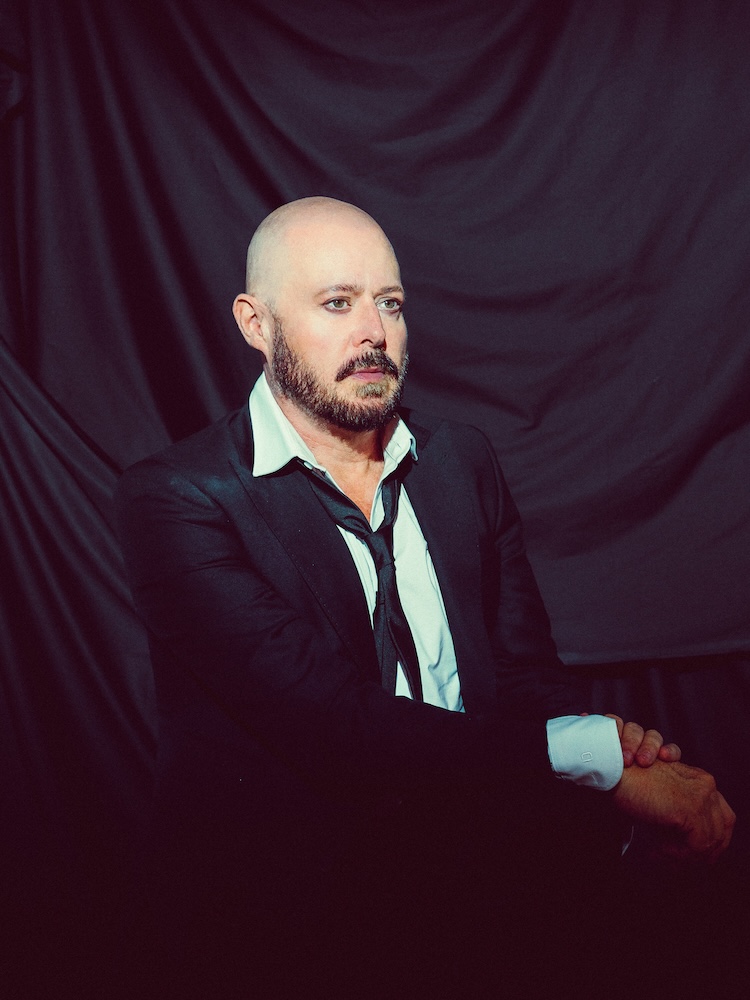
You mentioned that “Suite 17” had been dormant for years before NOANNE became involved. What was it about her that convinced you it was finally time to finish the song?
Gregory: The song had been with me for a long time, but I had never found the right voice or the right creative context for it. It already contained a certain dramatic tension, but it needed another character—someone who could enter the story rather than simply sing alongside it.
When NOANNE became involved, I immediately felt that she understood the emotional world of the song. She did not approach it as just another duet. She heard the mystery, the danger and the theatrical possibilities inside it, and she began to imagine what existed beyond the music: the room, the characters and the psychology of the story.
Her voice also brought exactly the kind of conviction the song needed. There is vulnerability in it, but also something unsettling and difficult to define. Once I heard her within the composition, it no longer felt dormant. It felt as though the song had finally found the person it had been waiting for.
Having collaborated with artists like Julian Lennon and Gregg Alexander, what made this partnership creatively different?
Gregory: Every collaboration develops its own chemistry, so I would never place one above another. What made this partnership different was the particular nature of the song and the way our creative roles complemented each other.
Suite 17 already had its melody, emotional tension and dramatic foundation, but when NOANNE became involved, the song began to expand beyond its original form. She responded to the atmosphere within the music and developed a broader psychological and visual world around it — the room, the symbolism, the ambiguity surrounding Jack and the relationship between the two voices.
We also discovered that we share a strong instinct for theatricality and emotional tension. That does not always mean making something louder or more dramatic on the surface. Often, the most effective moments come through restraint, silence or the sense that something remains unresolved.
What made the collaboration rewarding was that we approached the same material from different but compatible perspectives. My focus was rooted in melody, structure and the emotional architecture of the song, while NOANNE brought another layer of character, imagery and narrative interpretation. Together, those elements allowed Suite 17 to become the world it is now.
Your verses represent someone watching another person disappear into their inner struggles. How did you approach conveying that perspective emotionally?
Gregory: I wanted the emotion to come from helplessness rather than judgement.
The character is watching someone drift further into a private world that he cannot fully enter or control. He may understand that something is wrong, but understanding does not necessarily give him the power to stop it. That is where much of the sadness comes from.
Vocally, I tried not to overstate the emotion. The more restrained the delivery became, the more it felt like someone trying to remain composed while witnessing something deeply painful. There is concern, distance and perhaps even guilt in that perspective.
I also wanted the listener to feel that the narrator may not be entirely reliable. Is he genuinely trying to save her? Is he remembering events after they have already happened? Is he part of the danger himself? That uncertainty gives the song more emotional depth than a simple victim-and-villain narrative.
What surprised you most about working with NOANNE during the creative process?
Gregory: After working with NOANNE for the last 3 years, nothing surprises me, as her unique contribution, energy, persistence, attention to detail and powerful voice is expected. So it’s become the norm how quickly she recognised the depth of the song, its content and how she could play a part in taking Suite 17 to another level.
Like myself, she imagines music in a cinematic way, where the song and track becomes more than just a name, and Suite 17 becomes more than just a location.
Your career spans decades and many musical styles. What continues to excite you about collaborating with emerging artists?
Gregory: Emerging artists often bring a sense of possibility that is very energising. They are still defining their language, which means the creative process can move in unexpected directions.
What interests me is not simply youth or novelty. It is conviction. I am excited by artists who have a genuine point of view, who are prepared to work and who want to create something with an identity rather than simply follow what is currently fashionable.
Experience can give you structure, perspective and a strong understanding of craft. An emerging artist can bring new questions, new references and a willingness to imagine the work in forms you may not have considered before. The best collaborations allow both sides to influence each other.
That is what keeps music alive for me. A song may have existed for years, but one new voice can suddenly reveal why it was never meant to be finished before.
How would you describe your artistic identity to someone hearing your music for the first time?
NOANNE: I think of myself as an author, storyteller and creator of worlds rather than simply as a musician. My work moves between music, cinema and theatre, but all of those forms belong to the same artistic language.
At the centre of my work is the psychology of human behaviour: the thoughts people cannot silence, the roles they perform for others, the memories they repeatedly return to and the desires that can slowly become destructive.
Each song introduces an emotional situation, a character or a world with its own internal logic. That world may continue through film, theatre, costume or live performance. I want the audience to feel that they are not simply listening to a song, but entering a place that is intimate, beautiful and perhaps slightly dangerous.
Gregory: My identity has always moved between songwriting, performance and film. I began in music very young, singing in the Mitchell Boys Choir and recording for film scores before I had imagined a career as a recording artist. Later came bands, piano-driven songwriting, touring, arranging, producing and collaborations across many styles. The common thread has always been storytelling through melody. Together, our approaches meet in music that is melodic and emotionally direct, but also cinematic, theatrical and psychologically layered.
What inspires you most when you’re creating new music?
NOANNE: I am most inspired by human behaviour and by emotional contradictions.
I am interested in vulnerability existing beside danger, elegance beside instability, tenderness beside control. I often begin with something private and psychologically uncomfortable: a memory someone cannot release, a role they continue performing, a desire they know may harm them or a relationship in which beauty and danger have become difficult to separate.
I am not necessarily looking for a complete story immediately. Sometimes one gesture, object, sentence or emotional tension is enough to open an entire world.
Gregory: I am inspired by the moment when music begins to suggest a life of its own. Sometimes it starts with a melodic phrase, a rhythm or a chord change, but very quickly I begin to feel a character or situation behind it. Having worked in film music, theatre, rock, orchestral recording and traditional songwriting, I tend to hear all of those worlds communicating with each other.
For both of us, drama has to grow from emotional truth. It cannot simply be added for effect.
What usually comes first for you—a melody, a lyric, or a concept?
NOANNE: It can begin with any of them, but usually there is an emotional situation first.
Sometimes it is a line or an image. Sometimes I see a room, an object or a character before I understand what has happened there. At other times, the music creates an atmosphere so clearly that the psychological world begins to reveal itself through the sound.
I do not always need to know the entire plot. I need to understand the emotional truth of the scene: who wants what, what they are hiding and where the danger lies.
Gregory: Melody is often the first signal for me. My background is rooted in song structure, arrangement and cinematic music, so a melody may immediately suggest movement, tension or atmosphere. Once that happens, the lyrics and story begin to reveal what the music has been trying to say.
Our starting points may be different, but they usually lead us toward the same emotional centre.
How did the collaboration first come together, and what made you realize your artistic styles complemented each other?
Our collaboration grew from a shared attraction to emotionally intense and dramatically structured music.
Gregory’s background crosses film scores, choir, rock, piano pop, orchestral arrangements, touring and production. NOANNE’s work similarly moves across mediums, treating music, cinema, theatre and live performance as parts of one continuing artistic universe.
We realised that we both heard more than the surface of a song. Gregory often hears its emotional architecture: how the melody moves, where tension should rise and where restraint will be more powerful than volume. NOANNE hears the psychological world surrounding it: the characters, the concealed motives, the visual symbols and the emotional history that may exist beyond the lyrics.
Our styles complemented each other because we share an instinct for drama, but express it through different creative languages. One builds the structure of the room; the other begins asking who has been living inside it.
Which artists, writers, or filmmakers have had the greatest influence on your creativity?
NOANNE: I am influenced by creators who construct complete psychological and visual worlds.
In cinema, that includes Alfred Hitchcock, David Lynch, Tim Burton, Guillermo del Toro, Christopher Nolan and Denis Villeneuve. I am drawn to films in which atmosphere, sound and symbolism are as important as the literal plot.
Musically, I connect with artists such as Kate Bush, Lana Del Rey, Florence + The Machine, Sevdaliza, Agnes Obel, AURORA and Woodkid—not because I want to imitate them, but because their work demonstrates how a song can also become a character, an environment or a theatrical event.
I am also inspired by cinematic composers such as Hans Zimmer, Hildur Guðnadóttir, Danny Elfman and Max Richter, and by fashion designers including Alexander McQueen, Iris van Herpen and Schiaparelli, who use the body, silhouette and clothing as forms of storytelling.
Gregory: My influences come from several different chapters of my life. Ennio Morricone introduced me very early to the emotional power of music written for the screen. Later, I was shaped by the tradition of melodic writers and piano-led storytellers—artists capable of combining craft, memorable songs and emotional directness. Working across rock, pop, film and orchestral music also taught me not to treat genres as closed rooms.
We both admire creators who understand that melody and atmosphere are not opposites. The strongest work can be immediately memorable and still contain mystery.
NOANNE: Do not wait for your artistic identity to arrive fully formed. It develops through creating, finishing work and paying attention to the ideas that continue returning.
Do not remove the strange, private or uncomfortable parts of your work simply because they are more difficult to explain. The details you initially consider too unusual may eventually become the elements that make your voice recognisable.
Your identity is not only your sound. It may also live in the characters you create, the subjects you repeatedly explore, the visual language you choose and the emotional atmosphere people recognise before they even see your name.
Gregory: Study the craft and remain open to the fact that a career may take many different forms. You may work in bands, write for other artists, tour, produce, arrange or return to a song years after it was first written. None of those stages is necessarily wasted.
For both of us, resilience is essential. Rejection and silence are part of the industry. Finding your voice also means developing the strength to continue using it before the world has fully learned how to listen.
About the Author


