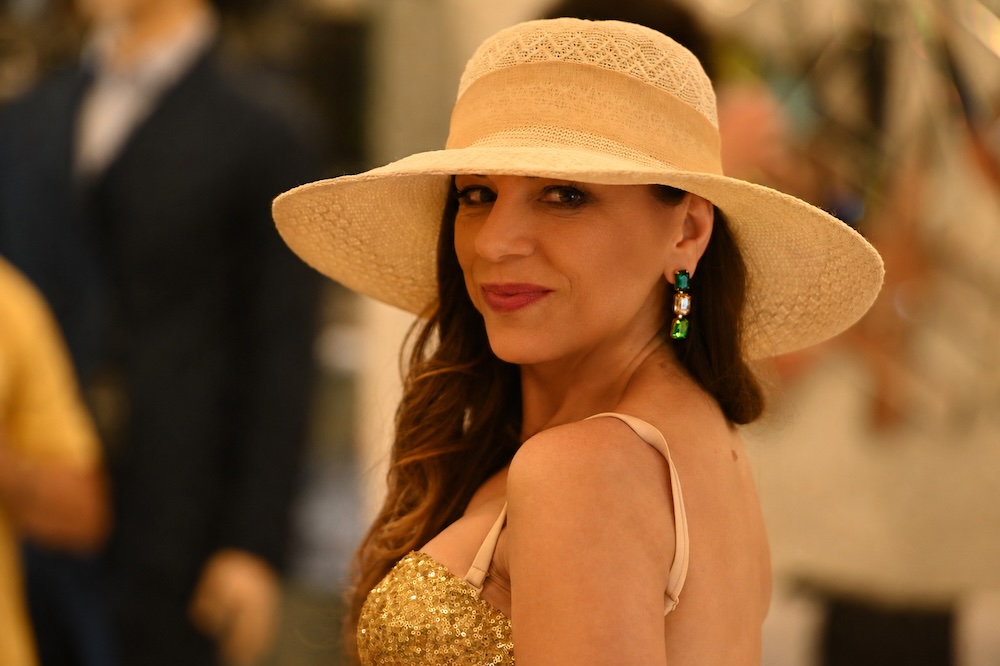
Valeria Rossi
An exclusive interview with Valeria Rossi, SSD Project and VIMA on “Rivedendo Te” and what comes next.
“Rivedendo Te” is less a conventional comeback than a meeting between different eras of Italian pop and contemporary electronic music. At the center is Valeria Rossi, the Italian singer-songwriter who became widely known in 2001 with her breakout hit “Tre parole,” a defining pop song of its era that established her as one of the most recognizable voices of Italian pop. More than two decades after the beginning of her recording career, Rossi returns with a project that deliberately avoids simply recreating the sound or identity of her earlier work. Instead, her distinctive voice meets the electronic and dance-driven production of SSD Project (Salvatore D’Angelo), the project founded by Salvo in 2020, and the contemporary songwriting perspective of VIMA (Vincenzo Marco Mugavero). “Rivedendo Te” is built around memory, loss, reconnection and the feeling of encountering someone from the past again, but its emotional core is carried by a bright, energetic sound that invites movement rather than melancholy. The collaboration also expands beyond the recording itself: filmed in Poggio Mirteto, the music video brings together the artists, local community, production teams and more than 300 dancers from across Italy, turning the song into a collective experience and making the town itself part of its story.
In this wide-ranging conversation, Rossi, SSD Project and VIMA discuss the personal and creative forces behind “Rivedendo Te” and the unexpected journey that brought the three artists together. Rossi reflects on returning to music after twenty-five years, the evolution of her relationship with voice and songwriting, and the experiences that have shaped her artistic and educational work. SSD Project’s Salvo takes us through the project’s origins during the pandemic, its evolution from dance and electronic productions, its connection with cinema and the decision to bring Rossi and VIMA into the track. VIMA discusses the experience of working with an artist whose music has become part of the collective memory of Italian pop and finding a contemporary voice within that encounter.
Valeria, “Rivedendo Te” marks your return to music. What made this song and this project the right moment to come back?
Valeria: “Rivedendo Te” came at the right time precisely because it was born out of sharing: from the meeting of different sensibilities, experiences, and artistic personalities. Today, for me, making music means less and less being alone at the center of a project and more and more creating something that exists through relationships, exchange, and cross-fertilization.
The anniversary, therefore, has not become a point of arrival but a fertile pretext for the beginning of a new chapter. After twenty-five years, I’m happy to be able to say: that story continues, but not because I’m repeating it. It continues because it has encountered new people, new languages, and a different Valeria. And I believe this is the most vibrant way I know to celebrate the passing of time.
The title itself suggests memory, emotions and a powerful encounter. What personal meaning does “Rivedendo Te” have for you?
Valeria: “Rivedendo Te” is about an encounter that transcends the usual boundaries through which we interpret reality. It could be the encounter between two people, certainly, but also between two dimensions we tend to consider opposite: that of the living and that of those no longer physically present.
The song evokes a connection with a loved one who passed into another dimension at a very young age. I didn’t want to express it explicitly or didactically, but through images, smells, lights, and sensations, as happens with certain memories: they arrive suddenly and, for a moment, change the perception of time.
There’s also a more archetypal suggestion, linked to the myth of Isis and Osiris, and therefore to the theme of loss, reunion, and love that seeks what has been separated and tries to restore it to form. I’m deeply fascinated by this idea: that the bond with someone can continue to exist even when that person’s presence in our lives has completely changed.
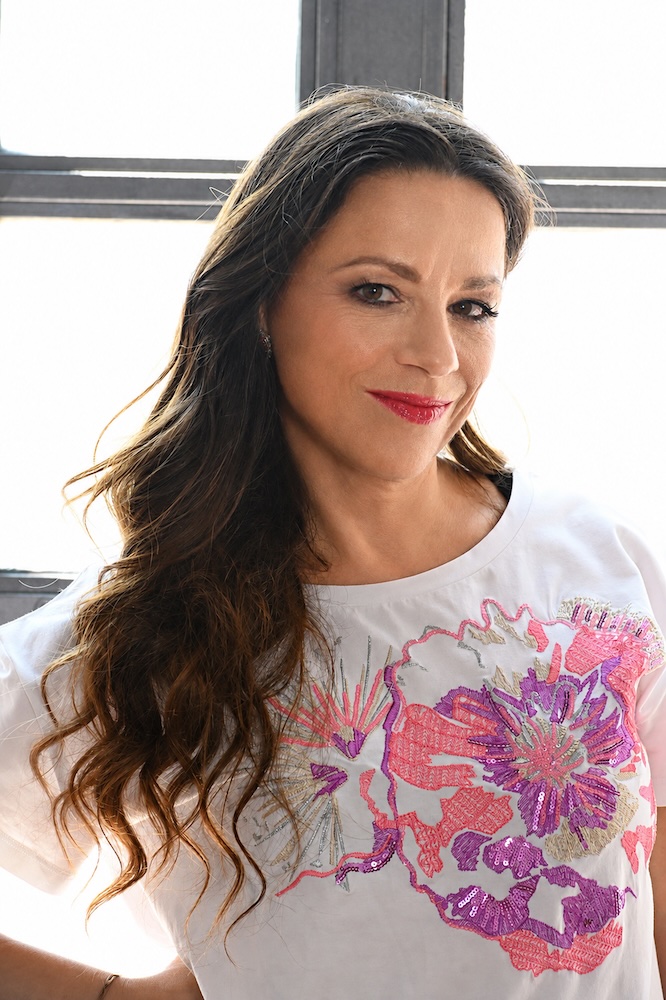
Valeria, after such a successful career in Italian pop music, what continues to inspire you as an artist today?
Valeria: Today, I’m especially inspired by what connects different worlds: music with the body, the voice with awareness, art with social issues, lightness with depth. I’m less interested in the idea of remaining within a fixed artistic identity and much more in the idea of continuing to explore.
I’m inspired by people, their transformations, their fragilities, their life transitions, but also by the work shared with other artists and professionals. At this stage, I deeply appreciate the value of collaboration: not just creating “alone,” but allowing the encounter to shape the project and open up possibilities we wouldn’t have seen alone.
And then I’m still inspired by the same thing that moved me in the beginning: the need to give form to what I feel. Only now I have more tools, more questions, and perhaps even more freedom. For me, music continues to be a place of exploration, not a formula to be replicated.
What attracted you to collaborating with SSD Project and VIMA?
Valeria: What drove us most was the feeling that our differences could become a strength. We come from stylistically different yet complementary worlds: singer-songwriter, pop, dance. And right there, at the point where these languages meet without canceling each other out, we felt something interesting could be born.
SSD brings a production sensibility that’s very tied to energy and the dance dimension, VIMA has a writing style and an artistic attitude that I feel are very close to contemporary singer-songwriters, while I arrive with my pop path and with a particular attention to voice, melody and meaning.
The collaboration was therefore born not from the desire to conform, but from the opposite: to bring together different identities and see what new form they could generate. “Rivedendo Te” is precisely this meeting of different worlds that, instead of competing with each other, complement each other.
How did you approach interpreting a song with such an emotional but energetic atmosphere?
Valeria: The interpretation came after a lot of research. I didn’t want the vocals to simply rely on nostalgia, because the song also has a very lively, almost physical energy. So we worked hard to find a formula that was consistent with both my voice and the surrounding soundscape.
We experimented with different colors, intentions, and dynamics, seeking a balance between intimacy and momentum, between memory and movement. Ultimately, the key was not to “act out” the emotion, but to let it emerge within a more contemporary and energetic sound structure.
I was interested in the voice retaining warmth and depth without weighing down the song, and at the same time managing to fit within that brighter pulse. It was precisely this contrast, in the end, that gave the performance its identity.
The song talks about an encounter that makes time stop. Have you ever experienced a moment in life where music, memories and emotions came together like this?
Valeria: Yes, I’ve experienced moments when music, memory, and emotion have merged so intensely that time seems to stand still. It’s precisely that feeling I tried to capture in the song: when a presence returns, even if only for an instant, and what seemed distant suddenly becomes so close.
The videoclip transforms Poggio Mirteto into a stage with hundreds of dancers. How important was it for you to bring music outside the traditional spaces and involve an entire community?
Valeria: For me, it was crucial, because I truly believe in the quality of socialization when it becomes structure, a network, and real participation. Taking music beyond traditional spaces and engaging an entire community means transforming a song into a shared experience, something that isn’t just listened to but experienced together.
It’s a theme I feel very close to my work as a trainer and group leader in social promotion: when a group is well-supported, when people feel they have a place, a role, and a chance to express themselves, something happens that is more than the sum of the individuals. Trust is built, belonging is created, and shared energy is created.
The atmosphere of the flash mob, with over 300 dancers from all over Italy, was precisely this: powerful, festive, yet surprisingly cohesive. There was enthusiasm, of course, but above all, the feeling that so many different people were contributing to a single form. Of course, I owe a great deal to the production team that came together around this project, including Maurizio Serafini, a highly regarded dance instructor, and Erasmo Fiorentino, a multifaceted stylist. They know how to engage and inspire huge, enthusiastic groups of people with their profound humanity.
And this is perhaps the aspect that moved me the most: seeing music become a relationship, a network, and a community. When that happens, you no longer have just a video clip. You have a small living organism.
Valeria, can you take us back to the very beginning of your artistic journey? When did you first realize that music was your path?
Valeria: I think I realized very early on that music would be an important path for me, even though at first I didn’t have the confidence to easily follow it. I was very shy, introverted, and I was experiencing a rather intense conflict between an overwhelming need to express myself and an equally strong resistance to exposing myself. I wrote constantly: songs, poems, thoughts, pages and pages of notebooks. In a certain sense, writing was the first place where my voice found the courage to exist.
The difficulties of the early years were therefore also very personal, not just professional. I had to learn to be in my voice, my body, the gaze of others. And that very difficulty pushed me to search a lot: I studied, took courses, met teachers and mentors, experimented with different approaches. I even traveled to Haute-Savoie, in the dead of winter, to meet Serge Wilfart, after reading about him in an interview with Ornella Vanoni. When I’m interested in an answer, the concept of “around the corner” evidently becomes rather elastic.
What helped me most was research: not settling for a formula, continuing to ask questions and gradually transforming obstacles into tools of knowledge. Over time, I understood that music wasn’t just a career to build, but a way to get to know myself, connect with others, and give shape to what would otherwise have remained voiceless.
Perhaps this is also why my work as an artist and educator are so intertwined today: many of the difficulties I needed to overcome personally have become, over the years, skills I can use to help others find their own expression.
Who are the artists, musicians, or experiences that have influenced your artistic journey?
Valeria: More than individual role models, over time I have been influenced above all by the encounters and experiences that have forced me to broaden my understanding of voice and music.
I remember, for example, how struck I was when I read Ornella Vanoni talking about her work with Serge Wilfart: that testimony even took me to Haute-Savoie to meet him and explore an approach to the voice that went far beyond simple technique. It was one of those moments that made me understand how much sound has to do with the body, with breathing, and with identity.
Then came the long writing, production, and experimentation sessions with Liliana Richter and Giulio Albamonte, which were crucial to my first recording career: hours and hours of research, trial and error, and insight. That artisanal dimension of music has remained deeply with me.
Over the years, I’ve also been influenced by theater, physical therapy, counseling, poetry, and encounters with artists from worlds very different from my own. Today, in fact, I feel that cross-fertilization is one of my main sources of inspiration: singer-songwriter, pop, dance, spoken word, body, voice, and social issues.
Perhaps the thing that influenced me most, in the end, was research itself: never considering the voice as something already given, but as a territory to continue exploring.
The music industry has changed dramatically with streaming, social media, and digital platforms. What do you think are the biggest opportunities and challenges for artists today?
Valeria: The challenge is enormous: being visible doesn’t necessarily mean being heard. The potential opportunities today are enormous: an artist can produce, publish, communicate, and reach an international audience with a freedom that was unthinkable twenty-five years ago. Digital platforms have lowered many barriers to entry and allow communities to be built without necessarily going through traditional channels.
The opportunity is endless, but on the other hand, attention spans are very short, and the risk is that artists begin to think more about the content they publish than about their own research. You can become very good at communicating an identity before you’ve even had time to build it. And that, frankly, is a rather modern paradox.
What advice would you give to young artists who are starting their own musical journey today?
Valeria: I would therefore advise young artists to use all contemporary tools, but not to become their instruments themselves. Study, write a lot, listen, collaborate, experiment, and above all, give yourself the time you need to understand what you really have to say.
I also see it in the poetry and urban songwriting workshops I lead with boys and girls: when we remove the pressure of performance and numbers for a moment, a strong need to talk about ourselves and find a personal language still emerges.
The most important advice, then, would be this: don’t build your character first and then look for something for him to say. Build your voice. The rest can come later.
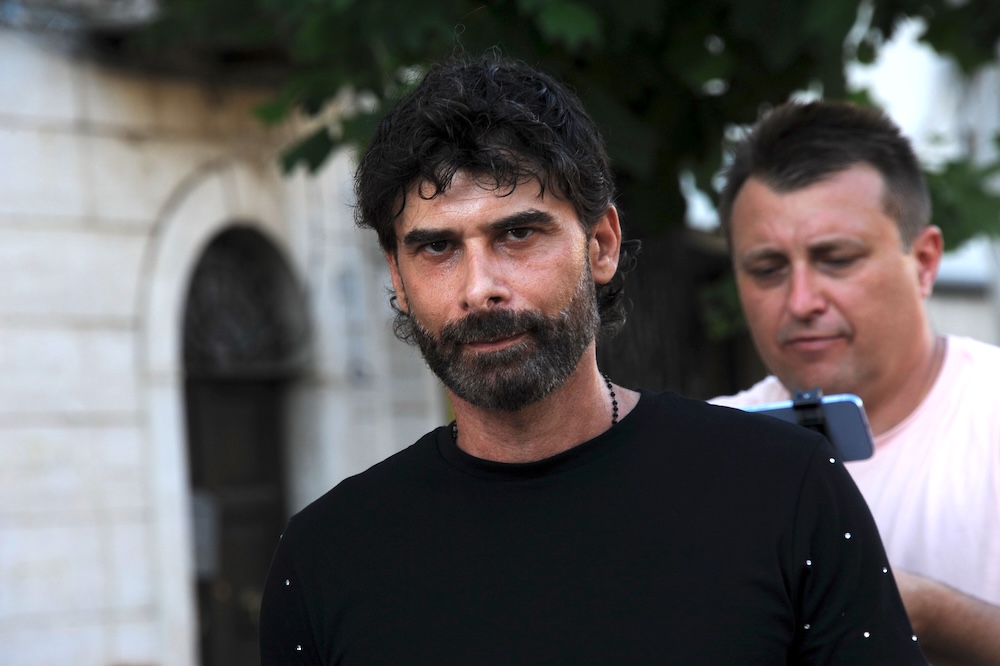
Salvo, how was SSD Project born and how has the project evolved since its first productions?
SSD Project: SSD Project officially began in 2020, during the pandemic. At such an unusual time, when everything seemed to have come to a standstill, I felt the need to turn that suspended moment into something creative and to bring to life a musical project that could fully represent me.
The first production was “Born,” and that track marked the beginning of a journey of research and experimentation that has evolved considerably over the years. I started out mainly with dance, house and electronic sounds, while always trying not to confine SSD Project to a single genre.
Over time, the project also grew through collaborations and its connection with cinema. Some of my tracks have been featured in film soundtracks, such as “Beautiful Life,” included in Marco Simon Puccioni’s film The Invisible Thread (Il filo invisibile), distributed by Netflix, and later “I Can Do It,” featured in Mario Spinocchio’s film Fuori Scuola, available on Amazon Prime Video.
Today, I feel that SSD Project has entered a new phase. With “Rivedendo Te,” I wanted to open the project even more to Italian songwriting while maintaining the electronic and dance identity that has always been part of my sound. It feels like a natural evolution: SSD Project was born during the pandemic almost as a personal and creative need, whereas today it has become a broader musical project built around productions, collaborations, and the interaction between music, images and cinema.
“Rivedendo Te” brings together SSD Project, Valeria Rossi and VIMA. How did this collaboration come together?
SSD Project: The collaboration came about almost by chance. I had created “Rivedendo Te” the previous spring, but it was quite different from my earlier productions, so at first I wasn’t completely sure whether I wanted to take it any further.
At one point, I said to myself: “I’ll send it to Valeria. If she says yes, then I’ll move forward with it.” So I sent her the track, and shortly afterwards I got her answer: yes. That was the moment I realized the project really had to take shape.
However, I felt that the song also needed a male voice other than my own, someone who could interact with Valeria’s voice and bring another personality to the track. Through Valeria, I got in touch with VIMA, and from there everything developed very naturally.
That’s how the collaboration between SSD Project, Valeria Rossi and VIMA was born: it wasn’t something planned from the beginning, but rather the result of a series of encounters and intuitions that ultimately gave the song its final identity.
What made you think that Valeria Rossi’s voice was the perfect match for this production?
SSD Project: I thought of Valeria Rossi because I was looking for a voice that was instantly recognizable, but at the same time light, fresh and emotional. “Rivedendo Te” is about an encounter and emotions resurfacing after a long time, but without being melancholic: it’s a song meant to convey energy and a sense of lightness.
In my opinion, Valeria’s voice had exactly those qualities. She has a very distinctive tone and has the ability to make a melody feel immediate and catchy without losing the emotional side of the lyrics.
I also really liked the idea of bringing her voice into a contemporary dance-pop production, preserving her identity while placing it within the musical world of SSD Project. When I finally heard her voice on the track, I knew it had been the right choice: it almost felt as if “Rivedendo Te” had been written for her from the very beginning.
As producer, what was the creative vision behind the song? What sound were you looking for?
SSD Project: I was looking for something fresh, light, but not predictable. I wanted a song with an immediate impact, something that could convey energy and make you want to move, while still maintaining an emotional side.
From a production point of view, the idea was to combine pop and electronic dance music, with a modern sound without making it too heavy. It was important to me that the production supported the melody and the voices without ever overpowering them.
“Rivedendo Te” had to be a song you could listen to on the radio, in the car, at the beach, or dance to in a club, while still having a story to tell. So I tried to find the right balance between rhythm, melody and emotion, while maintaining the electronic element that is part of SSD Project’s identity.
In the end, I think the sound of the track came from exactly that idea: creating something that feels simple and immediate when you listen to it, but is carefully produced and, above all, stays in your head.
The track combines pop, dance energy and emotional storytelling. How do you balance a strong melody with a modern production?
SSD Project: I believe the key is to always start with the melody. For me, a song has to work first of all in its simplest form: if a melody can move you and stay in your head, then you already have a strong foundation to build everything else around.
With “Rivedendo Te,” I tried never to sacrifice the melody for the sake of production. The dance and electronic elements had to give the song energy and make it sound contemporary, without taking anything away from the vocals and, above all, from the story the song tells.
So the production process was mainly about finding the right balance: choosing the right sounds, rhythm and elements without overcrowding the track. I like to think that a modern production doesn’t necessarily have to be complicated. Sometimes it’s precisely a few elements, placed in the right way, that make a song immediate, recognizable and able to connect with people.
SSD Project has already had important experiences, including songs featured in film soundtracks. How have those experiences influenced your artistic journey?
SSD Project: The connection with cinema has definitely played an important role in the journey of SSD Project, also because cinema is part of my professional life and inevitably influences the way I think about music.
When “Beautiful Life” was featured in the soundtrack of Marco Simon Puccioni’s The Invisible Thread (Il filo invisibile), distributed by Netflix, it was a great source of satisfaction. Later, “I Can Do It” was also featured in Mario Spinocchio’s film Fuori Scuola, available on Amazon Prime Video. These experiences made me realize even more how a song can take on a completely different power when it meets images.
That’s probably also why, when I produce a track, I often tend to visualize it: I imagine a scene, an atmosphere, something that can accompany the music and amplify its emotional impact.
Above all, cinema has taught me the importance of telling a story. And that’s something I increasingly try to bring into SSD Project: not simply creating tracks to listen or dance to, but making music that can evoke images, emotions and little stories.
The project involved an entire community, from the locations in Poggio Mirteto to local businesses and institutions. Why was it important to connect music with a place and its people?
SSD Project: At first, I was quite undecided about whether to shoot the music video in a studio or outdoors. It was mainly Maurizio Serafini, the choreographer for the song, who convinced me to consider Poggio Mirteto as the location.
Maurizio, together with Erasmo Fiorentini, who was responsible for the styling of the project, knows the area very well because they both live there. They introduced me to several places that they felt could give the video a special and, above all, more authentic atmosphere.
We then carried out several location scouts with the director, Mario Spinocchio, and we realized that Poggio Mirteto was perfectly suited to the story we wanted to tell. Its squares, streets and characteristic corners, together with the possibility of involving local people, gave the video something we could hardly have recreated in a studio.
From there, the project grew very naturally, eventually involving local businesses, institutions and many people from the community. In the end, Poggio Mirteto was not simply a location: it became an integral part of the story and of the music video’s identity.
The flash mob involved dancers and schools from many Italian regions. Did you expect such a strong response from the dance community?
SSD Project: Honestly, I didn’t expect such a strong response. When we first started thinking about the flash mob, we knew that dance would be an important part of the project, but I never imagined it would generate such a high level of participation.
Thanks especially to the work of Maurizio Serafini, the choreography began to spread, and dancers and dance schools from different regions of Italy started joining the project. Seeing so many people get involved, learn the choreography and participate with such enthusiasm was one of the most wonderful surprises of the entire experience.
What impressed me the most was seeing how a song that was born almost by chance managed, even before its release, to bring people together and connect people who had never met before.
I believe that this collective energy gave the music video something that simply cannot be created artificially: spontaneity, enthusiasm and a genuine sense of celebration. And that is probably one of the aspects of “Rivedendo Te” that makes me happiest.
The videoclip has a very ambitious production with Vinias Production and 98 Sale Srl. What was the biggest challenge in bringing this idea to life?
SSD Project: The biggest challenge was definitely turning a very ambitious idea into something that could actually be brought to life, especially because we chose to shoot outdoors and involve so many people.
With 98 Sale Srl and Vinias Production, we had to coordinate many different aspects at the same time: Mario Spinocchio’s direction, Maurizio Serafini’s choreography, the artists, dancers, locations, costumes, technical production, and the entire organization on site. Shooting in a town also means dealing with public spaces, permits, logistics, and very precise timing.
The greatest challenge was making sure that this entire production machine worked smoothly without losing the spontaneity and energy we wanted the music video to have. I didn’t want it to feel staged or artificial; it had to convey the feeling of a big celebration that suddenly brings an entire town together.
It was a demanding production, but when I saw all those people dancing together to “Rivedendo Te,” I realized that all the effort had been worth it. We had managed to turn the idea we had in our minds into something real.
What can audiences expect from the upcoming EP and the next SSD Project releases?
SSD Project: I hope the audience will discover an even better, more mature and constantly evolving SSD Project. The upcoming EP represents another step forward for me and is a project supported by Nuovo IMAIE, featuring six new tracks.
Musically, it will be quite diverse, ranging from electronic pop sounds to productions that move more decisively into house and tribal house. I didn’t want to create six tracks that all sounded the same, but rather an EP that could showcase the different sides of SSD Project while still maintaining a recognizable identity.
After “Rivedendo Te,” I want to continue experimenting, exploring new sounds and new collaborations. I hope this EP will reveal a more confident and mature SSD Project, but one that is still curious and free to move between different genres, because I believe that this creative freedom is one of the defining characteristics of the project.
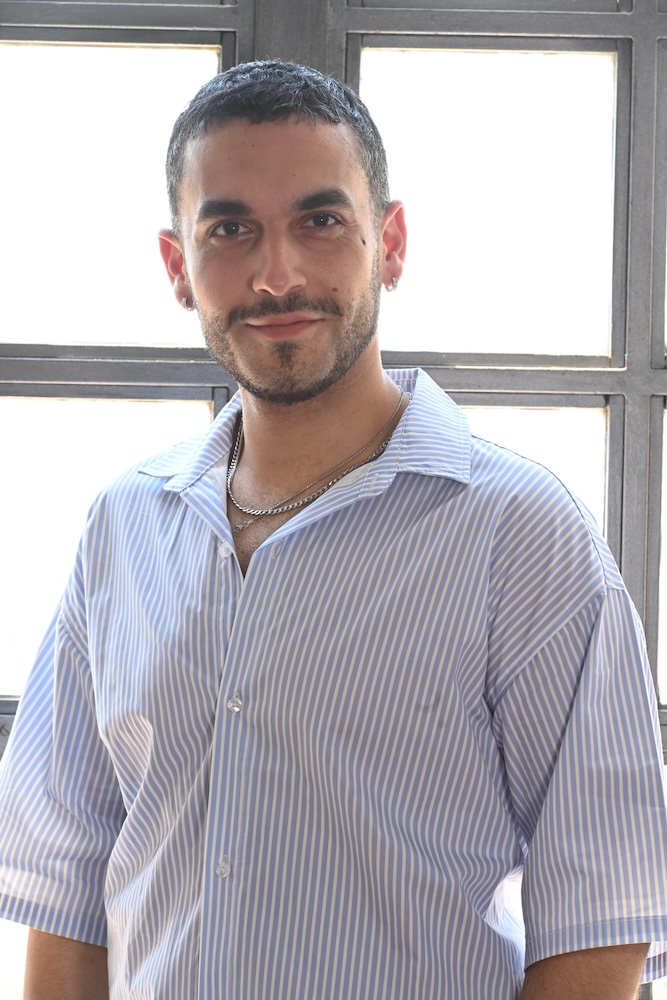
VIMA, how did you become part of the “Rivedendo Te” project?
VIMA: I was invited to be part of the project through SSD Project, and I immediately felt that “Rivedendo Te” was something that could fit naturally into my artistic journey. When I heard about the idea behind the song and the collaboration with Valeria Rossi, I was curious and excited to discover how my musical identity could meet such an important piece of Italian pop history.
What was your first reaction when you discovered you would be working with Valeria Rossi?
VIMA: I was honestly very excited. Valeria is an artist whose voice and songs belong to the collective memory of Italian pop, so the possibility of sharing a project with her had a very special meaning for me. At the same time, I tried to approach the experience with curiosity and without putting too much pressure on myself: I wanted to enjoy the opportunity and bring my own identity into the collaboration.
How would you describe the artistic chemistry between you, Valeria and SSD Project?
VIMA: I think there was a beautiful balance between different generations, experiences and musical perspectives. Valeria brings an incredible artistic history and a very recognizable identity, SSD Project brought the vision and energy of the project, while I tried to contribute with my own contemporary and more intimate way of interpreting music. The result is a meeting rather than a simple collaboration.
What does this song represent for you personally?
VIMA: “Rivedendo Te” represents the idea that some people and some emotions can remain with us even after a long time. For me, it is a song about looking back without necessarily wanting to go back. Sometimes memories return to remind us of who we were, what we felt and how much we have changed.
The song speaks about memories, emotions and rediscovering someone special. How do you connect with this message as an artist?
VIMA: Very deeply. I think memory is one of the strongest sources of inspiration for songwriting. As artists, we often transform personal experiences into something that can belong to everyone. I like the idea that a song can take a very intimate emotion and allow another person to recognize themselves in it.
Your style meets Valeria Rossi’s iconic pop identity. What do you think this combination brings to listeners?
VIMA: I think it creates an interesting bridge between different musical worlds and generations. There is something familiar in Valeria’s identity, but at the same time the project has a contemporary energy. For listeners, I hope this combination can create both a sense of nostalgia and the curiosity to discover something new.
What was the experience like filming the videoclip in Poggio Mirteto surrounded by hundreds of dancers?
VIMA: It was an incredibly energetic and almost surreal experience. Seeing hundreds of people dancing together around us made the song feel much bigger than what we had imagined while recording it. Poggio Mirteto became almost another character in the videoclip, and being surrounded by so many people sharing the same energy was one of the moments I will remember most from this project.
Do you think music today has the power to bring communities together in the way this project has done?
VIMA: Absolutely. Music has always had this power, but I think today it is perhaps even more important. We live in a world where people are often separated by screens, opinions and algorithms. A song, a concert or a shared performance can bring people physically and emotionally into the same place. What happened with “Rivedendo Te” is a beautiful example of that.
What are the artists or influences that have shaped your musical path?
VIMA: My influences are quite diverse. I grew up listening to Italian singer-songwriters and pop music, but I have also been influenced by international pop, indie and dream-pop. The piano has played a fundamental role in my musical development, so I have always paid a lot of attention to melody and harmony. More than following a single artist, I have always tried to absorb different worlds and turn them into something that feels authentically mine.
What are your expectations for “Rivedendo Te” and for the future after this collaboration?
VIMA: I hope “Rivedendo Te” can reach people in a simple and genuine way and become a song that listeners associate with a particular memory or moment of their lives. Personally, I see this collaboration as another step in my artistic journey. I would like to continue experimenting, collaborating with different artists and producers, and developing VIMA’s identity while remaining faithful to the emotional side of my songwriting.
If you had to describe “Rivedendo Te” with three words, which ones would you choose?
Valeria Rossi, SSD Project, VIMA: Nostalgia, emozione, rinascita.
What is the emotion you hope listeners feel the first time they hear the song?
Valeria Rossi, SSD Project, VIMA: I hope they feel a mixture of nostalgia and happiness. That particular feeling you get when a song brings back someone, somewhere or something you thought you had forgotten. And, above all, I hope they feel the desire to share that emotion with someone else.
After this experience, what is the next dream you would like to achieve together?
Valeria Rossi, SSD Project, VIMA: I would love to continue creating music that brings people together, perhaps with a new song and an even bigger live experience. I think when a collaboration works, the most beautiful thing is not simply to repeat it, but to see how far it can evolve.
Why should listeners add “Rivedendo Te” to their summer soundtrack?
Valeria Rossi, SSD Project, VIMA: Because summer is the perfect season for memories. “Rivedendo Te” has that combination of melody, emotion and energy that can work both during a carefree day and in those moments when you find yourself thinking about someone from your past. It is a song that makes you want to sing, but also to remember.
About the Author