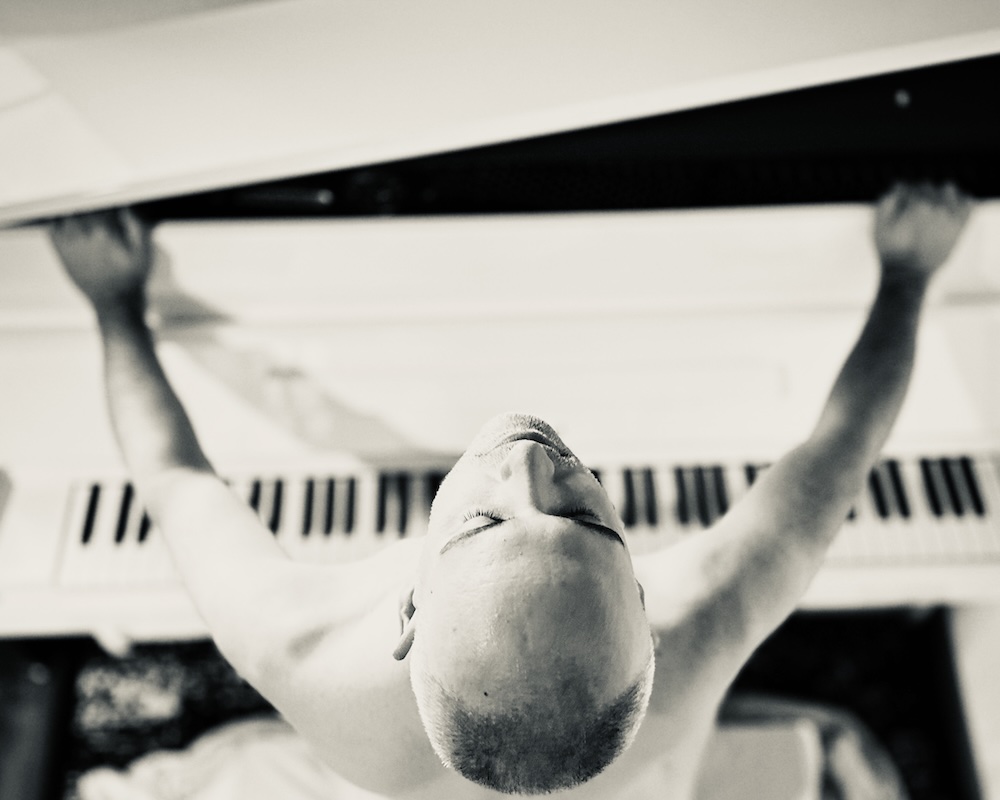
Gregory Douglass
After 25 years of independent artistry, the Vermont singer-songwriter opens up about love, survival, and the freedom of creating without needing to prove anything.
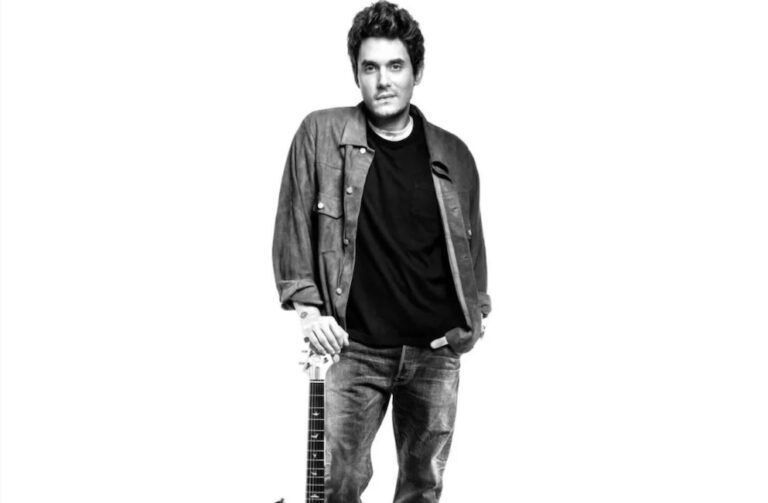
For most of his career, Gregory Douglass has existed just outside the machinery of the music industry — not because he lacked the talent, ambition, or emotional force to succeed, but because he built a career on his own terms. Long before independent artists had the digital tools and platforms that now make direct-to-fan careers possible, Douglass was already living that reality: writing songs alone at the piano, releasing records independently, touring relentlessly, performing house concerts, connecting directly with listeners, and building a devoted audience through patience and persistence rather than industry momentum. Over 25 years, he has independently released ten studio albums, collaborated with international producers, and shared stages with artists including Grace Potter, Jason Mraz, Regina Spektor, Patty Griffin, They Might Be Giants, and fellow Vermont musician Anaïs Mitchell, whose own extraordinary journey from the independent folk world to Broadway’s Hadestown reflects the kind of slow-burning artistic evolution Douglass has always embraced. In 2019, his song “Alibis” reached a new international audience after appearing in the Netflix series The Rain, but the deeper story of Gregory Douglass has never been about visibility alone. It is about the relationship between an artist and the work — and the willingness to keep following that relationship wherever it leads.
Douglass has built a body of work defined less by industry milestones than by emotional honesty. His forthcoming eleventh album, AMATEUR, marks his return with his most revealing collection yet: a deeply personal chamber-pop record exploring queer identity, desire, grief, healing, and the lifelong process of becoming. After years of reflection, reinvention, and questioning the assumptions that shaped his life and art, Douglass returns with a record that feels less like a comeback than a reckoning. In this exclusive interview, he opens up about the experiences behind AMATEUR, the complicated truths of love and intimacy, and what it means to begin again after a lifetime spent searching for the next song.
“Bespoke” feels incredibly intimate. What was happening in your life when this song first began to take shape?
“Bespoke” came out of a relationship that became much more emotionally significant than I expected it to. I was already married and living a life I loved, but I was also beginning to question some of the assumptions I had inherited about intimacy, desire and what different kinds of relationships are allowed to mean. This particular relationship started as a lover but then blurred the line between friendship, intimacy, fantasy and something I still don’t have a perfect word for. That uncertainty became part of the song.
I think what made it so powerful was that it wasn’t simply about wanting another person. It was about what that person awakened in me – parts of myself I had compartmentalized, judged or perhaps never fully understood. The song really lives in the aftermath of that experience, when I was trying to separate what was real from what I had projected onto it. And ultimately I realized both could be true. Something can contain illusion and still change you profoundly.
You describe the relationship behind “Bespoke” as someone who became both a muse and a mirror. What did that person ultimately help you discover about yourself?
I think the mirror was ultimately more important than the muse. There were qualities I believed I was responding to in this person that were actually pointing toward things I wanted to reclaim within myself – desire, confidence, freedom, sensuality, vulnerability. Sometimes we become fascinated with another person because they seem to possess something we have unconsciously decided we aren’t allowed to possess ourselves.
That was a difficult realization because projection can feel exactly like intimacy while you’re inside it. But it also became incredibly freeing. Instead of asking, “Why did this person have such power over me?” I could begin asking, “What were they revealing to me about myself?” That shift is a huge part of “Bespoke.” The relationship didn’t become meaningless once I could see it more clearly. If anything, I could finally understand why it mattered.
The song explores shedding internalized shame and reclaiming desire. Was writing it part of that healing process, or did the clarity come afterward?
Both, and I think that’s usually how songwriting works for me. I rarely sit down because I’ve already figured something out. I write because something is unresolved and I need somewhere to put it.
“Bespoke” began inside the confusion. Some of the clarity came through writing it, and some came much later. There are things I understand about that experience now that I certainly didn’t understand when I was living through it. One of the biggest realizations was how deeply shame can survive even when you’ve intellectually rejected it. I had been openly gay for decades. I considered myself progressive and sexually open-minded. And yet there were still places inside me where desire became entangled with guilt, fear and important information I still needed to unpack.
Sonically, “Bespoke” is quite restrained, with piano, strings, and your voice carrying much of the emotional weight. Why was that the right musical language for this song?
Because the song needed intimacy more than spectacle. I love recordings where you can hear the confrontation. With “Bespoke,” anything too heavily produced would feel like it was putting emotional distance between the listener and the story. Piano, voice and strings created this beautiful architecture where nothing could really hide. And because the song is dealing with such blurry emotional territory, I didn’t want over-production telling the listener how to feel about it. I wanted enough space around “Bespoke” for somebody else to hear their own experience inside mine.
That restraint became part of the entire philosophy behind the AMATEUR album. At a moment when technology can generate and manipulate virtually anything, I became increasingly interested in protecting the evidence of humanity inside the music.
AMATEUR explores queer identity, love, fantasy, grief, and healing. Did these themes emerge naturally as you were writing, or did you recognize them as a larger story once the album began to take shape?
They definitely emerged before I understood the larger story. I wasn’t sitting down thinking, “I’m going to make an album about queer adulthood and healing.” I was writing individual songs because something in my life needed attention. Eventually I started noticing that the songs were talking to one another, which frankly, is usually what happens for me.
There were recurring questions about desire and shame, fantasy versus reality, the child I had been versus the adult I was trying to become, marrital commitment vs. sexual freedom, chosen family, self-sabotage and forgiveness. Different songs seemed to be approaching the same fundamental question from different directions: Who are you when you stop trying so hard to become the person you thought you were supposed to be?
That’s when AMATEUR began to reveal itself as an album rather than simply a collection of songs. One of the larger ideas running through it is that adulthood isn’t about finally becoming a finished person. We keep carrying all of these earlier versions of ourselves forward. That’s the heart of the album: the beauty and heartbreak of still becoming.
Living in Palm Springs seems to have played an important role in the making of AMATEUR. How did being immersed in that particular queer community and culture affect the way you thought about love, sexuality, and authenticity?
Palm Springs gave me proximity to versions of queer adulthood I hadn’t fully experienced before. I grew up understanding queerness largely through difference – the feeling that you were somehow outside the dominant culture. Palm Springs can feel almost like the inverse of that. Queerness here is visible, ordinary, intergenerational and unapologetic. You see queer people building marriages, open relationships, friendships, businesses, chosen families, sex lives and entire communities around themselves.
Living here forced me to recognize how much shame I was still carrying despite decades of being openly gay. It also complicated some of the stories I had inherited about relationships. Desire doesn’t automatically threaten love. Marriage doesn’t magically eliminate insecurity. Sexual freedom doesn’t necessarily make someone emotionally free. You can intellectually reject shame and still discover it hiding in your nervous system.
I couldn’t have written AMATEUR ten years ago because I was still looking for definitive answers about who I was. Palm Springs helped me become much more comfortable with contradiction.
Many people carry some degree of internalized shame around desire and intimacy. What do you hope someone who recognizes themselves in that struggle takes away from “Bespoke”?
I hope they become a little more curious about themselves and a little less judgmental. Shame wants everything reduced to a verdict: good or bad, faithful or unfaithful, appropriate or inappropriate, worthy or unworthy. But human beings are much more complicated than that.
Desire can reveal places where we’re lonely, afraid, curious, hungry for connection or trying to recover something we’ve disowned in ourselves. That doesn’t mean every desire needs to be acted upon. It means there may be something worth listening to underneath it.
“Bespoke” isn’t really trying to offer a moral conclusion. It’s trying to offer compassion. Sometimes the person we think we desperately need is holding up a mirror to something we need to find within ourselves. And sometimes an experience can be heartbreaking, complicated and even unsustainable while still having been meaningful. Those truths are allowed to coexist.
You’ve shared stages with artists including Grace Potter, Jason Mraz, Regina Spektor, Patty Griffin, They Might Be Giants, and Anaïs Mitchell. Are there particular lessons or memories from those experiences that have stayed with you?
What stays with me more than anything is how different everybody’s path is. When you’re a younger artist, it’s very easy to look sideways at other careers and imagine there must be some formula you haven’t discovered yet. Sharing stages with artists I admired actually reinforced the opposite for me. The people who are most compelling usually have something unmistakably their own.
I also remember being struck by how much of a career is simply built through repetition – showing up, playing the show, writing the next song, doing the work again and again. Anaïs Mitchell is especially meaningful because we came up through the same Vermont music community, and watching HADESTOWN evolve from this extraordinarily imaginative project into a Broadway sensation has been remarkable. It’s a beautiful reminder that you can’t always know the eventual life of something while you’re making it.
That lesson means more to me now than it probably would have twenty years ago. Make the thing honestly. Its future may be much stranger than the one you’re trying to engineer for it.
You’ve spent much of your career thinking about success, independence, and artistic survival. How do you define success now?
Success now feels much more purpose-driven. Of course I still want people to hear the music. I want opportunities. I want audiences and meaningful collaborations and moments where something I’ve made reaches much farther than I expected. But I no longer want any of that badly enough to sacrifice the life surrounding the work.
For years, I think some part of me imagined that my career would eventually arrive somewhere and tell me who I was. That is an exhausting amount of responsibility to give a career. Now I’m much more interested in longevity than arrival. Can I keep making meaningful things? Can I remain curious and make music that still surprises me? Can it connect deeply with somebody who needs it? And how can I do all of that while still having a marriage, friendships, community and an actual life? That feels much closer to success now.
What would you say to the younger Gregory Douglass who was just beginning this career if you could put AMATEUR in his hands?
I think I would hand him the record and say, “You can stop trying so hard to prove that you belong here.” He spent an enormous amount of energy wondering where everything was going – whether the next record, tour, review or opportunity would finally validate all of the work. I’d want him to know that there is no single moment when somebody hands you a certificate saying, “Congratulations, your life as an artist counted.” The closest that comes is when someone recognizes you in an airport and thanks you for how meaningful a certain record of yours was at one point in their life (which just recently happened actually).
The records count while you’re making them. The person who tells you a song helped them through something counts. The strange little show where thirty people showed up counts. The failures count too.
I also think he would be shocked by AMATEUR. Not necessarily by the music, because I suspect he would recognize himself immediately, but by the life around it. I’d tell him, “You’re going to build a life much bigger than the career you’re so terrified of losing.” And then I’d probably tell him to relax – but no matter what I’d tell him, he probably wouldn’t listen.
After everything you’ve experienced over the past 25 years, what does it mean to you to begin again?
I don’t think beginning again means erasing anything. I’m not starting from zero. That’s part of what AMATEUR means to me. After more than 25 years of doing this professionally, I’ve found myself returning to the very first reason I made music: because I loved it and because there were feelings I couldn’t understand until I turned them into songs.
So beginning again isn’t really about reinventing myself. It’s about returning to myself with much less to prove. While the younger version of me was always asking, “Where is this going?”– at this point in my life, I’m much more interested in asking, “Is this true?” That feels like an honest place to begin again.
Official website of Gregory Douglass
About the Author