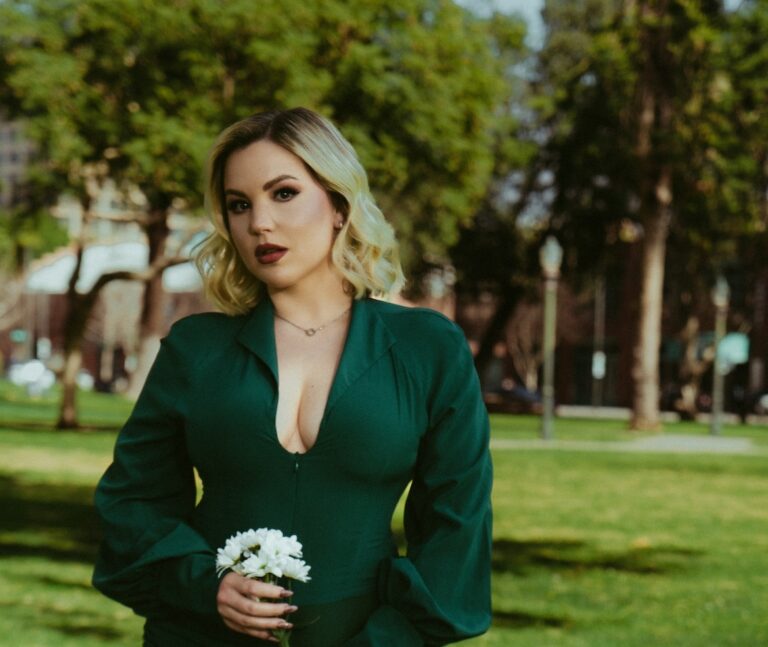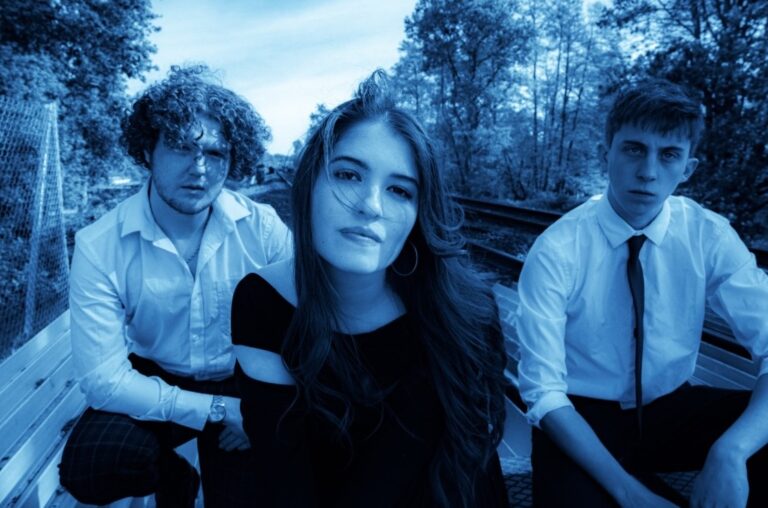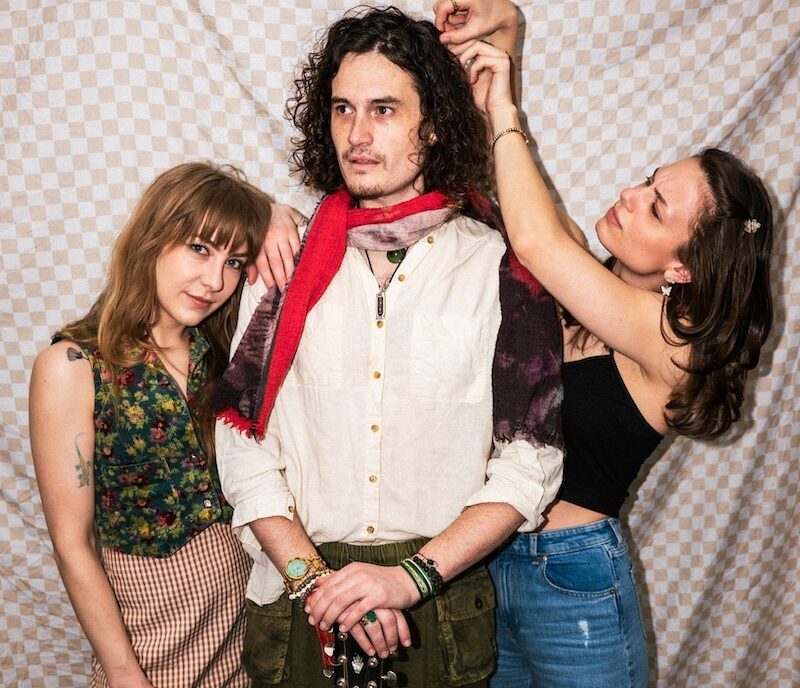
Evil Twin, photographed by Alex Bennett
What started as loose college connections snapped into focus as a deliberate collaboration—a rock band built on shared ambition and something bigger at stake.
At Indie Sound Magazine, we caught up with Peter McGee for an exclusive conversation about the origins of Evil Twin—because every band has its “eureka” moment, that instant when a loose collection of musicians clicks into something more intentional. For Peter—who grew up in a deeply creative household with Stephen Colbert as his father—that realization didn’t happen in a Northwestern basement or at a single formative show. In fact, the band wasn’t even a band yet. While Peter knew each member individually during college, the project itself came together later, assembled remotely with a shared understanding that it was a serious creative pursuit. Unlike the chaos of Peter’s earlier college group, where no one was aiming for longevity, Evil Twin was built with purpose from the outset: a search for collaborators who wanted to turn ambition into something real.
Still, there was a moment when that intention crystallized into something tangible. The first time they performed “Fine Line” live, the reaction was immediate as people were dancing and locking into the band’s groove. That energy confirmed what had only been an idea before: that they had found a distinct sound, something that resonated beyond themselves.
Every band has a “eureka” moment. Was there a specific rehearsal or show at Northwestern where you three looked at each other and realized this was a career, not just a hobby?
Well, we actually weren’t all in the same band in college. We knew each other – or rather I Peter knew everyone individually. But, when we were forming this band remotely, kind of putting together the people, there was a sense that it was a career aspiration and that it would also be fun. I think that, at least for me personally, I always wanted to make a career out of it, and this band formed for me looking for people who also wanted that. My college band by contrast was all chaos and no one wanted to make a career out of it, so I guess this band is a reaction to that. But I think that maybe the moment I realized that we had a special sound as a band was when we did fine line live the first time and it felt like people were really dancing really grooving to that in the audience.
You’ve mentioned that Evil Twin is “very out of time aesthetically.” What is it about the late 80s and early 90s indie canon that feels more “real” to you than the landscape of 2026?
Whether or not it was more real on a grand scale I couldn’t say, but I think it’s inarguable. The music had more individual value or at least recordings did back then. it really comes down to this: you couldn’t have infinite access to music. It feels like our modern system of $10 a month giving you unlimited access devalues musical recordings. It’s not like I want music to be less available to people, I’d be happy if people sold records for free: it’s almost just like a spiritual loss of what it cost to make them and to play music back. I know that sounds like old man talk, but I think it’s more something that I yearn for, and we all also yearn for: insular localized indie culture. Indie culture is localized in some ways now but it’s all in online spaces. I think you look at a lot of artists these days, especially indie rock (mk.gee) and you can see that the emotional impact of why people listen to this is coming from a collective yearning for things to happen in person. To be living with or in community with people rather than connecting with hypothetical people through YouTube comments, or through an imagination shared experience of a fan base that only happens on a third person third hand shared taste basis. Or in a simpler way, you never actually meet anyone who likes your favorite band as much as you do. You just know what type of person they would be. That’s not entirely true in every instance, but if you compare that to how things were in the 80s and 90s, it feels like something was lost. Maybe this is just my experience, completely unshared by the rest of the world (haha).
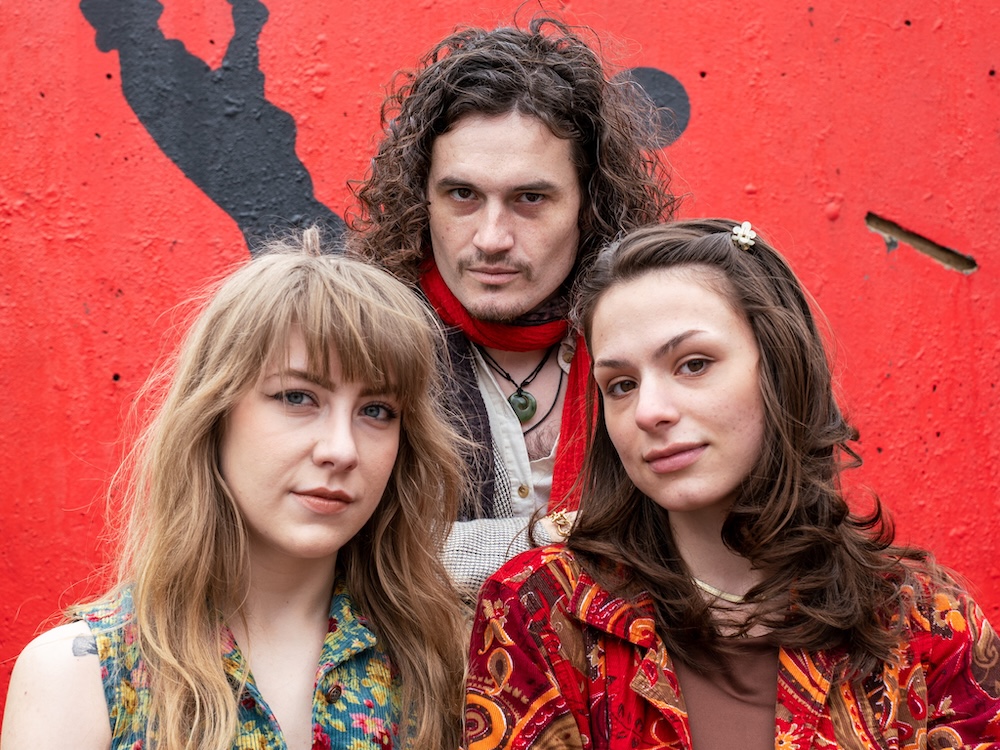
Why the name Evil Twin? Is it a reference to a specific piece of media, or more of a commentary on the duality of your sound (the “pop” vs. the “fuzz”)?
Well, for one, Riina, who suggested the name, got it from the Arctic Monkeys song, but I think more than that we all like it because we didn’t want to pick a super clever band name, we just wanted something that felt classic. There hasn’t been a classic evil twin yet – but I also feel like the evil twin is kind of the character that the songs are narrated by the evil version of yourself or dark version of yourself that’s fictionalized. I love the idea that it’s about the duality of the sound though because the duality is definitely intentional, I think a lot of the vocal performances I do are deliberately dreamy and smooth, but I like to have fracturing moments of violence splinter / explode through that, whether just be through giving you more passionate performance or even just screaming or through the shrieking fuzz, that is kind of the evil twin getting out, isn’t it?
The album features a lot of fuzzed-out, effect-laden guitars. When you were in the studio, how did you balance that “wall of sound” with the need for melodic clarity?
Well, I think it was a matter of adding things until it was too much and then starting to take them back out again me and Brayden spent a lot of time trying to make sure that the mix came out good and I just kept pretty close track of everything that we would change from mixed to mix in case we needed to reverse things = but I also think that you could get a lot of guitar layers in without disrupting the rest of the song if you just put them in the right frequency range.
You used something called a “Dream Reaper” to create infinite feedback loops on the opening track. Was there a specific moment in the studio where a happy accident with a pedal changed the direction of a song?
Oh yeah! When I was playing the ending of kudzu, I discovered I could affect the pitch of the feedback loop with the volume knob on the guitar, and suddenly it went from a normal guitar so at the end of this weird wacky deflating balloon sound, and that became the basis for that whole sonic pallet that we did at the end with the spoken word piece as well. I love the dream reaper. There’s so much crazy stuff you can do with it because it’ll fight back at you, all the while trying to make its feedback happen while you’re trying to play your riff, and it creates some crazy cool sounds.
Peter, when did you first get into music? Was it something you were always passionate about?
I mean, I’ve always liked music and I did start getting majorly into listening to it at the end of high school, but I didn’t get into making music till freshman year of college. I think it was just that I had a very music eccentric friend group, and it was a very music forward time in the culture. You had a lot of great stuff coming out: Blonde had just come out, awaken my love, currents by Tame Impala: I got into that psychedelic world; but went to the rock side of it because that’s what I knew I could make well. It did take years before I could write anything I thought was even half good, but I was just determined to find a way to do it, and I taught myself a lot of stuff on guitar and about songwriting through just making mistakes. I think the passion comes from just having gone through that: I suffered through making bad music so much, so now I know what good music is worth.
You made a point to record the core of every song live in a room together. In an era of remote collaboration and MIDI, why was that physical “musical conversation” non-negotiable for this record?
I think because we have always been in the room band we focus on practice as opposed to songwriting a lot of the time, and when we do write, we write in the room together, it’s usually rare that someone will come in with a truck that’s been made on Midi (red thread was like that though, but that’s another conversation…) I think we all like classic musicianship and the principles of being a live band so we didn’t want to fake too much stuff in the studio – we wanted to do things that we would be able to pull off. There was also a cost saving aspect to it, because it let us do all the parts simultaneously, (though we ended up doing a bunch of extra sessions anyway, so we didn’t save much but we didn’t have to do those. Those were more for fun and experimentation: we could’ve just released the demos and they still would’ve sounded great.)
You’ve cited Dinosaur Jr. and R.E.M. as influences—bands known for very distinct guitar languages. How do you and Claire Stevens divide the “guitar labor” to ensure your styles complement rather than compete?
Claire’s classical trained, and I’m a freewheeling messy improv kind of guy, so the way that we divided is that Claire focuses on melodic riffs, complex arpeggiated parts, and the backbone rhythm parts, whereas I’ll do more of the Sonic Youth squealing freak outs/more chaotic solos, and then pull back for more ambient textures. I think it’s more about precision for her and for me it’s about chaos.
“California (She’s So Royal)” is described as an “in-character kiss-off.” How often do you write from a persona versus your own direct autobiography?
I don’t think I ever write completely directly from my own autobiography, I’m almost not capable of doing it. When I put something in a song, it feels like it becomes a story and not my life, even if I am directly referencing something that is from my life, the song heightens it into fiction. I’ll always say that everything is non-biographical of course, even if I’m lying about it: but I’ll say that the album is maybe a 50-50 split
There’s a line about the character in “California” not being as cool as they seem. Is that a recurring theme on the album—the gap between who we project and who we are?
I think I agree with that. I think the thematic through line is the damage that people who don’t accept themselves due to others they’re not being able to be true to themselves.
“Red Thread” focuses on the idea of a “kismet meeting” at Penn Station. What is it about transit hubs that sparks that specific brand of romantic obsession or melancholy for you?
You know that’s a good question: and it goes back far in music, too all the way to at least blues. I think transit, trains or buses represent the opposite of what something like a car represents in Springsteen land. They represent being out of control in life and just being taken wherever it’s going to take you. But a transit hub is a crossing between those points, even though you haven’t had control over where the train is going you end up meeting at the same place and even if you’re going from different places, you have to cross paths with each other it’s a real life metaphor for the rest of life I’ll also just say that I run into a lot of people at Penn Station over the years and it’s always a possibility having grown up in New Jersey, plus I used to have a crush who lived in New York on the other side so you’d have to switch from NJ transit to Metro North to get to where she lived. Disassemble love for me just to round it in a fact. (that was some kind of typo but it was poetic so i left it in. I feel like it answers the question)
You mentioned a professor’s story about not feeling happiness until age 50 inspired “Aren’t You Lucky.” How does that heavy realization square with the “December snowstorm” warmth of the music?
Well, the warm snow represents your internal reality changing the way you experience an external reality, or more simply the person feels the snow as warm, they see the whimsical beauty of the snowstorm rather than the coldness that it brings. I think you could look at that moment of happiness is reframing your whole life in a warm way as opposed to being nothing but coldness. That person, Jan Fleischer, is a fascinating man, though he has this beautiful passage in his book about having a memory of writing on a tram back from somewhere. and seeing a young person with dwarfism caught in a beam of light. He said it was one of his happiest memories, but he didn’t realize for a long time that the reason why he remembered it so well was that he was riding the train back from prison.
“Gym Gurlz” is described as a Pavement-flavored track about being OK with yourself. Was it difficult to write a song that is genuinely “OK” amidst an album that often leans into darker, heavier themes?
That’s a good point. that song is a lot older so it didn’t have the darkness in it initially, and it may clash for some, but I think that’s why I needed to be there. You got to have some fun, hopeful moments in this.
“C74” deals with the “danger” of a causal relationship and mental health struggles. How do you approach writing about such sensitive topics without losing the “symphonic” energy of the track?
It is hard for me because the last thing is to come across as judgmental, but I want to be true to the reality of the situation I’m trying to write about; I think in that one, the chorus is what saves it from becoming just a mess of terrible moments, there’s still that spark of hope and sympathy, that they can make it through this. Even though they don’t, and one of them ends up either dead in a hotel bathtub or a drainage cistern.
The album ends with “Eta Carinae,” written from the perspective of Christa McAuliffe. That’s an incredibly heavy, specific historical touchpoint. What drew you to her story as a way to close the LP?
I had been reading about her recently and I was just very struck by listening to her parents talk about what she was like and why she decided to go on that space mission. I suppose the tragedy is remote enough now that it can be written about, the reason is that it still has a lot of cultural memory, and it’s something people can understand and feel the weight of. Most of all I just wanted to do justice to what little sense of her personality I could get from watching old interviews. I was also very struck by the sort of conspiracy that Reagan forced them to push up the launch date. I was indirectly responsible for their deaths, but not saying that that’s true. I was just very struck by the idea that it could be true.
I want to say one more thing, which is that I think with that challenger disaster, there it was wonder and innocence in terms of space travel that was forever lost, and now we have billionaires doing it instead of a government agency, which, while not perfect, at least was trying to do it for the sake of science and greater humanity.
Your producer, Brayden Baird, saw “Eta Carinae” as a metaphor for starting a music career—the danger and the “movie-like speech” before a potential disaster. Does that interpretation resonate with your own anxieties about releasing this music independently?
Certainly, releasing music independently can be quite scary. I think that the real danger is committing so much time to it in the risk that nothing may come of it. But ultimately, I’m happy to make it and share it with people: Perhaps I’m more worried that people will like it and then I’ll have to live up to that.
The vocal harmonies on the record feature the whole band rather than just layers of yourself. Why was it important to hear the “unique flavor” of Riina and Claire’s voices instead of a polished, singular studio vocal?
It’s more authentic, it’s organic, and it’s true. It’s not like we didn’t use any studio tricky for this, but I think that there’s almost like a childlike innocence that comes from having group vocals like that, it’s one of the things I love about R.E.M.
“In Flames” draws a parallel to R.E.M.’s “The One I Love.” Do you view the “protagonist” of your songs as someone the listener should be rooting for, or someone we should be wary of?
Oh, be wary of him. The guy from the one I love strikes me as a super confident but abusive man who has total control over the situation, but in “in flames” it’s just the opposite. It’s someone who has no control over their emotions or their relationship relationships, so they’d be very prone to lash out, I’m not saying it’s like an Incel song, but you know, it’s not far from that. I also think that the “everything’s in flames” chorus is referring to people who keep relationships going for the sake of love.
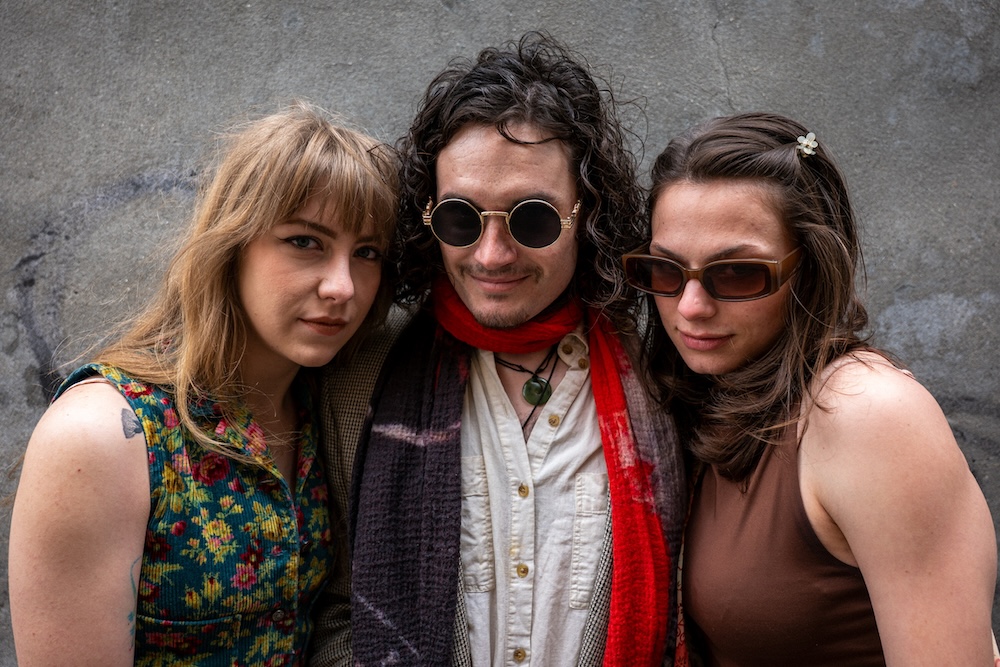
The band started at Northwestern University before migrating to the NYC scene. How did that change in geography—from Midwestern basements to Brooklyn stages—impact the “bigness” of your sound?
So, we didn’t actually start at Northwestern! We all went to Northwestern, but we weren’t a band back then, but I will say this about going from basements to stage: It took a lot of adjusting. I love playing basements and I do miss it, but it’s just more awesome if you can fill up a whole room. which we’ve gotten to do quite a few times now, and the sound systems also let you play with a whole other dimension. I wouldn’t run 90% of the gear that I use in a Northwestern basement because there would probably not be enough outlets to plug it in. The only way to make those shows work was to be as chaotic as possible or to play as fast as possible. My college band was a psych band and we had way more success playing unplanned jams in a kind of shrieking, White Light / White Heat velvet underground style way then we did play composed and written songs. But I don’t know how well one of those jams would work in the cold light of the stage where you can hear what’s really going on.
You’re releasing Upside Down We’re Flying independently. What has been the most liberating (and the most terrifying) part of keeping the “business” side of Evil Twin in-house?
Well, I think it’s liberating! Because we can do whatever we want! We can have our image be whatever we want, but that’s also terrifying because you have to figure it out on your own. and put up all the money on your own. and that’s really complicated to figure out. But at the end of the day, it’s just about sharing the music, sharing the story. It doesn’t matter if it’s for 10 or 10,000. I have to remind myself that.
Thomas Kikuchi provided the drums for this record before his departure. How did his specific percussive style help shape the “assault” you were looking for on tracks like “Frost on the Lilies”?
Thomas (they/them) is an amazing drummer. They had been a member of the band since the beginning, and they only recently left, which is something we are still adjusting to, but yes, they their style of drumming was very much “I want to play fast” kind of in defiance of their own jazz chops, because they didn’t want to play complicated stuff (even though they could), they wanted to play fast beats that people liked jumping to, so that was how the tracks like frost on the lilies came about; just rapid fire drum fills atop a nice peppy, almost punky groove. I don’t talk like a pitchfork writer in real life i promise.
Peter, your father (Stephen Colbert) is a master of satire and public performance. Did growing up around someone so attuned to “voice” and “character” influence how you approach your own lyrics?
Definitely, and I spent a lot of time doing improv training as well both with him and in other places, but I also think it’s like you say, just growing up with him and in my family, we all grew up doing characters, and both my parents were actors, so it just came naturally, and it still does.
What is the biggest misconception people have about being an independent band in 2026?
I think the biggest misconception people have about being independent is thinking that they are going to find their fans outside themselves, instead of finding them inside of their own personal groups and their personal communities: that’s the best success we’ve had; and we’re growing our fans over time – but you know we’re still just getting started. And actually maybe the biggest misconception is that if you’re going to be indie, you were trying to blow up on social media or you want to be famous. Your Goals should just be to share your music with people without worrying about those things. Of course life makes it hard for us to make music, so you wanna make a career out of it. But I feel like there’s a wierd conformity that is forced onto indie bands to be either with the grain or against the grain. The grain is a social construction, maaan. The biggest misconception people have is that you’re looking for feedback I guess. We don’t live in an era of major labels anymore. We don’t need to measure the value of our music by how many people listen to it. We had a couple thousand people listen to our records, that’s more than I’ve ever had to see anything of mine before and that’s incredible. I think that more than enough lives have been touched, and I’m extremely grateful to all those people who have listened to it.
Outside of music, what’s the biggest influence on the band? Are there films, books, or visual artists that dictate the “Evil Twin” aesthetic?
You know there’s Neon Genesis, and I feel like has an influence on this record. There’s that monologue that references it from this Reddit post and really the show itself is not the influence but more the ambience the crickets, the broken up apocalyptic landscapes that are somehow serene., I’d throw in a lot of other things in there, but I don’t want the list to be too long, but I’ll say Stalker, the movie by Tarkovsky/the roadside picnic: and for the story of the album, I was very, very influenced by a lot of fiction, but in particular anything that dealt with a split personality character. The tension of never being able to know which one you’re talking to: Vertigo is a good example of that, The Garden of Sinners, I could go on but everyone’s got their own example of it. My favorite book is Jeff and Venice Death in Varanasi, and I think the spiritual emptiness that the book is about had big influence on this. Also, I’m going to say the Bell Jar is a big influence. I don’t know if that’s true, but I’m going to say that it is because I like the idea of a character in perpetual downward spiral, yet thinking that they’ll somehow turn their life into an upward spiral, that is the story of this record, even if the reasons for it are completely different. Kind of like catcher in the rye as well. A downward spiral will never invert itself into an upward spiral, unless you flip yourself upside down. Maybe that’s where the title comes from.
Now that the record is out in the world, what do you hope the “statement of intent” is for the future of Evil Twin?
I think this record is all about showing the different styles that we can do, and the statement of intent is that we’re here to experiment and make awesome music, the next thing we do will be a tightly focused set of songs with a well-developed story. We’ve got lots of cool stuff to come.
The album is now available on all platforms, including Bandcamp.
About the Author