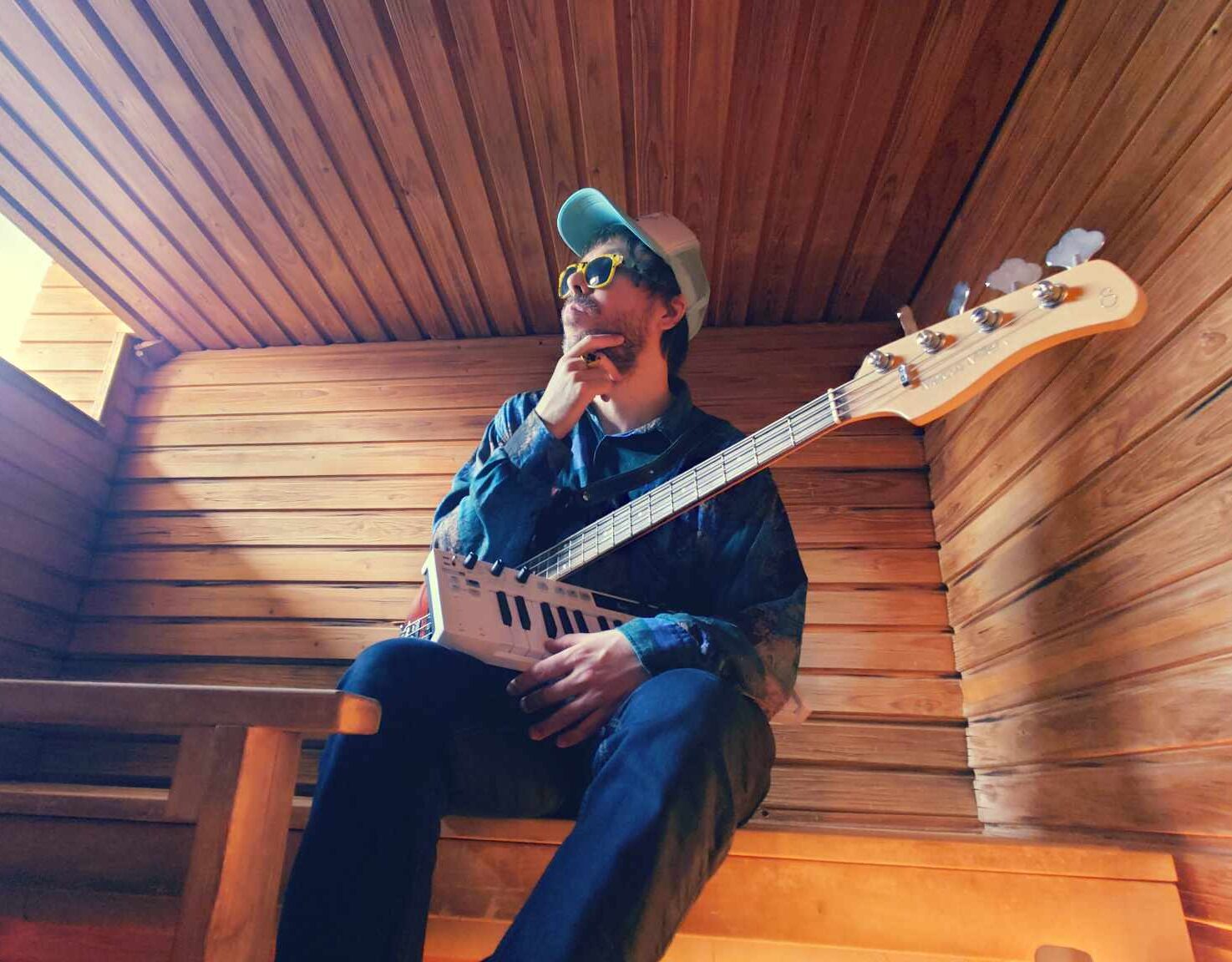
Forwardman
Marking a new chapter for the Finnish artist after years of shifting lineups, “No Man’s Land” sees Forwardman strip everything back while continuing to blur genres
With the release of “No Man’s Land” on March 20, 2026, Forwardman returns from a two-year silence with a track that both expands and distills everything the project has stood for so far. The single marks the first glimpse into the upcoming fifth full-length album—still untitled—and signals a shift toward a more electronic, laid-back sound. Yet, as with most things in the Forwardman universe, the idea of a “shift” is slippery. There are echoes here of New Tomorrow (2018), making the new material feel like a kind of spiritual continuation rather than a reinvention. What truly sets “No Man’s Land” apart, however, is its total independence: for the first time, every aspect of the track—from songwriting to performance to production—has been handled solely by Sakari Viittala, the Finnish musician behind the ever-evolving Forwardman identity.
Since its beginnings as a one-man troubadour act in London’s pubs and small venues, Forwardman has grown into a fluid, shape-shifting project that resists easy categorization. Over the years, Viittala has collaborated with a rotating cast of musicians, each album introducing a new lineup and a new sonic direction, while he remains the constant creative core. The result is a discography that moves freely between genres—rock, indie, electronic—without settling into a fixed identity. Described as “the musical equivalent of a character actor,” Forwardman thrives on transformation, embracing contradiction, and reinvention.
How did the idea for Forwardman first come to you, and what made you choose that name instead of releasing music under your own name?
When I was younger, I was in a band called Backwardsman. And the rest is history.
“No Man’s Land” marks a shift toward a more electro-pop and laid-back feel compared to your 2024 album. What inspired that change in direction?
I don’t feel like I’m changing directions. I like to write in different styles, so all these musical worlds exist for me at the same time. I think it’s a shame how a lot of new bands get commercialised and brand themselves from the get-go. It’s like they’re announcing, “We are this kind of band, we play this kind of music, and we represent only these certain things.” I know that has everything to do with money and business, but absolutely nothing to do with honesty, freedom of expression, or creativity.
You’ve mentioned that this new single is a spiritual sequel to your second album, New Tomorrow. What is it about that specific electronic sound that felt right to revisit in 2026?
I’m not revisiting sounds—just a style of music. But not really even revisiting that, just making more electronic music, as I find it fascinating.
For the first time on “No Man’s Land,” you handled every single role—songwriter, performer, producer, and technician. Did you find that total autonomy liberating, or was it a challenge to work without other musicians to bounce ideas off?
I’m not sure if it was ever liberating, but it was definitely challenging—then a headache, then a nightmare, and then hell. But right now, it’s heaven.
You’ve been described as the “musical equivalent of a character actor.” Do you feel like you’re stepping into a different role with each release, or are these genres just different sides of the same person?
Definitely all just different sides of the same multipersonalities.
Your music often blends rock, indie, and electronic elements. How do you approach combining these influences without losing a clear identity as Forwardman?
I don’t feel that Forwardman should necessarily have a clear identity. Identities are slippery, tricky bastards—and that’s how they should be.
How has living in different places like Sweden, London, and Finland influenced your songwriting and your perspective as an artist?
I think if you stay in one place, like Finland, your whole life, you’re not going to have much perspective as an artist. Finland is very homogeneous and quite small, really. When I listen to Finnish bands who sing in English, it doesn’t resonate with me much. Having said that, I support their attempt to use the English language. But it’s all pretty clichéd—not that people who have lived in Finland all their lives really even notice that. Mediocre music can be very popular.
Why did you decide to go entirely solo for this upcoming fifth album?
There just comes a time when you want to take on the ultimate challenge. You kind of get bored listening to yourself telling others what to do, I suppose.
When you are producing your own music, how do you know when a track is finished and ready to be released?
A track is never finished, but it does, at some point, get released. So… when I can tolerate it.
Your music often feels both nostalgic and modern at the same time. How intentional is that balance for you?
There is some intent, I guess. Hats off to those who came before—but not too much.
Are there any specific artists or albums that have had a lasting impact on how you approach creating music today?
Yes, so many. Today’s example shall be Freddie Mercury — Mr. Bad Guy.
What challenges have you faced as an independent artist, and how have you managed to get through them?
I wouldn’t dare call myself an independent artist. Rather, I’m an independent hobbyist—but that too comes with countless challenges. How not to just settle for the easy life—work for your money, wait for the weekend, let them entertain you, and then repeat it all over again.
How not to crumble under the social pressure of not standing out from the crowd, because, you know, everybody wants you to be just like them. It’s almost like you’re not allowed to be that good at anything—let alone more than one thing at a time—or else people instantly try to grind you down, paint you black, chew you up, and spit you out.
Making art is about digging deep, challenging yourself, questioning yourself—not locking your self-image into some character you perform for others in the hope they’ll buy your lazy attempt to sell them a false identity, but instead constantly asking yourself to change and grow.
But obviously, those are just the basics. If you like to create art, I promise you the challenges will keep coming. Society does not support creative people and artists. The country is going down the fucking toilet. Parliament is a circus with too many clowns in it, and their mentality is that of a greedy five-year-old—feed the rich, bury the poor.
How do you handle creative blocks or periods when inspiration is hard to find?
Drugs. Plagiarism. No—but seriously, I just don’t write, and I never worry about it.
What do you hope listeners take away emotionally after hearing “No Man’s Land” and the music from your upcoming album?
They’ll take away whatever they feel. But if I had to choose: it’s OK to be yourself, it’s OK to go your own way.
Looking ahead, what directions or experiments are you most excited to explore as you finish your fifth full-length record?
The record is already finished. Tomorrow is always a mystery.
Listen to No Man’s Land on Spotify.
About the Author