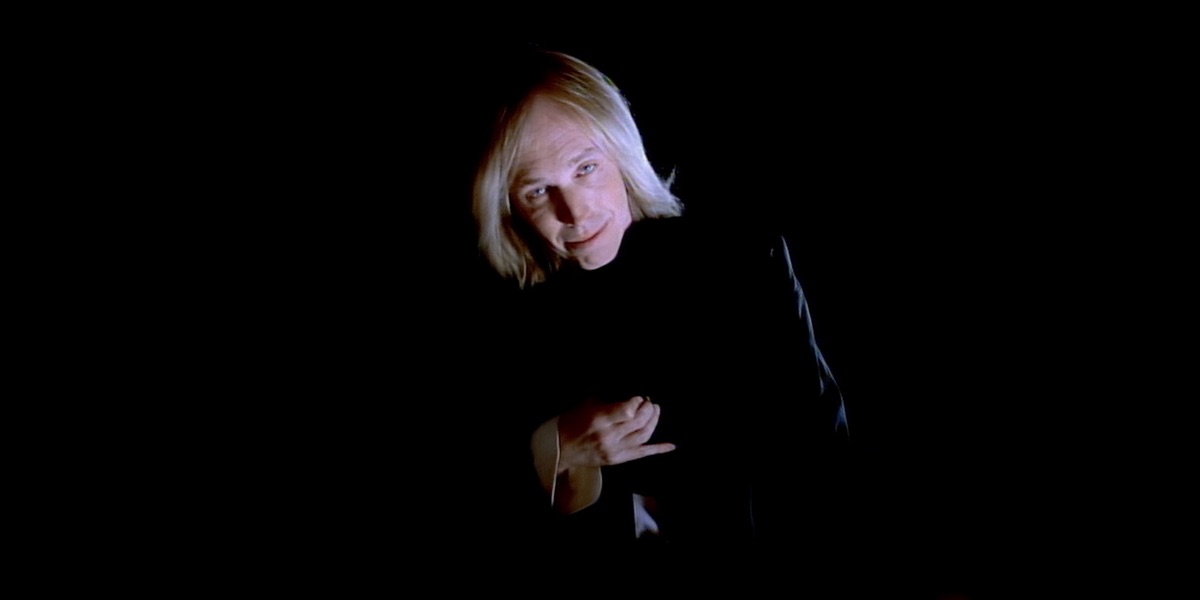
Tom Petty in Mary Jane’s Last Dance (1993)
A deep dive into the decade when high-concept masterpieces redefined the 1990s aesthetic and transformed the music video into pure cinematic magic
If British musicians of the 1980s invented the music video as we know it today, the 1990s transformed it into an all-American fever dream. This was the decade MTV evolved from a novelty broadcast into the undisputed center of the cultural universe. Defined by massive budgets and a total lack of creative restraint, the era gave rise to “auteur” directors like David Fincher and Spike Jonze.
Whether it was the gritty, haunting surrealism of grunge or the hyper-glossy, gravity-defying spectacles of pop and R&B, the 90s used the music video to redefine how we “consumed” a song. You saw the moving floor in Jamiroquai’s living room, felt the industrial rot of Nine Inch Nails, and witnessed the cinematic opulence of Michael and Janet Jackson’s space-age sibling rivalry.
The cinematic epics of Madonna and George Michael showcased a level of storytelling that rivaled Hollywood, while the unsettling brilliance of Björk and the mind-bending choreography of the Beastie Boys pushed the boundaries of what a four-minute clip could achieve. From the unblinking, raw close-up of Sinead O’Connor to the grunge-soaked angst of Hole and Nirvana, these videos not only promoted singles—they also created iconography that remains burned into our collective retinas decades later.
“I want my MTV.” — The mantra that defined a generation and paved the way for the visual masterpieces listed below.
Jump They Say — David Bowie
Director Mark Romanek brought a clinical, high-contrast sheen to this deeply personal track, drawing from the dystopian DNA of Godard, Kubrick, and Welles. Bowie wrote the song to process the suicide of his half-brother, Terry, and the video reflects that trauma through a lens of corporate paranoia and surveillance.
It’s a masterpiece of tension, featuring Bowie in sharp suits and terrifying heights—explicitly referencing the “Most Beautiful Suicide” photo of Evelyn McHale. These visuals echo the alien isolation of his 1970s film roles but updated for a slick, digital age, transforming a private family tragedy into a public nightmare of a man scrutinized by a faceless machine.
Mary Jane’s Last Dance — Tom Petty and the Heartbreakers
Director Martyn Atkins turned this 1993 hit into a masterclass in the macabre, subverting the “lonely heart” trope through a lens of suburban gothic and cinematic surrealism. Tom Petty plays a meticulous mortician who brings home a “deceased” woman—played by Kim Basinger—to fall in love with her.
Drawing from Witkin’s transgressive photography and Lynchian dream-logic, the video peaks with a grotesque “last supper” that elevates the narrative into a high-concept meditation on mortality. The tension climaxes during the final reveal as Basinger’s eyes snap open underwater. It’s a gothic short story that balances the morbid and the tender, proving that the 90s weren’t afraid to push the boundaries of “taste” to tell a compelling narrative.
Human Nature — Madonna
Narrowing the 1990s down to just one iconic Madonna video is an impossible task—the decade was essentially a ten-year masterclass in visual reinvention. Yet, Jean-Baptiste Mondino’s “Human Nature” stands out for bringing a high-fashion, BDSM elegance to the screen, opting for a monochromatic aesthetic that mirrored the song’s lyrics. Set against a white background, the video features Madonna and her dancers clad in black vinyl, leather, and PVC. By stripping away complex sets, Mondino created a clinical yet high-energy atmosphere that reframed Madonna not as a mere victim of her mid-90s tabloid controversies, but as a dominant figure in total control of herself.
The video’s visual power lies in its fluid choreography and a circling handheld camera that creates a sense of intimacy and claustrophobia. It famously features the singer trapped in—and eventually breaking out of—a series of glass boxes and complex rope harnesses. At one point, the dancers use these ropes to form a pentagram with Madonna at the center, adding a ritualistic undertone to the narrative. This symbolism served as a literal middle finger to critics attempting to “box her in,” weaponizing the public’s discomfort to reclaim her narrative through provocative, self-referential pop art.
Heart-Shaped Box — Nirvana
Director Anton Corbijn’s vision for “Heart-Shaped Box” remains a haunting artifact of the grunge era, utilizing a “technicolor” palette to create a surrealist fever dream. The video is saturated with Kurt Cobain’s specific, often visceral internal symbolism, obsessing over the cycles of birth, medical trauma, and the decay hidden beneath beauty. This is most famously captured in the imagery of the frail, Santa-like man climbing onto a cross and the presence of a young girl in a pointed, white hood reaching for fetal “umbilical” bags hanging from trees, set against an artificial backdrop of vibrant poppy fields that suggested a morphine-induced haze or a hollow, staged reality.
The production itself was a collaborative clash of aesthetics, with Cobain providing detailed sketches that Corbijn then filtered through his high-contrast, moody lens. The video famously features a mechanical crow, a giant IV drip, and a “shrine” of anatomical models. By placing the band in a “heart-shaped box” of their own making—the video serves as a final window into Cobain’s psyche before his untimely death.
Spin Spin Sugar — Sneaker Pimps
The music video for “Spin Spin Sugar” serves as a quintessential time capsule for the mid-90s trip-hop movement, masterfully distilling the underground grit of the era into a visual fever dream. Kelli Ali’s ethereal, almost doll-like performance in the video provides a startling contrast to the track’s jagged, distorted synth lines, together with the intentionally ambiguous lyrics which still puzzle listeners.
Directed by Toby Tremlett, the visuals lean into a claustrophobic, David Lynch-inspired aesthetic that explores the death of privacy. Set within the grimy confines of a motel room, the video plays on the unsettling idea that “nowhere is really private”—a space where you can hear the “private perversions” of the next room over and no one is quite up to any good. Tremlett employed innovative techniques for the time, such as invisible scratch edits and a rain-slicked, neon-saturated color palette, to create a voyeuristic atmosphere that feels both trippy and edgy.
Violet — Hole
The music video for “Violet” stands as a visceral manifestation of mid-90s grunge, anchored by a Victorian-era burlesque hall that serves as a theater of subversion. The atmosphere feels heavy and dark. Rather than catering to the traditional male gaze, the setting frames the dancers as weary figures who reclaim their autonomy through sheer defiance.
Fueling this visual chaos is Courtney Love’s unbridled energy, which acts as the video’s high-octane combustion engine. The frantic, almost violent editing style perfectly mirrors the abrasive distortion of the guitars, creating a sensory assault that captures the song’s internal turmoil. Love’s presence—complete with smudged lipstick, tattered lace, and a screaming vocal delivery—solidifies her status as the decade’s definitive anti-heroine. By the time the final feedback fades, the video has successfully transformed a scene of supposed entertainment into a haunting manifesto of rage and resilience, leaving a lasting mark on the visual language of alternative rock.
Drop Dead Gorgeous — Republica
The music video for “Drop Dead Gorgeous” is a high-octane blast of kinetic energy, serving as the visual equivalent of a double-shot espresso. Directed by Michael Geoghegan—who also helmed the hyperkinetic clip for the band’s sports-staple hit “Ready To Go”—the video is a masterclass in mid-90s “Cool Britannia” aesthetics. Saffron, with her iconic two-toned red-and-black hair, dominates the screen through a series of vignettes, smashing shiny garden gnomes with a hammer, donning angelic wings, and discharging a fire extinguisher. This unapologetically loud and fast style perfectly complemented Republica’s “techno-pop-punk” sound, capturing a moment when the UK scene was moving away from grunge-era brooding and toward a more aggressive, stylish confidence.
Beyond the visuals, the track serves as a cathartic anthem for anyone dealing with a “hot but lazy liar” of an ex-boyfriend. Saffron has noted that the song is designed to boost self-esteem by fueling that specific brand of righteous rage, turning a frustrating relationship into a scream-along hit. The song’s massive success—becoming their highest-charting UK hit at #7—cemented Saffron’s status as a definitive 90s frontwoman.
Closer — Nine Inch Nails
The music video for “Closer” is a visceral landmark in the industrial genre, meticulously crafted by director Mark Romanek as a descent into a decaying, steampunk purgatory. Drawing deep visual inspiration from the canvases of Francis Bacon and the photography of Joel-Peter Witkin, the video functions as a panopticon of the grotesque. Every frame is saturated with a sepia-toned patina that feels pulled from a 19th-century medical theater, featuring a disturbing montage of rotting meat, a monkey bound to a crucifix, and a mechanical “beating heart” that pulses in time with the track’s iconic breakbeat.
Amidst this industrial ruin stands a tuxedoed Trent Reznor, serving as both the ringmaster and the victim of his own psychological landscape. His performance—ranging from blindfolded and suspended in mid-air to being buffeted by high-velocity wind—anchors the video’s surrealist chaos. Upon its release, the video’s explicit imagery required heavy censorship for MTV, yet the “clean” version arguably heightened the tension by leaving the most transgressive acts to the viewer’s imagination. Widely cited as one of the greatest music videos ever made, “Closer” succeeded in elevating the aesthetic of the 90s underground into high art, proving that the truly unsettling can be undeniably beautiful when viewed through a lens of uncompromising creative vision.
Wicked Game — Chris Isaak
The music video for “Wicked Game” stands as the definitive gold standard for sensuality in the MTV era, meticulously crafted by legendary fashion photographer Herb Ritts. Shot on Hawaii’s black-sand shores, Herb Ritts’ high-contrast, black-and-white visual discards narrative for a timeless aesthetic reminiscent of a vintage fashion spread. By stripping away 90s excess to focus on the raw textures of sand, surf, and shadow, Ritts created a cinematic language of longing that transformed Chris Isaak’s rockabilly ballad into the definitive “romantic” music video.
The power of the video is anchored by the palpable chemistry between Isaak and supermodel Helena Christensen, whose presence in the clip turned her into an overnight global sensation. Even decades after its release, the video remains an untouchable benchmark for the “less is more” philosophy, proving that a single, perfectly lit gaze can be more evocative than the most complex special effects.
Intergalactic — Beastie Boys
The music video for “Intergalactic” is a high-energy, campy love letter to Japanese Kaiju cinema and sentai television, expertly directed by Adam Yauch under his eccentric Swiss pseudonym, Nathaniel Hörnblowér. Dressed in high-visibility construction vests and safety goggles, the trio—Ad-Rock, MCA, and Mike D—perform their signature synchronized choreography through the bustling corridors of Tokyo’s Shibuya and Shinjuku train stations. The visual centerpiece, however, is a low-budget, high-concept battle between a giant, silver-clad robot (piloted by the band) and a multi-eyed, tentacled sea monster.
Shot largely on location in Japan using a fisheye lens—a staple of the group’s visual identity—the video serves as a testament to the Beastie Boys’ unadulterated sense of fun. The contrast between the intense, booming basslines and the sight of the band dancing amidst confused Japanese commuters highlights their legendary status as the ultimate pranksters of hip-hop.
Bull in the Heather — Sonic Youth
Directed by Tamra Davis, the visual for “Bull in the Heather” serves as the ultimate blueprint for 1994’s alternative “cool,” stripping away the polished artifice of mainstream rock in favor of a raw, lo-fi aesthetic. The video is anchored by Kim Gordon’s iconic deadpan delivery and nonchalant bass playing, set against a backdrop of grainy, overexposed film that feels like an intimate art-school project. A central highlight is the spirited cameo by Kathleen Hanna of Bikini Kill, whose frantic, erratic dancing provides a kinetic counterpoint to Gordon’s cool detachment.
It remains an indelible cultural artifact that proved a compelling vibe and authentic presence were far more influential than expensive special effects, providing a visual manifesto for a generation that found beauty in the eccentric.
Never Felt As Good — Belvedere Kane
The music video for “Never Felt As Good” stands as a sophisticated pillar of the mid-90s “Romo” (Romantic Modernism) movement, driven by Barry Stone’s intensely charismatic, screen-commanding performance. Stone provides a sleek, magnetic alternative to the aggressive “laddish” Britpop that dominated the era, positioning Belvedere Kane at the forefront of “spook pop”—a lush, melodic sound that feels both futuristic and hauntingly nostalgic. While Stone’s electric presence in the video led Popjustice to hail the track as one of the twenty best singles of the 1990s, the parent album, Such Trying Times, was famously shelved, leaving the track to exist as a cult classic fueled by Stone’s enduring mystique.
In 2026, the album finally emerged as an exhilarating time capsule, featuring the standout “Legends (Forever Young).” This track breathes new life into a lost Dead or Alive vocal, weaving a rediscovered Pete Burns lyric into a glittering club anthem with the estate’s blessing. By finally finishing what he started three decades prior, Stone transformed a “lost classic” into a modern reality, proving the sophisticated allure of Belvedere Kane remains as resonant today as it was in 1996.
Breathe — The Prodigy
Directed by Walter Stern, the music video for “Breathe” is a claustrophobic masterclass in visual tension that feels like a fever dream set in the bowels of a condemned squat. The setting—a derelict, damp-walled apartment—is thick with an almost tangible sense of decay, where peeling wallpaper and flickering fluorescent lights frame a nightmare menagerie of cockroaches, centipedes, and a misplaced crocodile. Stern’s use of high-contrast, grime-streaked cinematography heightens the sensory overload, making the viewer feel the humidity and the persistent, skittering unease of the environment.
At the center of this industrial rot are Keith Flint and Maxim, whose menacing performances provide the video’s kinetic heartbeat. Flint’s manic, wide-eyed intensity—anchored by his iconic double-mohawk—clashes perfectly with Maxim’s prowling, predatory composure, creating a physical tug-of-war that mirrors the track’s aggressive bassline. The rapid-fire editing syncs every distorted synth stab with jarring cuts and unsettling close-ups, effectively weaponizing the imagery.
Where the Wild Roses Grow — Nick Cave & Kylie Minogue
Directed by Rocky Schenck, the music video for “Where the Wild Roses Grow” is a hauntingly deliberate homage to Victorian art, most notably John Everett Millais’ Ophelia. The video transforms the traditional murder ballad into a visual poem, casting Kylie Minogue as the ill-fated Elisa Day. She is depicted floating in a stagnant, leaf-strewn pool, her pale skin and crimson lips contrasting against the murky greens of the water.
The true brilliance of the video lies in the magnetic, almost jarring contrast between its two leads. In 1995, Kylie Minogue was the quintessential pop princess, and seeing her reinvented as a pallid, ethereal victim of a gothic tragedy was a daring subversion of her public persona. Nick Cave, with his towering, ink-black presence and predatory gravitas, provides the perfect shadow to her light. It remains one of the decade’s most effective artistic collaborations, proving that pop imagery could be just as dark, complex, and high-concept as the most avant-garde cinema.
Army of Me — Björk
Directed by Michel Gondry, the video for “Army of Me” is a quintessential piece of 90s cyberpunk industrialism, blending urban decay with whimsy. It features Björk piloting a massive, toothy armored tanker that rumbles through a metallic cityscape where the proportions of reality seem to buckle under the Björk’s gritty vocals and heavy, distorted bassline. Gondry utilizes tactile, practical effects to create a world that feels lived-in yet utterly alien; the truck isn’t just a vehicle but a mechanical extension of Björk’s own fierce autonomy.
The video’s narrative centerpiece involves a visit to a gorilla dentist; after the gorilla extracts a glowing diamond from Björk’s mouth—representing a hard-won clarity or a precious core within the noise—she steals it back and embarks on a mission to a museum to plant it in the chest of a sleeping man. The climax, involving a massive explosion and a desperate rescue, showcases the visual surrealism that defined Gondry’s career.
Insomnia — Faithless
Directed by Lindy Heymann, the music video for “Insomnia” is a masterclass in atmospheric minimalism, trading the neon flash of typical 90s dance videos for a gritty, monochrome urban realism with splashes of red.
The video’s power is anchored by the late Maxi Jazz, whose magnetic, preacher-like delivery provides the song’s philosophical soul. This quiet tension serves as the perfect foil for the song’s eventual explosion—the iconic pizzicato synth lead that would go on to define the trance movement.
Lovefool — The Cardigans
Directed by Geoff Moore, the music video for “Lovefool” is a masterclass in mid-90s retro-chic, standing as a vibrant, sugar-coated rebellion against the era’s lingering obsession with grunge. It features lead singer Nina Persson trapped in the hull of a stylized ship, sending out a flurry of messages in bottles to an indifferent recipient. The aesthetic is drenched in a sun-bleached, pastel palette—heavy on turquoise, coral, and canary yellow—that feels like a vintage 1960s postcard come to life.
This combination of desperate, unrequited longing and high-fashion artifice made “Lovefool” the ultimate visual icon of sophisticated irony, defining a moment where pop music became as much about the “look” as it was about the hook.
Du Hast — Rammstein
Directed by Philipp Stölzl, the music video for “Du Hast” is a masterclass in desaturated, high-tension storytelling that feels more like a noir film than a standard promotional clip. Set against a backdrop of a desolate, windswept field and a crumbling industrial shed, the visual style leans heavily into a Lynchian sense of dread, utilizing a sepia-toned palette that makes every frame feel dusty and oppressive. The iconic slow-motion walk of the band—donning featureless, eerie white masks—is a direct, heavy-handed nod to Quentin Tarantino’s Reservoir Dogs, injecting a sense of cool, calculated violence into the German industrial scene.
At its core, the video explores a dark narrative of loyalty, brotherhood, and ultimate betrayal; the storyline follows drummer Christoph Schneider as he enters the warehouse to confront his “brothers” (the rest of the band), while his lover waits anxiously outside. The tension culminates not in a verbal resolution, but in a massive, signature Rammstein explosion that consumes the building, symbolizing a violent rejection of traditional domesticity and the wedding vows the song’s lyrics parody.
Freedom ’90 — George Michael
Directed by a young David Fincher, “Freedom ’90” is a masterclass in high-contrast, atmospheric cinematography that successfully translated George Michael’s soulful rebellion into a high-fashion spectacle. Michael, weary of the relentless demands of his own celebrity, famously refused to appear on camera, opting instead to cast the “Big Five” supermodels of the era: Naomi Campbell, Linda Evangelista, Christy Turlington, Cindy Crawford, and Tatjana Patitz. Fincher utilized moody, low-key lighting and a cinematic, industrial-loft setting to create a world where these icons didn’t just look beautiful—they acted as visual proxies for Michael’s own voice.
It features the literal, ritualistic destruction of the symbols that defined Michael’s Faith-era stardom: the iconic leather jacket, the Wurlitzer jukebox, and the gretsch guitar are all blown to pieces in slow-motion bursts of fire and debris. The video functions as a visual manifesto of Michael’s artistic liberation—as he believed he had to incinerate the very things that made him a household name.
This Is Hardcore — Pulp
Directed by Doug Nichol, the music video for “This Is Hardcore” is a sprawling, high-concept eulogy for the golden age of cinema and the crushing weight of celebrity. Clocking in at nearly nine minutes in its full version, the video features Jarvis Cocker inhabiting a series of meticulously crafted archetypes—from a tuxedo-clad crooner in a lush Technicolor musical to a shadowy detective in a 1940s film noir. The visual language is one of calculated artifice; its hyper-saturated colors and eerie, frozen compositions possess an uncanny valley quality that a modern viewer might mistake for a high-definition AI generation at first glance.
As the track unfolds, the video turns into a meta-textual deconstruction of its own glamour; the camera frequently pulls back to reveal the scaffolding, green screens, and bored film crews, stripping away the magic of the cinematic lens to show the “hardcore” reality of the industry. Cocker’s performance is a masterpiece of sleazy vulnerability; he plays the part of the predatory leading man with an edge of pathetic desperation, perfectly mirroring the song’s themes of power, aging, and disillusionment.
Crucified — Army of Lovers
Directed by Fredrik Boklund and Martin Persson, the music video for “Crucified” is a riotous explosion of high-camp, neo-Baroque maximalism that redefined the visual limits of 90s dance-pop. Set in a hyper-stylized world of powdered wigs, velvet corsets, and gilded ornaments, the video presents Army of Lovers as a court of the absurd. The aesthetic is a deliberate sensory overload, blending the grandeur of a 17th-century royal palace with the kitsch of a postmodern discotheque.
The video’s enduring power lies in its charismatic cast and their commitment to the grotesque and the glamorous. Alexander Bard, Jean-Pierre Barda, and La Camilla inhabit their roles with a theatricality that blurs the lines between religious fervor and sexual liberation.
Scream — Michael Jackson & Janet Jackson
Directed by Mark Romanek and released in 1995, “Scream” remains a high-water mark for the medium, famous for its record-breaking $7 million production budget. The video is a stark, monochromatic sci-fi masterpiece set aboard a sterile, high-tech spacecraft where the siblings seek refuge from a suffocating media landscape.
The core of “Scream” is a visceral response to the intense tabloid scrutiny that hounded the Jacksons throughout the early 90s. As they smash guitars and vases or flip gravity in the “media room,” the video transitions from a simple music clip into a potent manifesto on privacy and mental health. Its legacy is cemented not just by its Grammy win, but by how it redefined the “event” music video for the digital age.
California Love — 2Pac & Dr. Dre
Directed by Hype Williams and released in late 1995, the “California Love” music video is a massive, post-apocalyptic epic inspired by Mad Max Beyond Thunderdome. Set in the Mojave Desert in the year 2095 AD, the video features 2Pac and Dr. Dre leading a high-speed caravan of armored, off-road vehicles through a dust-choked wasteland. With a budget of roughly $1.5 million, Williams utilized his signature wide-angle “fisheye” lenses and high-contrast color grading to create a visual style that felt both gritty and impossibly expensive. The “Thunderdome” set, complete with cages and flaming pyres, provided a visceral backdrop for 2Pac’s triumphant return to the spotlight.
However, the video’s legacy is deeply bittersweet, as it captures 2Pac at the absolute zenith of his career just months before his murder in September 1996. Between the iconic cameos by Chris Tucker and Roger Troutman and the sheer kinetic scale of the desert chase, the video stands as a monumental tribute to a legend who was killed in a drive-by shooting in Las Vegas less than a year after the premiere.
My Name Is — Eminem
Directed by Philip Atwell and Dr. Dre, the “My Name Is” music video (1999) served as the world’s frantic, official introduction to the “Slim Shady” persona. The video is structured like a feverish night of channel-surfing, tossing Eminem into a blur of rapid-fire parodies that skewered the biggest cultural icons of the late ’90s. From morphing into Marilyn Manson and lampooning Bill Clinton to appearing as a ventriloquist’s dummy and a member of the Brady Bunch, the aesthetic was unapologetically low-brow, cartoonish, and brilliantly absurd.
Beyond the surface-level shock, this video remains the definitive peak of Eminem’s career due to its unparalleled strategic brilliance; by fearlessly centering himself within these absurd parodies, he claimed total ownership of his public image, disarming the media by mocking himself before they ever had the chance to define him. While his later work became more somber or technically complex, “My Name Is” stands as his most impactful artistic achievement—a lightning-in-a-bottle moment of cultural dominance that remains the gold standard for his legacy.
Professional Widow (Remix) — Tori Amos
The transformation of “Professional Widow” is one of the most audacious pivots in 90s music; Armand Van Helden’s “Star Trunk Funkin’ Mix” famously stripped away the original’s harpsichord-driven Southern Gothic intensity, replacing it with a minimalist, devastatingly effective house groove. This shift turned a complex, dark meditation on power into an immediate dancefloor behemoth. that remains a masterclass in how a remix can completely redefine an artist’s sound for a new audience.
Although it is not an original music video, it serves as a great example of the power of montage, as it sifts through Amos’s videos, specifically pulling from the moody, ethereal aesthetics of her Boys for Pele and Under the Pink eras—all synced perfectly to the relentless kick drum.
Come Undone — Duran Duran
Directed by Julien Temple, the music video for “Come Undone” is a masterclass in early ’90s moodiness, ditching the neon-soaked dance-pop excess of Duran Duran’s past for a more adult alternative aesthetic. The video primarily features Simon Le Bon performing in a dimly lit, watery landscape—most notably beneath the Hammersmith Bridge—while kaleidoscopic visuals and distorted camera angles create a dreamlike, almost hallucinatory atmosphere.
Beyond the band’s performance, the video weaves together a series of surreal vignettes that illustrate the song’s themes of vulnerability and emotional exposure; we see a variety of characters in states of distress, most notably a woman struggling within a submerged cage, interspersed with predatory imagery like a striking snake and the unblinking eyes of an owl.
…Baby One More Time — Britney Spears
Directed by Nigel Dick, the music video for “…Baby One More Time” launched Britney Spears’ career and also redefined the entire landscape of late-’90s pop culture. Set within the hallways of a California high school (the same one used in Grease), the visual follows a bored student daydreaming of the final bell. The aesthetic is legendary—the gray cardigans, pleated skirts, and pink hair ribbons became an instant cultural shorthand for the teen pop explosion. Interestingly, it was Britney’s own idea set the video in a high school.
Beyond the fashion, the high-octane choreography ushered in the TRL era, showcasing Britney as a charismatic triple-threat; from gymnasium backflips to synchronized hallway routines, the video proved she could command the screen with effortless, star-making energy. It captures the exact moment a global superstar arrived, turning a suburban high school setting into the ultimate stage for one of the most recognizable debuts in music history.
Sweating Bullets — Megadeth
The music video for Megadeth’s “Sweating Bullets” is a masterclass in psychological thrash, trading the typical concert stage for the claustrophobic confines of a high-security mental asylum. Directed by Wayne Isham, the visual centers on frontman Dave Mustaine confronting his own fractured psyche. The video is famous for its “multiple Daves” effect, where several versions of Mustaine occupy the same cramped cell, arguing, mocking, and echoing the song’s lyrics to represent a spiraling descent into madness.
The video eschews high-octane action in favor of a slow-burn internal dread, proving that a single room and a handful of Daves can be more disturbing than most horror movies.
Don’t Speak — No Doubt
Directed by Sophie Muller, the “Don’t Speak” music video is a poignant, semi-autobiographical look at the internal friction within No Doubt following the real-life breakup of lead singer Gwen Stefani and bassist Tony Kanal. The narrative highlights the isolation felt by the other band members as the media spotlight shifts increasingly toward Gwen, mirroring the actual tensions that nearly tore the group apart— this “art imitating life” approach gives the video a raw, vulnerable quality that resonated deeply with the MTV generation.
Visually, the video is defined by its soft, melancholic lighting and the recurring, slightly unsettling motif of rotting oranges—a nod to the band’s Orange County roots and the decay of their personal connections. From the iconic garage rehearsal scenes to the final shot of Tony replacing a fly-ridden orange, the imagery is heavy with symbolism regarding the end of an era and remains a staple of the era precisely because it didn’t shy away from describing heartbreak in all of it’s painful forms.
What is Love — Haddaway
The music video for Haddaway’s quintessential Eurodance anthem, “What is Love,” is a striking stylistic anomaly. Rather than the expected strobe lights and neon of a 1990s nightclub, the visual leans into a transitional gothic aesthetic—a moody, romantic precursor to the “vampire chic” of the late 90s.
Set within the shadows of a sprawling, atmospheric estate, the narrative follows Haddaway as he is pursued through candlelit chambers by a trio of mysterious, vampiric sirens. It is a world of velvet and mystery that feels like a midpoint between Bram Stoker’s Dracula and the industrial grit of Blade. The production remains a standout for its ambition, capturing the peak of the Eurodance era: a time when even the most infectious club tracks weren’t afraid to embrace a dark, cinematic melodrama.
Gangsta’s Paradise — Coolio & L.V.
Directed by Antoine Fuqua, the “Gangsta’s Paradise” music video is a masterclass in cinematic atmosphere. It is most famous for the high-intensity, close-up stare-down between Coolio and Michelle Pfeiffer, who reprised her role from the film Dangerous Minds. Shot with high-contrast, “chiaroscuro” lighting and a desaturated color palette, the video intentionally avoids the flashy, high-glamour tropes that were beginning to dominate mid-90s hip-hop.
It became the defining visual of 1995 pop culture, helping the track become the first rap single to ever top the Billboard year-end charts.
Livin’ la Vida Loca — Ricky Martin
Directed by Wayne Isham, the music video for “Livin’ la Vida Loca” is a neon-soaked, high-octane journey through the frantic pulse of late-90s nightlife. It captures Ricky Martin navigating a series of chaotic, rain-slicked urban settings—from dimly lit dive bars to crowded clubs—all while being led astray by a mysterious and unpredictable femme fatale.
At the center of this whirlwind is Ricky Martin, whose magnetic charisma and athletic choreography solidified his status as a global superstar. Dressed in the height of 1999 fashion—think leather pants and sheer shirts—Martin anchors the visual chaos with his signature hip-swivels and smoldering intensity. Martin’s performance remains the infectious, high-energy core of this dizzying pop masterpiece.
1979 — Smashing Pumpkins
Directed by the visionary duo Jonathan Dayton and Valerie Faris, the music video for “1979” is a masterclass in capturing the aimless, bittersweet ache of suburban adolescence. Eschewing the dark, Gothic theatricality usually associated with the band, the visuals follow a group of teenagers as they drift through a day of low-stakes rebellion in the suburbs of Chicago. Billy Corgan sits in the backseat of a moving car, singing directly to the viewer with a detached, nostalgic grace, serving as a bridge between the teenage characters’ present and the adult’s memory of it.
What makes “1979” endure is its uncanny ability to feel like a universal home movie: the video perfectly complements the song’s shimmering, loop-driven production by focusing on “the moments in between”—the driving, the staring out of windows, and the quiet boredom that defines youth. By the time the sun sets and the party winds down, the video leaves you with a profound sense of fleeting time, cementing its status as one of the definitive visual statements of the 1990s alternative era.
Virtual Insanity —Jamiroquai
Directed by Jonathan Glazer, the music video for “Virtual Insanity” is a landmark of practical filmmaking that remains as mind-bending today as it was in 1996. Set in a sterile, futuristic white room, the visual centers on frontman Jay Kay as he glides and weaves through a floor that appears to be shifting beneath him like a multi-directional conveyor belt. While it looks like high-tech sorcery, the effect was achieved by having a crew manually push the entire set—walls and furniture—around a stationary floor. As Jay Kay dodges sliding sofas and blood-red crows, his fluid, liquid dance moves create an uncanny sense of weightlessness, perfectly mirroring the song’s uneasy themes of a world losing its physical footing.
Beyond its technical wizardry, the video cemented Jay Kay’s status as a visual icon, largely thanks to his signature oversized black faux-fur hat and blue fleece. Its impact was immediate, dominating the 1997 MTV Video Music Awards and proving that a simple, brilliant idea—executed with perfect timing and choreography—could define an entire era.
Nothing Compares 2 U — Sinead O’Connor
Directed by John Maybury, the music video for “Nothing Compares 2 U” is a masterclass in cinematic minimalism that redefined the emotional stakes of the medium. Eschewing the high-concept sets and frantic editing of the early ’90s, the visual relies almost entirely on a stark, extreme close-up of Sinead O’Connor’s face against a void-like black background. Intercut with somber, gray-toned footage of her walking through the Parc de Saint-Cloud in Paris, the video forces the viewer into an uncomfortable yet hypnotic intimacy. With her striking shaved head and expressive features, O’Connor becomes a living landscape of grief, turning the act of singing into confession.
The video’s most enduring moment is famously unscripted: the two genuine tears that roll down O’Connor’s cheeks toward the end of the song. Triggered by the singer’s thoughts of her late mother, this moment of authentic sorrow transformed the track from a Prince-penned ballad into an agonizingly personal anthem of loss. It remains a haunting reminder of the power of pure performance, cementing O’Connor’s legacy as an artist who refused to hide behind the polished veneer of pop stardom.
Torn — Natalie Imbruglia
Directed by Alison Maclean, the music video for “Torn” is a brilliant meta-narrative that uses the artifice of filmmaking to mirror the emotional exposure of the lyrics. Set in a sparsely furnished apartment that is revealed to be a soundstage, the video features Natalie Imbruglia performing while crew members casually wander through the frame, shifting furniture and adjusting lighting rigs.
Beyond its conceptual depth, “Torn” became a defining aesthetic touchstone for the late 1990s. Natalie Imbruglia’s look—the iconic shaggy bob, the oversized hoodie, and the baggy cargo pants—encapsulated a generation’s shift away from high-glam pop toward something more grounded and “authentic.”
Come to Daddy — Aphex Twin
Directed by the master of the uncanny, Chris Cunningham, the music video for “Come to Daddy” is a haunting descent into industrial horror that redefined the boundaries of the medium. Set within a bleak, rain-washed council estate, the visual begins with a frail elderly woman walking her dog past a discarded television set. From this flicker of static emerges a terrifying, emaciated figure—often referred to as The Mother—who bellows a distorted scream into the woman’s face. The nightmare is populated by a pack of small, aggressive children, all of whom possess the digitally grafted, grinning face of Richard D. James (Aphex Twin).
The video’s power lies in its perfect synchronization with the song’s aggressive, drill-and-bass textures, as the track descends into chaotic breakbeats and guttural roars, the visuals respond with jarring edits and frantic movements that feel almost insect-like. The climactic scene, featuring the towering creature emerging from the TV to hover over the cowering woman, remains one of the most visceral images in music history.
Barbie Girl — Aqua
Directed by Peder Pedersen and Peter Stenbæk, the music video for “Barbie Girl” is a hyper-saturated, live-action cartoon that brought the world of Mattel to life with a wink and a nudge. Set in a brilliantly artificial world of candy-colored houses and cardboard cut-out props, the video stars lead singer Lene Nystrøm as a literal Barbie come-to-life and René Dif as a bald, buff, and slightly buffoonish Ken. From the vibrant pink convertibles to the backyard pool parties, every frame is meticulously designed to look like a toy catalog brought to life through a neon filter.
While the video appears to be pure bubblegum fun, it served as a clever, albeit controversial, satire of gender roles and consumerist perfection. The chemistry between Lene and René is purely comedic, leaning into the absurdity of the “plastic” lifestyle where you can “brush my hair and undress me everywhere.” This cheeky subtext famously led to a high-profile legal battle with Mattel, though the brand eventually embraced the song’s cultural impact years later.
Hunter — Dido
Directed by Matthew Rolston, the music video for “Hunter” trades the suburban warmth of Dido’s previous hits for a sleek, nocturnal urban aesthetic. Set against the rain-slicked streets and neon-lit shadows of London at night, the visual follows Dido as she navigates a series of moody, cinematic environments. The cinematography is heavy on high-contrast lighting and cold tones, creating an atmosphere of restless isolation. As she wanders through dimly lit clubs and deserted alleys, the camera captures a sense of quiet defiance, perfectly mirroring the song’s themes of seeking freedom from a suffocating or stagnant domestic life.
The video’s narrative takes a surreal, metaphorical turn as Dido encounters doubles of herself throughout the city, suggesting that the “hunter” in the lyrics isn’t just looking for a new lover, but for her own lost agency. By the time she confronts her own reflection in the final scenes, the video cements Dido’s status as the queen of understated melancholy.
Angel — Massive Attack
Directed by Walter Stern, the music video for “Angel” is a masterclass in psychological tension and atmospheric dread, perfectly mirroring the heavy, bass-driven pulse of the track. Set in the grim, fluorescent-lit bowels of an underground car park and extending into a bleak suburban night, the visual follows Grantley Marshall (Daddy G) as he walks with a steady, purposeful gait. As he moves, a mysterious man begins to follow him. Slowly, the crowd of pursuers grows—one by one, then dozens—creating an escalating sense of claustrophobic anxiety.
The genius of the video lies in its final, cinematic subversion of the “victim” narrative. Just as the tension reaches a breaking point and the crowd closes in, Daddy G stops in his tracks and turns around. In a sudden shift of power, the mob immediately recoils and begins to flee in absolute terror, turning the pursuers into the pursued. It remains one of the most iconic visuals of the Trip-hop movement, proving that a simple walk can be transformed into a profound statement on inner strength and hidden menace.
About the Author