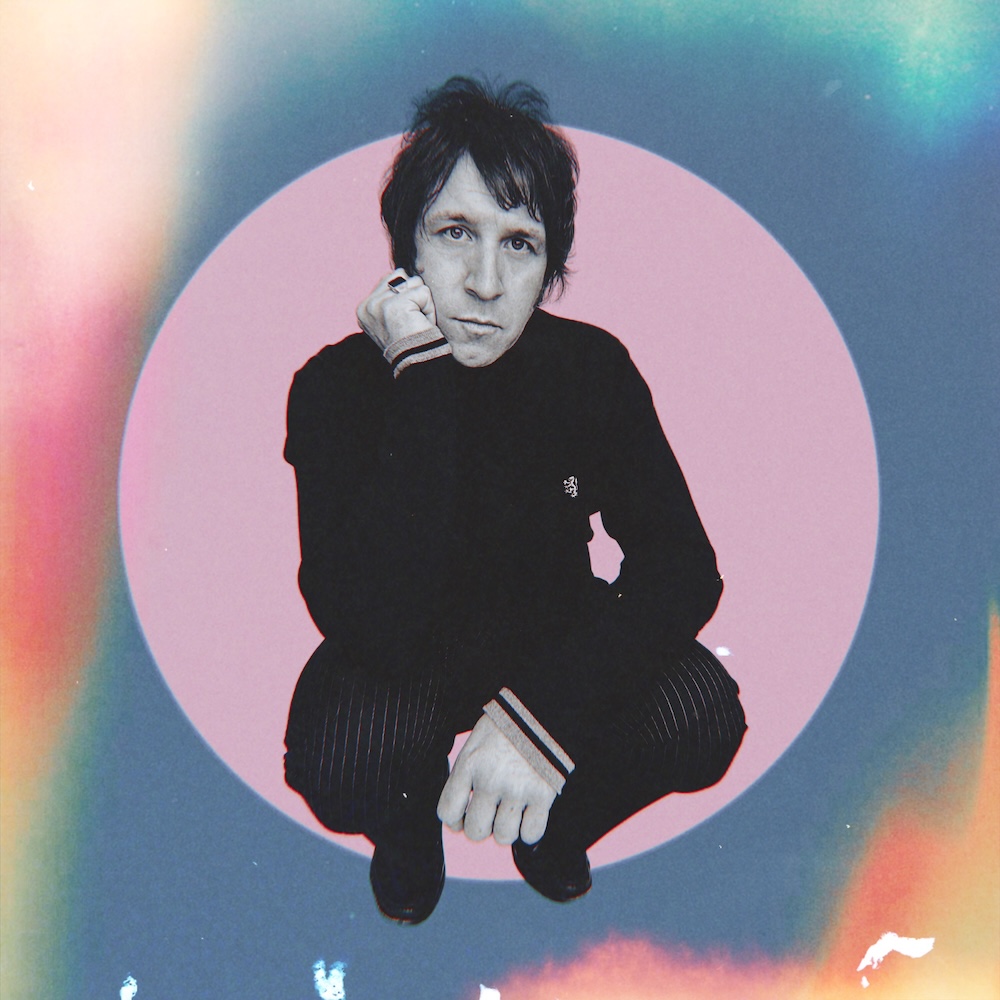
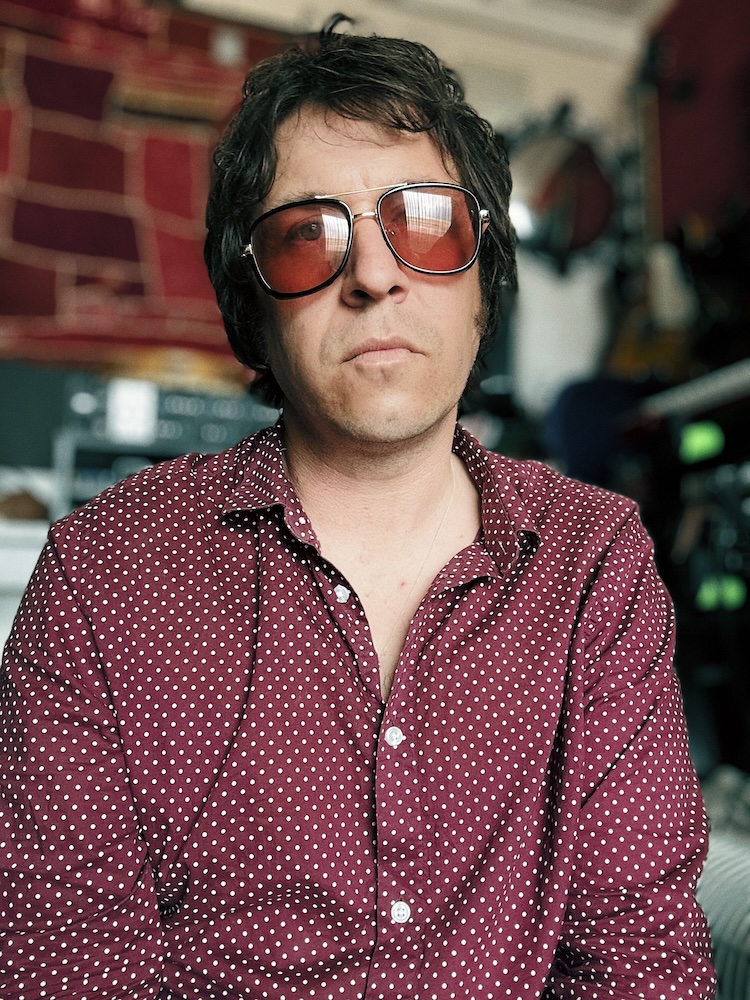
Andy Crofts
From piloting psych-pop favorites The Moons to standing center stage alone after fifteen years in Paul Weller’s band, Andy Crofts talks of solo freedom and finding hope beyond the noise
For over a decade, Andy Crofts has been a vital force in the British music scene, weaving his distinct melodic sensibilities into the fabric of psych-pop favorites The Moons and serving as a longtime, trusted collaborator in Paul Weller’s band. Now, the singer-songwriter and multi-instrumentalist is stepping squarely into the spotlight alone, carving out a bold new chapter with his highly anticipated debut solo album, Melody Boy. Infused with what he calls “chamber pop” elegance, the record balances grand, cinematic textures with an unmistakable, sun-soaked vulnerability—offering a striking look into an artist embracing complete creative freedom.
Ahead of the release of his vibrant new single, “Don’t Think” (out June 12th), an uplifting indie-pop anthem that encourages listeners to tune out the noise of modern life, we sat down with Crofts to discuss the realities of stepping center stage as a solo performer, how he translates his natural songwriting instincts into dreamy studio production, and why maintaining hope remains the core heartbeat of his new music. From the chaotic modern noise that inspired his latest track to the creative outlets—like painting and podcasting—that keep his mind racing, Crofts opens up about what success truly means to him today. To celebrate the release of Melody Boy, Crofts will also take to the stage for a headline show at London’s Bush Hall in Shepherd’s Bush on October 20 2026.
“Don’t Think” is described as being about letting go and escaping the noise. What was going on in your life or the world around you that made you want to write a track centered on that specific feeling?
I’d been thinking about the world and what it’s become. We live in a time where every piece of media seems aimed directly at us from every possible angle. No matter which way you turn, there’s always something competing for your attention, trying to influence the way you think, for better or worse.
Our phones are overflowing with ads, headlines, endless videos, viral dance trends, half naked bodies, and an awful lot of noise. Most of it is designed to keep us distracted.
“Don’t Think” is my way of pushing back against that. It’s about switching off the constant chatter, stepping away from the endless stream of information, and reconnecting with what really matters. Stop overthinking. Feel the beat. Feel the rhythm of life. Don’t let yourself be swallowed by the noise that surrounds us. As the great Bruce Lee once said… Don’t Think, Feel!
You mentioned wanting the track to have that “uplifting melodic energy” you grew up loving. What were some of the specific bands or songs from your childhood that inspired this particular sound? How has your musical taste changed over the years?
Yes, I think I did want that, but I certainly didn’t work towards it in any calculated way. I’ve always preferred to let songs find me rather than chase them. When an idea arrives, it usually tells me where it wants to go, and I tend to follow its lead.
In some ways, writing on instinct is a wonderful thing. It keeps the process honest and natural. But I suppose it can also hold me back at times. Another songwriter or producer might hear something completely different and take the song somewhere I’d never even considered. That’s just the way I work, though.
As for childhood inspirations, it was always The Beatles, The Beach Boys, The Jackson 5 and Buddy Holly. Those artists laid the foundations of melody in my brain. Every time I listened, I felt like I was learning something new. In my teens, I discovered punk, soul, indie and countless other genres, but I never replaced one influence with another. I simply kept adding to the collection.
My taste hasn’t really changed over the years so much as expanded. I’m more open than ever to all kinds of music. I find inspiration everywhere, from African chants and field recordings to the wonderfully eccentric pub piano of Mrs Gladys Mills. Great music can come from anywhere, and I’m always listening.
There is a timeless British songwriting edge in this track. How do you balance paying homage to the golden era of British guitar music while keeping the sound feeling fresh for today’s listeners?
That’s a good question. In all honesty, I never consciously set out to pay homage to the golden era of music. If anything, there are times when I’m probably trying to steer away from it. The truth is, though, that it’s in my blood. It’s simply the way I write.
I can honestly say I’ve never sat down and tried to create a song that sounds like it came from another decade. It just happens naturally because those records were my teachers. They shaped my understanding of melody, songwriting, life, love, fashion and poetry. They became part of my musical DNA.
I suppose I’m grateful to have that influence running through me. The funny thing is, when I’m making new music, I genuinely think it sounds contemporary. Then people tell me it reminds them of the greats from the past. Maybe I’m just a bit deluded… but I’ll happily take it as a compliment! There’s enough room for all types of music.
You are widely known for your work with Paul Weller and your band The Moons. How does the creative process change for you when you are writing completely solo for an album like “Melody Boy” compared to collaborating in a band setting?
Kind of, yes. With The Moons, I was already writing everything anyway, so I’m not that far removed from that process. The difference is the group dynamic. When you’re a band, you’re all generally working towards the same vision, but there are always moments where you can’t please everyone.
In the Weller band, I didn’t really have to write anything, my role was more about contributing ideas. I was very lucky in that Paul was always open and welcoming to input in the studio, and I really enjoyed being part of that process and adding to his songs.
Being solo now is complete freedom. I can change direction whenever I feel the need to. There’s nothing holding me back or pulling me in a direction I don’t want to go.
What is the hardest part about transitioning from being part of a collective band dynamic to standing center stage alone as a solo performer?
I think the hardest part will be having to teach everyone the music, rather than all of us learning it together. There’s a real “gang mentality” when you’re in a band, and stepping away from that can sometimes feel a bit isolating. But it’s not a negative thing.
I’m someone who can struggle with confidence at times, and then at other times feel completely on top of it all. So for me, the best thing is often just being pushed into the deep end and dealing with whatever comes as it arrives.
I do think hearing the response from the fans to my record will help too. Well… as long as they like it!
Following the positive response to your debut single “Blue,” did you feel a shift in anticipation or any pressure when preparing to follow it up with “Don’t Think”?
Not really, no. The album is full of songs that could all stand as singles in their own right. They’re melodic in my usual way of writing and full of what people would call “hooks”. The real challenge for me was deciding what to release next to keep the momentum and energy going.
There are slower songs on the record that I personally think are some of the strongest, but I’m not sure they’re the right choice for a single at this point. You need to maintain a certain energy when releasing singles, or at least stay within a similar vibe.
“Don’t Think” isn’t like “Blue”, but it’s strong and has a great chorus. It just felt like the right move.
The beauty of being independent and managing things myself is that I get to make all the decisions, whether they turn out good or bad. Either way, I’m constantly learning.
“Don’t Think” is the second single from your forthcoming debut solo album, “Melody Boy.” How does this track fit into the larger narrative or mood of the rest of the record?
The whole album has a feel, a kind of unified vibe running through it. Some of it is cinematic, some of it leans into jazzier textures or softer, sweeter moments, and at times it even nods back to The Moons.
“Don’t Think” sits right in the middle of all that. It feels like the track that holds everything together. part of the musical glue.
For me, it’s just a strong little indie pop song, or as I like to call it, chamber pop. There’s even a moment towards the end where it goes heavy for a second, which I really like. It feels like it closes the thought with a bit of impact and groove.
When people sit down to listen to “Melody Boy” as a complete body of work for the very first time, what is the core emotion or message you hope they walk away with?
Hope. That’s what I want people to hear running through everything. My emotions, my feelings, the parts of myself that I’ve put into each song, and ultimately the idea that the overall message is hope.
A lot of the songs are very personal, written from darker places. But even in that darkness, there’s always light if you search long enough. I’m not entirely sure how I got through some of those times, but I’m grateful I kept going and held on long enough for something to shift.
Ironically, the thing that saved me, was me! It wasn’t easy though. I had to really trust the process and accept that my mind was working away in the background, writing these songs, waiting for the right moment to surface.
I’ve never overthought how people might interpret my music, but I would be happy if listeners hear something in it that reflects their own lives and their own moments. Something they can recognise as their own.
The album is described as being filled with “cinematic textures.” Can you share a bit about the production techniques or instrumentation you used to achieve that grand, cinematic feel?
As I was recording these songs, I started to notice a theme emerging across the record. To me, it felt like a cross between Scott Walker, ELO, and Father John Misty. I couldn’t quite define it at the time, but I knew I liked it, and it just kept appearing naturally throughout the whole album.
My recording approach is, in many ways, fairly unorthodox. I’m sure I break every rule in the producer’s handbook, but I tend to just do things until they feel right. The record is full of reverbs and atmosphere rather than a dry, clinical sound. I wanted it to feel dreamy and colourful.
When I record, I’ve always kept to one principle: unless something is really wrong, I’ll usually do one take of everything — instruments and vocals. I’ve always had this idea in my head that when you perform live, you only get one chance, and then the moment is gone. There’s a raw magic in that, and sometimes the imperfections are what make it beautiful.
On a few tracks, I left in vocal lines that could have been “better”, but I decided that’s what happened in that moment, and that’s how it stays. If something is genuinely bad, I’ll fix it, of course, but if I can capture it in one live take, I will.
When making the album, I often pictured being somewhere sunny, a resort in the south of France or Italy. There’s a real sense of sunshine running through the melodies. In fact the album was written by the sea. Somewhere between the sun and the rain.
You have a major headline show coming up at London’s legendary Bush Hall on October 20th to celebrate the album. What makes Bush Hall the right venue for this milestone, and what can fans expect from what is being called your “biggest solo show” yet?
To be honest (again), it’s a bit ambitious for me, but I love the venue. It just felt right to return there with a debut album, like a statement of a new chapter, almost like this is the new me, the real me.
I wanted Bush Hall to be a beautiful evening of music and a moment to properly appreciate the new songs. I could have done a big album release show and timed it to the day it came out, but it felt like that would be wasted, because no one would have really lived with the songs yet. So instead, I chose a later date, giving the album time to exist in the world and take on its own life before bringing it to the stage.
I genuinely can’t wait to play it. I’m currently putting a band together for the show and it’s going to be great. All I need now is for people to grab tickets and come along.
I’ll be playing most of the new album, and I’m sure I’ll throw in a few songs from The Moons as well. It should be a strong set of music and hopefully a night to remember.
Going out there as a solo artist is a little nerve-wracking, but it’s exciting too.
Are there any specific habits, routines, or non-musical hobbies you rely on to clear your head and recharge your creative batteries?
I do try. I have a podcast called The Terror Cellar, which is focused on the paranormal and listeners’ ghost stories that I read out. That gives me a bit of a break from everything else.
I’ve also just started another podcast called The World of Andy Crofts. That one kind of happened by accident. On The Terror Cellar, I always enjoy chatting a bit before and after the stories, and the feedback I got from those more random conversations about life was actually quite strong.
So the other day I just sat in front of the microphone, pressed record, and started talking. I realised quite quickly that it actually does me good to get thoughts out like that. Instead of writing a diary, I just say it out loud into a podcast.
It’s not polished, and it’s not scripted, it’s just me talking about whatever is on my mind at the time. Some people might like it, some might not, but for me it genuinely helps mentally to do it.
Aside from music, what other forms of art—whether it is film, literature, or painting—do you find yourself turning to most often for creative fuel?
I love art. I really adore it. I can’t pretend I’m deeply knowledgeable about all the great painters in history, because I’m not, but I do genuinely love it and I’m constantly looking at it.
I also love to paint myself. My style is abstract, and it feels like it connects with my way of working through natural instinct. It’s similar to writing songs, it has a way of guiding me, of pulling out deeper feelings without me overthinking it.
I love books and poetry too, although I don’t read as much as I’d like to at the moment. My concentration span can be quite poor, not because I’m distracted by the internet or anything like that, but because my mind is always racing. It never really slows down. I’m often writing in the back of my mind, even while I’m doing something like this interview.
I can’t quite imagine what it feels like to have a quiet mind. Ideas just seem to keep coming, constantly.
I can already see my new podcast becoming something important to me. It’s not a vain thing, or a “look at me, I’ve got a podcast” situation. It’s an outlet, a way to empty the glass and keep moving forward. And if people connect with those thoughts along the way, then that’s an added bonus.
What does success look like to you at this stage of your career compared to what you thought it was when you first started making music?
When I was young and in my first band, I had the standard dream of making it. Becoming hugely successful and selling records all over the world. But with ages and experience, I’ve realised success is the small things. Getting through dark places to make my album is a success to me. I don’t think much further forward than what I’m currently doing. Yes of course I’d like to make good money and live off it, but that’s far from the truth. I’ve never been money driven so I think that works in my favour. I create for myself and to make others feel good or relate in some way. That is success for me. I just feel lucky that the melodies are still coming down from the sky and into my head. Some people have that cut off and then dry up completely. I still have so much to do and give.
If you could go back in time and give one piece of advice to your younger self just starting out in the music industry, what would it be?
It would be: just be you. Don’t feel embarrassed, don’t try to impress, and don’t be swayed by other people’s opinions or decisions. Stand up for yourself. Work harder on your songs, do what feels right when it feels right, and don’t let anything grind you down.
What is the biggest misconception people might have about you as an artist based on your previous work, and how does this solo album set the record straight?
Your questions are very good, it makes a nice change.
The biggest misconceptions are that I’m either riding on the back of Weller, or that I’m full of myself. Let me just make that clear. Yes, I was in the Weller band for around 15 years, and I’ll always be linked to that in some way, no matter what I do. But I’ve always had my own music and my own identity outside of that, particularly when it comes to songwriting.
As a person, I’m a mixture of contradictions. I can be highly insecure and confident at the same time. I don’t have a manager or anyone really guiding things in the traditional music industry sense, so everything I do is very hands-on. If I post pictures of myself working or promoting music, it’s simply because I have to, it’s part of doing it independently, just like anyone else.
Maybe I enjoy that side of it, maybe I don’t, I’m still figuring it out. But ultimately, nothing happens unless I make it happen.
To be fair, most people I come across and the supporters I have are nothing but kind and encouraging.
But I do find myself sometimes sitting on the fence, wondering whether to keep pushing forward or just step away from it all. I think that’s just the natural push and pull that comes with it.
With “Don’t Think” releasing worldwide on June 12th, how eager are you to see how fans react to it live compared to hearing it on streaming platforms?
I actually can’t wait. Performing the songs live gives them something completely different. Don’t get me wrong, I’m also excited for people to hear the new single and then the full album.
I love the idea that all of these songs started in my head, and then eventually belong to the people who listen to them. They take on new meanings for different people, depending on where they are in their own lives. That’s such a great feeling, like you’re letting your art go and setting it free into the world to stand on its own.
All I really want is for the people who follow my music, fans, supporters, whatever you want to call it, to get behind it, buy the record, and come to the shows. That would make me a very happy man.
Official website of Andy Crofts
About the Author