Mario with the Blue Eyes
Ridgefield-based alternative folk artist transforms a solitary journey through Vermont and New Hampshire into an intimate, cinematic new single
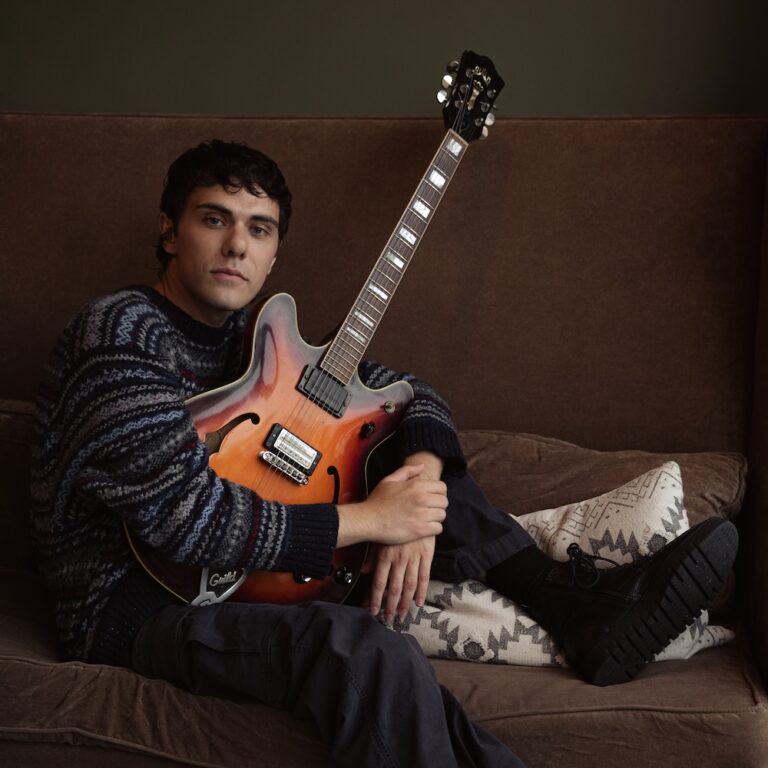
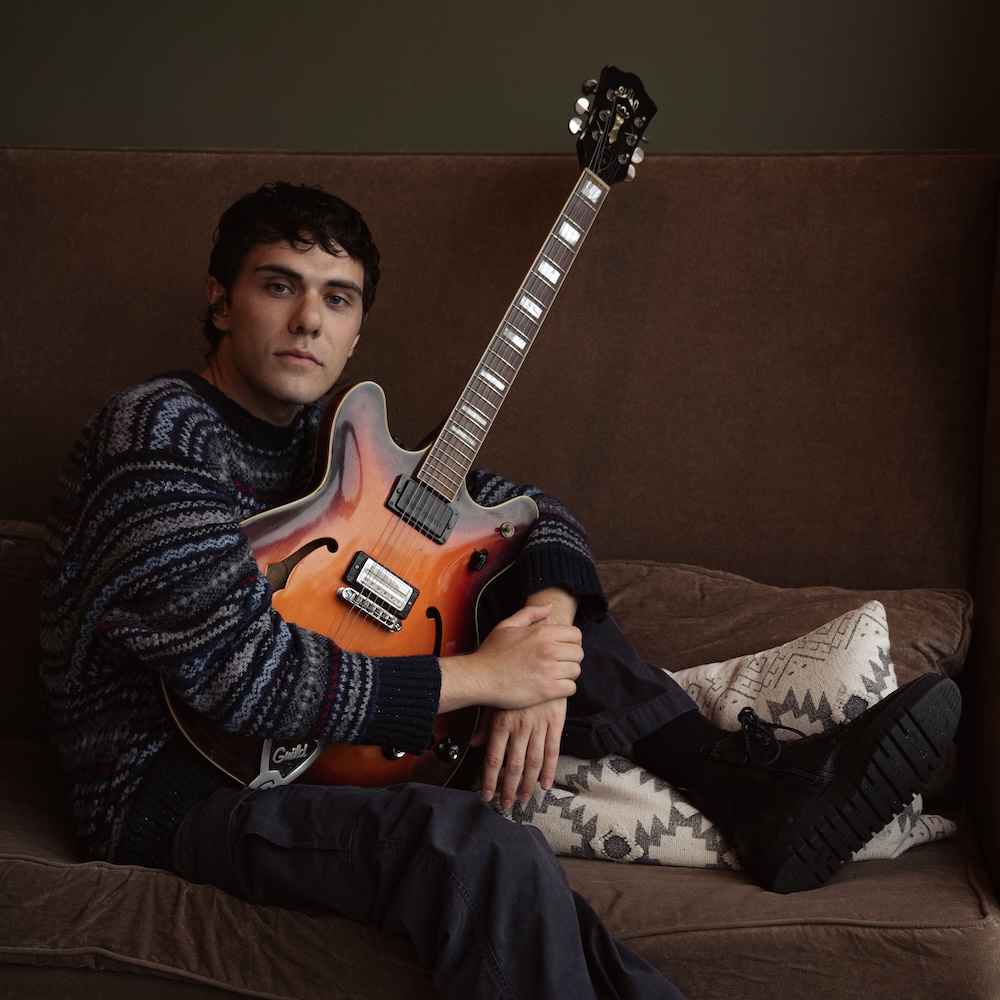
Mario with the Blue Eyes, an alternative folk artist from Ridgefield, New Jersey, explores the complicated relationship between love, fear, and personal transformation on his latest single, “North Country Sky.” Released on October 30, the track marks his debut release under the name Mario with the Blue Eyes, following his 2025 single “When I’m Back from Vermont,” released under the moniker nüvă. Inspired by a solitary journey through the forests and mountains of Vermont and New Hampshire, the song draws on an intensely personal experience in which Mario confronted his fear of vulnerability and recognized how it had affected his relationships with people he cherished. Musically, the track begins with the intimacy of voice and acoustic guitar before gradually expanding into an elaborate, cinematic arrangement of strings, horns, electric keys, bass, drums, and fuzz guitars. Recorded and co-produced with Christian Leitner at Greenwood Sound, with additional sessions at Sound on Sound in Montclair and Shorefire Studio in Long Branch, “North Country Sky” brings together alternative folk songwriting and the dramatic sensibility of film scores, allowing its emotional journey to unfold through a carefully developed arrangement.
In our conversation with Mario, he discusses the personal experiences behind “North Country Sky,” the psychedelic journey that inspired its creation, and the challenge of translating complex emotions into music. He also reflects on his songwriting process, his classical and jazz education at William Paterson University, the musicians and filmmakers who have influenced his creative vision, and the importance of leaving room for spontaneity when bringing music from the recording studio to the stage. Looking beyond the single, he talks about developing his identity as an independent artist, the creative possibilities of alternative folk, and his plans for an upcoming album that balances expansive cinematic arrangements with more intimate, stripped-down songs.
Your new single, North Country Sky, explores the relationship between love, fear, and personal growth. You mentioned that fear had caused you to push away people you cherished. What was the turning point that made you confront those feelings and transform that experience into a song?
There wasn’t specifically a single turning point, but I had hit a bottom in my unhappiness that over a few months got both better and worse little by little until it finally resolved all at once. The ‘all at once’ is ‘North Country Sky’.
The song was inspired by a solo trip through the woods of Vermont and New Hampshire that you described as both literal and psychedelic. What happened during that journey, and how did the experience change your perspective on yourself and your relationships?
Vermont is a sanctuary for me as I’ve visited the state every summer and my father was born and raised there. The land is magnificent and the people are so kindhearted. Prior to the trip, I had wanted to see the White Mountains of New Hampshire, as well as The Frost Place, home of Robert Frost, whose poem ‘Birches’ inspired my song ‘Waiting for June’. I hiked Mt. Washington via Lion’s Head, hence the line in the third verse of ‘North Country Sky’, which is the most difficult trek I’ve ever done. Afterward, I spent time in Vermont mostly just writing, as I had just started making music for what would become Mario with the Blue Eyes. It was time to face my fear of the unknown and of being vulnerable, which culminated in a psychedelic experience, what some might call a heroic dose. I experienced what I felt was physical contact with the love I have to give, and was overwhelmed. I can’t really describe it in words, but I think the bridge of the song is pretty close. I learned to trust love.
The title North Country Sky evokes a sense of openness, solitude, and mystery. What does the title mean to you personally, and did you know from the beginning that it would become the song’s title?
I was under pressure to finish songs for a show last year and struggled with the main line for the chorus. ‘I can’t say goodbye/North Country Sky’ came out through improv during those sessions and it felt right so I went with it. On my trip, I had a moment after setting up camp in New Hampshire that I stared at the sky and was deeply moved by the gleam of the stars. The whole scene was reflective but also omnipresent, which I think comes through in the song the way the sky itself is this godly, mysterious character.
The song begins with just your voice and acoustic guitar before gradually expanding into a cinematic arrangement of strings, brass, drums, keys, bass, and fuzz guitars. At what point did you envision the song growing into something so expansive, and how did you decide which instruments would best express its emotional journey?
‘North Country Sky’ actually started with more consistent instrumentation and gradually we stripped away whatever wasn’t needed. I didn’t know exactly what I wanted when I first started writing it, but I was thinking of it as a long form story song with evocative harmony.
There is a strong sense of movement in the track, almost as if the listener is being taken through a film without seeing the images. Are there particular films, composers, or soundtracks that have influenced your approach to songwriting and arranging this song?
I’m a big fan of film and used to make little movies for fun when I was young and with my friends even in the last few years. I admire film composers and scores like Daniel Hart’s The Green Knight, Hans Zimmer’s Dune, and Ludwig Goransson. Their scores are immersive to the point where it feels as if it’s living art. I think my grander approach to production comes artists that have orchestral arrangements like Michael Kiwanuka, Chicago, Labi Siffre, and Michael Jackson’s collaborations with Quincy Jones.
The dramatic bridge builds toward an explosive climax before the final refrain provides a sense of emotional release. How do you approach the dynamics of a song, and how do you know when an arrangement has reached its emotional peak without becoming overwhelming?
I wanted the bridge to specifically be the psychedelic experience of the trip, so it had to feel overwhelming right before the break. It became more intense as we realized it needed more layers, specifically the guitars with a gated effect. I’ve heard Bill Frisell use that effect, and Christian and I felt like that triple tracked with fuzz got the effect we were looking for.
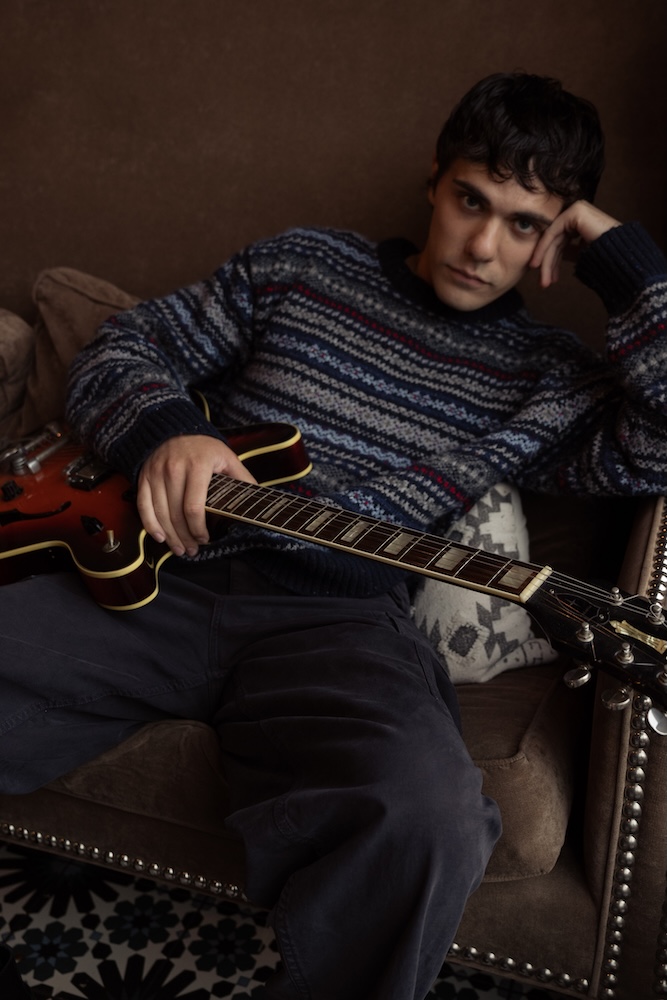
When you begin writing a new song, what usually comes first: a lyrical idea, a guitar progression, a melody, or a particular feeling you want to capture? Has your songwriting process changed over the years?
When I started writing songs, I’d write out lyrics and figure out some music to fit with it. Over the years I started to shift because I felt like the results I was getting were really square and the melody just wasn’t connected with the music, or the music wasn’t serving the story. I recently read The Artist’s Way by Julia Cameron, which made me embrace a whole new process of stream of consciousness writing and improvisation. I usually get random ideas throughout the day that I’ll record and flesh out later on, or if I’m sitting down to write I’ll start with humming or some absurd lyric. There are plenty of romantic songs that start off as tales of worms going to outer space, and the most important thing is to start writing and then to record it. Keep writing, record it, listen, assess, adjust, and do it again. Eventually the song is good enough to move on to something else, or I realize 3 hours have gone by and I should probably get up and get a snack.
Your lyrics have been described as ornate yet vulnerable. How do you balance poetic language and layered imagery with the need to communicate emotions that listeners can immediately understand and relate to?
It’s a delicate balance, but it’s usually about making something absurd or abstract a little more down-to-earth if it’s ultimately better for the story. I’d imagine it’s like digging up a dinosaur, you can see some of what it is peaking out of the ground, but to get the clearest view you need to brush away more sand little by little. I like dinosaurs.
How autobiographical is your songwriting? Do you generally write about experiences you’ve lived through yourself, or do you sometimes draw inspiration from imagined situations, observations, and other people’s stories?
At the moment, all of my songwriting is autobiographical. When I was writing for Echo Road (prog rock band), I would come up with some allegory for what I’d experienced rather than just coming out and saying the thing. That definitely worked for what we were going for at the time, but now I’m at a point where I feel like I’d be hiding behind an overly philosophical mythos. I have some songs now that are more story-based, but they’re still in first person and I feel like they’re more obvious in meaning. There are also songs where I don’t know what I’m writing and I learn what it’s about after.
Is songwriting primarily a way for you to understand your own emotions, or do you begin with the listener in mind? In other words, do you write to figure something out for yourself, or to communicate something you’ve already come to understand?
I’d say all of those are true in different cases, but songwriting or writing in general is done just for the sake of itself. Every morning I write three pages stream of consciousness, as prescribed by The Artist’s Way. By the time I’m halfway done, some revelation has occurred and I can follow it. I definitely have things in mind that I’d like to say just from living life, but the morning pages let the unconscious come through and determine what’s to be said now.
When you write about difficult emotions such as fear, regret, or loneliness, does putting those feelings into music help you work through them, or can revisiting those experiences sometimes make them more difficult to process?
Definitely both, but that’s part of it. It’s weird to think about songs as time capsules, but they certainly are. I do think it’s good to remember the past, whether for oneself or posterity, and have those stories live on.
Your music combines the intimacy of alternative folk with the scale and drama of film-score-inspired arrangements. How would you describe your sound to someone who has never heard your music, and which artists or musical traditions have played the biggest role in shaping it?
Describing what I create is pretty difficult for me to do, but I’ve been saying alternative folk because it feels the closest. I usually get a funny look either way, and I’d rather people just listen for themselves. If someone tells me they do art of some kind I’d prefer to see what it is rather than asking them to compare it to something I might know. That being said, in the last year or so I’ve learned a lot from Michael Kiwanuka, José Gonzales, Judee Sill, and Jack Johnson, while focusing my listening of Fleet Foxes, Father John Misty, and Joni Mitchell.
What was the first music that made you want to become an artist yourself? Can you remember a particular album, song, or live performance that changed the way you thought about music?
There are tons of moments, but I’ve always enjoyed stories and making things. I’ve definitely had some deeply memorable experiences with the end of Abbey Road, Fleet Foxes’ Shore, Pet Sounds, Rufus Wainwright’s Want One, A Love Supreme, and In A Silent Way.
Every artist has influences that are immediately recognizable and others that might surprise their audience. Which musicians, composers, filmmakers, or other artists have influenced your creative vision in ways listeners might not expect?
I think the most surprising influences on my music would be Kendrick Lamar and Miles Davis. I’m a huge fan of Mr. Morale and the Big Steppers, which lyrically inspired me to be more vulnerable. Miles Davis was my gateway into jazz, and earlier this year I read his autobiography and tried to study his music as much as I could. As an artist he was so innovative like Bowie or Prince, and never afraid to be the first one to do anything. I also grew up on a lot of classic rock like Led Zeppelin, Queen, and Rush, which comes back here and there.
When you are creating music, how much do you think about fitting into a particular genre? Do you see alternative folk as a home base for your sound, or would you prefer to approach every new song without worrying about genre classifications?
Folk is sort of a homebase, but mostly because I like acoustic instruments and music that sounds like humans made it in a room. I’m not thinking about fitting into to a genre or sound. I realized the sad steel string guitar thing is just not me, not that I’m knocking that, but it’s not what I want to do. I’m still figuring out my approach to whatever I think folk music even is, and part of that is based on the nylon guitar which is much more my sound having grown up playing it. Songs fitting together tonally is more a question of production. I come up with the same parts I would have in a rock band, but the difference is now a driven electric guitar part is played by a horn or maybe vocal humming, which I prefer. There’s a lot more nuance to feeling.
This release marks your debut single under the name Mario with the Blue Eyes, following your 2025 release When I’m Back from Vermont under the moniker nüvă. What prompted you to start releasing music under your own name, and does this new identity represent a different chapter in your artistic life?
I didn’t love the name nüvă and it’s a pain to find anywhere with the accents, so it needed to change. I wasn’t confident in using my own name and wanted to be a solo artist with a band name, but I came up with Mario with the Blue Eyes in the shower and thought it was kind of cool.
The experience behind North Country Sky involved recognizing how fear had affected your relationships. Has that realization changed the way you approach not only your personal life but also your work as an artist?
Once you know yourself enough, it’s good to jump into whatever what challenges you and makes you more of yourself.
Artists often have to reconcile the person they are in everyday life with the identity they present through their music. How much of Mario with the Blue Eyes is an extension of who you are privately, and is there anything about your artistic identity that allows you to express parts of yourself you might otherwise keep hidden?
I don’t wish to hide anywhere.
What has been the most significant challenge in your development as a musician so far? Was there a particular moment when you seriously questioned your direction, and what helped you keep moving forward?
Finishing music school as the first jazz/classical guitar major from William Paterson University was probably one of the biggest challeges I’ve faced so far. I’m not really a jazz or a classical player and I went in with the mind that that training would give me something unique in my songwriting. I was definitely rebellious playing a strat over ‘All the Things You Are’, and was told by a professor, ‘You don’t play jazz’, after two years in the program. I didn’t fit into either scene, but I was fortunate to meet some great people and somehow convinced them to play on my songs, like Jackson Bernstein (drums), Andres Guerra (keys), and many more. Playing with them and others at school threw me into the fire and taught me to be a better musician, lhow to play with a band, and how to actually practice. Looking back, I learned so much from my time there and had extraordinary professors like Tim Newman, Bill Charlap, the late Russell Malone, and the late Seth Himmelhoch. I think it’s good that there’s a program like William Paterson University that celebrates the jazz tradition. I’m sure there are some cats I went to school with that see me and think “He can’t play changes”, which is probably true, but I’m more interested in learning from a tradition, not following it.
You recorded North Country Sky across several New Jersey studios, working with Christian Leitner at Greenwood Sound and Joe DeMaio at Shorefire Studio, among others. What did these collaborations bring to the track, and was there a particular moment during recording when the song finally came together as you had imagined?
‘North Country Sky’ would not be what it is without Christian. We started out in our last year of college recording a jazz album that I never finished. I wasn’t sure about collaborating with a producer, but I loved the way Christian worked so I reached out when I had some finished material. It was immediately easy to work with him because of his infectious love of music and kindness. He really challenged me to think about how things should sound and why they should sound that way. I’m constantly learning from him, and we share a meticulous love of coffee. Christian is the barista extraordinaire. I’ve worked with Joe DeMaio previously on Echo Road’s Gemini, and loved his process and beautiful studio. Shorefire has such a cozy vibe with the vintage gear, as well as the memories I made recording with Echo Road. It felt natural to go back there.
Your arrangements can be quite expansive, but the emotional core of your music often feels intimate. When translating a song like North Country Sky into a live performance, what do you prioritize: recreating the studio production as closely as possible or reimagining the material for the stage?
Lately I’ve been playing solo, which has allowed me to experiment a lot with guitar arrangements. I used to just strum the chords, but I was inspired by guitarists like Bill Frisell, Lenny Breau, or even Joe Pass to really create a landscape with the guitar. I guess we’ll have to figure it an arrangement when I play with a band, but the most important thing is that the story be told. The studio is one space and the bandstand is another, I don’t think they should sound the same. It might be something from the jazz mentality, but I feel like the band should show up and just play not knowing what’s going to happen. Maybe someone takes a cadenza as an intro, maybe the end of the bridge descends into a totally free section. I think replicating the studio piece can work sometimes, but ultimately it relies on familiarity for the audience.
Being an independent artist means having considerable creative freedom, but it also involves managing the practical side of a music career. How do you balance songwriting and recording with promotion, networking, and the business responsibilities that come with releasing music independently?
I don’t really know, balance is pretty hard especially since I like many things. I’m working on a good balance, but the most important thing is to be healthy—physically, mentally, socially—and make space to do the thing, which is writing.
You’re scheduled to perform at a curated art and music event at The Fold in Paterson on November 20. How important is the connection between music and other art forms to you, and do you approach performing in an interdisciplinary setting differently from playing a traditional concert?
The show at The Fold was an idea with my partner and photographer, Aliana Trianine, to curate an evening for community and local art. We’ve been so fortunate to travel and find people from all walks of life that want to genuinely connect and share space. I love when shows can be more immersive for the audience, or more like an experience. I don’t really want someone to show up and say ‘Nice gig man I liked the Northern Skies one’. I’d rather they thought about something they experienced on the way home, something they can take with them into their lives and be inspired to make their own thing.
What do you hope listeners take away from North Country Sky? If someone hears the song while going through a difficult period in their own life, what would you hope they find in it?
Whatever a listener finds is theirs to keep, but it’d be humbling to know someone found comfort listening to ‘North Country Sky’. I think it’s crucial that people make space and time for themselves when they need to figure out something out, and maybe someone thinking about their fears might feel compelled to face it however they think best.
Looking ahead, what are you working toward as Mario with the Blue Eyes? Can listeners expect more music in the expansive, cinematic direction of North Country Sky, or are you eager to explore a different sound with your next release?
There’s a little bit of everything in the album we’re trying to finish for February or March. The cinematic moments don’t feel as rewarding without the stripped, intimate ones and vice versa. Each song has a different arrangement, some more pop or rock and one song I still have no idea what the hell it is, but folk is a sort of through line.
Listen to North Country Sky on Spotify
About the Author